
Sermorelin injection: dosing, use, and safety
Sermorelin injection dosing depends on your prescription and pharmacy. Here is what it is, how it is used, and the key safety points to know.
Key facts
- Sermorelin Injection is $219/month (billed $219 every 30 days), charged only after a clinician approves it.
- Answer a few health questions online. A licensed clinician reviews them. If approved, it ships to your door.
- Adults 18 or older. A licensed clinician reviews your health history and decides whether treatment is appropriate for you. Availability depends on the state you live in.


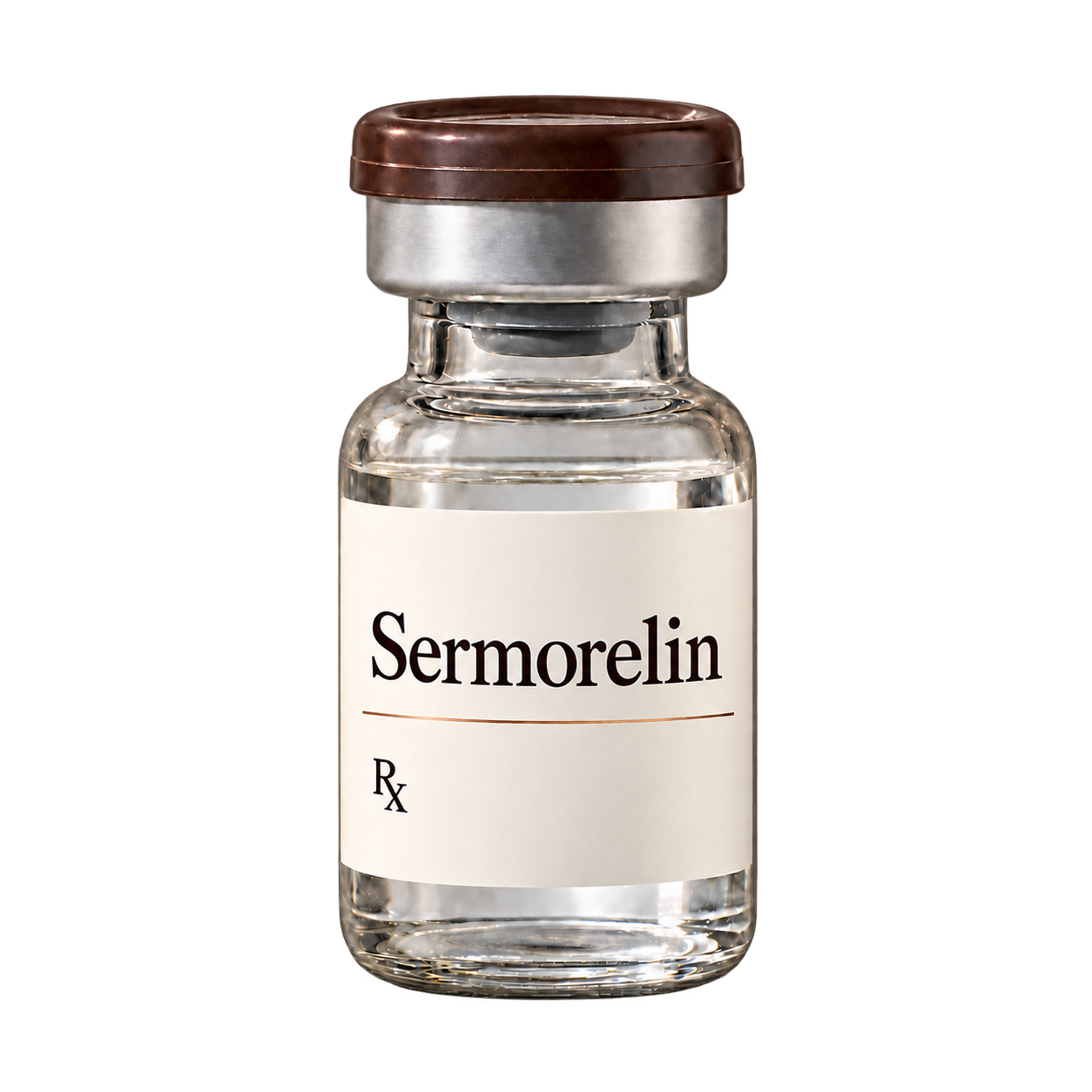
Sermorelin injection is commonly discussed in longevity and wellness care, but dosing details can be confusing because many prescriptions are compounded and vary by pharmacy. This page explains what sermorelin is, how dosing is typically determined in practice, and what safety questions to bring to your clinician. Vitals Vault can help you organize questions about your specific prescription, schedule, and monitoring plan, but dose decisions should stay with the prescribing clinician who knows your history.
- Sermorelin injection is a prescription peptide given by injection, with dosing set by your clinician and pharmacy.
- Most sermorelin used in the US is compounded, meaning it is not FDA-approved.
- Do not copy another person’s dose; your plan depends on your goals, labs, and risks.
- Ask your prescriber what to do if you miss a dose and what side effects should prompt urgent care.
What is sermorelin injection?
- What it is
- A synthetic peptide (sermorelin acetate) that stimulates release of growth hormone in the body.
- Typical US formulation
- Often compounded for an individual prescription, which is not FDA-approved.
- What “injection” means here
- Administration method depends on the dispensing pharmacy’s instructions and your prescriber’s training.
How dosing and use are determined
Why there is no single “standard dose”
Unlike FDA-approved products with a single prescribing label, compounded sermorelin can be prepared in different concentrations. Your prescription label is the dosing source of truth. If you see different numbers online, they may not match your formulation or goals.
What your clinician considers
A clinician typically weighs your symptoms and goals, baseline labs, medical history, and medications. They may also consider conditions where changing growth hormone signaling could be risky. This is why dosing is individualized and should not be self-adjusted.
How long a plan lasts
Your clinician may reassess after a period of use to decide whether to continue, adjust, or stop based on response and safety monitoring. With compounded products, follow-up also helps confirm the formulation and instructions are working for you.
Injection route and sites
For compounded sermorelin, there is no FDA-approved Instructions for Use that standardizes injection sites or technique. Your prescribing clinician and dispensing pharmacy should provide the specific administration instructions for your product and show you how to use it safely.
Missed doses and schedule changes
If you miss a dose or your schedule changes, contact your prescriber or pharmacist for guidance based on your exact prescription. Do not “double up” unless a clinician specifically instructs you to do so for your situation.
Side effects and interactions to ask about
Ask about expected side effects for your formulation, what symptoms should prompt stopping and urgent evaluation, and whether any of your medicines or conditions change the risk profile. Because compounded products vary, your pharmacy may also provide product-specific counseling.
When to talk to a clinician urgently
Allergic reaction symptoms
Get urgent care for trouble breathing, swelling of the face or throat, or widespread hives. Bring your medication information, including the compounding pharmacy details, since inactive ingredients can differ by product.
Severe headache or vision changes
Severe headache, vision changes, or persistent nausea and vomiting should be evaluated promptly. These symptoms can have many causes, and you should not assume they are a normal effect of treatment.
Chest pain or fainting
Chest pain, fainting, or severe shortness of breath needs emergency evaluation. Do not try to troubleshoot medication effects at home when symptoms could represent a medical emergency.
Concerning swelling or numbness
If you develop new or worsening swelling, tingling, or numbness, contact your clinician. These symptoms can be related to fluid shifts or nerve compression and may require a change in plan or further workup.
Practical tips for safer use
Keep your prescription label handy
Use your pharmacy label as the dosing reference, not online dosing charts.
Confirm your formulation
Ask the pharmacy what concentration you were dispensed so instructions match the vial.
Plan your follow-ups
Schedule check-ins and any requested labs before you run out of medication.
Do not share peptides
Sharing prescriptions increases infection risk and can cause dosing errors.
Report side effects early
Tell your clinician about new symptoms so they can reassess your plan.
Frequently Asked Questions
What is sermorelin injection used for?
Sermorelin has been used to stimulate growth hormone release, and in the US it is often discussed in wellness and longevity care. Because many prescriptions are compounded, the intended use and monitoring plan should be clarified with your prescribing clinician.
How do I inject sermorelin injection?
For compounded sermorelin, follow the instructions provided by your prescribing clinician and the dispensing pharmacy, since there is no FDA-approved Instructions for Use for a compounded product. Your clinician or pharmacist should show you how to administer it safely and answer technique questions.
What are common side effects of sermorelin injection?
Side effects can vary by person and by compounded formulation. Ask your clinician and pharmacy what to expect, what symptoms are not expected, and when to seek urgent care, especially for allergic-type symptoms or severe headache or vision changes.
Can I change my sermorelin injection dose if I am not noticing effects?
Do not change your dose on your own. If you are not noticing the effect you expected, bring it to your clinician so they can review your goals, adherence, safety, and whether monitoring labs or a plan change makes sense.
Can Vitals Vault help me figure out my sermorelin injection dose?
Vitals Vault can help you organize questions and understand your prescription instructions, especially if you are comparing information from different sources. Your prescribing clinician must make dose decisions and any changes based on your health history and monitoring.