
Sermorelin dosage: what is known and unknown
Sermorelin dosage is not standardized today because it is no longer FDA-marketed. Your prescriber sets dosing based on your goals and health history.
Key facts
- Sermorelin Injection is $219/month (billed $219 every 30 days), charged only after a clinician approves it.
- Answer a few health questions online. A licensed clinician reviews them. If approved, it ships to your door.
- Adults 18 or older. A licensed clinician reviews your health history and decides whether treatment is appropriate for you. Availability depends on the state you live in.


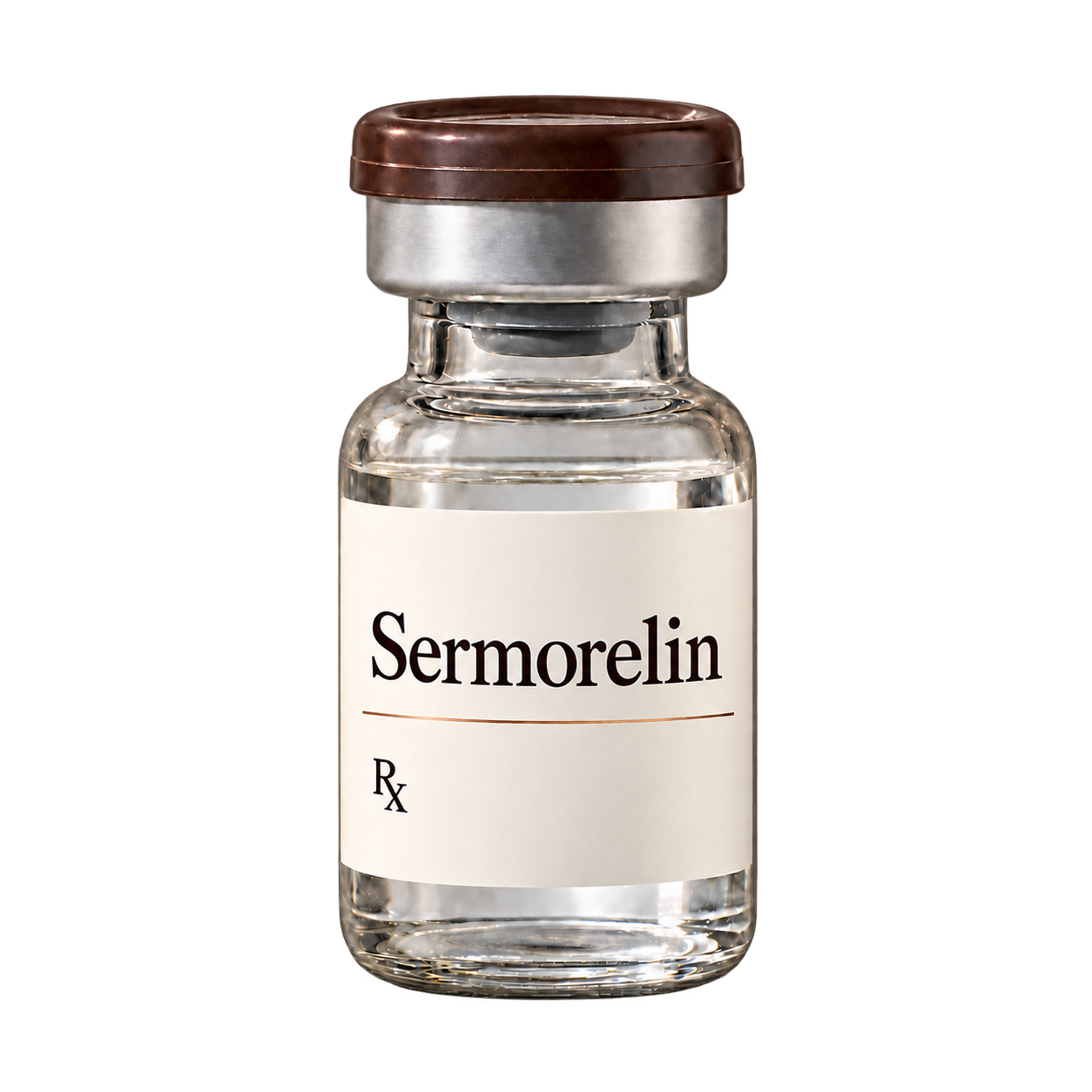
If you searched for sermorelin dosage, you are probably looking for a clear, label-based number. The challenge is that sermorelin is not currently marketed as an FDA-approved prescription product in the US, so there is no up-to-date FDA label that standardizes dosing across patients. This page explains what that means for you in practical terms and what to ask your prescriber before you change anything. Vitals Vault can also help you keep your questions organized using PocketMD.
- There is no single standard sermorelin dosage today because FDA-marketed sermorelin products are discontinued.
- Most current sermorelin use is compounded, so dosing and instructions come from your prescriber and pharmacy.
- Do not copy a dose from online calculators or forums; discuss goals, risks, and monitoring with a clinician.
- If you develop severe headache, vision changes, swelling, or allergic symptoms, seek urgent medical care.
What is the typical sermorelin dosage?
Why you will not find a current FDA label
Sermorelin was previously available as a branded product, but it is not currently marketed as an FDA-approved drug. Without an active FDA-approved product label, websites often fill the gap with estimates that may not apply to you.
What replaces the label in practice
For compounded sermorelin, the prescriber and dispensing pharmacy provide the dosing directions and administration instructions for your specific prescription. Those directions are the safest reference point for what to take and how often.
What you should do with online numbers
Treat calculators and forum dosing as non-authoritative. Use them only to generate questions for your clinician, not as a plan to follow.
Sermorelin dosing details to review with your prescriber
Your goal and evidence limits
Sermorelin is a growth hormone releasing hormone (GHRH) analog that can stimulate growth hormone release in certain settings. Many longevity and wellness goals discussed online are not FDA-approved indications, so your clinician should explain what is known, what is uncertain, and what outcomes are realistic to monitor.
Your baseline risks and contraindications
Before any dose is chosen, your clinician should review conditions where raising growth hormone or IGF-1 may be risky, such as active malignancy or other serious uncontrolled illness. Tell your clinician about any history of cancer, pituitary disease, diabetes, sleep apnea, or swelling problems.
Medication interactions and monitoring
Ask how your other medicines and conditions affect monitoring, especially glucose control and fluid retention. If you use insulin or diabetes medications, changes in glucose can matter even if the goal is not diabetes treatment.
How to handle missed doses
Because compounded products do not have a single FDA label, there is no universal missed-dose rule. Ask your prescriber what to do if you miss a dose, and do not double up unless a clinician specifically instructs you to.
Injection and administration instructions
Sermorelin is often prescribed as an injection, but compounded products can vary. Your prescribing clinician and dispensing pharmacy should provide the exact administration instructions for your formulation and supplies, and show you how to use them safely.
When to talk to a clinician urgently
Allergic reaction symptoms
Get urgent care for trouble breathing, facial or throat swelling, widespread hives, or severe rash. These can be signs of a serious allergic reaction and should not wait for a routine message.
Severe headache or vision changes
A sudden severe headache, vomiting, or vision changes should be evaluated urgently. These symptoms can signal a serious problem that needs prompt assessment, regardless of the cause.
New swelling or shortness of breath
Rapid swelling in the legs, hands, or face, or shortness of breath should be assessed quickly. Fluid retention can have multiple causes and needs clinical evaluation.
High blood sugar symptoms
If you have excessive thirst, frequent urination, confusion, or signs of very high blood sugar, seek medical care. If you have diabetes, ask your clinician how to monitor glucose when starting or changing any peptide therapy.
Pro tips for safer dosing conversations
Bring your exact vial label
Different pharmacies compound different concentrations, so the label matters.
Ask what you are monitoring
Clarify which symptoms and labs should trigger a clinician check-in.
Confirm your plan for missed doses
Get a written rule from your prescriber for your prescription.
Share your full medication list
Include supplements, diabetes meds, steroids, and thyroid medicines.
Avoid comparing to others
Dose needs can differ widely based on risks and goals.
Frequently Asked Questions
What is the typical sermorelin dosage?
There is no single standardized sermorelin dosage because FDA-marketed sermorelin products are discontinued and many prescriptions are compounded. Your prescriber sets dosing for your situation and your pharmacy label is the safest reference.
Is sermorelin FDA-approved, and does that affect dosing?
Sermorelin is not currently marketed as an FDA-approved prescription product in the US. Without an active FDA label, dosing is not standardized, so your clinician and dispensing pharmacy provide individualized directions.
Can I use a sermorelin dosage calculator to set my dose?
A calculator can help you form questions, but it should not be used to set or change your dose. Compounded products vary in concentration and instructions, so dosing decisions should stay with the prescribing clinician.
What should I do if I miss a dose of sermorelin?
There is no universal missed-dose instruction for compounded sermorelin. Ask your prescriber for a written plan for missed doses, and avoid doubling up unless a clinician specifically tells you to.
How do I inject sermorelin?
Because sermorelin is commonly compounded, your prescribing clinician and dispensing pharmacy should provide the administration instructions for your specific product and supplies. If you need technique guidance, ask them to demonstrate and review the written instructions they provide.