
Estriol face cream: what it is and how to get it
Estriol face cream is a compounded topical estrogen some use for menopausal skin changes. Learn safety and who should avoid it.
Key facts
- Answer a few health questions online. A licensed clinician reviews them. If approved, it ships to your door.
- Adults 18 or older. A licensed clinician reviews your health history and decides whether treatment is appropriate for you. Availability depends on the state you live in.





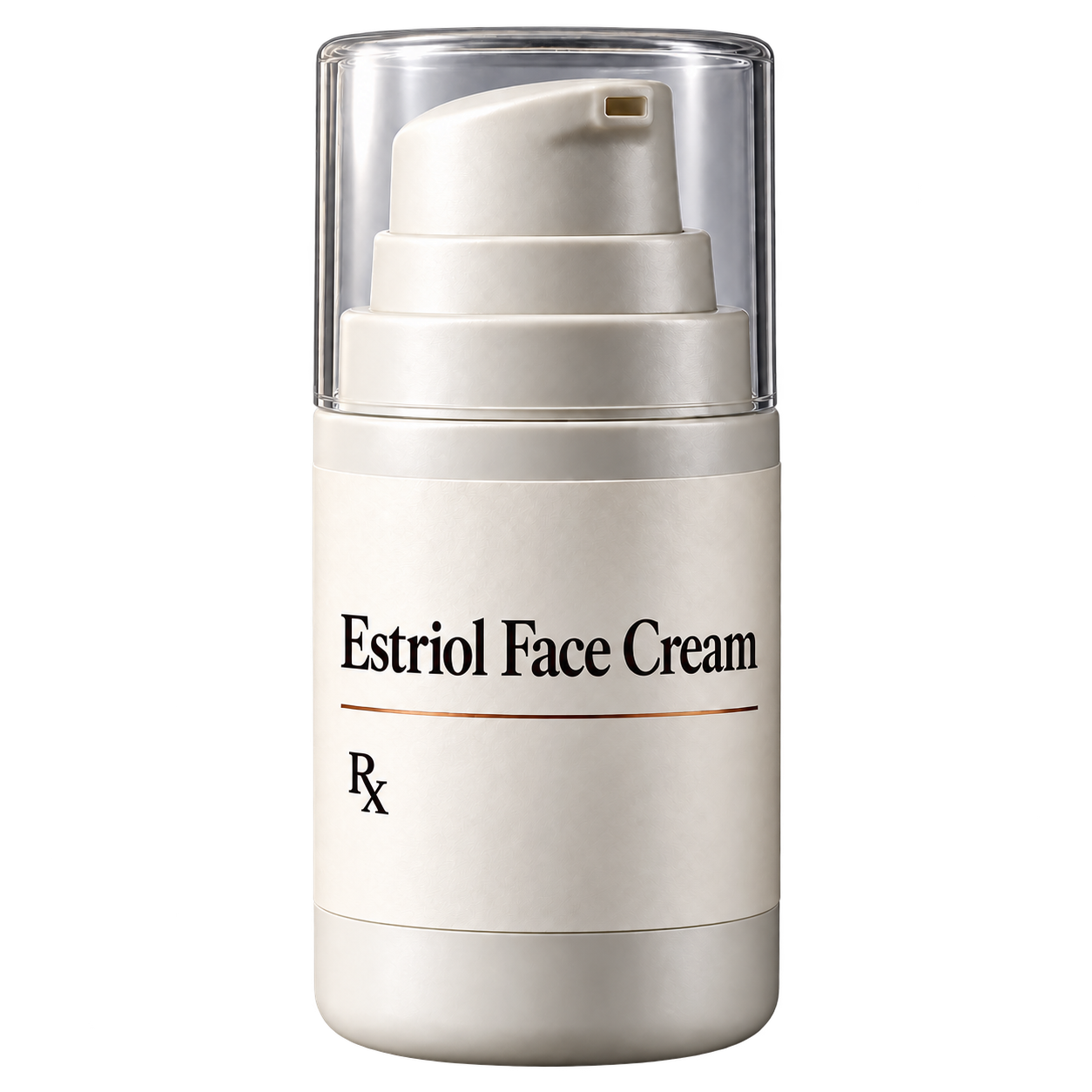
Estriol face cream is a topical estrogen some people use to address skin changes that can happen around menopause, such as dryness and thinning. Because estriol products for the face are typically compounded, the benefits and risks are not as well defined as for FDA-approved estrogen medicines. Vitals Vault can help you explore whether a clinician-supervised plan is appropriate, what safety issues to consider, and what access and follow-up usually look like for compounded hormone treatments.
- Estriol face cream is a compounded topical estrogen used for menopausal skin changes.
- Compounded estriol is not FDA-approved, and product strength can vary by pharmacy.
- Avoid estrogen products if you have estrogen-sensitive cancer or unexplained vaginal bleeding.
- Discuss risks like blood clots and stroke, especially if you smoke or have clot history.
- Current prices, if available, are shown on this page in the catalog block.
What estriol face cream is
A topical estrogen
Estriol is a type of estrogen hormone. In a face cream, it is applied to the skin with the goal of improving menopausal skin changes such as dryness or loss of elasticity. Using estrogen for facial skin is not an FDA-approved indication.
Usually compounded
Most estriol face creams are compounded, meaning a licensed pharmacy prepares the medication for an individual prescription. Compounded medications are not FDA-approved, and their quality and potency depend on the compounding process.
Different from vaginal estriol
Estriol used in the vagina is typically aimed at genitourinary symptoms of menopause, such as vaginal dryness and painful sex. A face cream is used on facial skin and may have different absorption and risk considerations.
Not the same as estradiol
Estradiol is another estrogen and is the main estrogen in many FDA-approved hormone therapy products. Estriol is often described as a weaker estrogen, but it can still have estrogen effects in the body depending on dose and absorption.
How it may work for facial skin
Estrogen and skin structure
Skin has estrogen receptors, and estrogen signaling is linked with collagen content, skin thickness, and hydration. After menopause, lower estrogen levels are associated with changes like dryness and thinning, which is why some people consider topical estrogen.
Local versus systemic exposure
Even when a hormone is applied to the skin, some amount can be absorbed into the bloodstream. How much absorption occurs depends on the formulation, the amount applied, the skin barrier, and where it is applied.
Evidence is limited for face creams
Research on topical estrogen for skin exists, but results vary and many studies are small or use different estrogen types and formulations. For compounded estriol face cream specifically, there is no FDA-reviewed evidence package establishing safety, effectiveness, or consistent dosing.
Why clinician oversight matters
Because estrogen can have body-wide effects, a clinician typically considers your personal risks, other hormone use, and whether monitoring is appropriate. This is especially important if you have risk factors for blood clots, stroke, or hormone-sensitive cancers.
Who estriol face cream may be for
Menopausal skin concerns
You may be considering estriol face cream if you notice new or worsening facial skin dryness, thinning, or irritation around perimenopause or menopause. A clinician can help sort out whether these changes fit menopause or another skin condition.
People avoiding stronger options
Some people ask about estriol because they want a lower-dose or different estrogen approach than standard systemic hormone therapy. That does not automatically mean lower risk, because absorption and individual factors vary.
Those with a clear plan
It may fit best when there is a clear goal, a defined trial period, and a plan for what to do if it does not help. Clinician follow-up is important to reassess benefits, side effects, and whether other options are safer or more effective.
Not a substitute for skin care
Even if you use a hormone-based cream, basic skin care still matters, including gentle cleansing, moisturizers, and sun protection. If you have acne, rosacea, eczema, or pigment changes, you may need targeted dermatology treatment instead.
Who should not use estriol face cream
Unexplained vaginal bleeding
Do not start estrogen therapy if you have vaginal bleeding that has not been evaluated. Bleeding after menopause can have many causes, including conditions that need prompt assessment.
Estrogen-sensitive cancers
If you have a history of breast cancer or other estrogen-dependent cancers, estrogen exposure may be unsafe. Decisions about any estrogen, including topical products, should be made with your oncology and gynecology team.
Blood clot or stroke history
Estrogen therapy can increase the risk of blood clots and stroke in some people. If you have had a clot, stroke, or have strong risk factors, you should discuss alternatives and risk reduction with a clinician.
Pregnancy and breastfeeding
Facial estriol products are generally not intended for use during pregnancy or breastfeeding. If pregnancy is possible, ask a clinician about safer options for skin concerns.
Allergy or severe irritation
Do not use a product that causes significant rash, swelling, or worsening irritation. A clinician can help determine whether the reaction is from estriol itself, the base cream, fragrances, or preservatives.
What to expect if you use it
A trial and reassessment
Because evidence and dosing consistency are limited for compounded estriol face cream, many clinicians treat it as a time-limited trial with follow-up. If you do not notice meaningful improvement, the plan may shift to non-hormonal skin strategies or a different therapy.
Possible local skin changes
Some people notice improved hydration or reduced dryness, while others notice irritation or breakouts depending on the base cream and their skin type. If you have sensitive skin, a clinician may suggest patch testing or adjusting the formulation.
Watch for systemic effects
Even topical estrogen can be absorbed. If you develop breast tenderness, new headaches, nausea, or unexpected vaginal spotting, contact a clinician promptly to review whether the product is contributing.
Coordination with other hormones
If you already use systemic hormone therapy or vaginal estrogen, adding another estrogen source can change your overall exposure. A clinician should review your full regimen, including over-the-counter supplements marketed as hormonal.
Side effects and safety concerns
Skin irritation or rash
Redness, itching, burning, or a rash can occur from the active ingredient or the cream base. If irritation is persistent or severe, stop using the product and contact a clinician to evaluate for dermatitis or allergy.
Acne or clogged pores
Some cream bases are occlusive and can trigger breakouts, especially if you are acne-prone. A clinician or dermatologist can help adjust the vehicle or consider non-hormonal options if acne worsens.
Breast tenderness
Breast tenderness can be a sign of systemic estrogen exposure. Report this to a clinician, especially if it is new, worsening, or occurs with other hormone-related symptoms.
Vaginal spotting or bleeding
Unexpected spotting or bleeding after menopause needs medical evaluation, even if you think it is related to a topical product. Estrogen exposure can affect the uterine lining in some circumstances, and bleeding can also signal other conditions.
Blood clots or stroke
Estrogen therapy is associated with an increased risk of blood clots and stroke in some people, particularly those with risk factors. Seek emergency care for symptoms such as sudden shortness of breath, chest pain, leg swelling, or sudden neurologic symptoms.
Cost and access
What drives cost
Cost can vary based on the estriol strength, the cream base, the size of the prescription, and the compounding pharmacy. Shipping, required clinician visits, and whether any lab work is recommended can also affect total cost over time.
Insurance coverage
Compounded medications are often not covered by insurance, and coverage varies widely by plan and pharmacy. If you have coverage questions, ask your insurer and the dispensing pharmacy what documentation they require.
What you see on this page
When available, current prices for the estriol face cream plan are shown on this page in the catalog price block. Those prices can change, so confirm details during checkout and clinician review.
Access requirements
Because estriol face cream is a prescription treatment, you typically need a clinician evaluation. A clinician may also ask about other hormone use, cancer screening history, and symptoms that could require in-person evaluation.
How to get estriol face cream
- 1
Complete an intake
Share your symptoms, medical history, medications, and goals so a clinician can assess fit and safety.
- 2
Clinician review
A licensed clinician reviews your information and discusses benefits, uncertainties, and risks for you.
- 3
Labs if needed
A clinician may ask for recent lab results before prescribing, depending on your history and current therapy.
- 4
Prescription and follow-up
If appropriate, the clinician prescribes and sets a follow-up plan to reassess response and side effects.
Frequently Asked Questions
Is estriol face cream FDA-approved?
Estriol face cream is typically a compounded medication, which means it is not FDA-approved. Your clinician and the dispensing pharmacy should explain the formulation, expected benefits, and safety considerations for you.
Can estriol face cream affect the rest of my body?
Yes. Even when applied to skin, some estrogen can be absorbed into the bloodstream, and the amount can vary by formulation and how it is used. Tell a clinician if you notice breast tenderness, headaches, or any unexpected vaginal spotting.
Is estriol face cream safe if I had breast cancer?
If you have a history of breast cancer or other estrogen-sensitive cancers, estrogen exposure may be unsafe. Decisions about any estrogen, including topical products, should be made with your oncology and gynecology team.
How long does estriol face cream take to work?
There is no single proven timeline for estriol face cream because evidence is limited and compounded formulations vary. If you try it, a clinician typically sets a follow-up point to reassess whether you are seeing meaningful changes or side effects.
How much does estriol face cream cost?
Cost depends on the formulation, strength, quantity, pharmacy, and whether clinician visits or labs are needed. When available, current prices are shown on this page in the catalog price block rather than listed in the article.