
Estradiol cream: what it is and how it works
Estradiol cream is prescription estrogen used mainly for menopausal vaginal symptoms. See who it is for, the key risks, and access.
Key facts
- Estradiol Vaginal Cream is $39.67/month (billed $119 every 84 days), charged only after a clinician approves it.
- Answer a few health questions online. A licensed clinician reviews them. If approved, it ships to your door.
- Adults 18 or older. A licensed clinician reviews your health history and decides whether treatment is appropriate for you. Availability depends on the state you live in.
- A $20 clinician review, refunded if you don’t qualify.





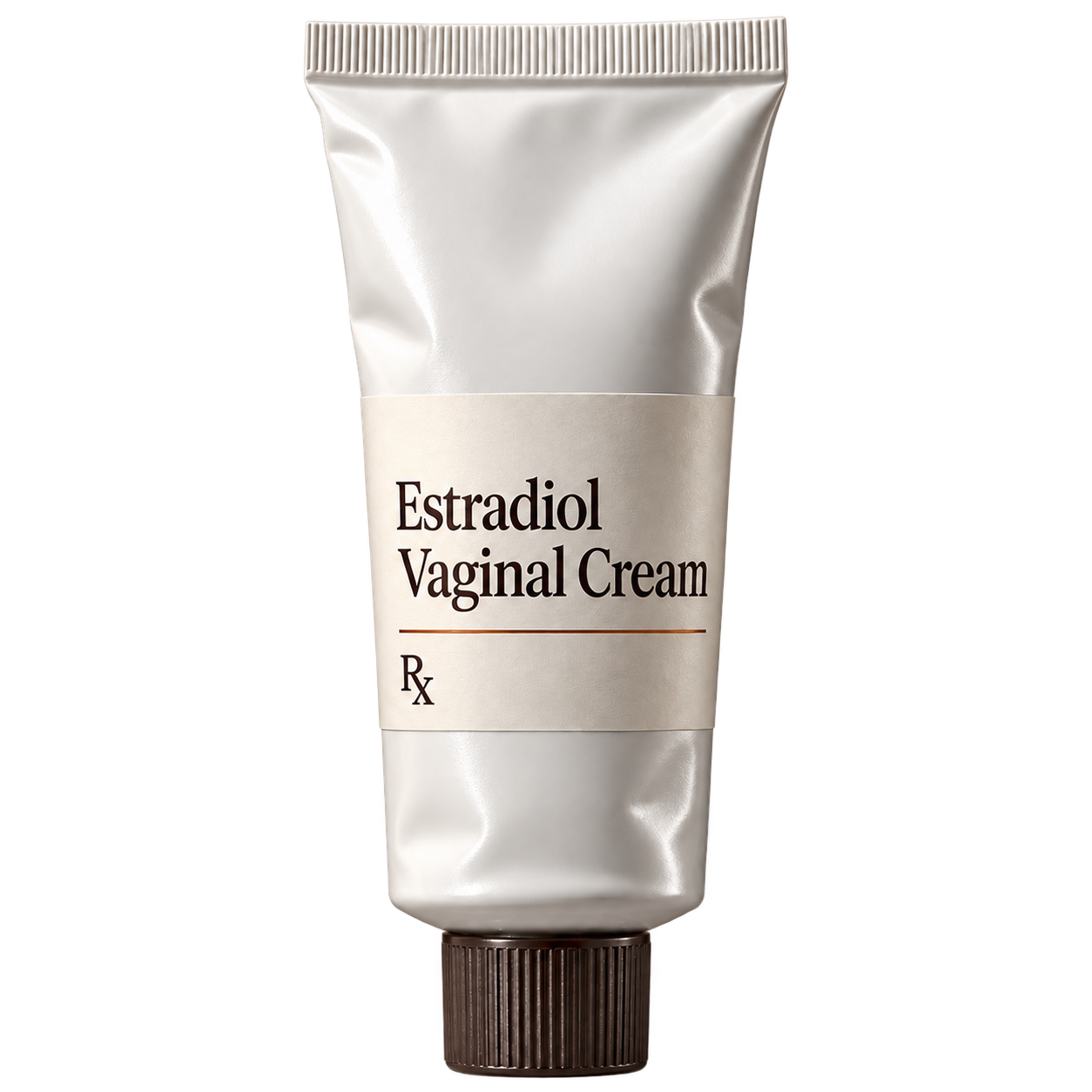
Estradiol cream is a prescription form of estrogen. It is most often used as vaginal estrogen to treat menopausal vulvar and vaginal symptoms such as dryness, burning, irritation, and pain with sex. This guide explains how estradiol cream works, who it may fit, key risks, and what access typically looks like. If you are exploring care through Vitals Vault, a licensed clinician reviews your history to decide whether treatment is appropriate.
- Estradiol cream is a prescription estrogen used mainly for menopausal vaginal symptoms like dryness and painful sex.
- It works by replacing estrogen locally in vaginal tissues, which can improve tissue thickness and moisture.
- Even vaginal estrogen can be absorbed, so boxed warnings and individual risk review still matter.
- Your clinician chooses the lowest effective dose and reassesses periodically based on symptoms and risks.
What estradiol cream is
A prescription estrogen
Estradiol is the primary form of estrogen your ovaries make before menopause. Estradiol cream is a prescription medication that delivers estradiol to the body through a cream formulation. Different estradiol products exist, including oral tablets, patches, and vaginal creams.
Often used vaginally
Many people mean vaginal estradiol cream when they search for estradiol cream. Vaginal estradiol is commonly used for genitourinary syndrome of menopause, which includes vaginal dryness, irritation, and painful sex, and may also help some urinary symptoms. Your clinician will confirm the right product and route for your goals.
Not the same as compounded hormones
Some pharmacies make compounded hormone creams. Compounded medications are prepared for an individual prescription and are not FDA-approved. This page focuses on FDA-approved estradiol products and how clinicians typically think about safety and fit.
- Drug class
- Estrogen therapy (estradiol)
- Common use
- Moderate to severe vulvar and vaginal atrophy due to menopause (vaginal symptoms)
- Key safety theme
- Estrogen carries boxed warnings and requires individualized risk review
How estradiol cream works
Replaces estrogen in tissues
After menopause, lower estrogen can lead to thinner, drier vaginal tissues and higher vaginal pH, which can cause discomfort and pain with sex. Estradiol binds to estrogen receptors in target tissues and changes gene expression, which can improve tissue health over time. For vaginal products, the goal is often symptom relief with lower overall exposure than systemic therapy.
Local does not mean zero absorption
Vaginal estradiol can still be absorbed into the bloodstream to some degree. Because of this, product labeling includes boxed warnings and precautions similar to other estrogen therapies. Your clinician weighs benefits and risks based on your personal history.
Progestin may matter with a uterus
Using estrogen without a progestin can increase the risk of endometrial cancer in a person with a uterus. Whether a progestin is needed depends on the product, dose, and your situation, and should be decided with your clinician. Report any unusual vaginal bleeding promptly.
Who estradiol cream is for
Vaginal dryness and irritation
Estradiol cream is commonly considered when menopausal vaginal dryness, burning, or irritation is bothersome and not relieved by nonhormonal moisturizers or lubricants. Symptoms may be constant or show up mainly with sex. Your clinician can help confirm that menopause-related tissue changes are the likely cause.
Pain with sex from menopause
Painful sex (dyspareunia) can happen when tissues become thin and less elastic after menopause. Vaginal estrogen can improve tissue quality over time, which may reduce pain. If pain is new, severe, or associated with bleeding, you should be evaluated to rule out other causes.
Some urinary symptoms
Genitourinary syndrome of menopause can include urinary urgency, burning with urination, or recurrent urinary symptoms. Vaginal estrogen may help some people, but it is not a substitute for evaluation of infection, blood in the urine, or other urinary conditions. Your clinician may recommend additional testing depending on your symptoms.
People avoiding systemic therapy
Some people want symptom relief without taking oral estrogen or using a patch. Vaginal estradiol may be an option, but it still requires a safety review and follow-up. If you also have hot flashes or night sweats, a clinician may discuss systemic options instead.
Who should not use estradiol cream
Estrogen-dependent cancers
Do not use estrogen therapy if you have known, suspected, or a history of breast cancer or other estrogen-dependent cancer unless your oncology and gynecology teams specifically guide it. Product labeling lists these as contraindications. If you have a history of cancer, discuss nonhormonal options and specialist input.
Unexplained vaginal bleeding
Unusual or unexplained vaginal bleeding needs medical evaluation before starting estrogen. Bleeding after menopause can have many causes, including endometrial changes that need prompt assessment. Contact a clinician urgently if bleeding is heavy or accompanied by severe pain.
Clot, stroke, or heart attack history
Estrogen therapy is contraindicated in people with active or past blood clots (deep vein thrombosis or pulmonary embolism) and in those with active or recent arterial clots such as stroke or heart attack. Your clinician will review your personal and family history and other risk factors such as smoking.
Liver disease or allergy
Estrogen is contraindicated in known liver impairment or disease in product labeling. Do not use estradiol if you have had a serious allergic reaction to estradiol or any ingredient in the product. Seek emergency care for symptoms of anaphylaxis such as trouble breathing or swelling of the face or throat.
Pregnancy
Estradiol is not used during pregnancy. If pregnancy is possible for you, discuss contraception and timing with your clinician before starting any estrogen therapy.
What to expect with estradiol cream
Symptom relief is gradual
Vaginal symptoms from menopause often improve over weeks, not overnight. You may notice less dryness or discomfort first, with continued improvement as tissues heal. If symptoms are not improving, your clinician may reassess the diagnosis, application technique, or whether a different product is a better fit.
Follow-up and reassessment
Estrogen therapy is typically used at the lowest effective dose for the shortest duration consistent with treatment goals. Your clinician should reassess periodically to confirm you still need it and that benefits outweigh risks. Report new breast symptoms, vaginal bleeding, or severe headaches promptly.
Application method depends on product
Some estradiol creams are designed for vaginal use with an applicator, while others may be used differently depending on the specific product and indication. Follow the FDA-approved labeling for your exact product, or the instructions from your prescribing clinician and pharmacist. If you have questions about an applicator, ask your pharmacy to demonstrate how it is intended to be used.
Other supportive care still helps
Lubricants for sex and vaginal moisturizers between sex can reduce friction and discomfort, even if you use estradiol. Avoiding irritants such as harsh soaps or scented products may also help. Pelvic floor physical therapy can be useful when pain has a muscle component.
Estradiol cream side effects and warnings
Vaginal irritation or discharge
With vaginal estradiol products, local effects such as irritation, itching, burning, or increased discharge can occur. These may improve as tissues heal, but persistent symptoms should be discussed with a clinician to rule out infection or a reaction to an ingredient. If you develop severe pain or swelling, stop and seek medical advice promptly.
Breast tenderness or headache
Some people report breast tenderness, headache, or nausea with estrogen therapy. These effects can be related to systemic absorption, dose, or sensitivity to hormones. If headaches are sudden, severe, or associated with neurologic symptoms, seek urgent evaluation.
Blood clots, stroke, heart attack
Estrogen therapy carries warnings about increased risk of blood clots and cardiovascular events, especially in certain populations and with systemic therapy. Seek emergency care for chest pain, sudden shortness of breath, coughing blood, leg swelling, sudden weakness, or trouble speaking. Your clinician will review clot risk factors before prescribing.
Endometrial cancer risk
In a person with a uterus, estrogen use without a progestin increases the risk of endometrial cancer. Report any unusual vaginal bleeding right away, including spotting after menopause. Your clinician may recommend evaluation such as pelvic exam or endometrial assessment depending on symptoms and risk factors.
Breast cancer and dementia warnings
Labeling for estrogen therapy includes warnings related to breast cancer risk and probable dementia in older postmenopausal women based on studies of systemic hormone therapy. Your clinician will consider your age, personal and family history, and whether a local vaginal product is appropriate. Keep up with recommended breast cancer screening.
Gallbladder and liver problems
Estrogen therapy can be associated with gallbladder disease and can worsen certain liver conditions. Contact a clinician promptly for severe abdominal pain, yellowing of the skin or eyes, or dark urine. People with liver disease should not use estrogen therapy unless specifically directed by a specialist.
Cost and access for estradiol cream
What drives the cost
Cost can vary based on the exact product (cream strength and tube size), whether you use a brand or an FDA-approved generic, and how often it is used. Pharmacy pricing and your insurance formulary tier also matter. Current prices, when available, are shown on this page in the price block.
Insurance coverage varies
Some plans cover vaginal estrogen products with a copay, while others require prior authorization or prefer one formulation over another. If your plan does not cover your prescribed product, your clinician may be able to document medical necessity or consider an alternative. Ask your pharmacy what your plan prefers before switching.
Prescription and follow-up
Estradiol cream requires a prescription. Many clinicians will review your symptoms, medical history, and cancer and clot risk factors before prescribing, and will reassess periodically. If you develop new vaginal bleeding, breast symptoms, or clot warning signs, you should be evaluated promptly.
How to get estradiol cream
- 1
Document your symptoms and goals
Note dryness, irritation, pain with sex, urinary symptoms, and what you have tried so far.
- 2
Review your health history with a clinician
A licensed clinician reviews clot risk, cancer history, bleeding, and other contraindications.
- 3
Confirm the right product and instructions
Your clinician prescribes the specific estradiol product and your pharmacist explains how to use it.
- 4
Follow up and reassess
Recheck symptoms and side effects, and revisit whether the lowest effective dose is still needed.
Frequently Asked Questions
What does estradiol cream do?
Estradiol cream provides estrogen to help treat menopausal tissue changes, especially vaginal dryness, burning, irritation, and pain with sex. It works by activating estrogen receptors in tissues that have become estrogen-deprived after menopause. Your clinician will confirm whether a local or systemic product fits your symptoms.
How to apply estradiol cream?
How you apply estradiol cream depends on the specific product and whether it is intended for vaginal use. Follow the FDA-approved instructions for your exact prescription, and ask your pharmacist or prescribing clinician to show you how the applicator is intended to be used. Seek medical advice if you develop significant irritation or bleeding.
How long for estradiol cream to work?
Many people notice gradual improvement in vaginal dryness and discomfort over weeks as tissues recover. The exact timeline varies based on symptom severity, the product used, and consistency of use. If you are not improving, your clinician can reassess the diagnosis and options.
Is estradiol 0.01 cream the same as estradiol .01 cream?
Yes. These phrases usually refer to the same labeled concentration, written in different ways. Because estradiol products come in different strengths and forms, confirm the exact product name and directions on your prescription label.
Does estradiol cream have boxed warnings?
Yes. Estradiol products include boxed warnings about risks such as endometrial cancer (when estrogen is used without a progestin in people with a uterus), cardiovascular events, and certain cancers based on evidence from systemic hormone therapy. Even with vaginal products, you should review your personal risks with a clinician.