
NAD+: What it is, how it works, and access
NAD+ is a molecule your cells use for energy and repair. Evidence for supplements and compounded forms is limited. Learn the safety points.
Key facts
- NAD+ Injection is $250/month (billed $250 every 4 weeks), charged only after a clinician approves it.
- Answer a few health questions online. A licensed clinician reviews them. If approved, it ships to your door.
- Adults 18 or older. A licensed clinician reviews your health history and decides whether treatment is appropriate for you. Availability depends on the state you live in.
- A $20 clinician review, refunded if you don’t qualify.


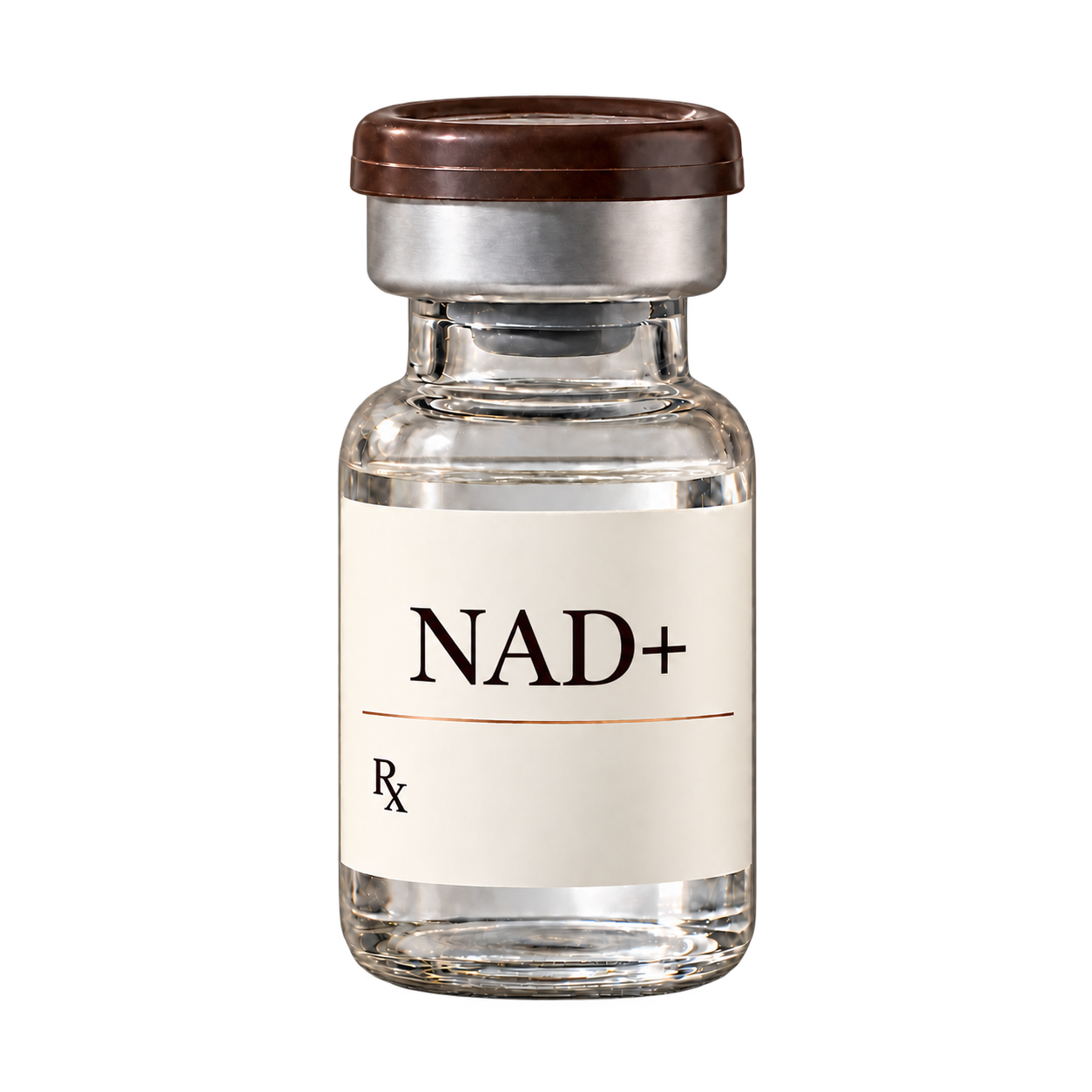
NAD+ (nicotinamide adenine dinucleotide) is a molecule found in every cell. Your body uses it to help convert food into energy and to support processes involved in DNA repair and stress responses. Interest in NAD+ has grown because NAD+ levels appear to change with aging, but human evidence for benefits from boosting NAD+ is still developing. This page explains what NAD+ is, what science supports so far, and how access works if you are considering a clinician guided plan through Vitals Vault.
- NAD+ is a natural molecule your cells use for energy and repair, but evidence for added NAD+ is limited.
- Most consumer NAD+ products are supplements or compounded prescriptions, not FDA-approved drugs.
- If you are pregnant, breastfeeding, or have active cancer concerns, talk with a clinician before using NAD+.
- Side effects depend on the form and dose; ask about interactions with your medications and conditions.
What NAD+ is
A coenzyme in every cell
NAD+ is a coenzyme, meaning it helps enzymes do their work. It is central to metabolism, including how your cells turn nutrients into usable energy. It also participates in signaling pathways that help cells respond to stress.
Made from vitamin B3 pathways
Your body can make NAD+ from dietary sources and precursors related to vitamin B3, including nicotinamide. Many over-the-counter products aim to raise NAD+ by providing precursors rather than NAD+ itself. The amount that reaches target tissues can vary.
Not one standardized product
When people say "NAD+" they may mean supplements (like precursors), IV infusions marketed by clinics, or compounded prescription formulations. These are not interchangeable, and they do not share the same oversight or evidence base.
Evidence is still evolving
Early human studies show that some NAD+ precursors can increase NAD+ levels in blood, but increases in NAD+ do not automatically translate into proven clinical benefits. Many outcomes people care about, like fatigue, cognition, or longevity, still need stronger trials.
- What NAD+ stands for
- Nicotinamide adenine dinucleotide (oxidized form, NAD+).
- Why it matters biologically
- Acts as an electron carrier in energy metabolism and as a substrate for enzymes such as sirtuins and PARPs.
- What is known from early human research
- Some NAD+ precursors can raise NAD+ levels in blood in small studies; clinical benefits remain uncertain.
How NAD+ works in the body
Energy production (redox)
NAD+ helps move electrons in chemical reactions that produce ATP, the energy currency of cells. It cycles between NAD+ and NADH as it accepts and donates electrons. This is one reason NAD+ is discussed in relation to energy and fatigue.
Cell repair signaling (PARPs)
NAD+ is used by enzymes called PARPs (poly(ADP-ribose) polymerases) that respond to DNA damage. These pathways are complex, and more activity is not always better. Human studies have not established that boosting NAD+ improves DNA repair outcomes in a meaningful way.
Stress response pathways (sirtuins)
Sirtuins are enzymes that use NAD+ and are involved in cellular stress responses and metabolism. Much of the excitement around sirtuins comes from animal and lab research. Translating those findings into proven human outcomes is still an active area of research.
Inflammation and immune signaling
NAD+ related pathways intersect with inflammation and immune cell metabolism. That does not mean NAD+ is an anti-inflammatory treatment. If you have an autoimmune condition or take immune-modifying medications, it is worth discussing NAD+ plans with a clinician.
Who NAD+ may be for
People seeking clinician guidance
If you are considering NAD+ as part of a wellness plan, a clinician review can help you weigh potential benefits against unknowns. This is especially important if you take prescription medications or have chronic conditions. A plan should include clear goals and follow-up.
Those with fatigue concerns
Some people look to NAD+ when they feel low energy. Because fatigue has many causes, it is often more useful to rule out common contributors first, such as anemia, thyroid issues, sleep problems, or nutrient deficiencies. Labs can help you and a clinician decide what makes sense next.
People focused on healthy aging
NAD+ is often marketed for longevity. Current human evidence does not support claims that NAD+ products slow aging or extend lifespan. If you choose to try it, consider it an emerging area rather than a proven longevity therapy.
Those avoiding stimulant approaches
Some people prefer to avoid stimulants and look for metabolic support options. NAD+ is not a stimulant, but it is also not a guaranteed energy solution. A clinician can help set expectations and screen for risks.
Who should not take NAD+ without clinician input
Pregnant or breastfeeding
If you are pregnant, trying to conceive, or breastfeeding, avoid starting NAD+ products without medical guidance. Safety data for many NAD+ formulations and doses in pregnancy and lactation is limited. A clinician can help you choose safer alternatives.
Active cancer or cancer treatment
Cell metabolism and DNA repair pathways are relevant to cancer biology. That does not mean NAD+ causes cancer, but it does mean you should not self-direct NAD+ use if you have active cancer or are receiving cancer therapy. Discuss it with your oncology team.
Significant liver or kidney disease
Many compounds are processed through the liver and kidneys, and safety data for NAD+ products in advanced organ disease is limited. If you have known liver or kidney problems, a clinician should review your history and labs before you consider NAD+.
Complex medication regimens
If you take multiple prescriptions, especially for diabetes, blood pressure, mood, seizures, or autoimmune disease, ask a clinician to review for interactions and overlapping side effects. Even when direct interactions are unknown, monitoring may be appropriate.
Unexplained severe symptoms
If you have chest pain, severe shortness of breath, fainting, new neurologic symptoms, or rapidly worsening fatigue, seek urgent medical care. Do not use NAD+ as a substitute for evaluation of potentially serious symptoms.
What to expect if you try NAD+ support
Goals should be specific
Because NAD+ is marketed for many different outcomes, it helps to define what you are trying to change, such as daytime energy, exercise tolerance, or recovery. A clinician can help you decide whether those goals are realistic. If goals are vague, it is harder to judge whether a plan is helping.
Formulation matters
Oral products, nasal products, and injections or infusions can have different absorption and tolerability. Compounded prescriptions are individualized and are not FDA-approved. Ask what form is being used and what evidence exists for that route.
Monitoring may be part of the plan
Many people benefit from checking baseline health markers and following up, especially if fatigue or metabolic concerns are part of the reason for trying NAD+. Labs do not diagnose on their own, but they can help you and a clinician spot patterns that change the plan.
Expect uncertainty in outcomes
Even when NAD+ levels rise, symptom changes are not guaranteed. If you notice no meaningful change, that information is still useful for deciding what to do next. A clinician can help you avoid chasing multiple products without a clear rationale.
Side effects and safety considerations
Stomach upset
Some NAD+ related products, especially oral precursors, may cause nausea, diarrhea, or abdominal discomfort. Taking products with food may help for some people, depending on the product. If symptoms are persistent or severe, stop and discuss with a clinician.
Headache or flushing
Headache and flushing are reported with some vitamin B3 related compounds and may also occur with other NAD+ approaches. Hydration and avoiding other triggers may help, but you should not push through severe symptoms. Seek medical advice if you have concerning reactions.
Sleep changes
Some people report insomnia or vivid dreams with metabolic or energy focused supplements. If sleep worsens, it can outweigh any perceived benefit. A clinician can help you consider timing, dose form, or whether another cause is more likely.
Allergic reaction
Any product can trigger an allergic reaction, including rash, hives, swelling, or trouble breathing. This can be serious and needs urgent evaluation. Tell your clinician about any past reactions to supplements or injectable products.
Worsening of an underlying condition
Because NAD+ pathways intersect with metabolism and immune signaling, some people with complex medical histories may feel worse rather than better. New chest pain, severe anxiety, fainting, or neurologic symptoms should be treated as urgent. Do not rely on NAD+ to manage serious symptoms.
Cost and access
What drives cost
Cost depends on the formulation (supplement vs compounded prescription), route (oral, nasal, injectable, or infusion), and how the plan is structured. Clinician time, follow-up, and pharmacy compounding can also affect total cost. Current prices for the NAD+ plan are shown on this page.
Insurance coverage varies
Many NAD+ products are not covered by insurance, especially when used for wellness goals. Compounded prescriptions are often paid out of pocket because they are not FDA-approved products. If you have coverage questions, a clinician or pharmacy can help you understand what applies to your situation.
Quality and sourcing matter
Products marketed as "nad+ for sale" can differ in purity, dosing, and whether they are legally marketed as supplements or dispensed as prescriptions. Choosing a clinician guided pathway can reduce guesswork about what you are receiving. Always ask who is making the product and what standards they follow.
Access depends on state rules
Telehealth prescribing and pharmacy dispensing rules vary by state. Even when a plan is available online, a licensed clinician must review your health history and decide whether it is appropriate for you. Availability depends on the state you live in.
How to get NAD+ support safely
- 1
Choose a clinician guided option
Look for a pathway where a licensed clinician reviews your health history and goals before recommending anything.
- 2
Consider baseline labs if needed
A clinician may ask for recent lab results before prescribing, especially when fatigue or metabolic concerns are involved.
- 3
Review the plan and safety monitoring
Confirm the formulation, expected monitoring, and what to do if you have side effects or no benefit.
- 4
Follow up and reassess
Treatment plans should include clinician consults and ongoing support, with check-ins to decide whether to continue.
Frequently Asked Questions
Is NAD+ for sale the same as prescription NAD+?
Not always. Many products marketed as NAD+ are dietary supplements or precursors, while some are compounded prescriptions. Compounded medications are prepared for an individual prescription and are not FDA-approved, so quality and oversight differ from supplements.
What is NAD+ used for?
NAD+ is used by your cells for energy metabolism and as a substrate for enzymes involved in stress responses and DNA repair. Consumer use is often aimed at wellness or fatigue, but clinical benefits from boosting NAD+ are not firmly established in large human trials.
Does NAD+ increase energy?
NAD+ is essential for cellular energy production, but that does not guarantee that taking NAD+ products will improve how you feel. Some precursors can raise NAD+ levels in blood in small studies, while symptom benefits remain uncertain. A clinician can help evaluate other common causes of low energy.
Is compounded NAD+ FDA-approved?
No. Compounded medications are prepared by a licensed pharmacy for an individual prescription and are not FDA-approved. If you are considering compounded NAD+, ask your clinician and pharmacy about the formulation, quality standards, and monitoring plan.
How much does NAD+ cost?
Cost depends on the formulation, route, and whether clinician follow-up and labs are included. Coverage varies and many wellness uses are paid out of pocket. Current prices for the NAD+ plan are shown on this page.