
NAD: What it is and how it works
NAD is a molecule your cells use to make energy and repair DNA. Here is what NAD+ therapy is, who it may suit, safety, and access.
Key facts
- NAD+ Injection is $250/month (billed $250 every 4 weeks), charged only after a clinician approves it.
- Answer a few health questions online. A licensed clinician reviews them. If approved, it ships to your door.
- Adults 18 or older. A licensed clinician reviews your health history and decides whether treatment is appropriate for you. Availability depends on the state you live in.
- A $20 clinician review, refunded if you don’t qualify.


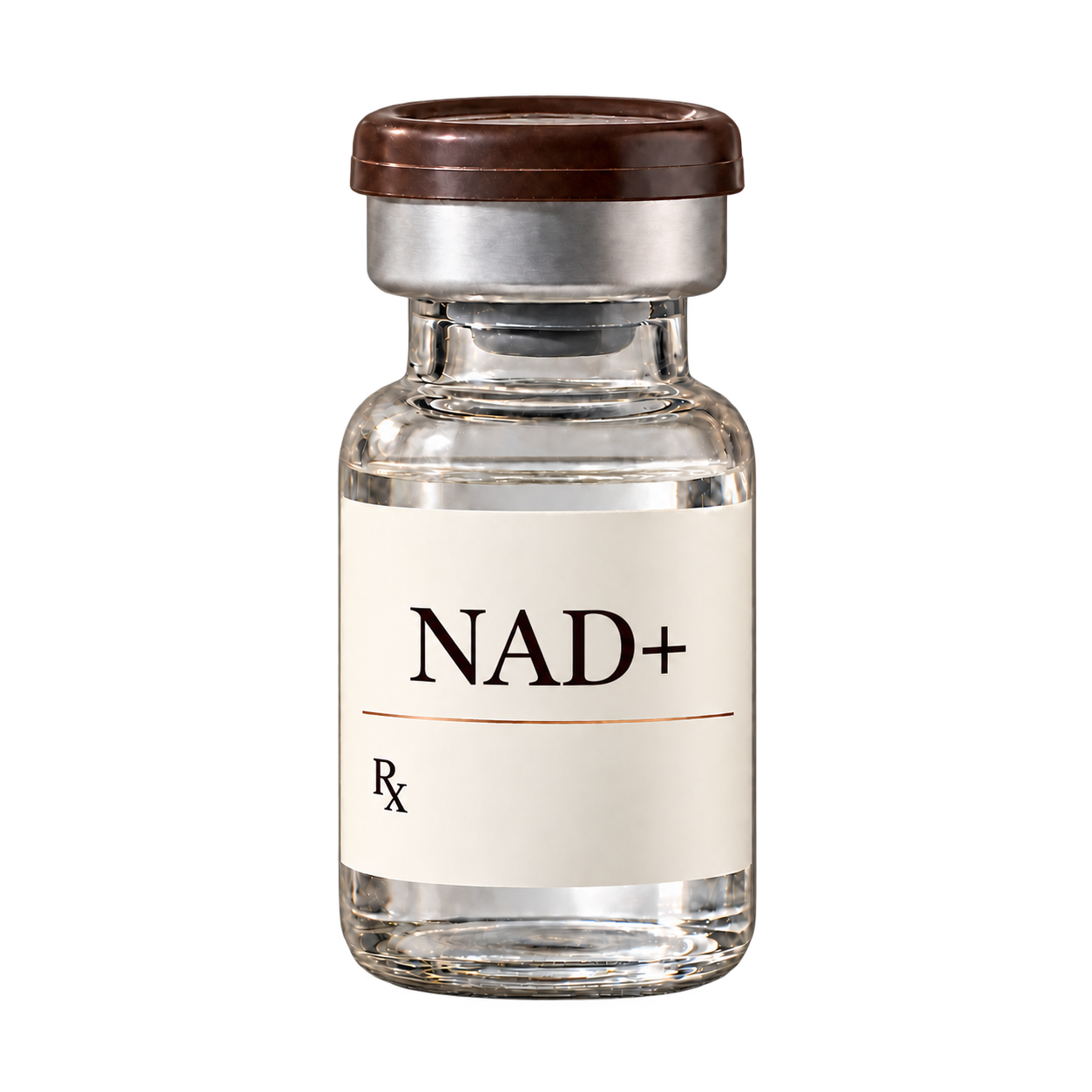
NAD (nicotinamide adenine dinucleotide) is a molecule your body makes and uses in nearly every cell to help turn food into energy and support repair processes. Interest in NAD+ therapy has grown because NAD levels may decline with age, but human evidence for specific health outcomes is still developing. This page explains what NAD+ is, what it can and cannot be expected to do, key safety considerations, and how access typically works through Vitals Vault with clinician review.
- NAD is a natural molecule in your cells that supports energy production and DNA repair.
- NAD+ therapy is often offered for wellness, but strong clinical outcome evidence is limited.
- If you use NAD+, plan for clinician screening and a discussion of medications and conditions.
- Side effects depend on the route and dose form; serious reactions are uncommon but possible.
What NAD is
A molecule, not a vitamin
NAD is a coenzyme, meaning it helps enzymes do their jobs. Your body can make NAD from dietary building blocks such as niacin (vitamin B3) and tryptophan. People sometimes call it a "NAD vitamin," but NAD itself is not a vitamin.
NAD+ vs NADH
NAD exists in different forms. NAD+ is the oxidized form and NADH is the reduced form, and your cells cycle between them during energy production. Many wellness products specifically refer to NAD+.
NAD+ therapy varies
In wellness settings, NAD+ may be offered in different formulations and routes, including compounded preparations. Compounded medications are prepared for an individual prescription and are not FDA-approved, so quality and instructions depend on the prescribing clinician and dispensing pharmacy.
Evidence is still emerging
NAD biology is well established, but translating that biology into proven clinical benefits is harder. Many claims you may see online are based on animal studies or early human research rather than large trials showing clear health outcomes.
How NAD works in the body
Energy production in cells
NAD is central to redox reactions, which are chemical steps that help your cells extract energy from carbohydrates, fats, and proteins. This is part of how your body makes ATP, the main energy currency of cells.
Supports DNA repair pathways
NAD is used by enzymes involved in DNA repair and cellular stress responses, including PARPs (poly(ADP-ribose) polymerases). When these pathways are active, they can consume NAD, which is one reason researchers study NAD availability.
Involved in sirtuin activity
Sirtuins are enzymes that require NAD to function and are studied for roles in metabolism and cellular aging. Human studies have not yet established that boosting NAD reliably improves longevity or prevents disease.
NAD precursors vs NAD itself
Some supplements aim to raise NAD by providing precursors such as nicotinamide riboside (NR) or nicotinamide mononucleotide (NMN). These are different from receiving NAD+ directly, and the evidence and safety considerations can differ by product.
Who NAD+ therapy may be for
People seeking wellness support
Some people explore NAD+ as part of a broader wellness plan that also includes sleep, nutrition, exercise, and management of medical conditions. If your goal is general well-being, it helps to set expectations that outcomes may be subtle or uncertain.
Those with fatigue concerns
Because NAD is involved in cellular energy pathways, fatigue is a common reason people ask about it. Fatigue has many causes, so a clinician may recommend evaluation for sleep issues, anemia, thyroid disease, medication effects, depression, or other conditions before considering NAD+.
People optimizing metabolic health
NAD-related pathways are studied in metabolism and insulin sensitivity. However, NAD+ therapy is not a substitute for evidence-based care for diabetes, high cholesterol, or high blood pressure, and it should not replace prescribed medications.
Those wanting clinician oversight
If you are considering a compounded NAD+ product, clinician oversight matters because dosing, route, and monitoring are individualized. Your clinician can also screen for interactions and decide whether labs are appropriate.
Who should not use NAD+ without clinician guidance
Pregnant or breastfeeding
Safety data for NAD+ therapy in pregnancy and breastfeeding are limited. If you are pregnant, trying to conceive, or breastfeeding, discuss risks and alternatives with a clinician before using NAD+ products.
Active cancer or cancer treatment
NAD biology is tied to cell growth and DNA repair pathways, which are also relevant in cancer. If you have a current cancer diagnosis or are receiving chemotherapy or radiation, ask your oncology team before using NAD+ therapy.
Significant liver or kidney disease
If you have moderate to severe liver or kidney disease, your clinician may be more cautious with supplements and compounded therapies. They may recommend lab review and a careful risk-benefit discussion.
History of serious allergic reactions
Any injectable or infused product can cause allergic reactions in rare cases. Tell your clinician about prior reactions to medications, preservatives, or IV products so they can assess safety.
Unexplained severe symptoms
If you have chest pain, shortness of breath, fainting, severe headache, new neurologic symptoms, or sudden severe weakness, seek urgent care. Do not use NAD+ therapy as a substitute for emergency evaluation.
What to expect from NAD+ therapy
An individualized plan
A clinician typically reviews your goals, medical history, and current medications and supplements. They may recommend lifestyle changes or evaluation for common contributors to fatigue or low energy before considering NAD+.
Possible labs first
Depending on your symptoms and history, a clinician may ask for recent lab results before prescribing. Labs can help identify issues like anemia, thyroid problems, vitamin deficiencies, or metabolic risk factors that may need targeted treatment.
Benefits are not guaranteed
Some people report improved energy or mental clarity, but these outcomes are subjective and can be influenced by sleep, stress, hydration, and expectations. Current human research does not support promising specific longevity or disease-prevention results from NAD+ therapy.
Route matters for experience
People may use oral precursors, injections, or infusions depending on the product and clinician plan. Side effects and tolerability can differ by route, and compounded products may come with pharmacy-specific instructions.
Side effects and warnings
Flushing and warmth
Some NAD-related products are discussed alongside niacin (vitamin B3), which can cause flushing, warmth, and itching due to blood vessel dilation. If you experience flushing, tell your clinician so they can review the product and formulation.
Nausea or stomach upset
Gastrointestinal symptoms such as nausea can occur with some NAD precursors and may also occur with other wellness supplements taken at the same time. Let your clinician know about all supplements you use so they can help identify likely contributors.
Headache or lightheadedness
Headache or feeling lightheaded can happen for many reasons, including dehydration, low blood pressure, or anxiety around injections or infusions. If symptoms are persistent, severe, or new for you, stop and seek medical advice promptly.
Allergic reaction
Seek urgent care for hives, swelling of the face or throat, wheezing, or trouble breathing. Allergic reactions can occur with any medication or injectable product, including compounded preparations and their inactive ingredients.
Infection at injection site
If you use an injectable form, contact a clinician urgently for increasing redness, warmth, swelling, pus, fever, or red streaking near the injection site. Proper technique and sterile supplies are important, and your clinician or pharmacy should provide instructions.
Cost and access
What drives the cost
Cost can vary based on formulation (for example, compounded NAD+), route, plan structure, and whether labs are needed before prescribing. Shipping, pharmacy preparation, and follow-up support can also affect total cost.
Insurance coverage is variable
Wellness-focused compounded therapies are often not covered by insurance, but coverage rules differ by plan and state. If you want to try to use insurance, ask your insurer what is covered and what documentation is required.
Where to see current prices
If a price block appears on this page, it shows current catalog pricing for the NAD+ treatment option available through this route. Prices can change, so use the on-page price block for the most up-to-date information.
How to get NAD+ safely
- 1
Start an eligibility check
Share your health history, medications, and goals so a clinician can assess fit.
- 2
Complete clinician review
A licensed clinician reviews your information and decides whether treatment is appropriate.
- 3
Get labs if requested
If needed, complete recent labs so your clinician can review key health markers before prescribing.
- 4
Follow the care plan
If prescribed, follow clinician guidance and check in about side effects, goals, and any changes in health.
Frequently Asked Questions
What is NAD +?
NAD+ (nicotinamide adenine dinucleotide) is a form of NAD that helps your cells produce energy and supports enzymes involved in DNA repair and stress responses. Your body makes it from nutrients such as niacin (vitamin B3) and tryptophan. Research on added NAD+ for health outcomes is still developing.
Is NAD a vitamin?
NAD is not a vitamin. It is a coenzyme your body makes, partly using vitamin B3 (niacin) and other building blocks. People may call it a "nad vitamin" because it is related to B3 metabolism, but it is different from taking a vitamin pill.
Is NAD+ therapy FDA-approved?
Compounded NAD+ products are not FDA-approved. Compounded medications are prepared by a licensed pharmacy for an individual prescription, and quality and instructions depend on the prescribing clinician and dispensing pharmacy. Ask what formulation is used and what evidence supports your goal.
What are the side effects of NAD+?
Side effects depend on the product and route, but people commonly report symptoms like nausea, headache, or flushing-like sensations. Serious reactions such as allergy are uncommon but require urgent care if you have trouble breathing, swelling, or hives. Review your full medication and supplement list with a clinician.
How much does NAD cost through Vitals Vault?
Costs vary based on formulation, route, whether labs are needed, and the plan structure. If a price block appears on this page, it shows current catalog pricing for the NAD+ option linked here, without you needing to calculate it. A clinician still decides if treatment is appropriate.