
Do NAD patches work? What evidence shows
Do NAD patches work? Evidence is limited and absorption is uncertain. See what research suggests and the safety considerations.
Key facts
- NAD+ Injection is $250/month (billed $250 every 4 weeks), charged only after a clinician approves it.
- Answer a few health questions online. A licensed clinician reviews them. If approved, it ships to your door.
- Adults 18 or older. A licensed clinician reviews your health history and decides whether treatment is appropriate for you. Availability depends on the state you live in.


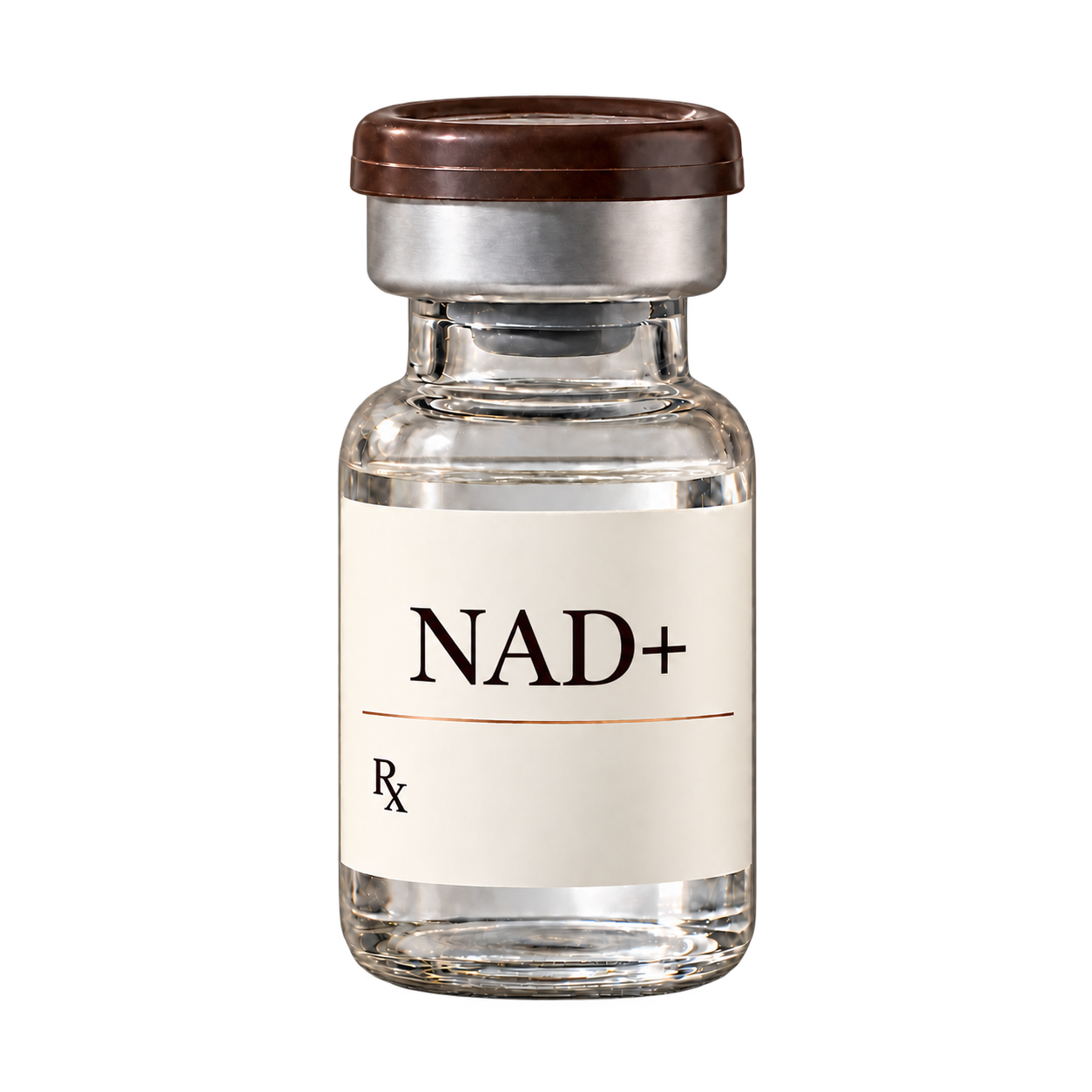
NAD+ patches are marketed for energy, focus, and longevity, but the key question is whether enough NAD+ or a usable precursor can get through your skin to matter. Right now, there is not strong human evidence that NAD+ patches reliably raise NAD+ in the body or improve health outcomes. This page explains what NAD+ is, what research does and does not show, and how to approach NAD+ support more safely through Vitals Vault with clinician review when appropriate.
- Do NAD patches work? Evidence is limited, and skin absorption is uncertain.
- NAD+ is essential for cellular energy, but boosting it has not proven longevity benefits.
- Human studies focus on oral precursors, not transdermal NAD+ patches.
- If you try compounded NAD+, use clinician oversight and track side effects.
What NAD+ patches are
What NAD+ is
NAD+ (nicotinamide adenine dinucleotide) is a molecule found in all living cells. It helps your body convert nutrients into energy and supports enzymes involved in DNA repair and cellular stress responses. Interest in NAD+ is high in aging research, but that does not prove supplementation improves outcomes.
What a patch is
A patch is a transdermal product designed to deliver an ingredient through the skin over time. For NAD+ patches, the claim is usually that delivery through the skin can raise NAD+ and improve how you feel. The main uncertainty is whether meaningful amounts actually cross the skin barrier.
Not an FDA-approved drug
There is no FDA-approved prescription drug for NAD+ replacement or anti-aging delivered by a patch. Some NAD+ products are compounded, meaning they are prepared by a licensed pharmacy for an individual prescription and are not FDA-approved. Evidence and quality can vary by formulation and pharmacy.
How this differs from precursors
Most human research has focused on NAD+ precursors such as nicotinamide riboside (NR) and nicotinamide mononucleotide (NMN), which the body can convert into NAD+. Even in those studies, outcomes are often changes in blood NAD+ related markers rather than clear symptom or disease benefits.
How NAD+ support is supposed to work
Energy metabolism
NAD+ is central to chemical reactions that produce cellular energy (ATP). In plain terms, it helps your cells turn food into usable energy. That is one reason NAD+ is often discussed in fatigue and performance conversations, even though fatigue has many possible causes.
Cell repair pathways
NAD+ is required for enzymes such as sirtuins and PARPs that are involved in cellular stress responses and DNA repair. These pathways are linked to aging biology in lab models. Human benefits from boosting NAD+ are harder to prove and are not established for patches.
The delivery challenge
For a patch to work, the active ingredient must cross the skin barrier and reach the bloodstream or target tissues. Transdermal delivery is well established for certain small, fat-soluble drugs, but it is not automatically effective for large molecules. Without product-specific human pharmacokinetic testing, patch claims are difficult to verify.
What studies measure
Many NAD+ studies measure blood NAD+ metabolites after oral precursors such as NR or NMN. Fewer studies evaluate transdermal delivery, and even fewer connect any delivery method to patient-centered outcomes like improved function or quality of life. When you see strong claims, check whether they are based on human trials.
Who may consider NAD+ support
People wanting clinician input
If you are considering NAD+ for energy, recovery, or longevity goals, start with a clinician conversation. Symptoms often blamed on “low NAD+” overlap with sleep problems, anemia, thyroid disease, depression, medication side effects, and overtraining. A review of your history and labs can help avoid chasing the wrong cause.
Those comparing options
If you want to try NAD+ support, you may be choosing among patches, oral precursors (NR or NMN supplements), or clinician-supervised compounded options. The best fit depends on your goals, medication list, and how you weigh convenience versus evidence. It also depends on how you plan to monitor for side effects.
People avoiding injections
Some people look at patches because they want to avoid injections or IV infusions. That preference is reasonable, but convenience is not the same as proven delivery. A patch can be easy to use and still not deliver enough active ingredient to be meaningful.
People tracking objective markers
If you decide to try NAD+ support, it is safer to track objective markers and symptoms over time rather than relying on marketing claims. Labs cannot diagnose aging, but they can help you and a clinician spot common contributors to fatigue and poor recovery. Tracking also helps you avoid changing multiple variables at once.
Who should avoid NAD+ patches or get medical advice first
Pregnant or breastfeeding
Avoid NAD+ patches unless your clinician specifically recommends them. Safety data for NAD+ patch use in pregnancy and breastfeeding is not established, and transdermal products can vary in actual delivered dose. If you are trying to conceive, discuss any longevity products with your clinician first.
Cancer history or active care
Discuss NAD+ related products with your oncology team before using them. NAD+ pathways are involved in cell growth and DNA repair, and researchers study these pathways in cancer biology. This does not prove harm, but it is a reason to avoid self-directed use during cancer care.
Liver or kidney disease
If you have significant liver or kidney disease, ask a clinician before using NAD+ products. Supplements and compounded therapies can affect metabolism, interact with other medications, or complicate monitoring. A clinician can help you weigh uncertainty against potential benefit.
Complex meds or conditions
If you take multiple prescription medications or have complex medical conditions, review your full list with a clinician first. Even when a product seems “natural,” transdermal delivery and compounded formulations can introduce variability. This is especially important if you have cardiovascular disease, arrhythmias, or uncontrolled anxiety.
Severe or sudden symptoms
If you have chest pain, shortness of breath, fainting, severe weakness, confusion, or a sudden severe headache, seek urgent care rather than trying NAD+ products. These can be signs of a medical emergency that needs immediate evaluation. Do not delay care while testing wellness products.
What to expect if you try NAD+ patches
Absorption is uncertain
The biggest unknown is whether a patch delivers a consistent, meaningful amount of NAD+ or a precursor through the skin. Without published human pharmacokinetic data for a specific product, you cannot assume it raises NAD+ levels in the body. Different patch products can also vary in formulation and release characteristics.
Benefits are not guaranteed
Even if NAD+ related markers increase, that does not guarantee you will feel different. Human studies of NAD+ precursors show mixed results for subjective outcomes like fatigue and physical performance. If you notice changes, they can also be influenced by sleep, training, diet, caffeine, and placebo effects.
Baseline labs may help
Many people drawn to NAD+ are actually dealing with common, treatable issues such as low iron, low vitamin D, thyroid problems, insulin resistance, or inflammation. Starting with baseline labs can help you and a clinician decide whether NAD+ support is the right direction. It can also identify safer, more evidence-based next steps.
Plan how you will monitor
If you proceed, decide how you will monitor side effects and when you will seek care. For a patch, that includes watching for skin reactions and reviewing any new symptoms that start after use. Avoid stacking multiple new longevity products at the same time if you want to understand what is helping or causing problems.
Side effects and safety considerations
Skin irritation
Redness, itching, rash, or adhesive irritation can happen with any patch. If you develop significant irritation, blistering, or swelling, stop using the patch and contact a clinician. People with sensitive skin or eczema may be more prone to reactions.
Headache or nausea
Some people report headache, nausea, or stomach upset with NAD+ related products, especially when starting. With patches, it can be hard to know whether symptoms come from the active ingredient, other ingredients, or unrelated factors. If symptoms are persistent or severe, get medical advice.
Flushing or jittery feeling
NAD+ pathways overlap with vitamin B3 (niacin) metabolism, and niacin can cause flushing in some people. If a product contains niacin or related ingredients, flushing may occur. Seek urgent evaluation for chest pain, fainting, or severe palpitations.
Allergic reaction
Seek urgent care for hives, facial or throat swelling, wheezing, or trouble breathing. Patch products can contain adhesives and excipients that trigger reactions even if you have tolerated oral supplements before. Tell a clinician about any prior patch or adhesive allergies.
Delayed medical evaluation
A major safety risk is using NAD+ patches to self-treat symptoms that need medical evaluation, such as persistent fatigue, unexplained weight change, or new exercise intolerance. If symptoms are new, worsening, or affecting daily function, a clinician evaluation is safer than trial-and-error supplementation.
Cost and access
What drives cost
Cost depends on the formulation, the compounding pharmacy, the amount prescribed, and whether labs or follow-up visits are needed. Transdermal products can also vary in how they are manufactured and tested, which can affect pricing. Current prices for NAD+ care, when available, are shown on this page in the price block.
Insurance coverage
NAD+ support for longevity or wellness is typically not covered by insurance because it is not an FDA-approved treatment for a specific disease. Even when a clinician is involved, compounded medications are often paid out of pocket. If you have an HSA or FSA, ask your plan administrator what is eligible.
Why clinician oversight matters
Because evidence is limited and products vary, access through a clinician can add safety. A licensed clinician can review your health history, medications, and goals, and decide whether NAD+ support is appropriate. They can also recommend labs to check for common, treatable contributors to fatigue and low energy.
How to get NAD+ support safely
- 1
Clarify your goal
Write down what you want to improve and what you have already tried.
- 2
Review your health history
A clinician reviews conditions, medications, allergies, and pregnancy status.
- 3
Start with labs if needed
A clinician may ask for recent lab results before prescribing.
- 4
Follow a clinician plan
Check in about side effects, benefits, and whether to continue.
Frequently Asked Questions
Do NAD patches work?
Evidence is limited, and it is not clear that NAD+ patches reliably deliver enough NAD+ through the skin to meaningfully raise NAD+ in the body. Most published human research focuses on oral NAD+ precursors, not patches.
Are NAD+ patches FDA approved?
No FDA-approved drug is approved as an NAD+ patch for longevity or wellness. Some NAD+ products are compounded, meaning they are prepared by a licensed pharmacy for an individual prescription and are not FDA-approved.
Are NAD patches better than NAD supplements?
Not necessarily. Oral NAD+ precursors such as nicotinamide riboside (NR) have more published human data than transdermal patches, but results are still mixed and do not guarantee symptom improvement. Patch absorption remains a key uncertainty without product-specific testing.
What side effects can NAD patches cause?
Skin irritation is a common issue with any patch. Some people also report headache or nausea with NAD+ related products. Seek urgent care for signs of an allergic reaction or concerning symptoms like chest pain or trouble breathing.
Is compounded NAD+ the same as a generic?
No. Compounded medications are prepared by a licensed pharmacy for an individual prescription and are not FDA-approved, so they are not considered FDA-approved generics. If you are considering compounded NAD+, a clinician should review your health history and goals first.