
Tretinoin side effects: what to expect and when to worry
Tretinoin side effects are usually dryness, peeling, and irritation early on. Know what is common, what is serious, and when to call a clinician.
Key facts
- Tretinoin + Niacinamide is $43/month (billed $129 every 90 days), charged only after a clinician approves it.
- Answer a few health questions online. A licensed clinician reviews them. If approved, it ships to your door.
- Adults 18 or older. A licensed clinician reviews your health history and decides whether treatment is appropriate for you. Availability depends on the state you live in.


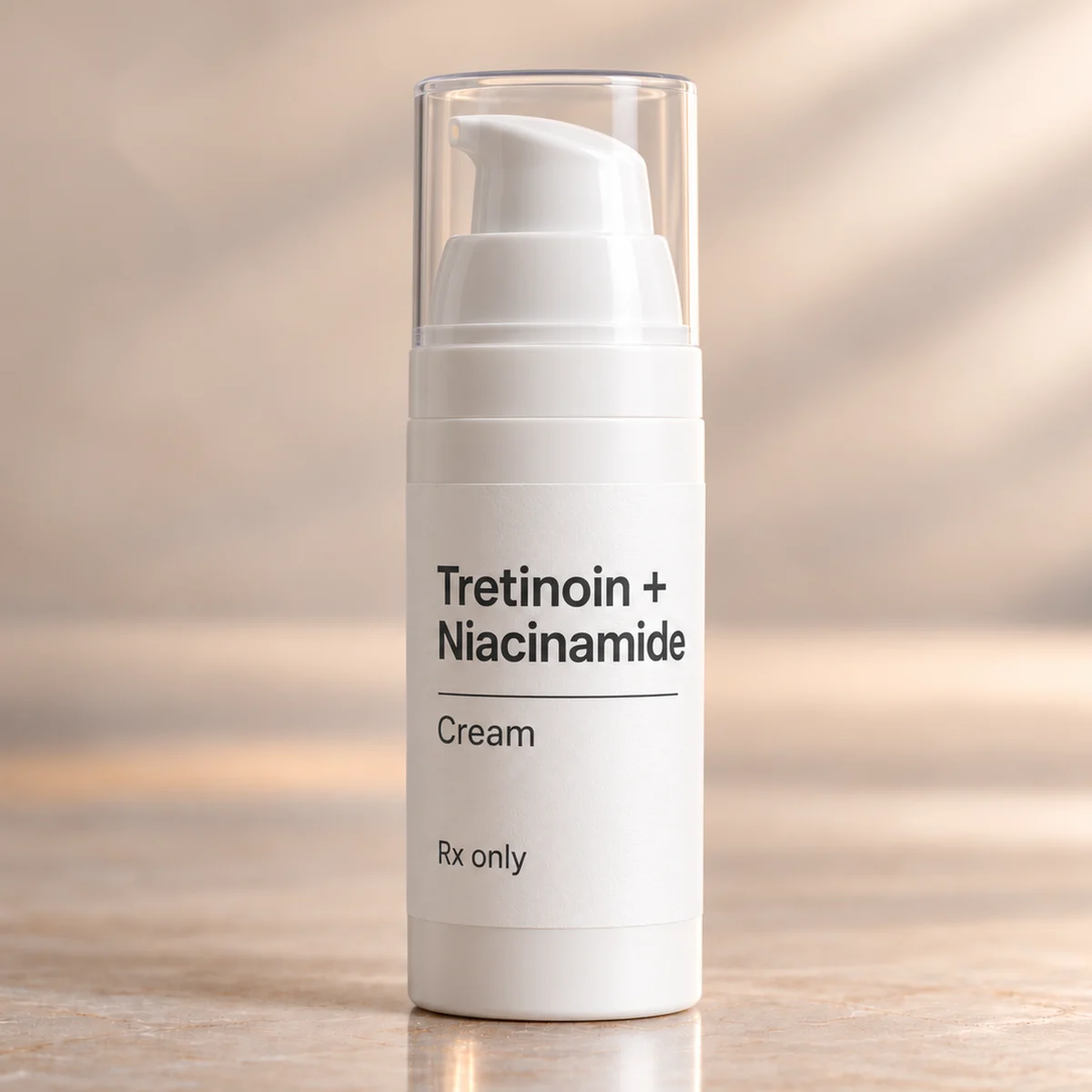
Tretinoin is a topical retinoid used for acne and for certain types of sun damaged skin. The most common tretinoin side effects are local skin irritation, especially when you first start or if you use too much or combine it with other irritating products. This guide breaks down what is common versus serious, what can make side effects worse, and when to contact a clinician.
- Tretinoin side effects are most often dryness, peeling, redness, and burning or stinging.
- Irritation is usually worst early in treatment and improves as your skin adapts.
- Sun sensitivity can increase, so daily sun protection matters while using tretinoin.
- Stop and get urgent help for severe swelling, blistering, or signs of an allergic reaction.
Answer: what tretinoin side effects feel like
Dryness and peeling
Dry, flaky skin is one of the most common tretinoin side effects. It often shows up in the first weeks as your skin barrier adjusts. Using a gentle cleanser and a bland moisturizer can help reduce discomfort.
Redness and irritation
Redness, mild swelling, itching, and a burning or stinging feeling can happen where you apply tretinoin. These effects are usually local and improve with less frequent use or a lower strength, as directed by your prescriber.
Sun sensitivity
Tretinoin can make your skin more sensitive to sunlight and more likely to burn. Daily sunscreen and avoiding tanning beds are commonly recommended while using topical tretinoin.
Severe skin reaction
If you develop intense redness, severe burning, blistering, crusting, or significant swelling, treat it as a potentially serious reaction. Stop applying the product and contact a clinician promptly, especially if symptoms are spreading or worsening.
Common vs serious side effects (and what helps)
Dryness, peeling, scaling
These are expected local effects of topical tretinoin and are among the most frequently reported reactions. They tend to be worse if you apply more than directed or apply to damp skin. A fragrance free moisturizer and avoiding harsh exfoliants can make this easier to tolerate.
Burning, stinging, itching
A brief sting or burn can occur after application, especially early on. It can also happen if you use other irritating products at the same time, such as scrubs, astringents, or alcohol based toners. If it is persistent or severe, ask your prescriber about adjusting your regimen.
Redness or mild swelling
Erythema (redness) and mild edema (swelling) can happen in the treated area. This is more likely on sensitive skin or when starting treatment. Using a gentle cleanser and simplifying your routine often helps reduce irritation over time.
Worsening acne at first
Some people notice acne looks worse before it looks better. This can reflect irritation or the normal process of comedones (clogged pores) coming to the surface. If breakouts become severe, painful, or you develop widespread rash, check in with a clinician.
Skin color changes
Hyperpigmentation (darkening) or hypopigmentation (lightening) has been reported with topical tretinoin, particularly if irritation is significant or if you get sun exposure. Sun protection and minimizing irritation can lower the risk. Report new or uneven color changes to your clinician.
Allergic reaction
True allergy is uncommon, but it can happen. Get urgent care if you have hives, facial or throat swelling, trouble breathing, or severe widespread rash. If you suspect allergy, do not restart the product until you have been evaluated.
When to talk to a clinician
Severe irritation
Contact a clinician if you have severe burning, intense redness, blistering, crusting, or swelling. These can signal over irritation, contact dermatitis, or a reaction to an ingredient. You may need a pause, a different strength, or a different formulation.
Eye, lip, or mucous exposure
If tretinoin gets into your eyes, mouth, or inside your nose, rinse with water and contact a clinician if symptoms persist. Persistent eye pain, vision changes, or significant swelling needs prompt evaluation.
Signs of allergy
Seek urgent care for trouble breathing, facial or throat swelling, or widespread hives. For a new rash that is spreading or very itchy, contact a clinician promptly. Do not assume it is normal dryness.
No improvement or worsening
If your skin is steadily worsening after an initial adjustment period, or you cannot tolerate the irritation, talk with your prescriber. Sometimes the issue is frequency, layering with other products, or an underlying skin condition such as eczema or rosacea.
Pro tips to reduce irritation
Keep your routine simple
Use a gentle cleanser and moisturizer, and pause scrubs or strong acids.
Moisturize consistently
Moisturizer can reduce dryness and peeling while your skin adapts.
Use sun protection daily
Sunscreen and shade help prevent burns and irritation flares.
Avoid applying to broken skin
Do not apply to sunburned, cut, or severely irritated areas.
Ask about product interactions
Tell your clinician about other acne or antiaging products you use.
Frequently Asked Questions
What are the most common tretinoin side effects?
The most common tretinoin side effects are dryness, peeling, redness, and burning or stinging where you apply it. These are usually strongest early on and improve as your skin adapts. Using gentle skincare and sun protection can help.
Are the side effects of tretinoin normal at first?
Mild irritation such as dryness, peeling, and redness is expected for many people when starting topical tretinoin. It often improves with time and with a simpler, less irritating routine. Severe burning, blistering, or swelling is not expected and needs medical advice.
How long do tretinoin side effects last?
Local irritation often happens early in treatment and may lessen as your skin adjusts. How long it lasts varies based on strength, how often you use it, and your skin sensitivity. If symptoms are not improving or are worsening, contact your prescriber.
Can tretinoin cause purging or make acne worse?
Some people notice acne looks worse at first, which can happen as clogged pores come to the surface and as irritation triggers breakouts. This should be discussed with a clinician if it becomes severe or painful. A clinician can help distinguish purging from intolerance.
When should I stop tretinoin and seek urgent care?
Seek urgent care for trouble breathing, facial or throat swelling, hives, or a rapidly spreading blistering rash. These can be signs of a serious allergic reaction. For severe local burning, blistering, or swelling, stop applying it and contact a clinician promptly.