
How does tretinoin work for acne and skin?
Tretinoin works by changing how skin cells grow and shed, helping unclog pores and improve texture over time. Expect irritation early and gradual results.
Key facts
- Tretinoin + Niacinamide is $43/month (billed $129 every 90 days), charged only after a clinician approves it.
- Answer a few health questions online. A licensed clinician reviews them. If approved, it ships to your door.
- Adults 18 or older. A licensed clinician reviews your health history and decides whether treatment is appropriate for you. Availability depends on the state you live in.


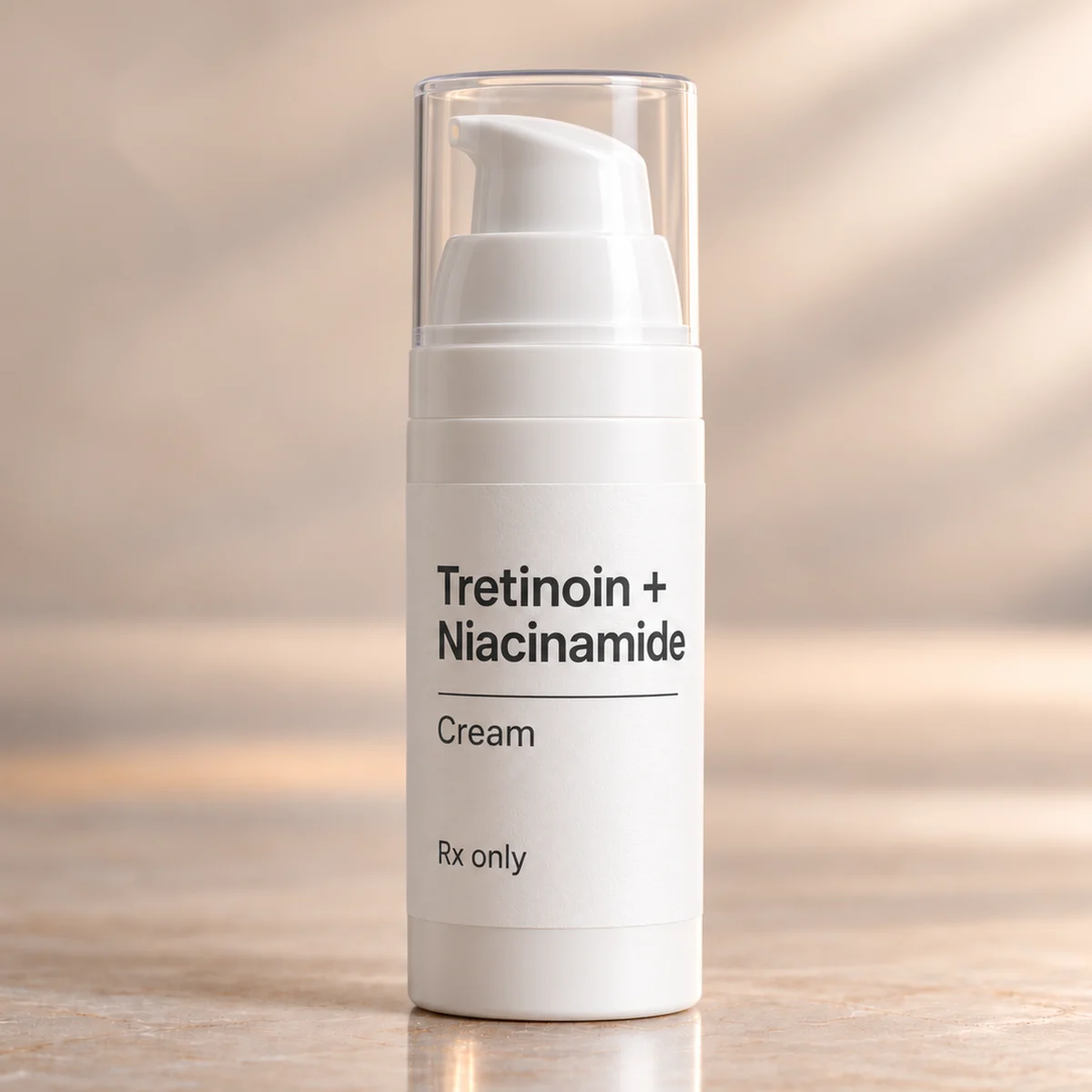
Tretinoin is a prescription retinoid (a vitamin A derivative) used on the skin for acne and, in some products, for photoaging (sun related fine wrinkles). It does not work like a spot treatment. Instead, it changes how your skin cells grow and shed, so improvements build gradually. This guide explains how tretinoin works, what that means for your timeline, and what can make irritation better or worse. If you are considering a compounded formula such as tretinoin with niacinamide, Vitals Vault can help you review options with clinician guidance.
- How does tretinoin work? It speeds skin cell turnover and helps prevent clogged pores over time.
- Early dryness, peeling, and stinging are common, especially when you first start.
- Results are gradual and vary by goal, strength, and how consistently you use it.
- Sun sensitivity can increase, so daily sun protection matters while using tretinoin.
How tretinoin works
It normalizes shedding in pores
Tretinoin influences how skin cells mature and shed inside hair follicles. This helps reduce the buildup that forms microcomedones (early clogged pores), which can lead to blackheads, whiteheads, and inflammatory acne over time.
It reduces comedones over time
By preventing new clogs and helping existing clogs clear, tretinoin supports fewer comedones and can reduce the number of acne lesions with consistent use. This is why it is often used as a long-term maintenance medication for acne.
It changes skin texture gradually
Tretinoin can improve roughness and uneven texture by increasing epidermal turnover. In photoaging products, tretinoin is also associated with improvement in fine wrinkling and mottled hyperpigmentation with ongoing use.
Irritation is part of the mechanism
Because tretinoin increases cell turnover, it commonly causes dryness, peeling, and redness early on. This does not necessarily mean it is harming your skin, but it can be a reason to adjust how you use it with clinician guidance.
What tretinoin does in your skin (and what affects results)
Retinoid receptor signaling
Tretinoin (all-trans retinoic acid) binds retinoic acid receptors in skin cells and changes gene expression. In practical terms, this shifts how quickly cells divide and mature, which is why it affects both acne formation and the look and feel of skin over time.
Comedolytic effect for acne
Tretinoin is considered comedolytic, meaning it helps prevent and treat comedones (clogged pores). This is one reason topical retinoids are a core part of acne treatment plans in dermatology guidelines.
Collagen and photoaging changes
In tretinoin products indicated for photoaging, clinical studies show improvements in fine wrinkles and mottled hyperpigmentation with continued use. These changes are gradual and depend on consistent application and sun protection.
Common early side effects
The most common issues are application-site irritation such as dryness, peeling, redness, burning or stinging, and itching. These effects are expected in labeling and are often most noticeable during the first weeks as your skin adapts.
Serious reactions are uncommon
Stop and seek urgent care if you develop signs of a severe allergic reaction such as swelling of the face, lips, tongue, or throat, or trouble breathing. Also contact a clinician promptly for severe blistering, crusting, or intense swelling at the application site.
Pregnancy and breastfeeding considerations
Topical tretinoin is generally avoided in pregnancy because retinoids can cause birth defects when taken systemically, and clinicians often recommend avoiding topical tretinoin as a precaution. If you are pregnant, trying to conceive, or breastfeeding, discuss safer options with a clinician.
| Factor | What it can change | What to discuss with a clinician |
|---|---|---|
| Strength and formulation | Higher strengths and some vehicles can irritate more. | Whether a lower strength, different base, or slower ramp-up fits your skin. |
| Skin barrier and baseline dryness | Dry or sensitive skin can sting and peel more. | Moisturizer strategy and whether to adjust frequency. |
| Other actives (benzoyl peroxide, acids) | Layering multiple irritating products increases dermatitis risk. | How to separate products or simplify your routine. |
| Sun exposure | Irritation and photosensitivity can worsen without protection. | Daily broad-spectrum sunscreen and sun avoidance habits. |
| Consistency | Irregular use can prolong irritation and delay results. | A schedule you can realistically maintain. |
When to talk to a clinician
Severe irritation or swelling
If redness, burning, swelling, blistering, or crusting becomes severe, contact a clinician. You may need a different strength, a different vehicle, or a change in how often you apply it.
Possible allergic reaction
Get urgent care for facial or throat swelling, hives with trouble breathing, or other signs of anaphylaxis. Although uncommon, this is an emergency.
Pregnancy or trying to conceive
If you are pregnant, planning pregnancy, or think you might be pregnant, ask a clinician whether you should stop tretinoin and what alternatives are safer. Do not make changes without medical guidance.
No improvement after a fair trial
If you are using tretinoin consistently and still not seeing meaningful improvement, a clinician can reassess the diagnosis, check for acne triggers, and consider adding or switching treatments.
Pro tips to tolerate tretinoin better
Start low and slow
Ask about starting with fewer nights per week and increasing as tolerated.
Moisturize consistently
A bland moisturizer can reduce dryness and peeling from retinoids.
Use gentle cleansers
Avoid harsh scrubs and strong soaps that worsen irritation.
Separate irritating actives
If you use acids or benzoyl peroxide, ask how to space them out.
Do not skip sunscreen
Daily broad-spectrum sunscreen helps limit irritation and pigment darkening.
Frequently Asked Questions
How long for tretinoin to work?
Tretinoin works gradually because it prevents new clogged pores and changes how skin renews itself. Many people notice irritation first, then improvement later with consistent use. Your timeline depends on your skin, the formulation, and what you are treating.
How does tretinoin work for acne?
Tretinoin helps acne by reducing the formation of microcomedones, the early clogged pores that can become blackheads, whiteheads, and inflamed pimples. It does this by changing how skin cells grow and shed inside follicles. Consistency matters because it prevents new clogs over time.
Is peeling a sign tretinoin is working?
Peeling can happen because tretinoin increases skin cell turnover and can irritate the surface layer, especially early on. It does not prove the medication is working better, and too much irritation can make it harder to keep using. A clinician can help adjust your routine if peeling is severe.
Does tretinoin thin your skin?
Tretinoin can cause early dryness and peeling, which can make skin feel thinner or more sensitive at first. In labeling and clinical use, tretinoin is associated with changes that can improve epidermal organization over time rather than permanently thinning healthy skin. If you bruise easily or have severe irritation, talk with a clinician.
Can I use tretinoin if I am pregnant or trying to conceive?
Clinicians commonly recommend avoiding topical tretinoin during pregnancy as a precaution because retinoids can cause birth defects when used systemically. If you are pregnant, trying to conceive, or breastfeeding, ask a clinician about safer alternatives. Do not make changes without medical guidance.