
How long does tretinoin take to work?
Tretinoin results build over weeks to months. See what to expect at each stage, including the purge, and when most people notice a change.
Key facts
- Tretinoin + Niacinamide is $43/month (billed $129 every 90 days), charged only after a clinician approves it.
- Answer a few health questions online. A licensed clinician reviews them. If approved, it ships to your door.
- Adults 18 or older. A licensed clinician reviews your health history and decides whether treatment is appropriate for you. Availability depends on the state you live in.


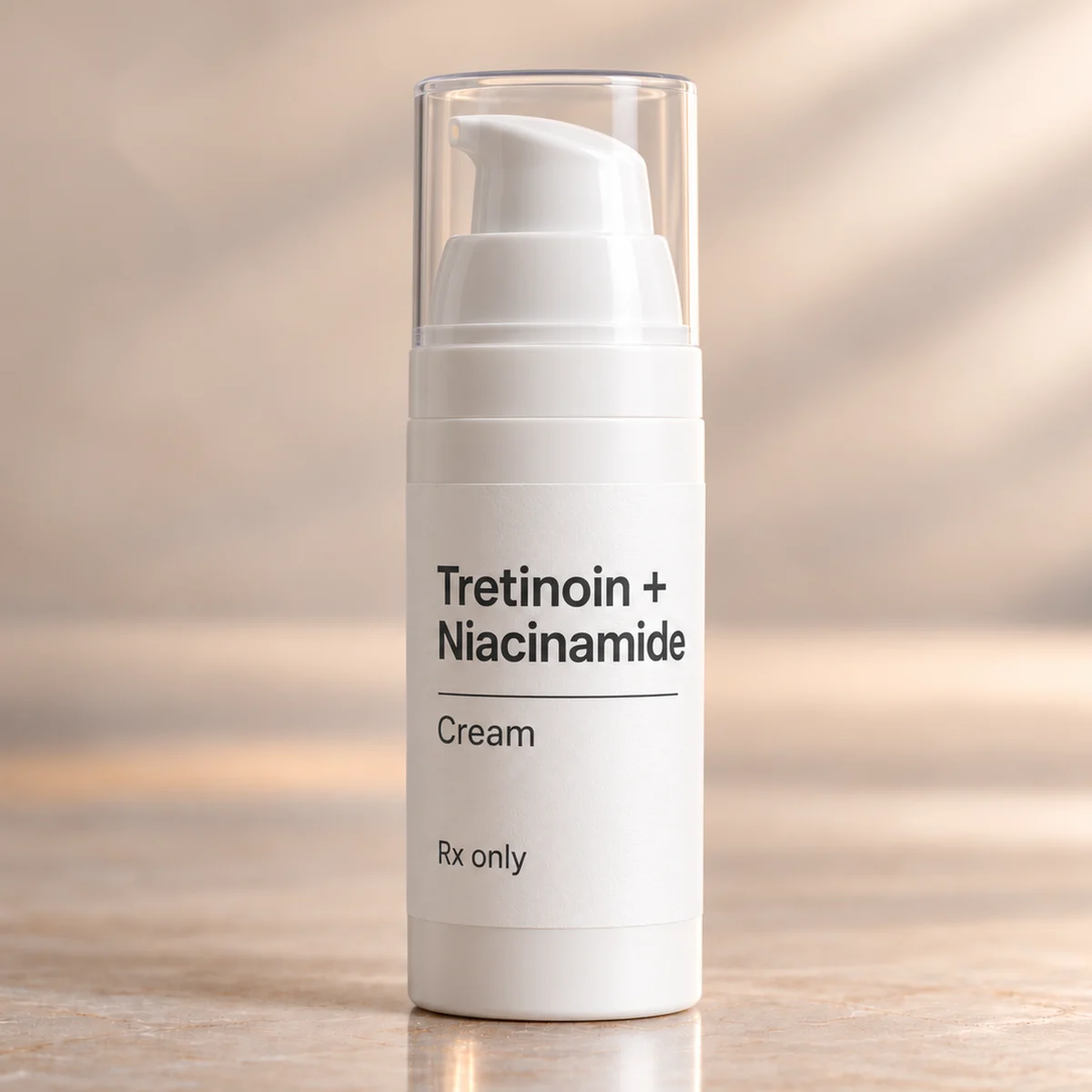
Tretinoin is a prescription topical retinoid used for acne and for photoaging (sun related fine wrinkles and uneven pigment). It changes how skin cells grow and shed, so improvement is gradual rather than immediate. This guide explains what prescribing information and clinical studies suggest about timelines, why results vary, and when to check in with a clinician. If you are using compounded tretinoin with niacinamide through Vitals Vault, your plan should follow your clinician’s instructions and the dispensing pharmacy’s directions.
- How long does tretinoin take to work? Usually weeks to months, depending on your goal.
- Early dryness, peeling, and stinging can happen before you see benefits.
- Acne can look worse at first as clogged pores surface.
- Consistency and tolerability often matter more than “going stronger” quickly.
How long does tretinoin take to work?
Acne
With acne, you may first notice fewer new pimples, while blackheads, clogged pores, and leftover marks can take longer to improve. Some people also notice an early flare, which can be hard to distinguish from irritation. If worsening is severe or painful, check in with a clinician.
Photoaging
For photoaging, studies typically evaluate changes like fine wrinkles, roughness, and mottled pigmentation over months of continuous use. This is why tretinoin is often described as a long game for texture and tone. Sun protection helps you judge progress more clearly.
If you stop and restart
Tretinoin’s benefits depend on repeated use over time. Long breaks can set back progress, and restarting may bring back early irritation. A clinician can help you find a schedule you can maintain.
What affects how fast you see results
Your skin’s tolerance
Dryness, peeling, redness, and burning are common with topical tretinoin, especially early on. If irritation is intense, people often use it less consistently, which can delay results. Using gentle skin care and adjusting frequency with a clinician can help.
Strength and vehicle
Tretinoin comes in different strengths and formulations (for example, cream, gel, lotion). The “vehicle” is the base that carries the medication and can change how it feels and how irritating it is. A clinician may switch the vehicle if you cannot tolerate one type.
Other products you use
Scrubs, frequent exfoliating acids, and alcohol based products can worsen irritation. If you also use acne actives like benzoyl peroxide or salicylic acid, spacing products out may improve tolerability. Ask a clinician or pharmacist before combining multiple irritating products.
Sun exposure
Tretinoin can increase sensitivity to sunlight, and sun exposure can worsen redness and discoloration. Daily sunscreen and other sun protection measures are part of most tretinoin plans. This can also reduce “false alarms” where sun irritation looks like tretinoin is not working.
What you call “results”
For acne, “working” might mean fewer new breakouts even if old marks remain. For photoaging, “working” might mean smoother texture or more even tone, which can be subtle day to day. Taking periodic photos in the same lighting can make changes easier to see.
Compounded formulas
Some clinicians prescribe compounded tretinoin with niacinamide to support tolerability for certain people. Because compounded medications are not FDA-approved, the exact ingredients and directions depend on the prescription and the dispensing pharmacy. Follow the instructions you are given.
| What you notice | When it can happen | What it may mean |
|---|---|---|
| Dryness, peeling, stinging | Early in treatment | Common retinoid irritation; may need routine adjustments |
| More visible bumps or breakouts | Early in treatment | Possible initial flare or irritation; discuss if severe |
| Fewer new pimples | After consistent use for weeks | Often an early acne response; marks may lag behind |
| Smoother texture, more even tone | Over months | Often a later change, especially for photoaging goals |
When to talk to a clinician about slow results or side effects
Severe irritation
Contact a clinician if you have intense burning, swelling, blistering, or crusting, or if irritation is preventing use. This can mean your skin barrier is overwhelmed or you are reacting to an ingredient. Your clinician may change the plan to protect your skin.
No improvement with consistent use
If you have used tretinoin consistently as prescribed and do not see meaningful change, a clinician can reassess the diagnosis and your regimen. They may adjust the formulation or add another acne or pigment treatment. This is especially important if you are developing scars.
Rapidly worsening, painful acne
Some early worsening can happen, but rapidly worsening, painful cysts, or scarring risk should be addressed promptly. A clinician can help reduce inflammation and prevent long term marks. Do not try to “push through” severe symptoms on your own.
Exposure to eyes or mucous membranes
Tretinoin is for external skin use only and should be kept away from eyes, lips, and inside the nose or mouth. If you get it in your eyes or have significant irritation in sensitive areas, ask a clinician or pharmacist what to do next.
Pro tips to help tretinoin work
Prioritize consistency
A tolerable routine you can keep up usually beats an aggressive one you quit.
Use gentle skin care
Mild cleanser and moisturizer can reduce irritation that derails progress.
Protect from sun
Daily sunscreen and sun avoidance help limit irritation and uneven pigment.
Avoid extra exfoliation
Scrubs and frequent acids can worsen peeling and burning.
Track changes monthly
Photos in the same lighting can reveal gradual improvements you miss daily.
Frequently Asked Questions
How long does it take for tretinoin to work?
Tretinoin works gradually, so it often takes weeks to months to see visible improvement. Early dryness, peeling, or stinging can happen before benefits. If you are not improving despite consistent use, check in with a clinician.
How long does it take tretinoin to work?
Many people need weeks to months to notice clear changes, and the timeline depends on whether you are treating acne or photoaging. Irritation early on is common and can slow progress if it leads to inconsistent use. A clinician can help adjust the plan for tolerability.
How long does tretinoin take to work for acne?
For acne, you may first notice fewer new breakouts after consistent use for weeks, while clogged pores and dark marks can take longer. Some people also notice an early flare. If acne becomes painful or you are scarring, contact a clinician.
Is it normal for tretinoin to make acne worse at first?
It can happen early as clogged pores surface and as irritation makes redness and bumps more noticeable. This does not always mean tretinoin is failing, but severe or rapidly worsening acne should be discussed with a clinician. Gentle skin care can help you stay consistent.
Does compounded tretinoin with niacinamide work the same way?
Tretinoin is the active retinoid that drives the main effect on skin cell turnover. Niacinamide is often included to support the skin barrier and reduce irritation for some people. Compounded medications are not FDA-approved, so follow your clinician’s and pharmacy’s directions.