
Tretinoin before or after moisturizer: best order
Tretinoin before or after moisturizer? Apply tretinoin to clean, dry skin first, then moisturize. If irritated, moisturizer first can buffer.
Key facts
- Tretinoin + Niacinamide is $43/month (billed $129 every 90 days), charged only after a clinician approves it.
- Answer a few health questions online. A licensed clinician reviews them. If approved, it ships to your door.
- Adults 18 or older. A licensed clinician reviews your health history and decides whether treatment is appropriate for you. Availability depends on the state you live in.


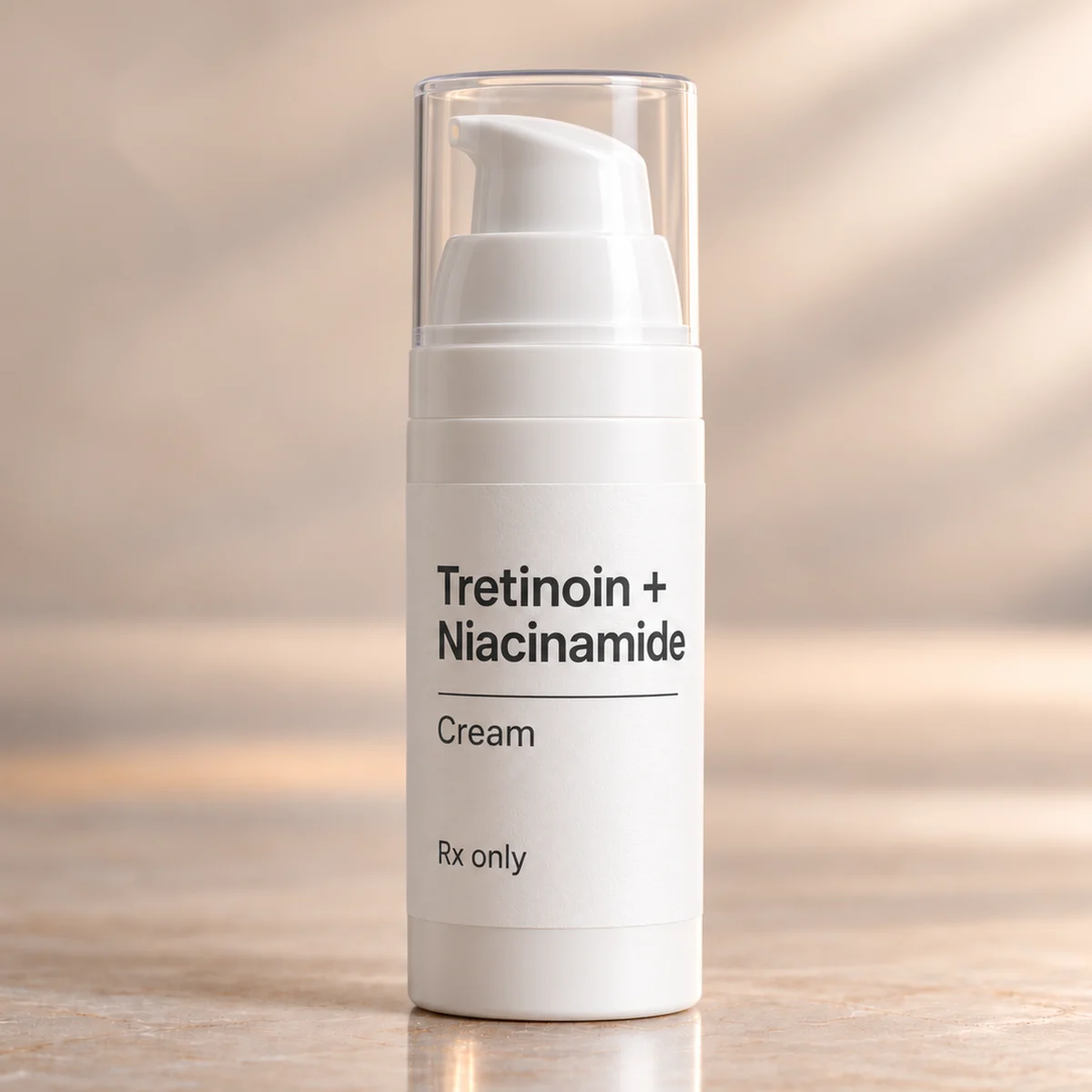
If you are wondering tretinoin before or after moisturizer, the usual answer is: tretinoin first, then moisturizer. This matches how tretinoin is studied and how FDA labeled tretinoin products are typically used: applied to clean, dry skin, with moisturizers used as needed for dryness. If your skin is sensitive, putting moisturizer on first (or using the moisturizer sandwich method) can reduce irritation while you build tolerance. Vitals Vault can help you review options with a licensed clinician and choose a routine you can stick with.
- For most people, tretinoin goes on clean, dry skin before moisturizer.
- If you get stinging or peeling, moisturizer first can buffer tretinoin and improve tolerance.
- Tretinoin commonly causes dryness and irritation early on, so consistency matters more than perfect layering.
- Avoid tretinoin in pregnancy; ask your clinician if you might be pregnant.
Tretinoin before or after moisturizer?
- What tretinoin is
- A topical retinoid (vitamin A derivative) used for acne and photoaging.
- Why order matters
- Moisturizer can reduce irritation by buffering tretinoin contact with skin.
- Biggest driver of results
- Regular use over time, balanced with tolerability, rather than a single perfect routine.
How to choose the right order for your skin
If you tolerate tretinoin well
Apply tretinoin first on clean, dry skin, then moisturize. This is the simplest routine and aligns with how topical tretinoin is generally directed in FDA labeling. If you are not getting irritation, you usually do not need to buffer.
If you are dry or stinging
Try moisturizer before tretinoin to buffer, or use moisturizer both before and after (the sandwich method). Buffering can reduce the intensity of common early side effects like dryness, peeling, and burning. The goal is a routine you can use consistently without having to stop.
If you are new to tretinoin
Expect an adjustment period where irritation is more likely. Many people start by buffering with moisturizer and then move to tretinoin first as their skin adapts. If irritation is persistent or severe, a clinician can help adjust strength, vehicle (cream vs gel), or frequency.
If you use other actives
Be cautious combining tretinoin with other potentially irritating products like exfoliating acids or benzoyl peroxide, especially at the start. Layering multiple actives can increase dryness and redness, which may make it harder to stay consistent. A clinician can help you build a plan that prioritizes tolerability.
If you are pregnant or trying
Avoid using tretinoin if you are pregnant, and talk with your clinician if you might become pregnant. Systemic absorption from topical use is low, but FDA labeling for tretinoin products advises against use in pregnancy due to potential risk. If you need acne or skin treatment during pregnancy, ask about safer alternatives.
Dryness and peeling
Dryness, flaking, and peeling are among the most common tretinoin effects, especially early on. Using a moisturizer and avoiding other irritants can help. If your skin barrier feels compromised (burning with bland products), ask a clinician about adjusting your plan.
Redness and burning
Redness, stinging, or a burning sensation can happen, particularly when starting or after increasing strength. Buffering with moisturizer can reduce irritation for some people. Persistent burning, swelling, or blistering is not expected and should be evaluated.
Severe irritation or swelling
Severe redness, swelling, blistering, or crusting can signal significant irritation or contact dermatitis. Stop using other potential irritants and contact a clinician for guidance. Seek urgent care if you have facial swelling with trouble breathing or signs of a severe allergic reaction.
When to talk to a clinician
You might be pregnant
Check in before continuing tretinoin if you are pregnant, trying to conceive, or breastfeeding. A clinician can help you weigh risks and choose alternatives that fit your goals.
Irritation is not improving
If redness, burning, or peeling is severe or not settling down with buffering and a gentle routine, ask for help. You may need a different strength, a different base (vehicle), or a different schedule.
You are using multiple prescriptions
If you also use topical antibiotics, benzoyl peroxide, or other acne medications, a clinician can help you sequence products to reduce irritation and avoid counterproductive combinations.
You have eczema or very sensitive skin
Underlying skin barrier conditions can make tretinoin harder to tolerate. A clinician can help you decide whether to buffer, use a lower strength, or treat the barrier first.
Pro tips to reduce irritation
Wait for fully dry skin
Applying to damp skin can increase irritation for some people.
Use a bland moisturizer
Fragrance free moisturizers often sting less during the adjustment period.
Prioritize sunscreen daily
Tretinoin can increase sun sensitivity, so daily sunscreen matters.
Avoid stacking irritants
Limit exfoliating acids and scrubs when starting tretinoin.
Be consistent, not aggressive
A tolerable routine used regularly usually beats a harsh routine you quit.
Frequently Asked Questions
Is it better to put tretinoin before or after moisturizer?
For most people, tretinoin goes on clean, dry skin before moisturizer. If you are getting significant irritation, applying moisturizer first can buffer tretinoin and improve tolerability. The best routine is the one you can use consistently.
Moisturizer before or after tretinoin: does it change results?
Moisturizer mainly affects tolerability, not whether tretinoin can work at all. Buffering may reduce irritation and help you stay consistent, which is important for long term results. If you are unsure, ask a clinician to tailor the plan to your skin.
Can I use the moisturizer sandwich method with tretinoin?
Yes. Using moisturizer before and after tretinoin is a common way to reduce dryness and stinging, especially when you are starting. If irritation is severe or persistent, check in with a clinician.
Should I wait between moisturizer and tretinoin?
Many clinicians suggest applying tretinoin to fully dry skin because damp skin can increase irritation. Exact wait times are not specified in FDA labeling, so focus on dryness and comfort. If you are still getting burning, ask about buffering or adjusting strength.
Can I use tretinoin if I am pregnant or trying to conceive?
FDA labeling for topical tretinoin products advises against use in pregnancy due to potential risk. If you are pregnant, trying to conceive, or might be pregnant, talk with a clinician before continuing. They can suggest alternatives that better fit pregnancy safety.