
Tretinoin cream side effects: what to expect
Tretinoin cream side effects are usually dryness, peeling, and irritation. Here is what is common versus serious and when to call a clinician.
Key facts
- Tretinoin + Niacinamide is $43/month (billed $129 every 90 days), charged only after a clinician approves it.
- Answer a few health questions online. A licensed clinician reviews them. If approved, it ships to your door.
- Adults 18 or older. A licensed clinician reviews your health history and decides whether treatment is appropriate for you. Availability depends on the state you live in.


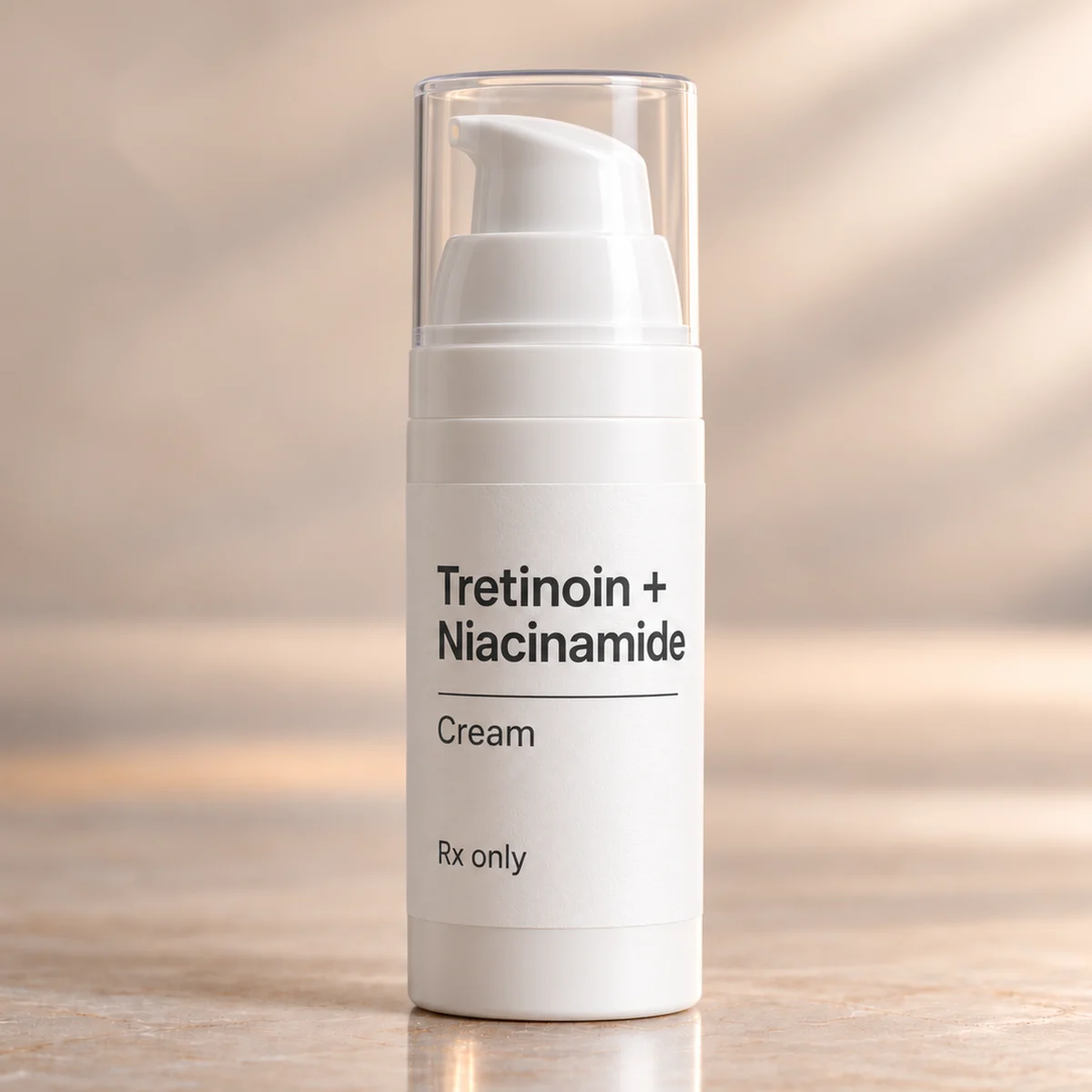
Tretinoin is a topical retinoid used for acne and some types of sun damaged skin. The most common tretinoin cream side effects are irritation where you apply it, such as dryness, peeling, redness, and a burning or stinging feeling. This guide separates common reactions from less common but more serious problems, plus practical ways to reduce irritation. If you want help applying this to your own skin type, other products, and pregnancy plans, Vitals Vault includes a free tool to ask questions and know when to see a clinician.
- Tretinoin cream side effects are most often dryness, peeling, redness, and burning or stinging.
- Irritation is usually worst early on and improves as your skin adjusts.
- Sun sensitivity can increase, so daily sun protection matters.
- Stop and seek care for severe swelling, blistering, or signs of an allergic reaction.
Quick answer: what side effects are most likely
Dryness and peeling
Flaking and tight, dry skin are among the most common tretinoin cream side effects. This is expected because tretinoin increases skin cell turnover. Using a gentle moisturizer and avoiding harsh cleansers can make it more tolerable.
Redness and irritation
Redness, mild swelling, itching, or a warm feeling can happen at the application site, especially when you first start. If irritation is persistent or worsening, a clinician may adjust how often you use it or the formulation.
Burning or stinging
A burning or stinging sensation can occur soon after application. This is more likely if your skin barrier is already irritated or if you use other drying products at the same time. If pain is significant, stop using it and contact a clinician.
Sun sensitivity
Tretinoin can make your skin more sensitive to sunlight, which can increase the chance of sunburn. Daily sunscreen and limiting direct sun exposure are commonly recommended in patient instructions for tretinoin products.
Common vs serious tretinoin cream side effects
Dryness, scaling, flaking
These are among the most frequently reported local reactions with topical tretinoin. They tend to be worse if you also use exfoliating acids, scrubs, or alcohol based toners. A clinician may suggest spacing out irritating products and using a bland moisturizer.
Erythema (redness)
Redness can range from mild pinkness to more noticeable irritation. It is more likely on sensitive areas like around the mouth and nose. If redness is intense or spreading beyond where you apply the medication, check in with a clinician.
Burning, stinging, itching
A brief sting can happen, but ongoing burning or itching can signal that your skin barrier is too irritated. This may be more likely if you apply to wet skin or use other drying acne treatments. If symptoms are severe, stop and seek medical advice.
Worsening acne early on
Some people notice breakouts seem worse at first as clogged pores surface. This does not mean it is failing, but it should not be extreme. If you develop painful cysts, widespread inflammation, or you are unsure whether it is acne or irritation, ask a clinician.
Severe irritation or chemical burn
Rarely, topical retinoids can cause severe redness, swelling, blistering, or crusting, especially with overuse or use on compromised skin. This is a reason to stop using the product and get prompt medical guidance.
Allergic reaction
Seek urgent care for hives, facial or throat swelling, trouble breathing, or severe dizziness. Allergic reactions are uncommon, but they are emergencies when they occur.
When to talk to a clinician or seek urgent care
Call promptly for severe irritation
Contact a clinician if you have intense burning, marked redness, swelling, blistering, or crusting. These can indicate your skin barrier is too inflamed for continued use without changes. Bring a list of all skincare products you use.
Get urgent care for allergy symptoms
Seek urgent care for hives, facial or throat swelling, or trouble breathing. Even if you think it is from a skincare product, these symptoms need immediate evaluation.
Check in if you cannot tolerate it
If dryness and peeling are so uncomfortable that you keep stopping and restarting, a clinician can help you troubleshoot. Options may include changing the vehicle (cream vs gel), lowering strength, or adjusting frequency.
Ask before combining actives
Using tretinoin with other potentially irritating products can increase side effects. Examples include benzoyl peroxide, salicylic acid, alpha hydroxy acids, and physical scrubs. A clinician can help you build a routine that minimizes irritation.
Pro tips to reduce irritation
Start low and slow
Many people do better easing in rather than using it nightly right away.
Moisturize consistently
A fragrance free moisturizer can reduce dryness and peeling.
Avoid harsh add ons
Skip scrubs and strong acids until your skin is stable.
Protect from sun
Use daily sunscreen and limit direct sun exposure.
Do not apply to broken skin
Wait until cuts, sunburn, or eczema flares have healed.
Frequently Asked Questions
What are the most common tretinoin cream side effects?
The most common effects are local skin irritation, including dryness, peeling, redness, and burning or stinging where you apply it. These are expected retinoid effects and often improve as your skin adapts. If irritation is severe, contact a clinician.
How long do tretinoin cream side effects last?
Mild irritation is often most noticeable early in treatment and may lessen as your skin adjusts. The exact timeline varies by strength, how often you use it, and your skin sensitivity. If symptoms keep worsening instead of improving, check in with a clinician.
Can tretinoin cream make acne worse at first?
Yes, some people notice breakouts seem worse early on as clogged pores surface. This can happen alongside dryness and peeling. If you develop severe inflammation, pain, or widespread irritation, ask a clinician to help you tell acne from irritation.
When should I stop tretinoin and seek care?
Stop and contact a clinician if you have severe burning, marked swelling, blistering, or crusting. Seek urgent care for hives, facial or throat swelling, or trouble breathing. These symptoms are not expected and need prompt evaluation.
Is Vitals Vault tretinoin with niacinamide FDA-approved?
If prescribed through Vitals Vault, tretinoin with niacinamide is a compounded medication prepared by a licensed pharmacy for an individual prescription and is not FDA-approved. A licensed clinician reviews your history to decide whether treatment is appropriate. Availability depends on your state.