
Tretinoin 0.1: what it is and how it works
What tretinoin treats, how to start, common side effects like dryness and purging, and how to get a prescription online.
Key facts
- Tretinoin + Niacinamide is $43/month (billed $129 every 90 days), charged only after a clinician approves it.
- Answer a few health questions online. A licensed clinician reviews them. If approved, it ships to your door.
- Adults 18 or older. A licensed clinician reviews your health history and decides whether treatment is appropriate for you. Availability depends on the state you live in.
- A $20 clinician review, refunded if you don’t qualify.


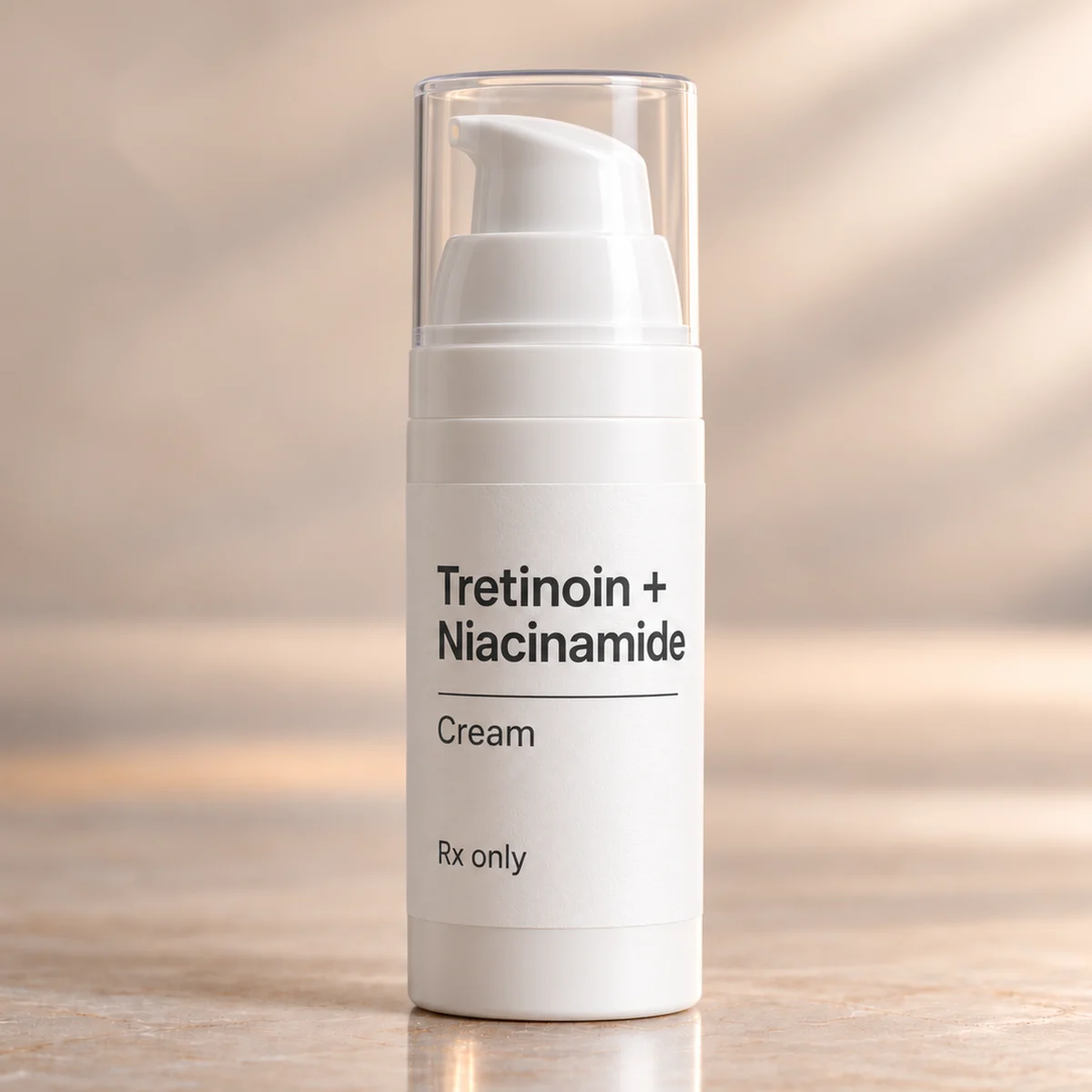
Tretinoin 0.1 refers to a higher strength topical tretinoin, a prescription retinoid (vitamin A derivative) used for acne and for certain signs of sun damaged skin. It can be effective, but it is also more likely to cause dryness, redness, and peeling, especially when you first start. If you are considering tretinoin 0.1, Vitals Vault can connect you with a licensed clinician who reviews your history and helps decide whether a tretinoin plan fits your skin goals and tolerance.
- Tretinoin 0.1 is a high strength topical retinoid used for acne and sun damaged skin.
- Irritation and peeling are common early, especially with stronger strengths.
- Tretinoin can increase sun sensitivity, so daily sunscreen matters.
- Do not use tretinoin during pregnancy; discuss plans to conceive with a clinician.
What tretinoin 0.1 is
A prescription topical retinoid
Tretinoin is a topical retinoid, meaning it is related to vitamin A and is applied to the skin. It is available in different strengths and formulations (such as cream, gel, or lotion). A 0.1% strength is generally considered a higher strength option and can be more irritating for some people.
Used for acne and photoaging
FDA approved tretinoin products are indicated for acne vulgaris and, for certain formulations, for mitigation of fine facial wrinkles and mottled hyperpigmentation from sun exposure when used with a skin care and sun avoidance program. Your clinician can help match the goal (acne vs photoaging) to the right formulation and strength.
This page includes compounded options
Some tretinoin products are compounded, meaning a licensed pharmacy prepares them for an individual prescription and they are not FDA approved. Compounded formulas may combine tretinoin with other ingredients (such as niacinamide) based on a clinician's prescription.
- Drug class
- Topical retinoid (vitamin A derivative)
- Route
- Topical (applied to skin)
- Common labeled uses
- Acne vulgaris; photoaging indications vary by product
How tretinoin works in your skin
Normalizes pore shedding
In acne, tretinoin helps reduce the buildup of dead skin cells that can clog pores and form comedones (blackheads and whiteheads). This is why it is often used as a foundational acne medication, including for maintenance once acne is controlled.
Speeds cell turnover
Tretinoin increases skin cell turnover, which can help fade uneven pigment over time and improve skin texture. This same effect is also why early irritation and peeling are common, especially with higher strengths like 0.1%.
Supports collagen changes with sun protection
For photoaging indications, tretinoin is used alongside sun avoidance and sunscreen. Sun protection matters because UV exposure can worsen irritation and counteract the long term cosmetic benefits that tretinoin is used for.
Who tretinoin 0.1 may be for
Acne with clogged pores
Tretinoin is commonly used for acne that includes blackheads and whiteheads, and it can also be part of a plan for inflammatory acne. Many people use it with other acne treatments (for example benzoyl peroxide or topical antibiotics) when a clinician thinks combination therapy is needed.
Sun damaged skin concerns
Some tretinoin products are indicated to help with fine wrinkles and mottled hyperpigmentation due to sun damage, when combined with a comprehensive skin care and sun avoidance program. Your clinician can clarify whether your specific formulation is intended for this goal.
People who can tolerate retinoids
A 0.1% strength may suit people who have already used lower strength retinoids or who have a plan to manage dryness and irritation. If you have very sensitive skin, eczema, or rosacea, your clinician may recommend a different approach.
Those wanting a tailored formula
Compounded tretinoin with niacinamide may be prescribed when a clinician wants a specific vehicle or combination. Niacinamide is often used in skin care for barrier support and redness, but the compounded combination itself is not FDA approved as a single product.
Who should not use tretinoin
Pregnancy
Do not use topical tretinoin during pregnancy. Even though absorption through the skin is lower than with oral retinoids, tretinoin is related to vitamin A derivatives that can cause birth defects, and product labeling advises avoiding use in pregnancy.
Trying to conceive or breastfeeding
If you are trying to become pregnant, talk with a clinician before starting tretinoin. If you are breastfeeding, discuss risks and benefits and how to minimize infant exposure, since safety data are limited and labeling advises caution.
Allergy to ingredients
Do not use tretinoin if you have had an allergic reaction to tretinoin or to ingredients in a specific formulation. Signs can include swelling, hives, or severe rash, and you should seek urgent care if you have trouble breathing.
Severely irritated or sunburned skin
Avoid applying tretinoin to sunburned, windburned, or eczematous skin until it has healed. Applying tretinoin to already inflamed skin can significantly worsen burning and peeling.
What to expect when starting tretinoin 0.1
Early irritation is common
Dryness, redness, burning or stinging, and peeling are common when you begin tretinoin, and they can be more noticeable with higher strengths. This does not always mean an allergy, but it can mean your skin barrier is stressed and your plan may need adjusting.
Acne may look worse first
Some people notice an initial flare of breakouts as clogged pores surface. If acne is rapidly worsening, painful, or accompanied by significant swelling, check in with a clinician to rule out irritant dermatitis or another reaction.
Sun sensitivity increases
Tretinoin can make your skin more sensitive to sunlight, increasing the risk of sunburn. Daily broad spectrum sunscreen and sun avoidance are typically recommended as part of tretinoin use, including for anti aging indications.
Consistency matters more than intensity
Tretinoin works gradually. Many plans focus on finding the strongest routine you can comfortably stick with, rather than pushing through severe irritation, because ongoing inflammation can lead to setbacks and post inflammatory hyperpigmentation in some skin tones.
| What you notice | What it can mean | What to do next |
|---|---|---|
| Mild dryness and flaking | Expected retinoid irritation | Use gentle cleanser and moisturizer; ask about adjusting frequency. |
| Burning that persists | Barrier irritation or contact dermatitis | Stop other irritants; contact a clinician for guidance. |
| New sunburn easily | Increased photosensitivity | Reinforce sunscreen and sun avoidance; discuss timing and products. |
Side effects and warnings
Dryness and peeling
Dry skin, flaking, and peeling are among the most common effects of topical tretinoin. They are often worse in the first weeks and with higher strengths. A clinician may suggest changes in frequency, vehicle (cream vs gel), or supportive skin care to improve tolerability.
Redness, burning, or stinging
Redness and a burning or stinging sensation can happen, especially after application or when combined with other irritating products. Fragrance, harsh exfoliants, and alcohol based toners can make this worse. If symptoms are severe or persistent, you may need a different plan.
Itching or rash
Itching and rash can be part of irritant dermatitis, but they can also signal an allergic reaction to ingredients in a specific formulation. If you develop swelling, hives, or widespread rash, seek urgent care and contact your prescriber.
Severe skin irritation or blistering
Some people develop significant irritation, swelling, crusting, or blistering, particularly if tretinoin is used on compromised skin or combined with other strong actives. Stop other irritants and contact a clinician promptly to reassess your regimen and rule out contact dermatitis.
Sunburn and photosensitivity
Tretinoin can increase sensitivity to sunlight, making sunburn more likely. Use sun avoidance measures and broad spectrum sunscreen as recommended by your clinician. If you get a sunburn, avoid applying tretinoin to the burned area until healed.
Cost and access
What drives the cost
The main cost drivers are formulation (FDA approved product vs compounded), strength, size, and the dispensing pharmacy. Compounded tretinoin with added ingredients like niacinamide can be priced differently than standard tretinoin products because it is prepared to a specific prescription.
Insurance coverage varies
Insurance coverage for tretinoin often depends on the indication, your plan rules, and whether the product is FDA approved and on formulary. Compounded medications are commonly not covered by insurance because they are not FDA approved products.
Where to see current pricing
If a tretinoin plan is available through Vitals Vault, current prices for the listed product are shown on this page in the price block. A clinician visit and follow up needs can also affect overall cost depending on how care is delivered.
How to get tretinoin 0.1 safely
- 1
Confirm your goal and skin history
Be ready to describe acne type, irritation history, pregnancy plans, and what products you already use.
- 2
Complete a clinician review
A licensed clinician reviews your health history and skin concerns and decides whether tretinoin fits.
- 3
Get a prescription and instructions
If prescribed, follow the clinician and pharmacy directions for how to apply and how to manage irritation.
- 4
Reassess and adjust
Check in if you have severe irritation, persistent rash, or no improvement so the plan can be adjusted.
Frequently Asked Questions
What is tretinoin 0.1 used for?
Tretinoin 0.1 is a higher strength topical retinoid used for acne, and some tretinoin products are also indicated for certain signs of sun damaged skin when used with sun protection. Your clinician can confirm whether a specific formulation is intended for acne, photoaging, or both.
Is tretinoin 0.1 stronger than 0.05?
Yes. A 0.1% strength contains more tretinoin per amount of product than 0.05%, and higher strengths are generally more likely to cause irritation. A clinician can help choose a strength based on your skin sensitivity and goals.
Can you use tretinoin 0.1 during pregnancy?
No. Product labeling advises avoiding tretinoin during pregnancy because retinoids are associated with risk to the fetus. If you are pregnant or planning pregnancy, discuss safer alternatives with a clinician.
What are the most common side effects of tretinoin 0.1?
Common effects include dryness, peeling, redness, and burning or stinging at the application site. These are often most noticeable early on or with higher strengths. Severe blistering, swelling, or hives should be evaluated promptly.
How much does tretinoin 0.1 cost?
Cost depends on the formulation (FDA approved vs compounded), strength, size, and whether insurance covers it. If pricing is available for the product on this page, current prices are shown in the on page price block rather than in the article text.