
Tretinoin cream benefits: what to expect
Tretinoin cream benefits include treating acne and improving sun damaged skin changes over time. Learn who it fits and the side effects.
Key facts
- Tretinoin + Niacinamide is $43/month (billed $129 every 90 days), charged only after a clinician approves it.
- Answer a few health questions online. A licensed clinician reviews them. If approved, it ships to your door.
- Adults 18 or older. A licensed clinician reviews your health history and decides whether treatment is appropriate for you. Availability depends on the state you live in.


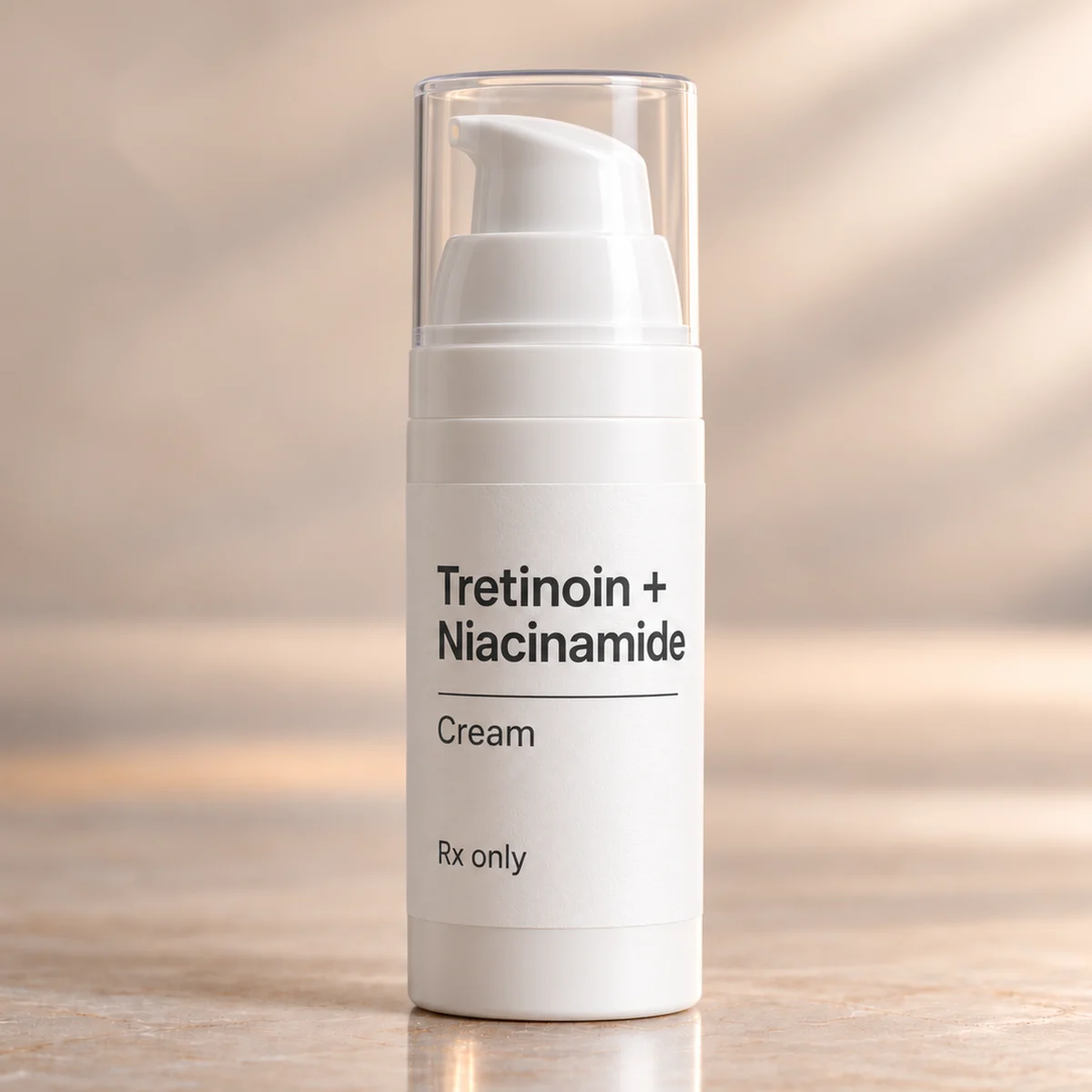
Tretinoin is a prescription topical retinoid used mainly for acne and for certain signs of sun damaged skin (photoaging). The main benefits come from steady use over time, but it is also common to have dryness, redness, or peeling at first. Vitals Vault can connect you with a licensed clinician to review your history and decide whether a tretinoin plan fits, with ongoing support where available.
- Tretinoin cream benefits include treating acne and improving sun damaged skin changes over time.
- Early irritation and peeling are common, especially when you first start or increase strength.
- Results take consistency, and your clinician may adjust strength and schedule to improve tolerability.
- Avoid tretinoin during pregnancy, and use sun protection because tretinoin can increase irritation with sun exposure.
What tretinoin cream is
A prescription retinoid
Tretinoin is a vitamin A related medication (a retinoid) applied to the skin. FDA approved tretinoin creams are indicated for acne vulgaris and, for some products, for mitigation of fine facial wrinkles with sun avoidance and skin care. Your exact indication depends on the product and your clinician’s plan.
Different from OTC retinol
Over the counter retinol and retinaldehyde are related ingredients, but they are not the same as prescription tretinoin. Tretinoin has FDA approved labeling for specific uses and has more predictable potency, which is why it can also be more irritating early on.
Sometimes compounded with other ingredients
Some prescriptions are compounded, meaning a pharmacy prepares a customized formulation for an individual prescription. Compounded tretinoin combinations, such as tretinoin with niacinamide, are not FDA approved, and the exact formula can vary by pharmacy.
- Drug class
- Topical retinoid (tretinoin)
- FDA approved uses (by product)
- Acne vulgaris; mitigation of fine facial wrinkles with sun avoidance and skin care
- How it is used
- Applied to affected skin as directed by a clinician
- Key limitation
- Compounded combinations are not FDA approved
How tretinoin works for skin
Normalizes skin cell turnover
Tretinoin changes how skin cells grow and shed. In acne, this helps reduce clogged pores (comedones) that can lead to blackheads, whiteheads, and inflammatory breakouts. This is why benefits build with consistent use rather than after a single application.
Helps with sun damage changes
For photoaging, tretinoin can improve the look of fine wrinkles and mottled hyperpigmentation as part of a broader plan that includes sun avoidance and skin care. It does not replace sunscreen, and sun exposure can worsen irritation while you are using it.
Niacinamide may support tolerance
Niacinamide is a form of vitamin B3 used in skin care for barrier support and redness. When combined with tretinoin in a compounded product, it may be included to improve comfort, but the evidence and labeling for specific compounded combinations are not the same as FDA approved single ingredient products.
Who tretinoin cream may be for
People with acne
Tretinoin is commonly prescribed for acne vulgaris, including comedonal acne and mixed acne. It is often used as part of a routine that may also include benzoyl peroxide, topical antibiotics, or other acne treatments, depending on acne type and skin sensitivity.
People targeting photoaging
Some tretinoin products are indicated to help mitigate fine facial wrinkles when used along with sun avoidance and a skin care program. If your main concern is discoloration or texture, your clinician may discuss whether tretinoin is the best fit or whether other options are more appropriate.
People who can commit to consistency
The main benefits of tretinoin are gradual. If you can follow a steady plan, tolerate early irritation, and use sun protection, you are more likely to see meaningful improvement over time.
People needing a tailored formula
If you have sensitive skin or need a combination approach, a clinician may consider a compounded formula such as tretinoin with niacinamide. Compounded medications are prepared for an individual prescription and are not FDA approved.
Who should not use tretinoin, or should use extra caution
Pregnancy
Topical tretinoin is generally avoided during pregnancy because retinoids are associated with fetal risk, and product labeling advises against use in pregnancy. If you are pregnant, think you might be pregnant, or are trying to conceive, discuss safer alternatives with a clinician.
Allergy to ingredients
Do not use tretinoin if you have had a hypersensitivity reaction to tretinoin or to components of the specific product. If you develop hives, swelling, or trouble breathing, seek urgent care.
Eczema or very irritated skin
If you have eczema, a compromised skin barrier, or active irritation, tretinoin can worsen burning and peeling. A clinician may recommend stabilizing the skin first or using a different approach.
High sun exposure
If you cannot reliably use sun protection or you have frequent outdoor exposure, tretinoin may be harder to tolerate. Sun exposure can increase irritation, and photoaging treatment labeling emphasizes sun avoidance and protective skin care.
Using other irritating topicals
Combining tretinoin with other potentially irritating products can increase dryness and stinging. Examples include abrasive cleansers, alcohol based toners, chemical exfoliants, and some acne medications. A clinician can help you space products and choose compatible options.
What to expect from tretinoin cream benefits over time
Early adjustment period
It is common to notice dryness, redness, peeling, or a stinging sensation when you first start tretinoin. Some people also notice acne seeming worse before it looks better as clogged pores clear. Your clinician may adjust the plan to improve comfort while you stay consistent.
Gradual acne improvement
For acne, tretinoin is typically used long term as part of a routine. Benefits usually build with steady use and good skin care habits, including gentle cleansing and moisturizer use. If acne is moderate to severe, you may need additional treatments alongside tretinoin.
Photoaging changes take time
For fine wrinkles and uneven tone related to sun damage, improvement is gradual and depends on ongoing sun avoidance and protective skin care. Tretinoin is not a spot treatment, and you generally assess progress over months, not days.
Sun protection matters
Tretinoin can make your skin more prone to irritation from sun and wind. Daily sun protection and avoiding tanning are part of getting benefits while minimizing setbacks from irritation.
| Goal | What tretinoin may help with | What else often matters |
|---|---|---|
| Acne | Reduces clogged pores and helps prevent new comedones | Gentle routine, moisturizer, and clinician guided combination therapy when needed |
| Fine wrinkles from sun damage | Mitigates fine facial wrinkles with sun avoidance and skin care | Daily sun protection, avoiding tanning, and consistent use |
| Uneven tone from sun damage | May improve mottled hyperpigmentation as part of photoaging care | Sun protection and clinician evaluation for other pigment treatments |
Side effects and risks
Dryness and peeling
Dryness and peeling are among the most common tretinoin side effects, especially early on. Using a gentle cleanser and a bland moisturizer can help, and your clinician may adjust frequency or strength if irritation is limiting.
Redness, burning, or stinging
Mild redness, burning, or stinging can happen after application. This is often worst in the first weeks and can improve as your skin adapts. Tell a clinician if symptoms are severe, persistent, or worsening.
Itching or irritation flare
Some people notice itching or an irritation flare, especially if they also use exfoliants, astringents, or other acne products. Simplifying the routine and spacing potentially irritating products can improve tolerability.
Sun sensitivity and sunburn risk
Tretinoin can increase irritation from sun exposure, and product labeling for photoaging emphasizes sun avoidance and protective skin care. Use sun protection and avoid intentional tanning while on tretinoin.
Severe skin reaction
Rarely, tretinoin can cause severe redness, swelling, blistering, or crusting that may require medical evaluation. Stop applying and contact a clinician promptly if you develop severe irritation or signs of skin injury.
Allergic reaction
A true allergy is uncommon but can be serious. Get urgent care for facial or throat swelling, trouble breathing, or widespread hives.
Cost and access
What drives cost
Your cost depends on whether the product is an FDA approved tretinoin cream or a compounded formulation, the strength and quantity prescribed, and the pharmacy used. Compounded products can vary in price because they are prepared for an individual prescription.
Insurance and coverage
Insurance coverage varies by plan and by indication. Acne treatment is more commonly covered than photoaging treatment, which may be considered cosmetic by some insurers. A pharmacy can tell you whether prior authorization or step therapy applies.
Where to see current pricing
If pricing is available for this treatment through Vitals Vault, current prices are shown on this page in the price block. Your final cost can still vary based on your prescription details and fulfillment.
How to get tretinoin safely
- 1
Confirm your goal and skin history
Be ready to share what you want to treat, your skin type, and any past reactions to retinoids or acne products.
- 2
Complete a clinician review
A licensed clinician reviews your health history, medications, and pregnancy status to decide whether tretinoin fits.
- 3
Get a prescription and plan
If appropriate, you receive a prescription with clinician guidance on how to use it and what to do if irritation occurs.
- 4
Follow up and adjust if needed
Check in if side effects are limiting or if your results are not tracking with your goal. Your clinician may adjust the regimen.
Frequently Asked Questions
What are tretinoin cream benefits for acne?
Tretinoin helps treat acne by reducing clogged pores and helping prevent new comedones from forming. Improvement is gradual and often comes with early dryness or peeling. A clinician can tell you whether you also need other acne treatments.
Does tretinoin help with wrinkles or sun damage?
Some tretinoin products are indicated to help mitigate fine facial wrinkles when used with sun avoidance and a skin care program. Benefits are gradual and depend heavily on consistent sun protection. Your clinician can help match the product and plan to your goals.
Is purging normal when starting tretinoin?
Some people notice acne looks worse before it improves as existing clogged pores come to the surface. This can overlap with irritation, which is also common early on. If breakouts or irritation are severe or persistent, check in with a clinician.
Can I use tretinoin cream while pregnant?
Tretinoin is generally avoided during pregnancy, and product labeling advises against use in pregnancy. If you are pregnant, trying to conceive, or could become pregnant, discuss safer alternatives with a clinician.
How much does tretinoin cost through Vitals Vault?
Cost depends on whether the prescription is FDA approved tretinoin or a compounded formula, the strength and quantity, and the pharmacy used. If pricing is available for this treatment, current prices are shown on this page in the price block. A clinician still has to decide if it fits you.