
Over the counter tretinoin: can you buy it?
Tretinoin is prescription only in the US. See which OTC retinoids are sold instead, how tretinoin compares, and how to get a prescription online.
Key facts
- Tretinoin + Niacinamide is $43/month (billed $129 every 90 days), charged only after a clinician approves it.
- Answer a few health questions online. A licensed clinician reviews them. If approved, it ships to your door.
- Adults 18 or older. A licensed clinician reviews your health history and decides whether treatment is appropriate for you. Availability depends on the state you live in.


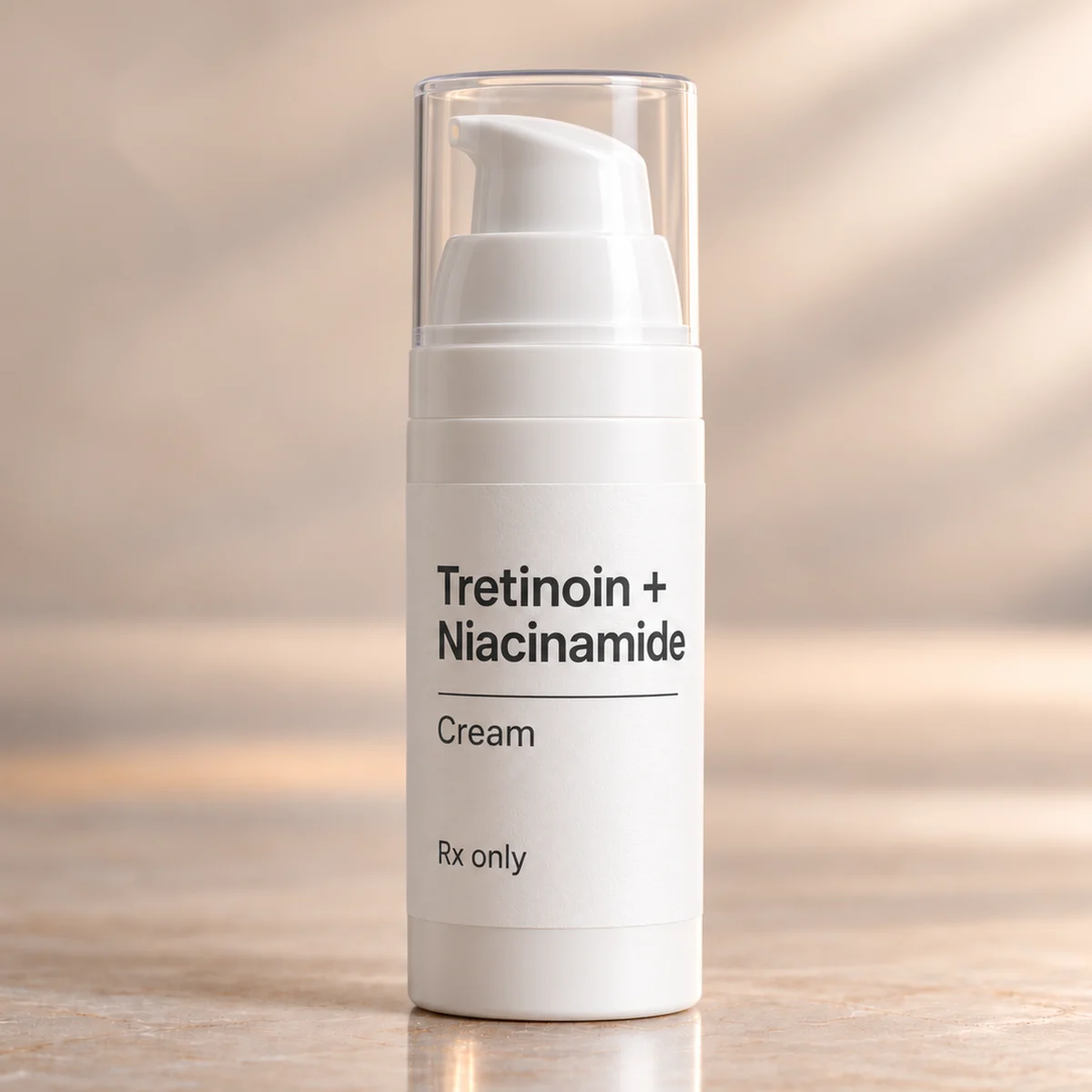
If you are searching for over the counter tretinoin, the key point is simple: tretinoin is a prescription medication in the United States. Over the counter retinol products are different and usually less potent. This page explains what tretinoin is, what results and side effects to expect, and where to get it safely. If you are considering a prescription plan, Vitals Vault can connect you with a licensed clinician who reviews your history and decides what fits.
- Over the counter tretinoin is not sold in the US because tretinoin is prescription only.
- Tretinoin is a topical retinoid used for acne and some forms of sun damaged skin.
- Irritation and peeling are common early on, especially with frequent use.
- Avoid use in pregnancy and discuss breastfeeding with a clinician.
- If you want tretinoin, the safe route is a clinician visit and a prescription.
What tretinoin is (and what OTC products are)
A prescription retinoid
Tretinoin is a topical retinoid, a vitamin A derivative used on the skin. In the US, tretinoin products are prescription only, so you cannot legally buy true tretinoin over the counter. If a product claims “OTC tretinoin,” it is usually something else or it is not an approved US product.
Not the same as retinol
Over the counter retinol and retinaldehyde are different ingredients that can convert to retinoic acid in the skin, but they are not the same as prescription tretinoin. They may be less irritating for some people, but they also may be less effective for certain goals. A clinician can help you choose between OTC retinoids and prescription tretinoin.
Common prescription forms
FDA approved tretinoin is available in different topical forms, including creams, gels, and lotions, and in multiple strengths depending on the product. Some formulations are designed to reduce irritation compared with older products. Your clinician chooses a form and strength based on your skin type, goals, and tolerability.
Compounded combinations exist
Some prescriptions are compounded, meaning a pharmacy prepares a customized formulation for an individual prescription. For example, tretinoin may be combined with other ingredients such as niacinamide. Compounded medications are not FDA approved, and quality depends on the dispensing pharmacy.
How tretinoin works for skin
Speeds skin cell turnover
Tretinoin binds to retinoic acid receptors in skin cells and changes gene expression. In plain terms, it helps normalize how skin cells grow and shed, which can keep pores from clogging. This is one reason it is used for acne.
Helps prevent comedones
Comedones are clogged pores that can become blackheads or whiteheads. Tretinoin helps reduce the formation of microcomedones, the early stage of clogged pores. That preventive effect is why consistent use matters more than spot treating.
Improves photoaging changes
Some tretinoin products are FDA approved for use as an adjunct in the treatment of fine wrinkles, mottled hyperpigmentation, and tactile roughness of facial skin due to sun damage, along with a comprehensive skin care and sun avoidance program. It is not a substitute for sunscreen or sun protective behavior.
Niacinamide support (when included)
Niacinamide (vitamin B3) is often used in skin care for barrier support and to reduce visible redness for some people. When it is included in a compounded formula with tretinoin, the goal is often to improve tolerability, but the evidence base depends on the exact formulation and has not been evaluated as an FDA approved combination product.
Who tretinoin may be for
Acne prone skin
Topical tretinoin is commonly prescribed for acne, especially comedonal acne with blackheads and whiteheads. It is often used as part of a broader acne plan that may include benzoyl peroxide or topical antibiotics. A clinician can help match the plan to acne type and skin sensitivity.
Sun damaged skin changes
Some tretinoin formulations are indicated as an adjunct for certain signs of photoaging, such as fine wrinkles and uneven pigmentation, when used with sun protection and a comprehensive skin care program. People with significant sun exposure history may discuss whether tretinoin fits their goals and tolerance.
People who can commit to routine
Tretinoin works best when used consistently over time. Early irritation is common, so many people do better with a plan that includes gradual introduction and moisturizer support. If you prefer a “quick fix” product, tretinoin may feel frustrating at first.
Those who need prescription strength
If OTC retinol products have not helped or you want a prescription option with FDA approved indications and labeling, tretinoin may be worth discussing. A clinician can also help you compare tretinoin with other prescription retinoids such as adapalene or tazarotene.
Who should not use tretinoin (or should use extra caution)
Pregnancy
Do not use tretinoin during pregnancy unless your clinician specifically advises it. Tretinoin is related to retinoids, a drug class with known fetal risk when taken systemically, and product labeling advises avoiding use in pregnancy. If you could become pregnant, discuss contraception and safer alternatives with your clinician.
Breastfeeding
If you are breastfeeding, ask your clinician whether tretinoin is appropriate and how to minimize infant exposure. Labeling for topical tretinoin products generally advises caution because it is not known whether topical use results in enough absorption to affect a nursing infant. Do not apply to areas that could contact an infant’s skin or mouth.
Very sensitive or inflamed skin
If you have eczema, rosacea flares, or severely irritated or sunburned skin, tretinoin may worsen burning and peeling. Your clinician may recommend stabilizing the skin barrier first or choosing a different approach. Using tretinoin on compromised skin can increase irritation and reduce adherence.
High sun exposure without protection
Tretinoin can increase skin sensitivity to sunlight. If you cannot reliably use sun protection and avoid tanning, you may be more likely to experience irritation and sunburn. Discuss your work and lifestyle exposure with your clinician before starting.
Certain irritating products
Using tretinoin alongside other irritating topicals can increase redness and peeling. Examples include abrasive cleansers, alcohol based astringents, strong exfoliants, and other retinoids. A clinician or pharmacist can help you build a routine that reduces overlapping irritation.
What to expect when you start tretinoin
Early irritation is common
Dryness, redness, burning, stinging, and peeling are among the most common early effects of topical tretinoin. Many people find these improve as the skin adapts, especially with a clinician guided routine. If irritation is severe or persistent, your clinician may adjust frequency, strength, or vehicle.
Acne may look worse first
Some people notice an early flare of breakouts when starting tretinoin, often described as “purging.” This can happen as clogged pores surface, but not every breakout is purging. If acne is rapidly worsening, painful, or scarring, contact your clinician to reassess the plan.
Consistency matters
Tretinoin is not a spot treatment. It is typically used on the affected area to prevent new clogged pores and gradually improve texture and tone. Skipping around based on daily skin appearance often leads to more irritation and less benefit.
Sun protection is part of treatment
Tretinoin can increase sensitivity to sunlight, and sun exposure can worsen irritation and uneven pigmentation. Product labeling for photoaging indications emphasizes use alongside a comprehensive skin care and sun avoidance program. Daily sunscreen and protective clothing are usually part of a safe plan.
| Option | What it is | How you get it | Typical tradeoff |
|---|---|---|---|
| Prescription tretinoin | Topical retinoic acid (retinoid) | Prescription only | Often more effective, but irritation risk can be higher |
| OTC retinol | Retinoid precursor that converts in skin | Over the counter | Often gentler, but may be less potent |
| OTC adapalene 0.1% gel | Topical retinoid (different molecule) | Over the counter in the US | May be an option for acne; still can irritate |
Tretinoin side effects and warnings
Dryness and peeling
Dryness, peeling, and flaking are among the most common effects, especially in the first weeks. Using a gentle cleanser and a fragrance free moisturizer can help support the skin barrier. If peeling is severe, your clinician may recommend changing frequency or formulation.
Redness, burning, or stinging
Redness and a burning or stinging sensation can occur, particularly with higher strength products or sensitive skin. Avoiding other irritating products and protecting skin from wind and sun can reduce symptoms. Contact your clinician if pain is significant or worsening.
Itching or irritation
Itching and general irritation can happen as your skin adjusts. Sometimes this is a sign that the routine is too aggressive or that another product in your regimen is contributing. A clinician can help you simplify your routine and choose a better tolerated vehicle.
Sun sensitivity and sunburn
Tretinoin can make your skin more sensitive to sunlight, increasing the risk of sunburn. Sun protection is important even on cloudy days, and tanning beds should be avoided. If you develop a sunburn, ask your clinician how to pause and restart safely.
Severe skin reaction
Rarely, people can develop severe irritation with swelling, blistering, or crusting. This can be more likely if tretinoin is combined with other irritating products or applied to compromised skin. Stop and contact a clinician promptly if you have severe pain, blistering, or significant swelling.
Allergic reaction
Allergic reactions are uncommon but can occur. Get urgent care for trouble breathing, facial or throat swelling, or widespread hives. If you suspect an allergy to tretinoin or an ingredient in the vehicle, a clinician can help you choose an alternative.
Cost and access: what affects price and availability
Prescription requirement
Because tretinoin is prescription only, access starts with a clinician evaluation. That visit determines whether tretinoin is appropriate and which formulation makes sense for your skin and goals. This is also where you can discuss pregnancy risk, irritation history, and other products you use.
Formulation and strength
Costs can vary based on the specific product form (cream, gel, lotion), strength, and quantity. Some branded or newer vehicles may cost more than older formulations. If you are using a compounded combination such as tretinoin with niacinamide, pricing and coverage can differ from FDA approved products.
Insurance coverage varies
Insurance may cover tretinoin for certain indications, but coverage rules vary by plan and by whether the prescription is for acne or for photoaging. Prior authorization or step therapy may apply. If you are paying cash, the pharmacy and formulation can be major drivers of out of pocket cost.
Where prices are shown here
If you are viewing a treatment plan on this page, current prices are shown in the price block. The exact total depends on the plan and what a clinician prescribes. Do not rely on third party “OTC tretinoin” listings, which may not be legitimate US products.
How to get tretinoin safely
- 1
Decide what you are treating
Be clear whether your goal is acne, texture, dark spots, or photoaging changes so a clinician can match options.
- 2
Complete a clinician evaluation
A licensed clinician reviews your health history, skin history, and current products to decide if tretinoin fits.
- 3
Fill the prescription through a pharmacy
If prescribed, you will receive an FDA approved product or a compounded prescription, depending on the plan.
- 4
Follow the plan and check in
Use the medication exactly as prescribed and contact your clinician if irritation is severe or persistent.
Frequently Asked Questions
Where to get tretinoin?
In the US, tretinoin is prescription only, so you get it through a clinician visit and a prescription filled by a pharmacy. Be cautious with sites advertising “over the counter tretinoin,” since true tretinoin is not sold OTC.
Is there OTC tretinoin?
No. OTC tretinoin is not available in the United States because tretinoin is a prescription medication. OTC retinol or OTC adapalene are different products that may be alternatives for some people.
Can you buy over the counter tretinoin in the US?
No. FDA approved tretinoin products are prescription only in the US. If you see “over the counter tretinoin” listings, they are typically mislabeled OTC retinoids or products from outside regulated channels.
Is tretinoin safe during pregnancy or breastfeeding?
Avoid tretinoin during pregnancy unless your clinician specifically advises it. If you are breastfeeding, discuss risks and ways to minimize exposure with your clinician, since it is not known whether topical use could affect a nursing infant.
How much does tretinoin cost?
Cost depends on the formulation, strength, pharmacy, and whether insurance covers it for your indication. If a price block is shown on this page, it displays current prices for the treatment option listed, without you needing to guess from third party listings.