
Tretinoin gel: what it is and how it works
Tretinoin gel is a topical retinoid used mainly for acne. See how it works, who it fits, what to expect, the side effects, and access.
Key facts
- Tretinoin + Niacinamide is $43/month (billed $129 every 90 days), charged only after a clinician approves it.
- Answer a few health questions online. A licensed clinician reviews them. If approved, it ships to your door.
- Adults 18 or older. A licensed clinician reviews your health history and decides whether treatment is appropriate for you. Availability depends on the state you live in.
- A $20 clinician review, refunded if you don’t qualify.


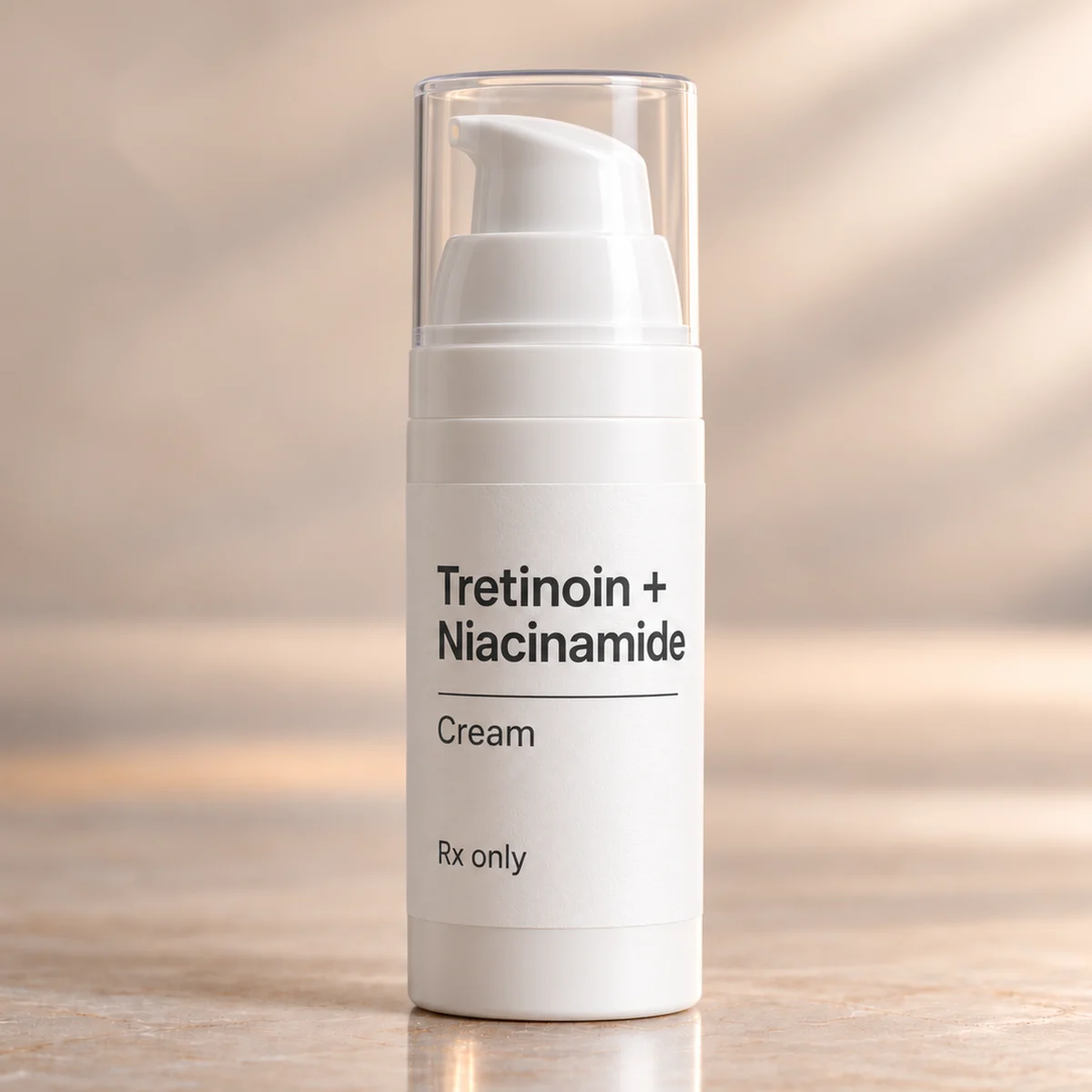
Tretinoin gel is a prescription vitamin A derivative (a retinoid) applied to the skin, most often for acne. It helps keep pores from clogging and can also improve uneven texture and post-acne marks over time, but it commonly causes dryness and irritation at first. If you are considering tretinoin gel through Vitals Vault, a licensed clinician reviews your health history and skin goals to decide whether it fits, with guidance on how to use it safely.
- Tretinoin gel is a prescription topical retinoid used mainly to treat acne.
- Irritation, dryness, and peeling are common early on and often improve with time.
- It can make your skin more sensitive to sun, so daily sun protection matters.
- Do not use it if you are pregnant unless your clinician specifically advises it.
What tretinoin gel is
A topical retinoid
Tretinoin is a prescription retinoid (related to vitamin A) that you apply to the skin. In FDA-approved products, it is available in gel and cream formulations and in different strengths. Your clinician chooses the formulation and strength based on your skin type, acne pattern, and tolerance.
Used mainly for acne
FDA-approved tretinoin products are indicated for acne vulgaris (common acne). Some clinicians also use topical retinoids for photoaging (sun-related fine lines and uneven tone), but that depends on the specific product and your situation. Ask your clinician what the goal is for your plan.
Gel versus cream basics
Gels often feel lighter and can be preferred for oilier skin, while creams can feel more moisturizing for drier or more sensitive skin. Both can irritate, especially early in treatment. The best choice is the one you can use consistently with manageable side effects.
Compounded combinations exist
Some prescriptions are compounded to combine tretinoin with other ingredients, such as niacinamide. Compounded medications are prepared by a licensed pharmacy for an individual prescription and are not FDA-approved. Your prescriber and the dispensing pharmacy provide the specific product instructions.
- Drug class
- Topical retinoid (vitamin A derivative)
- Route
- Applied to the skin (topical)
- Common FDA-approved use
- Acne vulgaris (varies by product labeling)
- Key early tradeoff
- More irritation early, clearer pores over time
How tretinoin gel works
Helps prevent clogged pores
Acne often starts when dead skin cells and oil block a pore (a comedone). Tretinoin changes how skin cells grow and shed, which helps keep pores from plugging. That is why it is especially useful for blackheads and whiteheads.
Reduces acne lesions over time
By normalizing the lining of the pore and reducing comedone formation, tretinoin can lower the number of acne lesions with consistent use. It is not a spot treatment for a single pimple. Most people need a sustained routine to see the full benefit.
Can improve texture and tone
Topical retinoids can improve rough texture and uneven pigmentation that follows acne. Some tretinoin products are also labeled for photoaging, but acne is the most common indication. Your clinician can clarify what changes are realistic for your skin.
Irritation is part of the mechanism
The same effects that speed up skin cell turnover can cause redness, peeling, and stinging, especially when you first start. This is sometimes called retinoid dermatitis. Adjusting application frequency, using moisturizer, and avoiding other irritants can help.
Who tretinoin gel is for
Comedonal acne
Tretinoin is often a strong fit when your acne is mostly blackheads and whiteheads, because it targets clogged pores. It can also be part of a plan for mixed acne. Your clinician may pair it with other acne treatments depending on inflammation and breakouts.
Mild to moderate acne
Many people with mild to moderate acne use topical retinoids as a foundation treatment. If acne is severe, scarring, or not responding, you may need additional prescription options. A clinician can help you decide what level of care matches your acne.
Oily or acne-prone skin
Gel formulations can be appealing if you dislike heavier creams or feel greasy with moisturizers. That said, gel can feel more drying for some people. The right formulation is the one you can tolerate and use consistently.
People who can commit to sun protection
Tretinoin can increase sensitivity to sunlight, and sun exposure can worsen irritation and discoloration. Daily broad-spectrum sunscreen and other sun-protective habits are part of using tretinoin safely. If you cannot reliably protect your skin from sun, discuss alternatives.
Who should not use tretinoin gel
Pregnancy
Avoid tretinoin during pregnancy unless your clinician specifically recommends it. While tretinoin is applied to the skin, retinoids as a class raise concern in pregnancy, and product labeling advises against use. If you are pregnant or trying to conceive, tell your clinician before starting.
Allergy to ingredients
Do not use tretinoin if you have had an allergic reaction to tretinoin or any ingredient in the product. Signs can include swelling, hives, or severe rash. Seek urgent care for trouble breathing or facial or throat swelling.
Severely irritated or sunburned skin
Do not apply tretinoin to sunburned, windburned, or severely irritated skin. Using it on compromised skin can worsen burning and peeling. Wait until the skin barrier recovers and ask your clinician how to restart safely.
Certain eczema flares
If you have eczema (atopic dermatitis) or very sensitive skin, tretinoin can trigger significant irritation. It is not automatically off-limits, but it often requires a cautious plan and close follow-up. Discuss your history of flares and triggers with your clinician.
What to expect when starting tretinoin gel
Early irritation is common
Dryness, peeling, redness, and stinging are common early on, especially in the first weeks. This does not always mean the medication is not working. Your clinician may recommend a slower start, moisturizer use, or spacing out other active products.
Acne can look worse first
Some people notice a temporary flare of breakouts when starting a retinoid, sometimes called purging. This can happen as clogged pores come to the surface. If breakouts are severe, painful, or persist, check in with your clinician to reassess the plan.
Consistency matters more than intensity
Using tretinoin consistently, as prescribed, is usually more effective than trying to push through severe irritation. Overuse can damage the skin barrier and lead to more redness and peeling. If you are struggling, ask about adjusting frequency or formulation.
Sun protection is part of treatment
Tretinoin can increase sun sensitivity, and sun exposure can worsen irritation and hyperpigmentation. Daily broad-spectrum sunscreen and protective clothing help you stay on treatment. If you get a sunburn, pause use and contact your clinician for guidance.
Other products may need adjusting
Harsh cleansers, scrubs, alcohol-based toners, and other irritating acne products can make tretinoin harder to tolerate. Your clinician may recommend simplifying your routine while you adjust. Bring a list of your current products to your visit.
Side effects and warnings
Dryness and peeling
Dryness, scaling, and peeling are among the most common effects of topical tretinoin, especially early in treatment. Using a gentle cleanser and a bland moisturizer can help reduce discomfort. If peeling becomes severe or painful, contact your clinician.
Redness, burning, or stinging
Mild to moderate redness and a burning or stinging sensation can occur, particularly in the first weeks. Irritation is more likely if you use other drying products or apply to damp skin. If you develop intense burning, swelling, or blistering, stop and seek medical advice.
Worsening irritation with sun
Tretinoin can increase sensitivity to sunlight, and sun exposure can worsen redness and peeling. Use broad-spectrum sunscreen and other sun protection as directed by your clinician. Avoid tanning beds while using tretinoin.
Skin color changes
Some people develop temporary darkening or lightening of the skin, especially if irritation is significant or if there is sun exposure. This can be more noticeable in deeper skin tones. If you notice persistent discoloration, ask your clinician about adjusting the plan.
Allergic reaction
Allergic reactions are uncommon but can be serious. Stop using the product and seek urgent care for facial or throat swelling, trouble breathing, or widespread hives. Report less severe rash or swelling to your clinician promptly.
Cost and access
What drives the cost
The main drivers are whether the product is FDA-approved or compounded, the strength and amount dispensed, and whether your plan includes clinician follow-up. Pharmacy pricing can vary by location and supply. Current prices, when available, are shown on this page in the price block.
Insurance and coverage
Coverage depends on your insurer, your diagnosis, and the specific product and formulation. Some plans cover FDA-approved tretinoin for acne but may not cover compounded combinations. Your clinician or pharmacy can help you understand what documentation is needed.
Access and state rules
Prescription access requires a clinician evaluation. If you are using a telehealth service, availability can depend on the state you live in and local prescribing rules. If a product is compounded, it is prepared by a licensed pharmacy for an individual prescription.
How to get tretinoin gel
- 1
Start with a clinician visit
Share your acne history, skin type, pregnancy status, and current products so a clinician can decide if tretinoin fits.
- 2
Review your treatment plan
If prescribed, your clinician will explain how often to apply it, how to reduce irritation, and what to avoid.
- 3
Fill the prescription
Your prescription may be filled as an FDA-approved product or as a compounded formulation, depending on what is prescribed.
- 4
Follow up if problems come up
Check in if irritation is severe, acne worsens significantly, or you think you may be pregnant while using tretinoin.
Frequently Asked Questions
What is tretinoin gel used for?
Tretinoin gel is primarily used to treat acne vulgaris by helping prevent clogged pores. Clinicians may also use topical retinoids for other skin goals, but the indication depends on the specific product and your plan.
How long does tretinoin gel take to work?
Tretinoin gel works gradually, and improvement is usually assessed over weeks, not days. Early irritation can happen before benefits are obvious, so follow-up with your clinician is important if you are not tolerating it.
Can tretinoin gel make acne worse at first?
Yes. Some people notice a temporary flare when starting tretinoin gel as clogged pores surface, sometimes called purging. If breakouts are severe, painful, or persistent, contact your clinician to reassess the plan.
Is tretinoin gel safe during pregnancy?
Product labeling generally advises avoiding topical tretinoin during pregnancy. If you are pregnant, trying to conceive, or become pregnant while using it, tell your clinician right away so they can guide next steps.
How much does tretinoin gel cost?
Cost depends on the formulation (FDA-approved versus compounded), strength, amount dispensed, and whether your plan includes clinician follow-up. If a price block is shown on this page, it reflects current catalog pricing for the listed product.