
Tretinoin: what it is, uses, and how to get it
Tretinoin is a prescription topical retinoid for acne. See who it is for, what to expect, the side effects, and how access and cost work.
Key facts
- Tretinoin + Niacinamide is $43/month (billed $129 every 90 days), charged only after a clinician approves it.
- Answer a few health questions online. A licensed clinician reviews them. If approved, it ships to your door.
- Adults 18 or older. A licensed clinician reviews your health history and decides whether treatment is appropriate for you. Availability depends on the state you live in.
- A $20 clinician review, refunded if you don’t qualify.


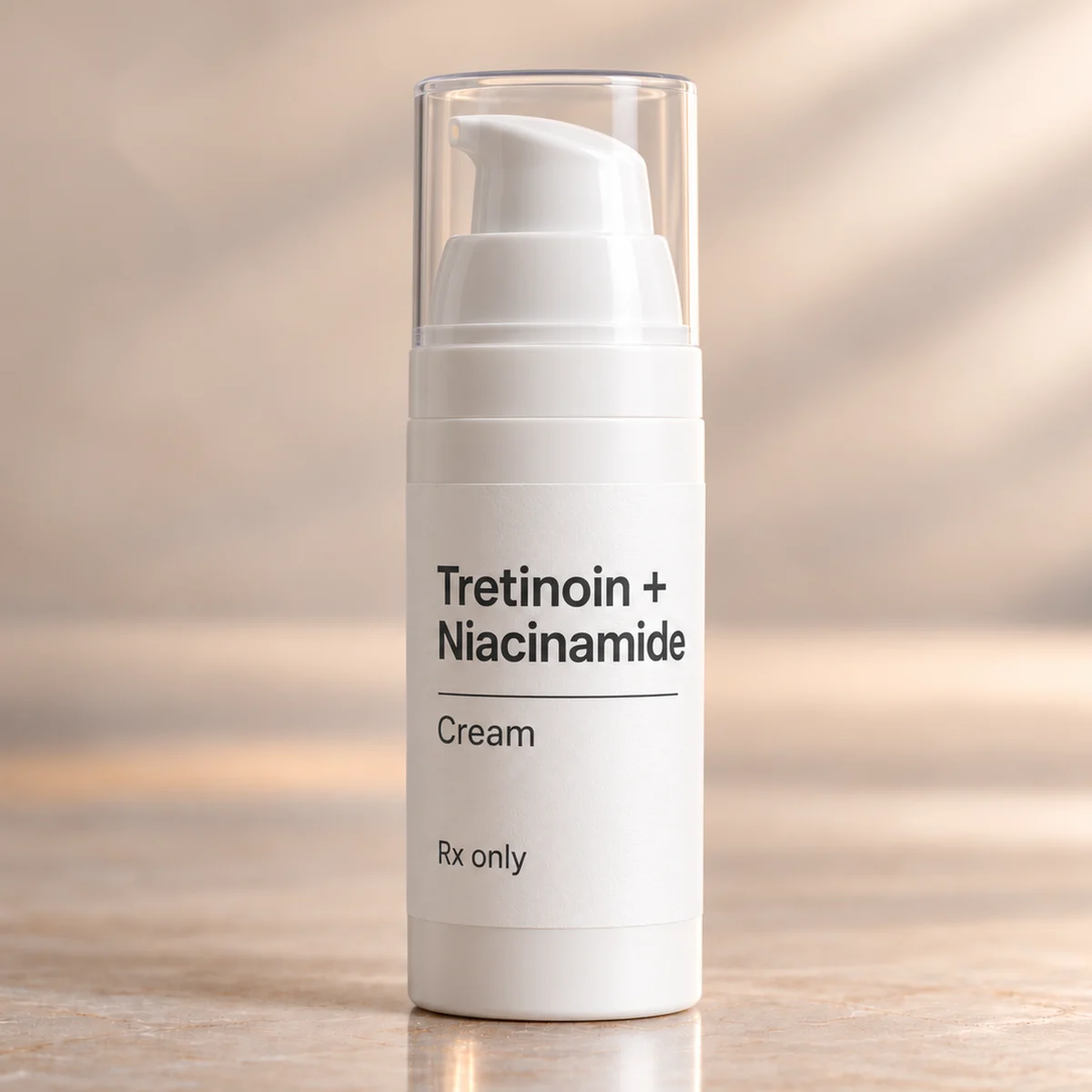
Tretinoin is a prescription vitamin A derivative (a topical retinoid) used most often to treat acne and help prevent new breakouts. It can also be prescribed for certain types of sun damaged skin, depending on the product and your clinician’s goals. This page explains what tretinoin does, what to expect, and how to get it safely. If you are considering a compounded option such as tretinoin with niacinamide, Vitals Vault can connect you with a licensed clinician to review whether it fits your skin and health history.
- Tretinoin is a prescription topical retinoid used mainly for acne.
- Irritation and dryness are common early, and sun sensitivity can increase.
- It is generally avoided during pregnancy because retinoids can harm a fetus.
- Results take consistent use, and acne may look worse before it looks better.
- Cost depends on formulation, strength, pharmacy, and insurance coverage.
What tretinoin is
A topical retinoid
Tretinoin is a retinoid, meaning it is related to vitamin A and is applied to the skin. It is available by prescription in different topical forms, including creams, gels, and lotions. Different products have different labeled uses, so the exact indication depends on the specific formulation.
Used mainly for acne
Many tretinoin products are FDA approved for acne vulgaris. For acne, tretinoin is typically used as part of a full routine that may also include gentle cleansing, moisturizers, and sometimes other prescription acne medications. Your clinician chooses a product and strength based on your skin type and how sensitive your skin is.
Not a steroid
Tretinoin is not a steroid and does not work like topical corticosteroids. It changes how skin cells grow and shed, which is why it can help keep pores from clogging. Because it affects skin turnover, irritation is a common early effect.
Compounded combinations exist
Some people are prescribed compounded topical formulas that combine tretinoin with other ingredients such as niacinamide. Compounded medications are prepared by a licensed pharmacy for an individual prescription and are not FDA approved. Your prescriber and dispensing pharmacy should explain the exact ingredients and directions for your specific compound.
How tretinoin works for acne
Unclogs pores over time
In acne, clogged pores (comedones) form when dead skin cells and oil build up in hair follicles. Tretinoin helps normalize how skin cells shed inside the follicle, which can reduce comedones and help prevent new ones. This is one reason it is often used for ongoing acne control.
Reduces microcomedones
A microcomedone is an early, invisible clogged pore that can later become a blackhead, whitehead, or inflamed pimple. Retinoids like tretinoin target these early lesions, which is why they are considered foundational acne treatments. The benefit comes from consistent use rather than spot treating.
Can calm acne inflammation
By changing skin cell behavior and the follicle environment, tretinoin can also help reduce inflammatory acne lesions for some people. If your acne is very inflamed, your clinician may pair a retinoid with other therapies to address bacteria and inflammation. Combination plans are individualized to reduce irritation and improve adherence.
Irritation is part of the mechanism
Early redness, peeling, and dryness are common because tretinoin increases skin cell turnover. This does not mean it is damaging your skin, but it can be uncomfortable and may require adjustments in how it is introduced. Moisturizers and gentle skin care are commonly recommended alongside tretinoin.
Who tretinoin is for
Comedonal acne
Tretinoin is often a good fit when your acne includes blackheads and whiteheads, because it helps prevent pores from clogging. It is commonly used as a long term maintenance medication once acne is under better control. Your clinician may recommend starting with a lower strength or a gentler vehicle if your skin is sensitive.
Mild to moderate acne
Many people with mild to moderate acne use tretinoin as a core treatment, sometimes combined with other topical or oral medications. The best plan depends on acne type, skin tone, irritation risk, and pregnancy plans. If you have severe nodulocystic acne, you may need additional evaluation and different therapies.
People who can commit to routine
Tretinoin works best when used consistently as directed, with patience through the early irritation phase. If you tend to stop treatments quickly because of dryness or peeling, talk with a clinician about a slower introduction plan. A simple routine that you can stick with often matters more than using multiple active products.
Some photoaging concerns
Certain tretinoin products are FDA approved for fine wrinkles and mottled hyperpigmentation from sun exposure when used with a comprehensive skin care and sun avoidance program. This use is product specific and not the same as over the counter retinol claims. Ask your clinician whether your goals match the labeled indication for the product being prescribed.
Who should not use tretinoin
Pregnancy
Topical tretinoin is generally avoided during pregnancy because retinoids can cause birth defects, and clinicians often choose safer alternatives. If you are pregnant, think you might be pregnant, or are trying to conceive, tell your prescriber before starting any retinoid. If exposure happens, contact your clinician promptly for individualized guidance.
Allergy to ingredients
Do not use tretinoin if you have had an allergic reaction to tretinoin or to ingredients in the specific product you were prescribed. Signs can include hives, swelling, or trouble breathing, which need urgent medical attention. Your pharmacist can review inactive ingredients if you have known sensitivities.
Severely irritated skin
If you have sunburn, eczema flares, or very inflamed or broken skin in the area you plan to treat, a clinician may recommend waiting until the skin barrier recovers. Applying tretinoin to compromised skin can significantly increase stinging and peeling. Your prescriber can help you time treatment around other procedures or active rashes.
Certain procedures and products
Recent waxing, chemical peels, laser treatments, or use of other irritating topical products can increase the risk of excessive irritation. Your clinician may advise spacing tretinoin away from these exposures. Always disclose your full skin care routine, including over the counter acids and scrubs.
What to expect when you start tretinoin
Early irritation is common
Redness, dryness, peeling, and a burning or stinging feeling are common when you first start. This is often most noticeable in the first weeks and may improve as your skin adapts. If irritation is intense or persistent, your clinician may adjust the product, strength, or schedule.
Acne can flare at first
Some people notice an initial acne flare as clogged pores surface, often called purging. This can be discouraging, but it does not necessarily mean the medication is not working. If breakouts are severe, painful, or accompanied by significant swelling, check in with your prescriber.
Sun sensitivity can increase
Tretinoin can make your skin more sensitive to sunlight, which can worsen irritation and increase the risk of sunburn. Many product labels recommend minimizing sun exposure and using protective clothing and sunscreen. Consistent sun protection also helps you get the intended benefit with less irritation.
Routine matters
A gentle cleanser and a plain moisturizer are commonly used alongside tretinoin to support the skin barrier. Using multiple strong actives at the same time can increase irritation and make it harder to stay consistent. Your clinician can help you simplify your routine so you can tolerate treatment.
Follow your product directions
Different tretinoin products have different instructions, including how often to apply and where to apply it. Use it only as prescribed, and ask your pharmacist or clinician if directions are unclear. For compounded tretinoin combinations, the prescribing clinician and dispensing pharmacy provide the instructions for your specific formula.
Tretinoin side effects and warnings
Dryness and peeling
Dry skin, peeling, and flaking are among the most common tretinoin side effects. They are more likely if you start too aggressively, use other irritating products, or have naturally sensitive skin. A gentle moisturizer and avoiding harsh cleansers can help, and your clinician can adjust the plan if needed.
Redness and burning
Redness, warmth, stinging, or burning can happen, especially early on. These effects often improve as your skin adapts, but severe discomfort can be a sign you need a different strength or vehicle. Contact your prescriber if you develop significant swelling, crusting, or persistent pain.
Sunburn risk
Tretinoin can increase sensitivity to sunlight and make sunburn more likely. Many labels advise minimizing sun exposure and using protective measures such as sunscreen and protective clothing. If you get sunburned, ask your clinician when it is safe to restart your product.
Skin color changes
Some people may notice temporary changes in skin color, especially if irritation is significant or if there is sun exposure. In deeper skin tones, inflammation can sometimes lead to post inflammatory hyperpigmentation. If you see darkening, lightening, or persistent discoloration, check in with a clinician.
Allergic reaction
Although uncommon, allergic reactions can occur. Stop using the product and seek urgent care for swelling of the face or throat, trouble breathing, or widespread hives. For localized rash or worsening itching, contact your prescriber to discuss whether you should switch products or evaluate for ingredient sensitivity.
Severe irritation or blistering
Severe redness, swelling, blistering, or crusting can occur, especially with overuse or use on compromised skin. This can increase the risk of infection and scarring in some cases. Contact your clinician promptly if you develop blistering, open sores, or intense pain.
Cost and access for tretinoin
What drives cost
The cost of tretinoin varies based on the product form (cream, gel, lotion), strength, quantity, and the pharmacy that dispenses it. Whether it is an FDA approved product or a compounded formula can also affect pricing. If current prices are available for a specific product, they are shown on this page in the price block.
Insurance coverage varies
Some insurance plans cover certain FDA approved tretinoin products for acne, while others require prior authorization or have age limits. Coverage can also differ depending on whether the prescription is for acne or for photoaging indications. Compounded medications are often not covered, but policies vary.
Strength and tolerability matter
People sometimes assume a higher strength is always better, but irritation can lead to inconsistent use and worse real world results. A clinician may choose a lower strength or a different vehicle to improve tolerability. That choice can also change which products are on your plan’s formulary.
Access requires a prescription
Tretinoin is prescription only in the United States. You can get a prescription through an in person visit or a telehealth visit with a licensed clinician, depending on your state and the service. Your clinician will consider acne type, skin sensitivity, and pregnancy risk before prescribing.
How to get tretinoin safely
- 1
Confirm your goal
Be clear whether you are treating acne, preventing breakouts, or addressing sun damage, since product choice can differ.
- 2
Review your health and skin history
A clinician should review pregnancy status, skin sensitivity, other medications, and your current skin care routine.
- 3
Get a prescription and directions
If appropriate, the clinician prescribes a specific tretinoin product and explains how to use it and what to avoid.
- 4
Plan follow up
Check in if irritation is severe, acne worsens significantly, or you are not seeing progress after consistent use.
Frequently Asked Questions
What is tretinoin?
Tretinoin is a prescription topical retinoid, a vitamin A derivative applied to the skin. Many products are FDA approved to treat acne, and some are approved for certain signs of sun damaged skin. It works gradually and can cause irritation early on.
How to get tretinoin?
Tretinoin requires a prescription, so you need an evaluation by a licensed clinician in person or via telehealth where available. The clinician considers your acne type, skin sensitivity, and pregnancy status before prescribing. Your pharmacy then dispenses the specific product prescribed.
Is tretinoin a steroid?
No. Tretinoin is a retinoid and does not act like a topical steroid. It changes how skin cells grow and shed, which helps prevent clogged pores but can also cause dryness and peeling.
How to get tretinoin prescription?
A clinician can prescribe tretinoin after reviewing your skin concerns, medical history, and current routine. Be ready to discuss pregnancy status and any recent procedures or irritating products. If a compounded formula is prescribed, the dispensing pharmacy prepares it for your individual prescription.
How much tretinoin to use?
Use tretinoin exactly as your prescriber directs, since instructions can differ by product and strength. Applying more than directed can increase irritation without improving results. If you are unsure about your directions, ask your clinician or pharmacist to clarify.