
Tirzepatide dosing for weight loss in units
Tirzepatide dosing for weight loss in units does not apply, since doses are prescribed in mg. Your clinician sets a weekly titration plan.
Key facts
- Tirzepatide + B12 is $169/month (billed $169 every 4 weeks), charged only after a clinician approves it.
- Answer a few health questions online. A licensed clinician reviews them. If approved, it ships to your door.
- Adults 18 or older. A licensed clinician reviews your health history and decides whether treatment is appropriate for you. Availability depends on the state you live in.


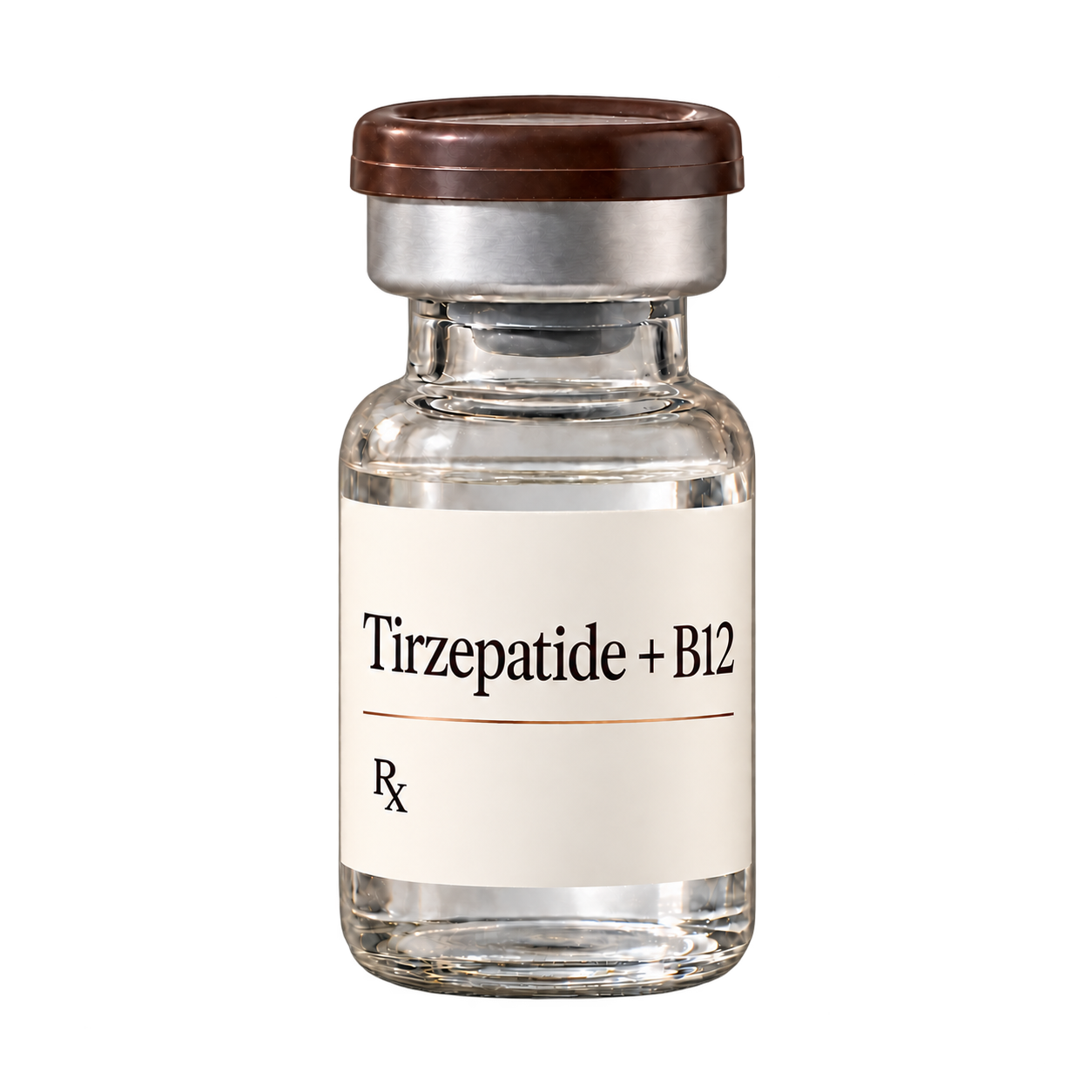
If you are searching for tirzepatide dosing for weight loss in units, the key point is that tirzepatide is prescribed in milligrams (mg), not insulin-style “units.” Units only make sense when you know the exact concentration and device you are using. This page explains label-based dosing in mg and why unit conversions can be unsafe without pharmacy instructions. Vitals Vault also offers PocketMD to help you ask dosing questions using your own health history.
- Tirzepatide dosing for weight loss in units is not a label concept; FDA dosing is in mg.
- “Units” depend on the pen or vial concentration, so unit to mg conversion is product-specific.
- FDA labeled titration is once weekly, starting low and increasing gradually as tolerated.
- If you miss a dose, label guidance depends on how close you are to the next scheduled dose.
Tirzepatide is dosed in mg, not units
Why “units” are confusing
A “unit” is a volume marking on a syringe or pen system, not a standard dose of tirzepatide. The same number of units can represent different mg amounts if the concentration differs. That is why the FDA label uses mg for tirzepatide dosing.
What the FDA label covers
FDA prescribing information provides a weekly titration schedule in mg for the approved products. It also provides missed-dose guidance and maximum dose information in mg. It does not provide a universal unit conversion table.
What compounded products change
Compounded tirzepatide is prepared by a licensed pharmacy for an individual prescription and is not FDA-approved. Concentrations and devices can differ, so only your prescriber and dispensing pharmacy can tell you what “units” correspond to your prescribed mg dose.
Label dosing schedule, missed dose rules, and why conversions vary
| Phase | Dose (mg) | How long (per label) | Notes |
|---|---|---|---|
| Starting dose | 2.5 mg | 4 weeks | Initiation dose; not intended for chronic weight management. |
| First increase | 5 mg | At least 4 weeks | Increase based on tolerability and clinical response. |
| Further increases | 7.5 mg, 10 mg, 12.5 mg, 15 mg | At least 4 weeks at each dose | Dose may be increased in 2.5 mg increments after at least 4 weeks. |
| Maintenance | 5 mg, 10 mg, or 15 mg | Ongoing | Recommended maintenance doses for chronic weight management. |
Missed dose rule (label)
If a dose is missed, the FDA label instructs taking it as soon as possible within 4 days (96 hours) after the missed dose. If more than 4 days have passed, the label instructs skipping the missed dose and resuming the next dose on the regularly scheduled day.
Dose spacing (label)
The FDA label states that the day of weekly administration can be changed if needed, as long as the time between two doses is at least 3 days (72 hours). This helps reduce the risk of dosing too close together.
Why you should not self-convert to units
Unit markings depend on the concentration (mg per mL) and the delivery system. Changing pharmacies, concentrations, or syringes can change what a “unit” represents. Ask your prescriber or dispensing pharmacy to confirm your exact measurement method for your prescription.
Injection sites (label concept)
For FDA approved tirzepatide products, the Instructions for Use describe where the medication can be injected (subcutaneous injection) and how to use the pen. For compounded tirzepatide, follow the instructions provided by your prescribing clinician and dispensing pharmacy.
When to talk to your clinician about dosing
You are unsure about units
If your prescription instructions mention units, ask your clinician or dispensing pharmacy to explain how units map to your prescribed mg dose for your specific concentration and device. This is especially important if your vial concentration or syringe type changes.
You cannot tolerate titration
Nausea, vomiting, diarrhea, constipation, and decreased appetite are common with GLP-1 based medicines and can worsen with dose increases. If side effects interfere with eating, hydration, or daily function, contact your clinician before making any change.
You missed a dose
If you missed a dose, follow the FDA label timing rules and confirm your plan with your clinician if you are unsure. Do not double up doses to “catch up.”
You have severe symptoms
Seek urgent medical care for severe abdominal pain that may radiate to the back (possible pancreatitis), symptoms of gallbladder disease, signs of an allergic reaction, or dehydration with reduced urination. These risks are described in FDA prescribing information for tirzepatide products.
Pro tips for staying consistent
Keep one weekly day
Pick a consistent day and set reminders to reduce missed doses.
Confirm concentration each refill
If compounded, verify the mg per mL and device instructions every time.
Track side effects and intake
Note nausea, bowel changes, and hydration to discuss at check-ins.
Ask before changing anything
Dose changes should be clinician-directed, not based on online unit charts.
Frequently Asked Questions
What does tirzepatide dosing for weight loss in units mean?
Tirzepatide is prescribed in mg in FDA labeling, not units. “Units” are device- and concentration-dependent volume markings, so they are not interchangeable across products. For compounded tirzepatide, your dispensing pharmacy should provide unit-based instructions for your specific prescription.
What is the FDA labeled tirzepatide titration schedule for weight loss?
FDA labeling for chronic weight management starts at 2.5 mg once weekly for 4 weeks, then increases to 5 mg once weekly. The dose may be increased in 2.5 mg steps after at least 4 weeks on the current dose, with recommended maintenance doses of 5 mg, 10 mg, or 15 mg.
If I miss a tirzepatide dose, what does the label say?
FDA labeling says to take the missed dose as soon as possible within 4 days (96 hours). If more than 4 days have passed, skip the missed dose and take your next dose on the regularly scheduled day. If you are unsure, confirm with your prescribing clinician.
Can I convert mg to units for compounded tirzepatide?
Only if you have the exact concentration and the dosing device instructions for your prescription. Different pharmacies and formulations can use different concentrations, so a unit chart from another source may be wrong. Ask your prescriber or dispensing pharmacy to confirm the conversion for your vial and syringe.
Why does tirzepatide dosing increase slowly over time?
The FDA labeled schedule increases gradually to improve tolerability, since gastrointestinal side effects are common early in treatment. Your clinician may adjust the pace based on side effects and overall response. Do not change your dose schedule without clinician guidance.