
Tirzepatide dosage chart: labeled weekly dosing
Tirzepatide dosage chart: FDA labeled dosing starts at 2.5 mg weekly, then increases every 4 weeks as tolerated. Units depend on concentration.
Key facts
- Tirzepatide + B12 is $169/month (billed $169 every 4 weeks), charged only after a clinician approves it.
- Answer a few health questions online. A licensed clinician reviews them. If approved, it ships to your door.
- Adults 18 or older. A licensed clinician reviews your health history and decides whether treatment is appropriate for you. Availability depends on the state you live in.


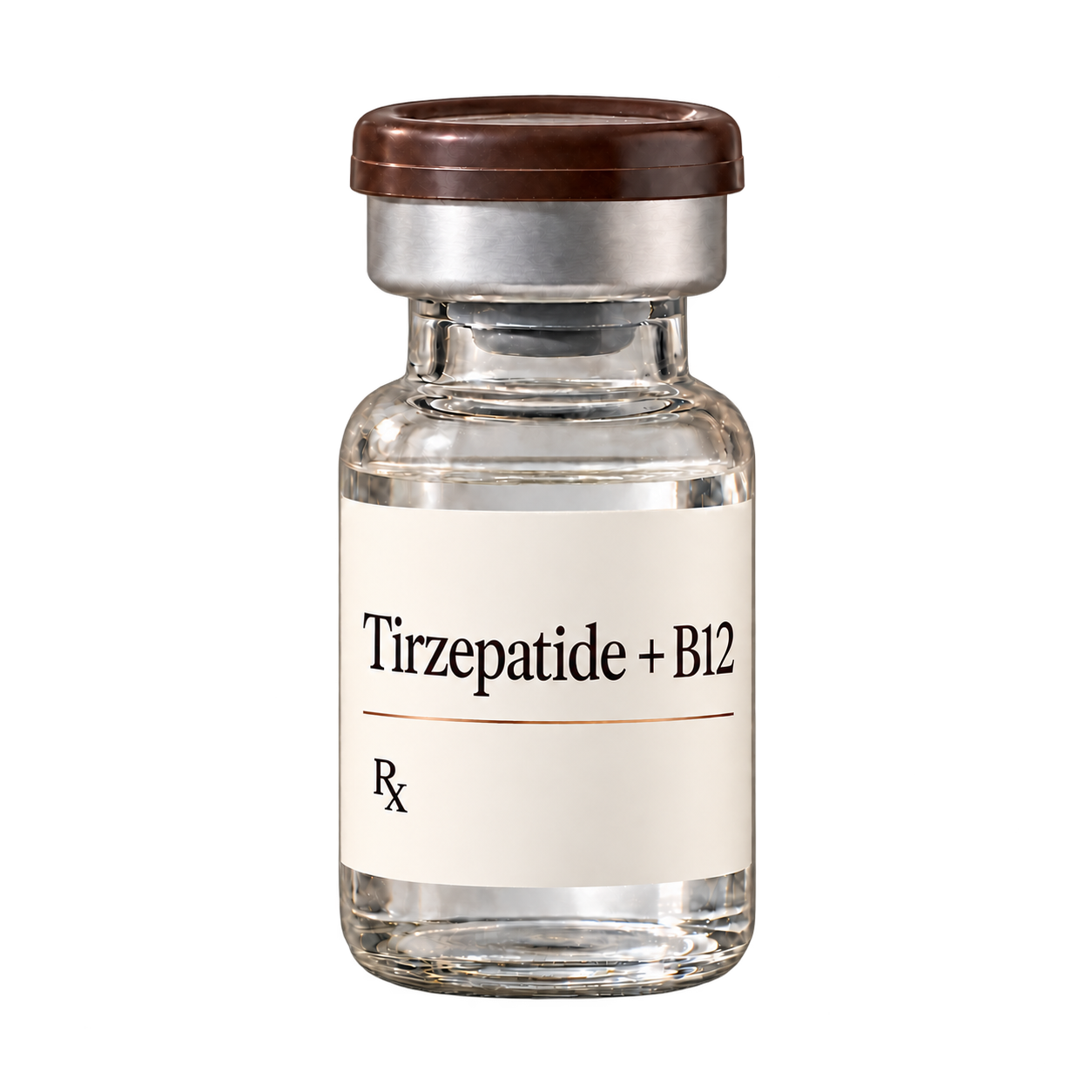
A tirzepatide dosage chart is a week by week schedule that shows how the dose is usually increased (titrated) to improve tolerability. The FDA labeled schedule uses once weekly injections and specific dose steps, including a labeled maximum dose. This page summarizes labeled dosing for education only and explains why mg to units conversions can be unsafe to guess. Vitals Vault also offers PocketMD, which can help you organize questions to review with your prescribing clinician.
- A tirzepatide dosage chart starts at 2.5 mg weekly, then increases every 4 weeks as tolerated.
- Labeled maintenance doses are 5 mg, 10 mg, or 15 mg once weekly.
- The FDA labeled maximum dose is 15 mg once weekly.
- Mg to units conversions depend on concentration and device markings.
Answer: the labeled tirzepatide dosage chart
| Treatment phase | Dose | How long at this dose | Notes |
|---|---|---|---|
| Starting dose | 2.5 mg once weekly | 4 weeks | This dose is for treatment initiation and is not intended for glycemic control. |
| First increase | 5 mg once weekly | At least 4 weeks | If additional control is needed, the dose may be increased. |
| Further increases | Increase by 2.5 mg once weekly | After at least 4 weeks on the current dose | Continue stepwise increases based on response and tolerability. |
| Maintenance doses | 5 mg, 10 mg, or 15 mg once weekly | Ongoing | Select a maintenance dose based on treatment goals and tolerability. |
| Maximum dose | 15 mg once weekly | Ongoing | Do not exceed the labeled maximum. |
Details: missed dose rules, units, and compounded products
What is the highest dose?
In FDA prescribing information, the maximum dose of tirzepatide is 15 mg once weekly. The labeled maintenance doses are 5 mg, 10 mg, or 15 mg once weekly. Your clinician chooses a maintenance dose based on response and tolerability.
Missed dose guidance (label)
The FDA label says that if you miss a dose, take it as soon as possible within 4 days (96 hours) after the missed dose. If more than 4 days have passed, skip the missed dose and take your next dose on the regularly scheduled day. Do not take two doses within 3 days (72 hours) of each other.
Why mg to units is not fixed
Milligrams (mg) measure the amount of drug, but units depend on the concentration (mg per mL) and the syringe or pen markings. Compounded tirzepatide can be prepared at different concentrations, so a units conversion that fits one vial can be wrong for another. Confirm your concentration and directions with your prescriber or dispensing pharmacy.
Compounded tirzepatide differences
Compounded tirzepatide is prepared by a licensed pharmacy for an individual prescription and is not FDA-approved. Because compounded products can differ in concentration and delivery device, do not use a brand pen chart to convert to units for a compounded vial. Use the directions provided for your specific prescription.
Injection sites (label overview)
For FDA approved tirzepatide pens, the Instructions for Use describe subcutaneous injection in the abdomen, thigh, or upper arm, and rotating sites. Your prescribing clinician or pharmacist should show you how to inject, and you should follow the Instructions for Use. For compounded tirzepatide, your clinician and dispensing pharmacy provide the instructions for your product.
When to talk to a clinician about dosing
Side effects limit increases
Dose increases are spaced out to improve tolerability. If nausea, vomiting, diarrhea, constipation, or decreased appetite is affecting hydration, nutrition, or daily activities, contact your clinician before any change.
Low blood sugar symptoms
Tirzepatide can increase hypoglycemia risk when used with insulin or insulin secretagogues such as sulfonylureas. If you have shakiness, sweating, confusion, or fainting, seek medical advice promptly and follow your clinician’s monitoring plan.
Severe abdominal pain
Severe abdominal pain that may radiate to the back, with or without vomiting, can be a warning sign for pancreatitis. Gallbladder problems can also cause abdominal pain, fever, or jaundice. Do not ignore these symptoms.
Dehydration or kidney concerns
Vomiting or diarrhea can lead to dehydration, which can worsen kidney function. If you cannot keep fluids down, have reduced urination, or feel lightheaded, contact a clinician promptly.
Neck lump or hoarseness
Tirzepatide has a boxed warning about thyroid C-cell tumors based on animal studies, and it is contraindicated in people with a personal or family history of medullary thyroid carcinoma or MEN 2. Report a neck lump, trouble swallowing, or persistent hoarseness.
Pro tips for using a dosing chart safely
Record your concentration
Keep the mg per mL from your label with your dosing notes.
Keep a weekly routine
A consistent day of week helps prevent missed or doubled doses.
Verify any conversion
Ask your clinician or pharmacy to confirm mg to units for your product.
Plan ahead for travel
Ask about storage and timing before trips so you stay on schedule.
Bring notes to check-ins
Share side effects and appetite changes so titration can be adjusted.
Frequently Asked Questions
How many units is 2.5 mg of tirzepatide?
There is not one correct units number for 2.5 mg because units depend on the concentration (mg per mL) and the syringe or device markings. With compounded tirzepatide, concentrations can vary by pharmacy. Confirm the conversion with your prescriber or pharmacy.
How many mg is 40 units of tirzepatide?
You can only convert units to mg if you know the exact concentration of your product and what units mean on your syringe or device. With compounded tirzepatide, the same units can represent different mg amounts across concentrations. Ask your prescriber or dispensing pharmacy to verify.
Whats the highest dose of tirzepatide?
In FDA prescribing information for tirzepatide, the maximum dose is 15 mg once weekly. The labeled maintenance doses are 5 mg, 10 mg, or 15 mg once weekly. Your clinician selects the dose based on response and tolerability.
Is there a tirzepatide compound dosage chart that matches brand pens?
Not reliably. Compounded tirzepatide is not FDA-approved and may come in different concentrations or delivery devices than FDA-approved pens, so a brand pen chart may not match your prescription. Use the directions provided by your prescriber and dispensing pharmacy.
What should I do if I miss a weekly tirzepatide dose?
The FDA label says to take a missed dose as soon as possible within 4 days (96 hours). If more than 4 days have passed, skip the missed dose and take the next dose on your regularly scheduled day. Do not take two doses within 3 days (72 hours) of each other.