
Semaglutide dosage chart units: how to convert
Semaglutide dosage chart units do not equal mg unless you know the vial concentration. Use your prescription label to convert units to mg.
Key facts
- Semaglutide + B12 is $157/month (billed $157 every 4 weeks), charged only after a clinician approves it.
- Answer a few health questions online. A licensed clinician reviews them. If approved, it ships to your door.
- Adults 18 or older. A licensed clinician reviews your health history and decides whether treatment is appropriate for you. Availability depends on the state you live in.


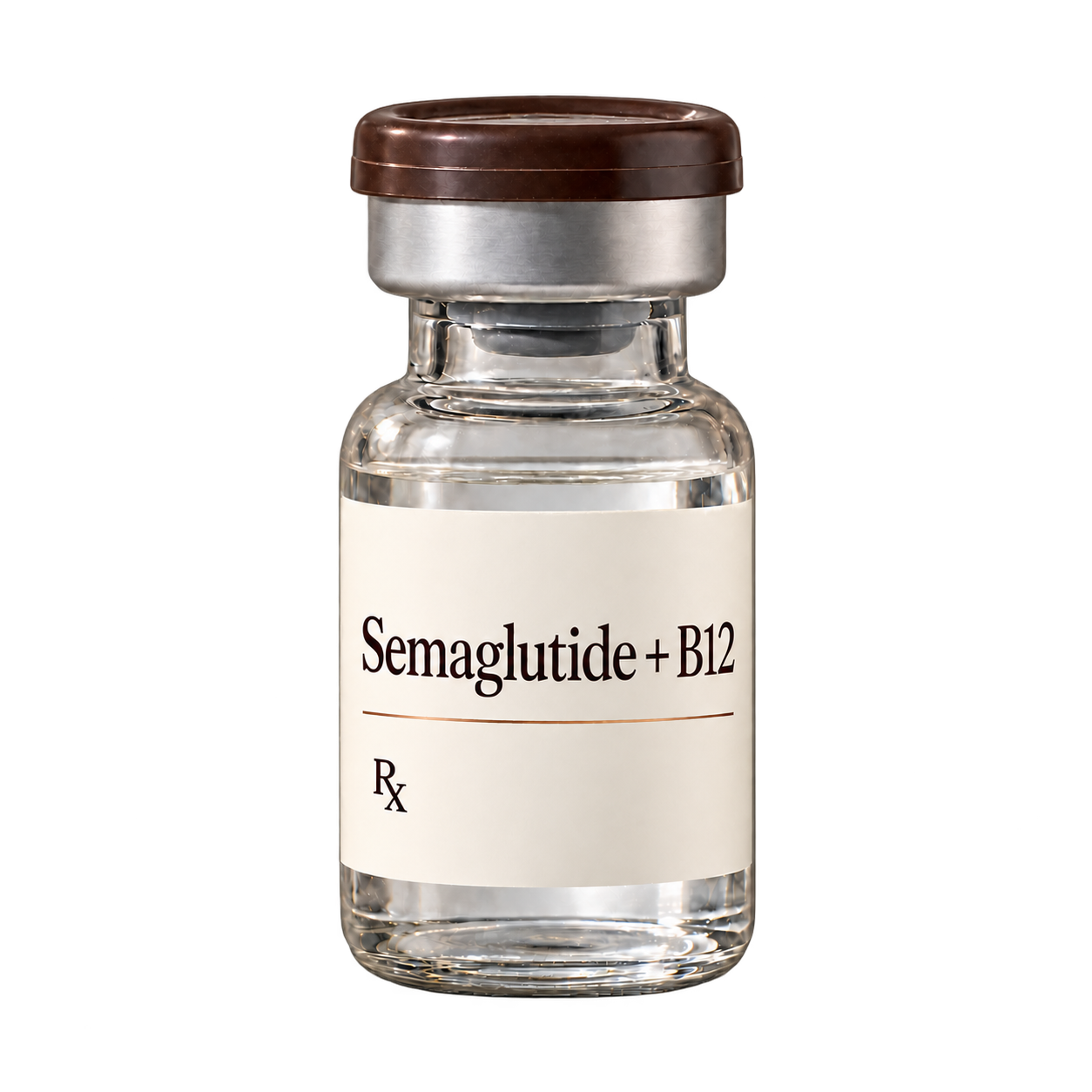
If you are searching for a semaglutide dosage chart units conversion, the most important detail is your medication concentration, usually written as mg per mL on the prescription label. Without that number, you cannot safely convert “units” on a syringe into milligrams (mg) of semaglutide. This page explains the conversion method and the common pitfalls that lead to dosing errors, especially with compounded semaglutide. If you want help double checking what your own label means, Vitals Vault can support you with clinician guidance and tools for questions.
- A semaglutide dosage chart in units only works if you know your vial concentration.
- Units measure volume on an insulin syringe, not the medication strength in mg.
- For compounded semaglutide, concentration can vary by pharmacy and prescription.
- If your label says mg per mL, you can convert units to mL, then to mg.
- When in doubt, confirm the conversion with your prescriber or pharmacist.
Semaglutide units to mg: the key rule
Why charts differ online
Many charts assume a specific concentration, but compounded semaglutide concentrations can vary. A chart that matches someone else’s vial may be wrong for yours, even if the syringe looks the same.
What to look for on your label
Find the concentration written as mg per mL (for example, “X mg/mL”). If your label only lists a total amount in the vial and a total volume, your pharmacist can confirm the mg per mL.
What to do before changing anything
If you are unsure how your prescribed dose maps to syringe units, pause and ask your prescriber or pharmacist to confirm the exact conversion. This is especially important after a refill or pharmacy change.
How to convert semaglutide units to mg (and avoid mistakes)
| What you have | What it means | What you can calculate | What to confirm |
|---|---|---|---|
| Syringe “units” | A volume marking on an insulin syringe | mL (volume) if you know the syringe scale | That your syringe is U-100 and how your pharmacy instructed you to measure |
| Concentration (mg/mL) | How much semaglutide is in each mL of liquid | mg = (mL) x (mg/mL) | That the mg/mL matches your current vial and prescription |
| Prescribed dose in mg | The medication amount your clinician prescribed | Target volume in mL = (mg) divided by (mg/mL) | How that volume is measured on your specific syringe |
Step 1: Identify concentration
Use your prescription label or pharmacy insert to find the concentration in mg per mL. This is the number that determines every units to mg conversion for your vial.
Step 2: Convert units to mL
Insulin syringes are typically calibrated so that “units” correspond to a fraction of a milliliter. Your dispensing pharmacy should tell you how to measure your prescribed volume on the syringe you received.
Step 3: Convert mL to mg
Once you know the volume in mL, multiply by your vial’s concentration (mg/mL) to get mg of semaglutide. If your prescription is written in mg, your clinician or pharmacist can confirm the matching syringe measurement.
Common pitfall: assuming 1 unit equals 1 mg
Units are not mg. Treating them as interchangeable can lead to taking much more or much less medication than intended, particularly when concentrations differ across compounded prescriptions.
Refills can change the math
Even if your dose in mg stays the same, a new vial can have a different concentration. If anything on the label looks different, ask for a reconfirmation before you measure a dose.
When to talk to your clinician or pharmacist
Your label does not show mg/mL
If you cannot find a concentration in mg per mL, do not guess. Ask the dispensing pharmacy to clarify the concentration and how your prescribed dose should be measured on your syringe.
You are switching products or pharmacies
Switching between compounded products, or between compounded and brand name semaglutide, can change how dosing is expressed and delivered. Ask for a fresh explanation of the dose and measuring method each time you switch.
You have severe symptoms
Seek urgent medical care for severe abdominal pain (with or without vomiting), signs of dehydration, fainting, or symptoms of a serious allergic reaction. These can be medical emergencies and should not be handled through dose adjustments.
You take insulin or a sulfonylurea
Semaglutide can increase the risk of low blood sugar when used with insulin or insulin secretagogues such as sulfonylureas. Your prescriber may need to adjust other diabetes medications and monitoring.
Pro tips for using a units chart safely
Use your vial, not the internet
Build any units chart from your own label concentration, not a generic chart.
Recheck after every refill
Confirm the concentration and instructions each time you receive a new vial.
Keep one measuring system
Stick to either mg or mL with your care team, and document the conversion.
Ask for written instructions
Request pharmacy directions that match your syringe type and your prescribed dose.
Do not self-correct side effects
If nausea or vomiting is severe, contact your prescriber instead of changing the dose.
Frequently Asked Questions
How many mg is 50 units of semaglutide?
It depends on your vial concentration (mg per mL) and how your syringe “units” map to mL. With compounded semaglutide, concentrations can vary, so use your prescription label and confirm the conversion with your pharmacist or prescriber.
How many units is 1.7 mg of semaglutide?
You can only convert mg to units if you know your vial concentration (mg/mL) and the syringe scale used for your prescription. Ask your pharmacist or prescribing clinician to provide the exact units measurement for your specific vial and syringe.
40 units of semaglutide is how many mg?
There is no single answer because “units” are a volume measure and mg depends on concentration (mg/mL). Check your prescription label for mg/mL, then ask your pharmacist to confirm what 40 units equals for your specific vial.
20 units of semaglutide is how many mg?
It depends on the concentration of your semaglutide solution (mg/mL), which can differ across compounded prescriptions. Use your label and pharmacy instructions to convert units to mL, then to mg, or have the pharmacy confirm it.
Why do semaglutide “units charts” online disagree?
Most charts assume a specific concentration and syringe type, but compounded semaglutide is not standardized and instructions can differ. The only reliable chart is one based on your own prescription label and the directions from your dispensing pharmacy.