
Semaglutide dosage chart: label-based dosing schedule
A semaglutide dosage chart shows the FDA label titration schedule and what to do for missed doses. Your clinician sets your exact dose.
Key facts
- Semaglutide + B12 is $157/month (billed $157 every 4 weeks), charged only after a clinician approves it.
- Answer a few health questions online. A licensed clinician reviews them. If approved, it ships to your door.
- Adults 18 or older. A licensed clinician reviews your health history and decides whether treatment is appropriate for you. Availability depends on the state you live in.


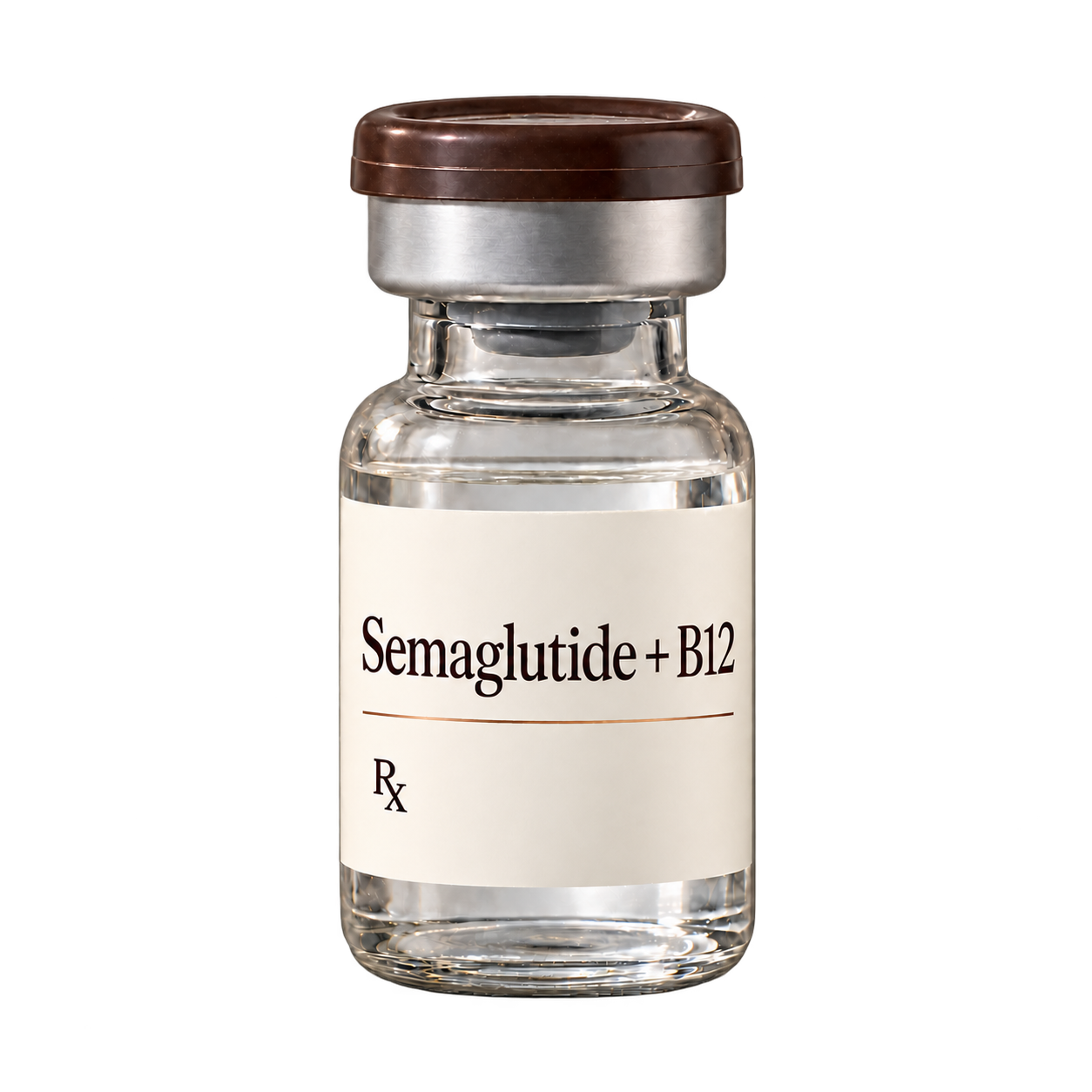
A semaglutide dosage chart is a quick way to see how semaglutide is typically started and increased over time. The FDA label for semaglutide products uses a gradual titration schedule to help your body adjust and reduce side effects. This page summarizes label-based dosing for education only, not personal medical advice. If you are using compounded semaglutide, your prescriber and dispensing pharmacy provide your exact instructions. Vitals Vault also offers PocketMD to help you ask dosing questions in context of your own history.
- A semaglutide dosage chart is a step-up schedule that starts low and increases gradually per the FDA label.
- Dose changes are typically made no more often than every 4 weeks on the label.
- If you miss a dose, the label gives different guidance depending on how many days have passed.
- Compounded semaglutide is not FDA-approved, so dosing instructions come from your prescriber and pharmacy.
Semaglutide dosage chart (FDA label)
| Treatment phase | Dose (mg once weekly) | Minimum time at dose |
|---|---|---|
| Start | 0.25 mg | 4 weeks |
| Step 2 | 0.5 mg | 4 weeks |
| Step 3 | 1 mg | 4 weeks |
| Step 4 | 1.7 mg | 4 weeks |
| Maintenance | 2.4 mg (or 1.7 mg if not tolerated) | Ongoing |
How dosing is increased and what to do if you miss a dose
Titration is gradual
On the FDA label, semaglutide is started at a low dose and increased in steps. The labeled schedule increases the dose no more often than every 4 weeks. Your clinician may pause an increase if side effects are limiting.
Maintenance dose depends on indication
For chronic weight management, the Wegovy label describes a maintenance dose of 2.4 mg once weekly, with 1.7 mg as an alternative if 2.4 mg is not tolerated. For type 2 diabetes, Ozempic has a different labeled maintenance range and maximum dose.
Missed dose guidance is time-based
The Wegovy label says that if you miss a dose and the next scheduled dose is more than 2 days away, take the missed dose as soon as possible. If the next scheduled dose is 2 days away or less, skip the missed dose and take the next dose on the regularly scheduled day.
If you miss 2 or more doses
The Wegovy label says that if you miss 2 or more consecutive doses, you can resume dosing as scheduled or, if needed, reinitiate Wegovy and follow the dose escalation schedule to reduce gastrointestinal symptoms. A clinician should guide this decision for your situation.
Injection sites and technique
For FDA-approved semaglutide pens, the Instructions for Use describe subcutaneous injection in the abdomen, thigh, or upper arm, and rotating sites. Your prescriber or pharmacist should show you how to use the device. For compounded semaglutide, follow the instructions from your clinician and dispensing pharmacy.
Compounded semaglutide is different
Compounded semaglutide is prepared by a licensed pharmacy for an individual prescription and is not FDA-approved. That means there is no FDA label dosing chart for compounded products, and dosing and administration directions come from your prescriber and pharmacy.
| If you miss a dose | What the label says to do |
|---|---|
| Next scheduled dose is more than 2 days away | Take the missed dose as soon as possible. |
| Next scheduled dose is 2 days away or less | Skip the missed dose and take the next dose on the scheduled day. |
| You miss 2 or more consecutive doses | Resume as scheduled or reinitiate and follow escalation schedule (clinician-guided). |
When to contact your clinician
Severe stomach symptoms
Contact your clinician if nausea, vomiting, or diarrhea is severe, persistent, or causes dehydration. The semaglutide label warns that dehydration from gastrointestinal reactions can worsen kidney problems, especially in people with existing kidney disease.
Possible pancreatitis symptoms
Get medical attention for severe abdominal pain that may radiate to your back, with or without vomiting. Semaglutide labels warn about acute pancreatitis and advise stopping the medication if pancreatitis is suspected, with clinician direction.
Gallbladder symptoms
Contact your clinician for right upper abdominal pain, fever, or yellowing of the skin or eyes. Semaglutide labels warn about acute gallbladder disease, including gallstones (cholelithiasis) and gallbladder inflammation (cholecystitis).
Low blood sugar risk situations
If you use insulin or a sulfonylurea, ask your clinician about hypoglycemia risk and monitoring. Semaglutide labels note that the risk of low blood sugar increases when used with insulin secretagogues or insulin.
Thyroid or neck symptoms
Tell your clinician promptly if you notice a lump or swelling in your neck, hoarseness, trouble swallowing, or shortness of breath. Semaglutide products for weight management and diabetes carry a boxed warning about thyroid C-cell tumors in rodents and are contraindicated with certain thyroid cancer histories.
Practical tips for staying on schedule
Pick a consistent weekly day
A consistent day helps you avoid missed doses and makes side effects easier to track.
Track symptoms during titration
Write down nausea, constipation, reflux, and appetite changes to discuss at check-ins.
Ask before you change other meds
If you take insulin or sulfonylureas, your clinician may adjust them to reduce hypoglycemia risk.
Confirm your product and directions
Brand-name pens and compounded semaglutide can have different instructions. Verify what you were dispensed.
Use reminders
Calendar alerts or a weekly routine can help you stay aligned with the label schedule.
Frequently Asked Questions
What is a semaglutide dosage chart used for?
A semaglutide dosage chart summarizes how semaglutide is typically started and increased over time on the FDA label. It is meant for education and planning discussions, not for choosing your personal dose. Your prescribing clinician sets your exact schedule.
Is the semaglutide dosage chart the same for Ozempic and Wegovy?
No. Ozempic and Wegovy contain semaglutide but have different FDA-approved indications and different labeled dosing schedules. Always follow the specific product label and your clinician’s instructions.
What does the label say to do if you miss a weekly dose?
On the Wegovy label, what you do depends on how close you are to the next scheduled dose. If the next dose is more than 2 days away, take the missed dose as soon as possible; if it is 2 days away or less, skip it and take the next dose as scheduled.
Where do you inject semaglutide?
For FDA-approved semaglutide pens, the Instructions for Use describe subcutaneous injection in the abdomen, thigh, or upper arm, and rotating injection sites. Your prescriber or pharmacist should show you how to use the device. For compounded semaglutide, follow your prescriber and pharmacy instructions.
Can Vitals Vault tell me what dose I should be on?
No. Dose decisions are individualized and should be made by your prescribing clinician based on your health history, response, and side effects. PocketMD can help you organize questions to bring to your clinician, but it is not a doctor and is not for emergencies.