
Sermorelin injections: dosing, use, and safety basics
Sermorelin injections are prescribed to stimulate growth hormone release. Here is what they are, how they work, and what to ask your clinician.
Key facts
- Sermorelin Injection is $219/month (billed $219 every 30 days), charged only after a clinician approves it.
- Answer a few health questions online. A licensed clinician reviews them. If approved, it ships to your door.
- Adults 18 or older. A licensed clinician reviews your health history and decides whether treatment is appropriate for you. Availability depends on the state you live in.


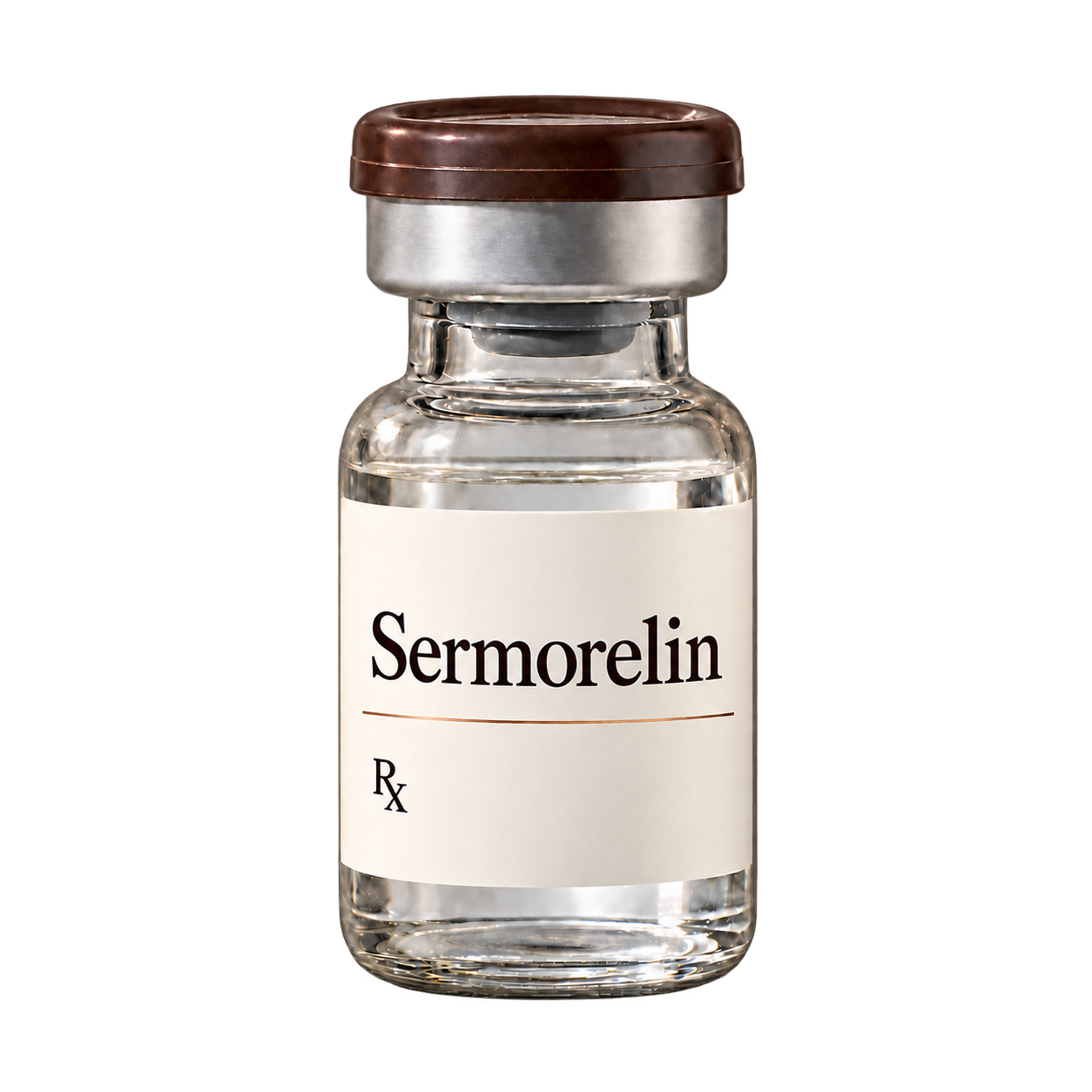
Sermorelin injections are used with the goal of stimulating growth hormone release by acting on the growth hormone releasing hormone pathway. People usually search this term because they want clear, practical guidance on dosing, how it is given, and what safety issues to ask about. This page explains what is known from medical references and why many sermorelin prescriptions are compounded. Vitals Vault also offers PocketMD, a free AI health companion, to help you ask dosing questions using your own health history.
- Sermorelin injections usually mean a prescription peptide used to stimulate growth hormone release.
- In the US, sermorelin is commonly compounded, so it is not FDA-approved.
- Your prescriber sets dosing and monitoring. Do not self-adjust.
- Injection sites and technique should come from your prescriber and dispensing pharmacy.
Sermorelin injections: the direct answer
What it is
Sermorelin is a lab-made peptide designed to stimulate the pituitary gland to release growth hormone. It is not the same as growth hormone itself.
FDA status in the US
Sermorelin is not FDA-approved as a drug in the United States. Many prescriptions are compounded, meaning prepared by a licensed pharmacy for an individual prescription and not FDA-approved.
What “dosing” means here
Because compounded products can vary and goals differ, dosing is not one-size-fits-all. Your prescribing clinician sets the dose and schedule and decides if changes are appropriate.
Dosing, administration, and safety details
How it works
Sermorelin is designed to act like GHRH, a natural hormone that signals the pituitary gland to release growth hormone. Growth hormone then influences insulin-like growth factor 1 (IGF-1), which may be used as a monitoring marker in clinical care.
What “compounded” changes
Compounded sermorelin is prepared by a licensed pharmacy for an individual prescription and is not FDA-approved. That means there is no FDA-approved prescribing label to rely on for standardized dosing or injection instructions, so your prescriber and pharmacy provide the official directions.
Where and how it is injected
For compounded sermorelin, injection sites and technique should come from your prescribing clinician and the dispensing pharmacy’s written instructions. Do not rely on online step-by-step technique guides for a prescription injection.
Side effects to ask about
Side effects discussed with growth hormone axis therapies can include injection-site reactions and symptoms related to fluid balance or blood sugar. Ask your clinician what side effects are most likely with your specific formulation and what symptoms should prompt urgent evaluation.
Drug and condition considerations
Any medication or condition that affects blood sugar, fluid balance, or pituitary function may matter when you are considering sermorelin. Tell your clinician about diabetes or prediabetes, pituitary disease, cancer history, pregnancy or breastfeeding, and all prescription and nonprescription drugs and supplements.
When to talk to a clinician urgently vs soon
Get urgent care now
Seek urgent evaluation for severe allergic symptoms (trouble breathing, swelling of the face or throat), chest pain, severe shortness of breath, fainting, or sudden severe headache with neurologic symptoms. These are not issues to troubleshoot through a dosing change.
Contact your prescriber soon
Reach out promptly for persistent swelling, rapid weight changes, new numbness or tingling, worsening headaches, vision changes, or signs of high or low blood sugar. Also contact your clinician if you miss multiple doses or are unsure how to restart safely.
Before starting or restarting
Talk with a clinician before starting if you have a history of pituitary tumors, active cancer, unexplained headaches or vision changes, or if you are pregnant or breastfeeding. Your clinician may also want baseline labs or other evaluation before prescribing.
Pro tips for using sermorelin more safely
Use one prescriber
Avoid mixing advice from multiple clinics. One clinician should own dosing and monitoring.
Track symptoms, not just labs
Write down sleep, energy, swelling, headaches, and glucose symptoms to review at follow-ups.
Bring your full med list
Include supplements and peptides. Interactions are often missed when they are not disclosed.
Confirm storage and handling
Follow the dispensing pharmacy’s instructions for storage and expiration.
Ask what “monitoring” means
If labs are used, ask which ones and how results change the plan.
Frequently Asked Questions
What are sermorelin injections used for?
Sermorelin injections are used with the goal of stimulating the pituitary gland to release growth hormone. In the US, sermorelin is commonly prescribed as a compounded medication, so the exact use and monitoring plan should be discussed with your clinician.
Is sermorelin FDA-approved?
Sermorelin is not FDA-approved as a drug in the United States. Many prescriptions are compounded, which means they are prepared for an individual prescription and are not FDA-approved.
Where do you inject sermorelin?
For compounded sermorelin, injection sites and technique should come from your prescribing clinician and the dispensing pharmacy’s written instructions. Because compounded products do not have an FDA-approved Instructions for Use, do not rely on online step-by-step injection directions.
What side effects should I watch for with sermorelin injections?
Ask your clinician about expected side effects for your specific formulation, including injection-site reactions and symptoms that could relate to fluid balance or blood sugar. Seek urgent care for severe allergic symptoms, chest pain, fainting, or sudden neurologic symptoms.
Can I use PocketMD to ask about sermorelin dosing?
Yes. PocketMD is free to download and can help you ask dosing questions using your own health history, but it is not a doctor and not for emergencies. Any dose decision or change should be made by your prescribing clinician.