
NAD injections: dosing and what to know
NAD injections are compounded and not FDA-approved. Here is what to ask about dosing, safety, and monitoring before you start.
Key facts
- NAD+ Injection is $250/month (billed $250 every 4 weeks), charged only after a clinician approves it.
- Answer a few health questions online. A licensed clinician reviews them. If approved, it ships to your door.
- Adults 18 or older. A licensed clinician reviews your health history and decides whether treatment is appropriate for you. Availability depends on the state you live in.


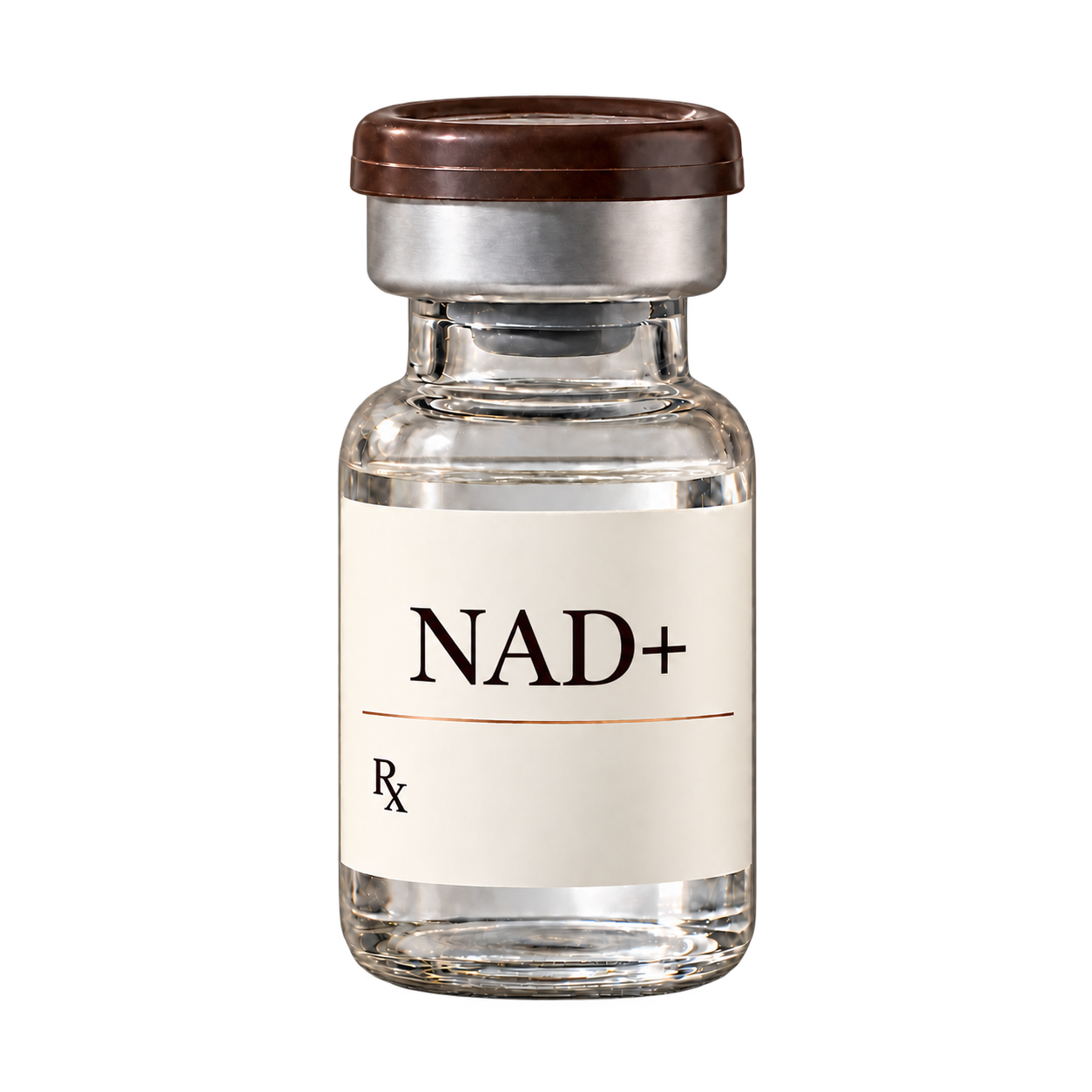
There is no FDA approved prescription drug labeled as NAD+ injections, so there is no official FDA label that defines a standard dose, schedule, or injection Instructions for Use. That means dosing information online can be inconsistent, and your safest source is your prescribing clinician and dispensing pharmacy. This page explains what to ask about dosing and administration for NAD injections, what can change a plan, and when to pause and get medical advice.
- NAD injections do not have FDA labeled dosing because they are compounded, not FDA-approved.
- If you use NAD+, dosing should be set and adjusted by your prescribing clinician.
- Ask what formulation, concentration, and route you are prescribed, since these change how dosing is planned.
- Discuss side effects, interactions, and what monitoring makes sense for your goals and health history.
Is there a standard NAD injection dose?
Compounded product
NAD+ injections are typically compounded, meaning prepared by a licensed pharmacy for an individual prescription and not FDA-approved. Because compounded products vary, dosing cannot be assumed to match any single online protocol.
Clinician-set plan
A dosing plan should be individualized and revisited over time, especially if you have side effects, start new medications, or have changes in kidney or liver function. Do not change your plan without the prescribing clinician.
Administration guidance
For compounded injections, the prescribing clinician and dispensing pharmacy should provide the specific administration instructions for your product. Avoid relying on generalized injection technique guides that are not specific to your prescription.
What affects NAD injection dosing decisions
Your route and setting
NAD+ is marketed in different ways, including IV infusions and injections, and the route matters for how a clinician thinks about tolerability and monitoring. Confirm whether your prescription is intended for injection versus infusion and how it is administered in your care plan.
Concentration and volume
Compounded medications can come in different concentrations. Your clinician and pharmacy should tell you the concentration and the exact amount you are meant to use, and how that maps to your prescription label.
Other medications and conditions
Bring a complete medication and supplement list, plus key medical conditions, to every follow-up. Even when a treatment is marketed as wellness-focused, clinicians still need to screen for safety issues and potential interactions.
Side effects and tolerability
If you feel unwell during or after administration, report it promptly and ask whether it could be related to the dose, rate of administration, hydration status, or another cause. Your clinician may adjust the plan or recommend stopping while you are evaluated.
Goals and evidence limits
NAD+ is often discussed for energy, aging, or metabolic goals, but human evidence for specific outcomes and optimal dosing is limited. Ask your clinician what outcome you are tracking and what would count as a reason to continue, adjust, or stop.
When to talk to a clinician urgently
Allergic reaction symptoms
Get urgent care for trouble breathing, swelling of the face or throat, widespread hives, or severe dizziness. These can be signs of a serious allergic reaction and need immediate evaluation.
Chest pain or fainting
Chest pain, fainting, or a racing or irregular heartbeat should be treated as urgent, whether or not you think it is related to NAD+. Do not try to manage these symptoms at home.
Severe headache or neurologic symptoms
Seek urgent evaluation for a sudden severe headache, weakness on one side, confusion, vision changes, or trouble speaking. These symptoms are not expected and should not be attributed to a wellness injection without medical assessment.
Injection site infection signs
Contact your clinician promptly for increasing redness, warmth, swelling, pus, or fever after an injection. Infections can worsen quickly and may require treatment.
Pro tips for safer dosing conversations
Bring the vial label
Ask your clinician to confirm concentration, route, and schedule from your actual prescription label.
Track symptoms simply
Write down timing of symptoms after each dose so your clinician can spot patterns.
Ask what to monitor
Clarify which labs or vitals matter for your goals and how often they are checked.
Avoid DIY changes
Do not change dose or frequency without the prescriber, even if you feel no effect.
Confirm storage and handling
Follow the dispensing pharmacy instructions for storage, beyond generic advice online.
Frequently Asked Questions
Are NAD injections FDA-approved?
NAD injections are typically compounded, which means they are prepared by a licensed pharmacy for an individual prescription and are not FDA-approved. Ask your prescriber and pharmacy what formulation you are receiving and why.
Is there a standard dose for nad injections?
There is no FDA labeled dosing for NAD+ injections because there is no FDA-approved NAD+ injection product. Your clinician should set dosing based on your prescription, goals, and medical history.
Where are NAD injections given?
Because NAD+ injections are compounded, there is no single official FDA Instructions for Use that lists injection sites. Your prescribing clinician and dispensing pharmacy should tell you exactly how and where your specific prescription is intended to be administered.
What should I ask my clinician before changing my NAD+ dose?
Ask about your product concentration, route of administration, and what symptoms would mean the plan should be adjusted or stopped. Also ask what monitoring makes sense for you and how to report side effects between visits.
How much do NAD injections cost?
Cost can vary based on the compounding pharmacy, formulation, visit frequency, and whether monitoring is included. If you are using Vitals Vault, the most current pricing and plan details are shown on the treatment page when you check eligibility.