
Glutathione injections: dosing and what to know
Glutathione injections are typically compounded and not FDA-approved. Here is what dosing discussions cover, plus the risks and questions to ask.
Key facts
- Glutathione Injection is $129/month (billed $129 every 4 weeks), charged only after a clinician approves it.
- Answer a few health questions online. A licensed clinician reviews them. If approved, it ships to your door.
- Adults 18 or older. A licensed clinician reviews your health history and decides whether treatment is appropriate for you. Availability depends on the state you live in.


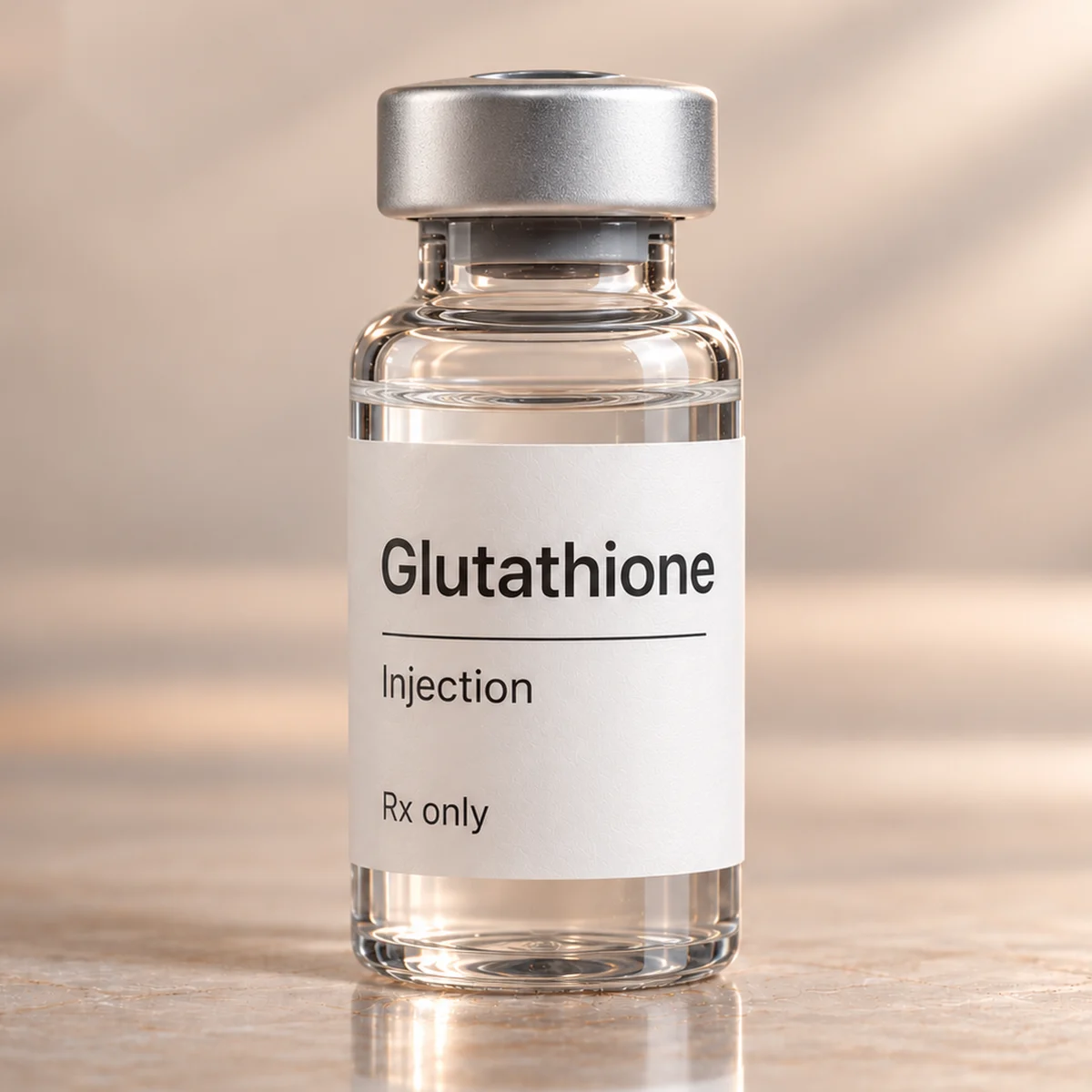
People search for glutathione injections because they want a clear dose and schedule. In practice, most glutathione injections are compounded, which means there is not one standardized FDA approved injection protocol for general wellness. This page explains what dosing conversations usually cover, what to ask your clinician, and where safety questions come up. If you want to compare what you are seeing online with your own history and labs, Vitals Vault includes PocketMD to help you organize questions for your prescriber.
- Glutathione injections are usually compounded, so dosing is individualized by a clinician.
- There is no single FDA labeled injection dose for wellness uses, so do not copy a protocol online.
- Safety depends on your conditions, other medicines, and how the product is prepared and administered.
- Ask your prescriber what goal is realistic and how you will monitor for side effects.
Glutathione injection dosing: the direct answer
Most are compounded
Compounded glutathione is prepared by a licensed pharmacy for an individual prescription. Compounded medications are not FDA-approved, and the exact formulation can vary by pharmacy.
Dose depends on the plan
Your clinician may set a dose based on your goal, prior response, and tolerance. They may also consider how often you are receiving injections and whether you are using other supplements or therapies.
Avoid copying online protocols
Protocols you see on social media or forums may not match your product or your health conditions. Using the wrong dose or schedule can raise the risk of side effects or contamination-related complications.
What dosing and administration discussions usually include
Your goal and evidence limits
Glutathione is an antioxidant made in your body, and it is also available as a supplement and as compounded injections. For many wellness goals, evidence is limited and not standardized, so your clinician should explain what is known versus uncertain.
Your medical history
Your clinician should review conditions that could change risk, such as asthma or a history of medication reactions. They should also ask about pregnancy or breastfeeding status when relevant, because safety data for compounded injections may be limited.
Other medicines and supplements
Bring a list of prescriptions, over-the-counter medicines, and supplements. Even when a specific interaction is not well studied, your clinician may adjust the plan if you are on therapies that affect the liver, kidneys, or immune system.
How the product is prepared
With compounded injections, safety depends on the pharmacy, sterility practices, storage, and beyond-use dating. Ask which pharmacy compounds it and what quality controls are used, because contamination and dosing variability are key concerns with sterile compounded products.
Injection method and training
How and where to inject depends on the specific product and the prescriber’s instructions. For compounded products, your prescribing clinician and dispensing pharmacy should provide the Instructions for Use and teach you how to administer it safely.
Monitoring and follow-up
A reasonable plan includes what side effects to watch for, when to pause and call the clinic, and how often you will reassess whether it is helping. If you are using glutathione as part of a broader longevity plan, your clinician may also track baseline and follow-up labs.
When to talk to a clinician before using glutathione injections
You have asthma or wheezing
Some reports and product information sources have raised concerns about bronchospasm in people with asthma when glutathione is inhaled, and clinicians may be cautious with glutathione use in reactive airway disease. Ask whether injections change that risk and what symptoms should trigger stopping and evaluation.
You are pregnant or breastfeeding
Safety data for compounded glutathione injections in pregnancy or breastfeeding is limited. A clinician can help you weigh potential benefit against unknowns and discuss alternatives with better-established safety profiles.
You have frequent medication reactions
If you have had hives, swelling, fainting, or breathing trouble from medicines or injections, you need a plan for allergy risk. Your clinician may recommend avoiding injectable therapies or using a monitored setting.
You have immune suppression
If you take immune-suppressing medicines or have conditions that affect immunity, sterile injection risks matter more. Your clinician can help decide whether the potential benefit is worth the added infection risk.
You have injection-site problems
If you have redness that spreads, warmth, pus, fever, or worsening pain after an injection, you should contact a clinician promptly. These can be signs of infection that should not be managed at home.
Pro tips for safer, clearer dosing conversations
Ask what success looks like
Have your clinician define what change you are watching for and when you reassess.
Confirm the exact formulation
Ask the pharmacy concentration, ingredients, and storage instructions for your specific vial.
Do not stack changes
If you change multiple supplements at once, it is harder to tell what caused a benefit or side effect.
Write down side effects to watch
Ask what symptoms mean stop and call, versus monitor and mention at follow-up.
Bring your lab history
If you are monitoring, share recent labs so your clinician can interpret trends.
Frequently Asked Questions
What are glutathione injections used for?
Glutathione is an antioxidant your body makes, and injections are sometimes used in wellness settings for goals like skin or “detox,” but these uses are not standardized. Ask your clinician what evidence applies to your goal and what outcomes you will monitor.
Are glutathione injections FDA-approved?
Many glutathione injections marketed for wellness are compounded, which means they are not FDA-approved. Your clinician and pharmacy should explain the exact formulation, how it is made, and what safety monitoring is appropriate.
What is the typical dose for glutathione injections?
There is not one typical dose that applies to all glutathione injections because compounded products vary and dosing is individualized. Your prescriber should set the dose and schedule based on your history, goals, and how you tolerate it.
Where do you inject glutathione injections?
Injection site and method depend on the specific prescribed product and your clinician’s instructions. For compounded glutathione, your prescribing clinician and dispensing pharmacy should provide administration instructions and show you how to use it safely.
Do I need labs before or during glutathione injections?
A clinician may ask for recent lab results before prescribing, especially if the plan is part of a broader longevity program. If you are tracking response over time, your clinician can tell you which labs matter for your situation and how often to repeat them.