
NAD+ injections: evidence guide and dosing basics
NAD+ injections are compounded and not FDA-approved. Here is what evidence shows, what is unknown, and what to ask your clinician.
Key facts
- NAD+ Injection is $250/month (billed $250 every 4 weeks), charged only after a clinician approves it.
- Answer a few health questions online. A licensed clinician reviews them. If approved, it ships to your door.
- Adults 18 or older. A licensed clinician reviews your health history and decides whether treatment is appropriate for you. Availability depends on the state you live in.


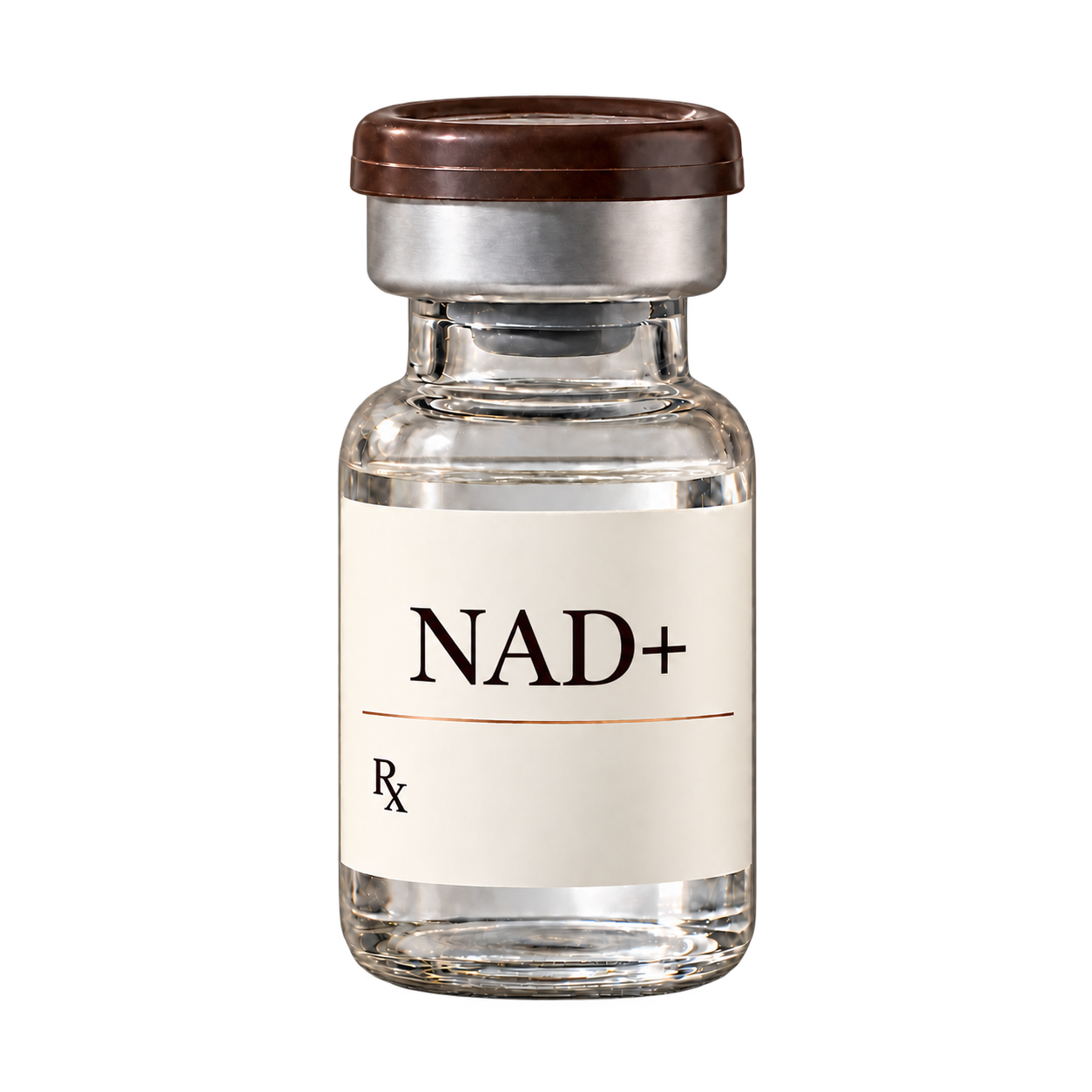
If you searched for nad+ injections, you are probably trying to separate marketing from medicine and figure out what is actually known about dosing and safety. The key point is that NAD+ injection products are typically compounded, which means there is no single FDA label that standardizes dose, injection method, or where to inject. This guide explains what NAD+ is, what evidence exists, and what questions to bring to your clinician before you start or while you are on treatment.
- NAD+ injections are compounded and not FDA-approved, so dosing and injection sites depend on your prescriber and pharmacy.
- Evidence for wellness and longevity outcomes is limited; most data are early or indirect.
- Do not self-adjust dose or schedule; ask your clinician how they monitor safety and response.
- Seek urgent care for severe allergic symptoms, chest pain, fainting, or trouble breathing.
Answer: what to know about NAD+ injections
What NAD+ is
NAD+ (nicotinamide adenine dinucleotide) is a coenzyme your cells use for energy metabolism and other processes. NAD+ levels and NAD+-related pathways are active areas of research, but that does not automatically translate to proven benefits from injections.
What the evidence supports
Human evidence for NAD+ injections improving longevity or broad wellness outcomes is limited. Much of the research focuses on NAD+ biology, or on oral NAD+ precursors such as nicotinamide riboside (NR) and nicotinamide mononucleotide (NMN), rather than injected NAD+ itself.
What dosing means here
Because compounded NAD+ is not FDA-approved, dosing is not label-driven. A clinician should tailor decisions to your goals, medical history, medications, and how you respond, and should tell you what monitoring they use.
Evidence, dosing questions, and administration
Evidence: what is known
Published human studies directly evaluating injected NAD+ for wellness goals are limited, and study designs vary. In contrast, oral NAD+ precursors (for example NR) have been studied more often, including effects on NAD+ biomarkers, but clinical outcomes remain uncertain in many populations.
Dosing: what to ask your clinician
Ask what formulation you will receive, how the dose is selected, and what symptoms or labs would prompt a change. Also ask how they define a meaningful response, and what the plan is if you do not notice benefit or you develop side effects.
Where to inject NAD+
There is no FDA label for compounded NAD+ injections that standardizes injection sites. Your prescribing clinician and the dispensing pharmacy should tell you where to inject NAD+ for your specific product and provide the official instructions for use for that preparation.
Common side effects to discuss
With injections in general, local reactions such as pain, redness, swelling, or irritation can occur at the injection site. Some people also report systemic symptoms such as nausea, headache, flushing, or feeling unwell, but the frequency and cause can be hard to pin down without standardized trials.
Serious reactions to take seriously
Any injection can rarely trigger a severe allergic reaction. Seek urgent care for trouble breathing, swelling of the face or throat, widespread hives, severe dizziness, or fainting, and tell your clinician about any severe or rapidly worsening symptoms after an injection.
When to talk to a clinician urgently
Possible severe allergy
Get urgent care for trouble breathing, swelling of the lips, tongue, or throat, widespread hives, or feeling like you might pass out. These can be signs of anaphylaxis, which is a medical emergency.
Chest pain or fainting
Chest pain, fainting, or severe dizziness after an injection should be evaluated urgently. Do not assume it is a normal reaction or something to push through.
Injection site infection concerns
Call your clinician promptly if you develop increasing redness, warmth, swelling, pus, fever, or worsening pain at an injection site. These can be signs of infection that may need treatment.
New or worsening symptoms
If you develop new symptoms that concern you, especially neurologic symptoms, severe headache, persistent vomiting, or severe weakness, contact a clinician. Bring the product name, concentration, and dosing schedule you were prescribed.
Practical tips for safer use
Confirm what you are getting
Ask the pharmacy what form of NAD+ is dispensed and how it is stored and labeled.
Keep a simple log
Track dose timing, symptoms, and injection site reactions to review with your clinician.
Do not change the plan solo
If you want to adjust dose or frequency, message your prescriber first.
Review medication interactions
Bring a full medication and supplement list to your clinician before starting.
Know your red flags
Trouble breathing, facial swelling, chest pain, or fainting needs urgent evaluation.
Frequently Asked Questions
Where to inject NAD+?
Because NAD+ injections are typically compounded, there is no single FDA label that standardizes where to inject NAD+. Your prescribing clinician and dispensing pharmacy should provide the correct injection site guidance and instructions for your specific prescription.
Are NAD shots FDA-approved?
NAD+ injection products are commonly provided as compounded medications, which are not FDA-approved. That means strength, purity, and instructions can vary by pharmacy, so clinician oversight matters.
Do nad+ injections work for longevity or energy?
Evidence for broad wellness outcomes from nad+ injections is limited, and many claims are not well-tested in large, high-quality human trials. Some research focuses on NAD+ biology or oral precursors, but clinical benefits are still uncertain for many people.
What should I ask before starting nad+ injections?
Ask what exact formulation you will receive, how dose and schedule are chosen, and what side effects should prompt a call. Also ask what monitoring they use and what the plan is if you do not notice benefit.
Can Vitals Vault help me decide if NAD+ fits?
Vitals Vault offers PocketMD, an AI health companion that can help you ask questions using your own health history and labs and tell you when to see a clinician. Final decisions about compounded NAD+ still need to be made with a licensed clinician.