
Natural estrogen cream: what it is and options
Natural estrogen cream usually means estradiol cream. It is prescription estrogen for menopause symptoms, with risks and clinician follow-up.
Key facts
- Estradiol Vaginal Cream is $39.67/month (billed $119 every 84 days), charged only after a clinician approves it.
- Answer a few health questions online. A licensed clinician reviews them. If approved, it ships to your door.
- Adults 18 or older. A licensed clinician reviews your health history and decides whether treatment is appropriate for you. Availability depends on the state you live in.
- A $20 clinician review, refunded if you don’t qualify.





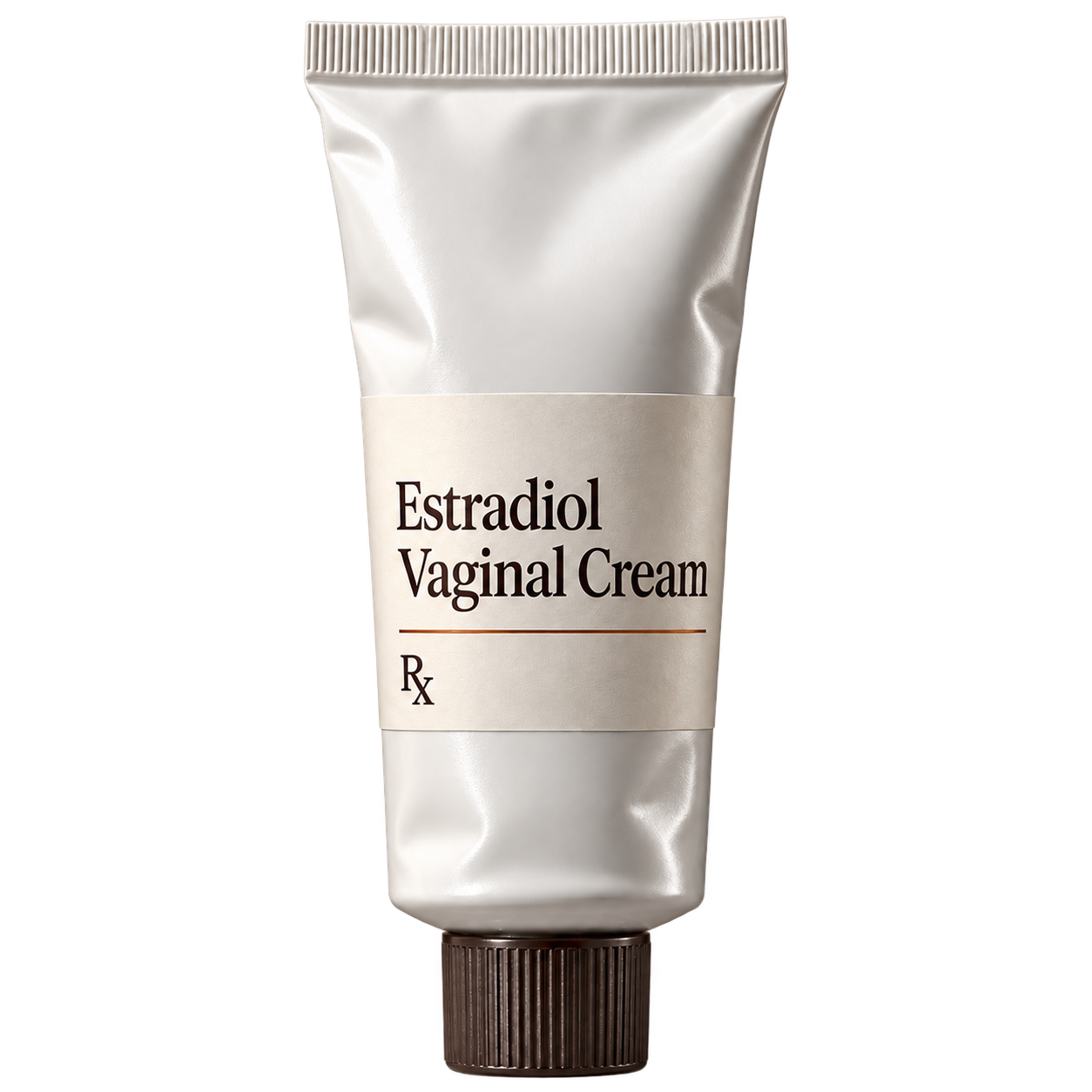
People often search “natural estrogen cream” when they want a more “bioidentical” option for menopause symptoms. In practice, most products discussed are prescription estradiol, a form of estrogen that is chemically identical to the main estrogen your ovaries make. This page explains what estradiol cream is, who it may help, key safety issues, and how access typically works. If you want to explore options with clinician oversight, Vitals Vault can connect you with a licensed clinician for evaluation where available.
- Natural estrogen cream usually refers to prescription estradiol cream for menopause related symptoms.
- Estrogen products have boxed warnings and are not right for everyone, especially with certain cancers or clot history.
- Vaginal estradiol is used for genitourinary symptoms of menopause; systemic estrogen is used for hot flashes.
- Costs vary by formulation, dose form, insurance, and whether you use a brand or generic.
What “natural estrogen cream” usually means
Estradiol is “bioidentical”
Estradiol is the primary estrogen made by the ovaries before menopause. Many people use “natural” to mean bioidentical, but what matters medically is the active ingredient, dose, and how it is used. FDA approved estradiol products include oral tablets, transdermal patches, gels, sprays, and vaginal creams, tablets, and rings.
Cream can mean vaginal estrogen
Estradiol cream is most commonly prescribed for vaginal and urinary symptoms of menopause, such as dryness, burning, pain with sex, and recurrent urinary discomfort. These symptoms are part of genitourinary syndrome of menopause, which reflects low estrogen effects on vaginal and urinary tissues.
“Natural” can also mean compounded
Some products marketed as “natural” are compounded “bioidentical” hormone creams made by a pharmacy for an individual prescription. Compounded hormones are not FDA approved, and their strength and absorption can be less predictable than FDA approved products.
Systemic vs local estrogen matters
Estrogen used throughout the body is called systemic therapy, such as oral tablets or patches. Vaginal estrogen is often considered local therapy for vaginal symptoms, although some absorption can occur. The risks, monitoring, and goals can differ by route and dose form.
How estradiol cream works
Replaces estrogen signaling
After menopause, lower estrogen levels can lead to thinning and dryness of vaginal tissue and changes in the urinary tract. Estradiol binds to estrogen receptors in tissues and helps restore estrogen signaling. This can improve tissue thickness, lubrication, and elasticity over time.
Different routes, different effects
Vaginal estradiol is primarily used for local vaginal and urinary symptoms. Systemic estrogen (for example, oral estradiol or a patch) is used for vasomotor symptoms such as hot flashes and night sweats. Your clinician chooses a route based on your symptoms and risk factors.
Progestin may be needed
If you have a uterus and use systemic estrogen, a progestin is typically added to reduce the risk of endometrial cancer from unopposed estrogen. Whether progestin is needed with low dose vaginal estrogen depends on the specific product and clinical situation, so it is a clinician decision.
Who may consider estradiol cream
Vaginal dryness and pain
If sex is painful, you have burning or irritation, or you notice persistent vaginal dryness after menopause, vaginal estradiol is a common evidence based option. It is often considered when nonhormonal moisturizers and lubricants are not enough. Your clinician will confirm symptoms and rule out other causes.
Urinary symptoms after menopause
Some people have urinary urgency, burning, or recurrent urinary discomfort that is linked to menopausal tissue changes. Vaginal estrogen may be part of a plan for genitourinary syndrome of menopause. It is not an antibiotic and does not treat an active urinary tract infection.
Menopause symptom plans
If your main symptoms are hot flashes or night sweats, clinicians often consider systemic estrogen options such as oral estradiol or a patch rather than vaginal cream alone. The best fit depends on your symptom pattern, age, time since menopause, and medical history.
People avoiding “herbal estrogen”
Over the counter products labeled as “natural estrogen” may contain plant compounds (phytoestrogens) or moisturizers, not prescription estrogen. If you want a predictable dose and known safety information, FDA approved estradiol products have standardized labeling and post marketing safety monitoring.
Who should not use estrogen without clinician clearance
Estrogen sensitive cancers
Estrogen is generally contraindicated in people with known, suspected, or history of breast cancer and in those with estrogen dependent neoplasia. If you have a cancer history, your oncology team and gynecology clinician should guide whether any estrogen exposure is appropriate.
Blood clots or stroke history
Systemic estrogen therapy is contraindicated in people with active or past deep vein thrombosis or pulmonary embolism, and in those with active or recent arterial thromboembolic disease such as stroke or myocardial infarction. Your clinician will weigh risks carefully and may recommend nonhormonal options.
Unexplained vaginal bleeding
Unusual or unexplained vaginal bleeding needs evaluation before starting estrogen. Postmenopausal bleeding can have multiple causes, including endometrial hyperplasia or cancer. A clinician may recommend an exam, ultrasound, or biopsy depending on your situation.
Liver disease or pregnancy
Estrogens are contraindicated in known liver impairment or disease and during pregnancy. If you could be pregnant or are breastfeeding, discuss safer alternatives with a clinician. Do not use someone else’s prescription hormone product.
Allergy to ingredients
Do not use estradiol products if you have had a serious allergic reaction to estradiol or any component of the specific formulation. Different creams and tablets can contain different inactive ingredients. A pharmacist can help review excipients if you have sensitivities.
What to expect if you use estradiol cream
Symptom relief is gradual
Vaginal tissue changes from low estrogen usually develop over time, and improvement can also be gradual. Many people notice less dryness and irritation after consistent use, but the timeline and degree of benefit vary. Your clinician may reassess symptoms and adjust the plan.
Follow up and monitoring
Your clinician may ask about bleeding, breast symptoms, headaches, or new leg swelling. If you are on systemic estrogen, monitoring often includes periodic reassessment of whether benefits still outweigh risks. If you have a uterus, your clinician will also consider whether endometrial protection is needed.
Application instructions are product specific
How and where to apply estrogen cream depends on the specific product and the reason it is prescribed. For FDA approved products, follow the Patient Information and Instructions for Use. If a product is compounded, your prescribing clinician and dispensing pharmacy provide directions.
Lifestyle and nonhormonal supports
Lubricants and vaginal moisturizers can be used alongside clinician guided estrogen therapy for comfort. Pelvic floor physical therapy may help if pain with sex is also related to muscle tension. If symptoms persist, your clinician may evaluate for infections, dermatologic conditions, or other causes.
Side effects and warnings
Vaginal irritation or discharge
With vaginal estradiol products, local irritation, itching, or changes in discharge can occur. If symptoms are severe, persistent, or accompanied by odor, fever, or pelvic pain, you need evaluation to rule out infection or another condition. Switching formulations may help in some cases.
Breast tenderness or headache
Estrogen therapy can be associated with breast tenderness, headache, nausea, or fluid retention. These effects are more often discussed with systemic estrogen, but can occur depending on dose and absorption. Tell your clinician if you develop new or worsening migraines or significant swelling.
Abnormal vaginal bleeding
Any new vaginal bleeding after menopause should be evaluated, whether or not you are using estrogen. Estrogen can cause bleeding, but bleeding can also signal endometrial hyperplasia or cancer. Contact a clinician promptly if you notice spotting or bleeding.
Blood clots, stroke, heart attack
Systemic estrogen therapy increases the risk of blood clots and can increase the risk of stroke and myocardial infarction in certain populations. Seek emergency care for symptoms such as chest pain, sudden shortness of breath, or one sided weakness. Your clinician considers your personal clot and cardiovascular risk before prescribing.
Breast cancer and dementia warnings
Estrogen therapy carries boxed warnings that include increased risk of endometrial cancer with unopposed estrogen, and risks related to cardiovascular events and probable dementia in older postmenopausal women in certain studies. Risk depends on factors like age, time since menopause, and whether progestin is used when needed.
Cost and access
What drives cost
Cost depends on whether you use a generic or brand product, the formulation (cream, tablet, ring, patch), and your dose and refill frequency. Pharmacy pricing and your insurance formulary can also change what you pay. Current prices for eligible options may be shown on this page when available.
Insurance and prior authorization
Some plans cover certain estrogen formulations but not others, or require prior authorization. If a specific product is not covered, a clinician may discuss alternatives within the same class. Coverage can differ for local vaginal estrogen compared with systemic hormone therapy.
Compounded products differ
Compounded “natural” estrogen creams are not FDA approved and may not be covered by insurance. If you are considering compounded hormones, ask what quality standards the pharmacy follows and how dosing consistency is verified. FDA approved estradiol products have standardized manufacturing and labeling.
How to get estradiol safely
- 1
Clarify your main symptoms
Note whether your main issue is vaginal and urinary symptoms, hot flashes, or both.
- 2
Review your health history
A clinician will screen for contraindications like clot history, cancers, liver disease, and unexplained bleeding.
- 3
Choose a formulation and plan
Together you decide on a route (vaginal vs systemic) and whether endometrial protection is needed.
- 4
Follow up and reassess
You will check in about symptom relief, side effects, and whether the plan still fits your goals.
Frequently Asked Questions
What is natural estrogen cream?
Most of the time, “natural estrogen cream” refers to prescription estradiol cream, which is bioidentical to the main estrogen your body makes. Some products marketed as “natural” are compounded hormones, which are not FDA-approved and can vary in strength.
Is natural estrogen cream the same as vaginal estrogen cream?
It can be, depending on what product you mean. Vaginal estradiol creams are commonly prescribed for vaginal and urinary symptoms of menopause, while systemic estrogen products are used for hot flashes. A clinician can help match the route to your symptoms.
Is natural estrogen cream safe?
Estrogen products have important warnings and are not safe for everyone, especially with a history of breast cancer, blood clots, stroke, unexplained vaginal bleeding, or liver disease. Safety depends on the formulation, dose, and your medical history, so clinician screening matters.
Do you need progesterone with estrogen cream?
If you have a uterus and use systemic estrogen, a progestin is typically needed to reduce endometrial cancer risk from unopposed estrogen. Whether you need it with low-dose vaginal estrogen depends on the specific product and your situation, so it is a clinician decision.
How much does natural estrogen cream cost?
Cost depends on whether you use a generic or brand product, the formulation, and your insurance coverage. If this page shows a price block, it reflects current catalog pricing for eligible options, and a clinician can discuss alternatives if coverage is limited.