
Estrogen cream: what it is and how it works
Estrogen cream is prescription estradiol used to treat menopausal vulvar and vaginal symptoms. Learn the safety basics and side effects.
Key facts
- Estradiol Vaginal Cream is $39.67/month (billed $119 every 84 days), charged only after a clinician approves it.
- Answer a few health questions online. A licensed clinician reviews them. If approved, it ships to your door.
- Adults 18 or older. A licensed clinician reviews your health history and decides whether treatment is appropriate for you. Availability depends on the state you live in.
- A $20 clinician review, refunded if you don’t qualify.





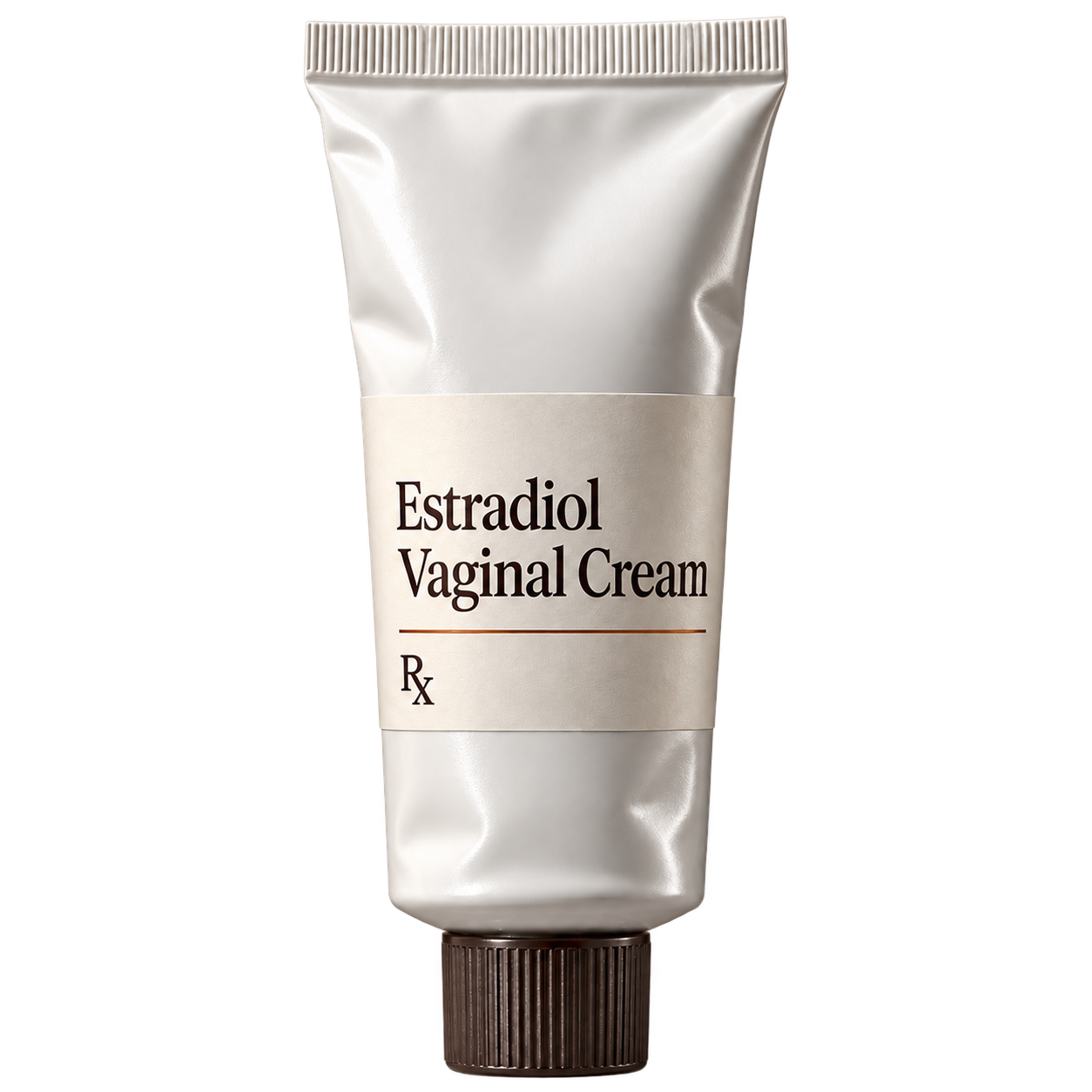
Estrogen cream is a prescription form of estradiol that is most often used in and around the vagina to treat menopause related symptoms such as dryness, burning, and pain with sex. It is different from facial or cosmetic estrogen creams, and it is not the same as systemic hormone therapy pills or patches. This guide explains what estrogen cream does, who it may or may not fit, side effects to watch for, and how access typically works.
- Estrogen cream is prescription estradiol used to treat menopausal vaginal and vulvar symptoms.
- It helps restore vaginal tissue and acidity, which can reduce dryness and painful sex.
- Even vaginal estrogen has boxed warnings, so discuss your personal risks with a clinician.
- Common effects are local irritation or discharge; urgent symptoms need prompt medical care.
- Costs vary by product, insurance coverage, and pharmacy; current prices are shown on this page.
What estrogen cream is
A prescription estradiol product
Most prescription estrogen creams contain estradiol, a form of estrogen. In the US, estradiol vaginal cream is FDA approved to treat moderate to severe vulvar and vaginal atrophy due to menopause and to treat moderate to severe dyspareunia (pain with sex) due to menopause.
Usually used locally, not cosmetically
When people say “estrogen cream,” they often mean vaginal estradiol cream used for genitourinary syndrome of menopause (GSM), which includes dryness, burning, and urinary symptoms. Cosmetic “estrogen face cream” products are not the same as prescription estradiol and should not be treated as interchangeable.
Not the same as pills or patches
Oral tablets and transdermal patches deliver estrogen systemically, meaning throughout the body. Vaginal estradiol cream is intended for local treatment, but some absorption can still occur, so safety warnings and individualized risk review still matter.
Different from compounded hormones
This page focuses on FDA approved estradiol products. Compounded “bioidentical” hormone creams are prepared for an individual prescription and are not FDA approved, and their strength and absorption can be less predictable.
- Active ingredient (common)
- Estradiol (vaginal cream formulations are FDA approved for menopausal vulvar and vaginal symptoms).
- FDA approved uses (vaginal cream)
- Moderate to severe vulvar and vaginal atrophy due to menopause; moderate to severe dyspareunia due to menopause.
- Boxed warning applies
- Estrogens have boxed warnings about endometrial cancer and cardiovascular and dementia risks (product labeling).
How estrogen cream works
Replaces estrogen in vaginal tissue
After menopause, estrogen levels fall and the vaginal and vulvar tissues can become thinner, drier, and more fragile. Estradiol applied vaginally can help reverse some of these changes by activating estrogen receptors in local tissues.
Improves moisture and elasticity
By supporting the health of the vaginal lining, estrogen therapy can improve lubrication and tissue flexibility. For many people, that can reduce irritation and make sex less painful when symptoms are due to GSM.
Helps restore vaginal pH
Low estrogen can raise vaginal pH (make it less acidic), which may contribute to irritation and recurrent symptoms. Vaginal estrogen can help restore a more typical vaginal environment, which may also affect urinary and infection like symptoms in some people.
Local does not mean risk free
Even when used vaginally, estradiol can be absorbed into the bloodstream. That is why product labeling includes systemic estrogen warnings and why clinicians consider your personal history, including cancer, clot, and bleeding risks.
Who estrogen cream is for
Menopause related vaginal symptoms
Vaginal estradiol cream is commonly used for moderate to severe vaginal dryness, burning, irritation, and pain with sex when these symptoms are related to menopause. A clinician can help confirm whether symptoms fit GSM versus infection, dermatologic conditions, or other causes.
People who prefer a local option
Some people want to target vaginal symptoms without taking systemic estrogen. Vaginal cream is one local option, along with vaginal tablets or rings, and the best fit depends on your symptoms, preferences, and medical history.
Those with urinary symptoms linked to GSM
Some urinary symptoms can overlap with GSM, such as burning or recurrent UTI like discomfort. A clinician may consider vaginal estrogen as part of a broader plan after evaluating for infection and other causes.
People needing individualized counseling
If you have a history of abnormal uterine bleeding, blood clots, stroke, heart disease, or estrogen sensitive cancers, you should discuss risks and alternatives with a clinician before using any estrogen product.
Who should not use estrogen cream
Undiagnosed vaginal bleeding
Unexpected vaginal bleeding after menopause needs medical evaluation. Estrogen can stimulate the uterine lining, so clinicians generally evaluate bleeding before starting or continuing estrogen therapy.
Known or suspected estrogen dependent cancer
Product labeling for estradiol lists known, suspected, or history of breast cancer and estrogen dependent neoplasia as contraindications. If you have a cancer history, decision making should involve your oncology and gynecology teams.
Blood clot or stroke history
Estradiol labeling lists active or history of deep vein thrombosis or pulmonary embolism and active or recent arterial thromboembolic disease (such as stroke or heart attack) as contraindications. Your clinician weighs risks and may recommend nonhormonal options.
Severe liver disease or allergy
Estradiol products list liver dysfunction or disease and known hypersensitivity to ingredients as contraindications. Tell your clinician about prior reactions to hormones or topical products.
Pregnancy
Estradiol products are not indicated in pregnancy. If pregnancy is possible, discuss contraception and safer alternatives for symptoms.
What to expect with estrogen cream
Symptom focused goals
The goal of vaginal estradiol cream is to improve menopause related vulvar and vaginal symptoms, such as dryness and pain with sex. It is not intended for contraception and it is not a treatment for every cause of vaginal discomfort.
Follow your prescribed schedule
Estradiol cream dosing schedules vary by product and by your clinician’s plan. Use it only as directed and contact your prescriber if you are unsure how much to use or how often.
Best time of day depends on instructions
People often ask about the best time of day to apply estrogen cream. The most important factor is using it the way your clinician prescribes and in line with the product instructions; if timing affects comfort or leakage, ask your clinician about practical adjustments.
When to recheck in
If symptoms are not improving, or if you develop new bleeding, breast changes, or persistent pelvic pain, you should follow up. Clinicians may reassess the diagnosis, check for infection or skin conditions, and review whether a different formulation fits better.
Side effects and warnings
Vaginal irritation or burning
Local irritation, itching, or burning can happen, especially early on or if you are sensitive to an ingredient in the cream base. If symptoms are severe, persistent, or accompanied by sores, swelling, or fever, contact a clinician to rule out infection or dermatitis.
Vaginal discharge or spotting
Some people notice discharge or light spotting. Any new or recurrent bleeding after menopause should be evaluated, because estrogen can stimulate the uterine lining and bleeding can also signal other conditions.
Yeast infection or BV like symptoms
People sometimes ask whether estrogen cream can cause a yeast infection. Vaginal symptoms can overlap, and changes in the vaginal environment can affect irritation and discharge, but you should not assume the cause. If you have new odor, thick discharge, or significant itching, get evaluated and treated appropriately.
Breast tenderness or headache
Because some estradiol can be absorbed, systemic type symptoms such as breast tenderness, nausea, or headache may occur in some people. Tell your clinician if these are new, worsening, or bothersome, especially if you have risk factors that make estrogen less appropriate.
Blood clots, stroke, heart attack
Estrogen therapy carries warnings about increased risk of blood clots and certain cardiovascular events, particularly with systemic estrogen and depending on age and risk factors. Seek urgent care for symptoms such as chest pain, sudden shortness of breath, leg swelling or pain, or sudden neurologic symptoms.
Endometrial cancer risk
In a person with a uterus, estrogen without a progestin can increase the risk of endometrial (uterine) cancer. Report any unusual vaginal bleeding promptly so a clinician can evaluate the cause.
Cost and access
What drives the cost
The cost of estrogen cream depends on the exact product (cream versus tablet versus ring), whether you use an FDA approved generic or a brand, the pharmacy, and your insurance benefits. Your clinician may also recommend follow up visits based on your symptoms and risk factors.
Insurance coverage varies
Some plans cover vaginal estradiol products with a copay, while others require prior authorization or prefer a specific formulation. If a plan does not cover one product, a clinician may be able to document medical need or consider an alternative formulation.
Where to see current prices
If a price block appears on this page, it shows current catalog pricing for the linked estradiol treatment option. Prices can change and may differ from what you pay at a local pharmacy or through insurance.
How to get estrogen cream
- 1
Review your symptoms and goals
Note your symptoms, triggers, and what you have tried so far, including lubricants or moisturizers.
- 2
Share key medical history
Tell the clinician about your uterus status, bleeding, clot history, migraines, liver disease, and any cancer history.
- 3
Discuss options and safety
A clinician can compare vaginal estrogen forms and nonhormonal alternatives and explain the main warnings for your situation.
- 4
Fill the prescription and follow up
Use the medication exactly as prescribed and follow up if symptoms persist, side effects occur, or any bleeding develops.
Frequently Asked Questions
How to apply estrogen cream with finger?
How you apply estrogen cream depends on the specific product instructions and your clinician’s directions. Many prescription vaginal estradiol creams come with an applicator, and your pharmacist can show you how to use it. If you are unsure, ask your prescriber before changing how you apply it.
What does estrogen cream do?
Prescription estradiol cream helps treat menopause related vulvar and vaginal symptoms by supporting the health of vaginal tissue. It can improve dryness, irritation, and pain with sex when symptoms are due to low estrogen after menopause. Some absorption can occur, so safety review still matters.
What is estrogen cream used for?
FDA approved estradiol vaginal cream is used to treat moderate to severe vulvar and vaginal atrophy due to menopause and moderate to severe dyspareunia due to menopause. Clinicians may also consider it for related GSM symptoms after evaluating for other causes. Your exact use should match your clinician’s plan.
Is estrogen cream safe?
For many people, vaginal estradiol can be used safely under clinician supervision, but it still carries boxed warnings and contraindications. Your personal history, including bleeding, clot risk, and cancer history, affects whether it is appropriate. Report any postmenopausal bleeding or clot warning symptoms promptly.
What is the best time of day to apply estrogen cream?
The best time of day to apply estrogen cream is the time that matches your prescribed schedule and the product instructions. If timing affects comfort, leakage, or sex, ask your clinician for practical guidance without changing the prescribed plan. Consistency matters more than a specific clock time.