
NAD+ dosage: choosing your dose
NAD+ dosage is not standardized. Your clinician sets dose and frequency based on goals, route, tolerance, and monitoring, especially for compounded NAD+.
Key facts
- NAD+ Injection is $250/month (billed $250 every 4 weeks), charged only after a clinician approves it.
- Answer a few health questions online. A licensed clinician reviews them. If approved, it ships to your door.
- Adults 18 or older. A licensed clinician reviews your health history and decides whether treatment is appropriate for you. Availability depends on the state you live in.


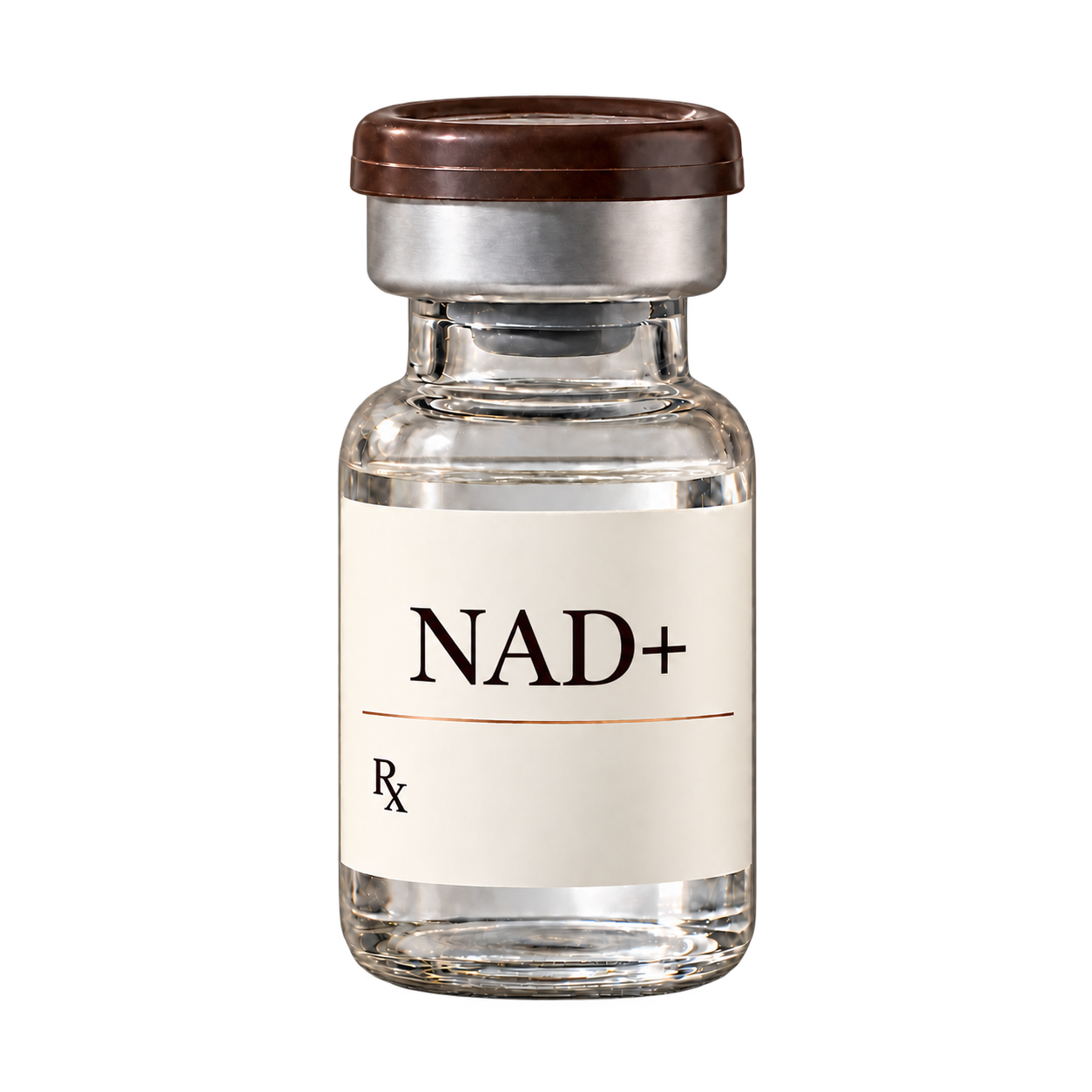
NAD+ dosage is not standardized the way many FDA approved prescription drugs are. In practice, clinicians choose a dose and frequency based on your goals, how you tolerate it, your medical history, and whether you are using injections or another route. This page explains what typically goes into NAD+ dosing decisions and what to discuss with a clinician. If you want to sanity check questions against your own history and labs, Vitals Vault includes PocketMD as a place to ask, but dose decisions stay with your prescriber.
- There is no single standard NAD+ dosage; your clinician individualizes it.
- Because NAD+ injections are typically compounded, dosing and instructions come from your prescriber and pharmacy.
- Dose decisions usually depend on your goal, route, tolerance, and any side effects.
- Bring your full medication and supplement list to avoid preventable interactions.
NAD+ dosage: choosing your dose
No FDA labeled dosing
NAD+ is a naturally occurring molecule in the body, but NAD+ injection products used in wellness settings are typically not FDA approved drugs with a standardized label. That means you should not expect one official dose or frequency to apply to everyone.
Compounded instructions matter
With compounded NAD+, the prescribing clinician and dispensing pharmacy provide the specific directions for use. Follow the prescription label and the pharmacy instructions rather than online dosing charts.
Dose is adjusted over time
Clinicians often start conservatively and adjust based on how you feel and any side effects. If you have symptoms that concern you, the safest next step is to contact the prescribing clinician instead of changing the dose yourself.
What determines NAD+ dosing
Your goal and expectations
People seek NAD+ for broad wellness goals like energy or recovery, but evidence for many outcomes is still limited and protocols vary. Your clinician may frame dosing around symptom tracking and realistic expectations rather than a guaranteed result.
Route and setting
NAD+ can be given by different routes in different settings, and the route can affect how quickly effects are felt and what side effects show up. Your prescriber should specify the route and how often it is used for your plan.
Tolerability and side effects
If you experience side effects, clinicians may change the plan by adjusting the amount, frequency, or route, or by stopping the medication. Do not push through severe symptoms or try to self adjust without guidance.
Other medications and supplements
Bring a complete list of prescription drugs, over the counter medicines, and supplements. Even when formal interaction data are limited, your clinician can screen for overlapping risks and decide what monitoring makes sense.
Medical history and monitoring
Your clinician may consider conditions like kidney or liver disease, pregnancy status, and cardiovascular history when deciding whether NAD+ is appropriate and how closely to monitor. If labs are used, they help track trends and safety, not to diagnose a condition.
Product concentration varies
Compounded products can differ in concentration and packaging, which changes how a prescribed dose is measured and administered. This is one reason copying a dosing chart from the internet can be unsafe.
When to talk to a clinician
Before starting or restarting
If you are considering NAD+ or you have been off it for a while, ask what the plan is for starting and whether any baseline information is needed. This is especially important if your health status or medications have changed.
If you are not tolerating it
Contact the prescribing clinician if you have symptoms that feel severe, persistent, or unusual for you. Do not change the dose or frequency on your own, because the safest adjustment depends on what is causing the symptoms.
If you have new meds or conditions
Let your clinician know if you start a new prescription, become pregnant, develop a new diagnosis, or have a procedure planned. These changes can affect whether NAD+ still fits your risk profile and monitoring needs.
If you have injection questions
For compounded NAD+, your prescriber and dispensing pharmacy should provide administration instructions and training. Ask them to review the exact product you received and the directions on your prescription label.
Pro tips for safer dosing conversations
Bring the vial or label
Share the exact concentration and directions printed by the pharmacy.
Track symptoms and timing
Note when symptoms start, how long they last, and what makes them better or worse.
Ask what to do if missed
Get a clear plan for missed doses rather than doubling up.
Confirm monitoring goals
Ask which labs or vitals are being tracked and what changes would prompt a dose adjustment.
Use one prescriber
Avoid overlapping protocols from multiple clinics to reduce confusion and risk.
Frequently Asked Questions
What is a typical NAD+ dosage?
There is not one typical NAD+ dosage that applies to everyone because protocols vary and many NAD+ injections are compounded. Your clinician sets the dose and frequency based on your goals, medical history, route, and how you tolerate it.
Is there an NAD+ injection dosage chart I can follow?
Be cautious with any NAD+ injection dosage chart you find online because it may not match the concentration or route of your prescribed product. The safest reference is the prescription label and instructions from your prescriber and dispensing pharmacy.
How often are NAD+ injections taken?
NAD+ injection dosage and frequency are individualized and depend on the protocol your clinician uses and how you respond. If you are unsure how often to take it, ask your prescriber rather than changing the schedule yourself.
Can NAD+ dosage be taken per day subcutaneous?
Whether NAD+ is used subcutaneously and how often it is used depends on the specific prescription and protocol. Your prescriber and pharmacy should confirm the route and provide the correct directions for your compounded product.
How do I ask Vitals Vault about my NAD+ dosing?
You can use PocketMD in Vitals Vault to ask questions using your own health history and labs. It can help you prepare for a clinician conversation, but it cannot prescribe and it is not for emergencies.