
Minoxidil mechanism of action: what it does
Minoxidil likely helps hair growth by prolonging the growth phase and enlarging follicles. Here is what research and labeling say and what is uncertain.
Key facts
- Finasteride + Minoxidil Scalp Solution is $53.50/month (billed $107 every 50 days), charged only after a clinician approves it.
- Answer a few health questions online. A licensed clinician reviews them. If approved, it ships to your door.
- Adults 18 or older. A licensed clinician reviews your health history and decides whether treatment is appropriate for you. Availability depends on the state you live in.


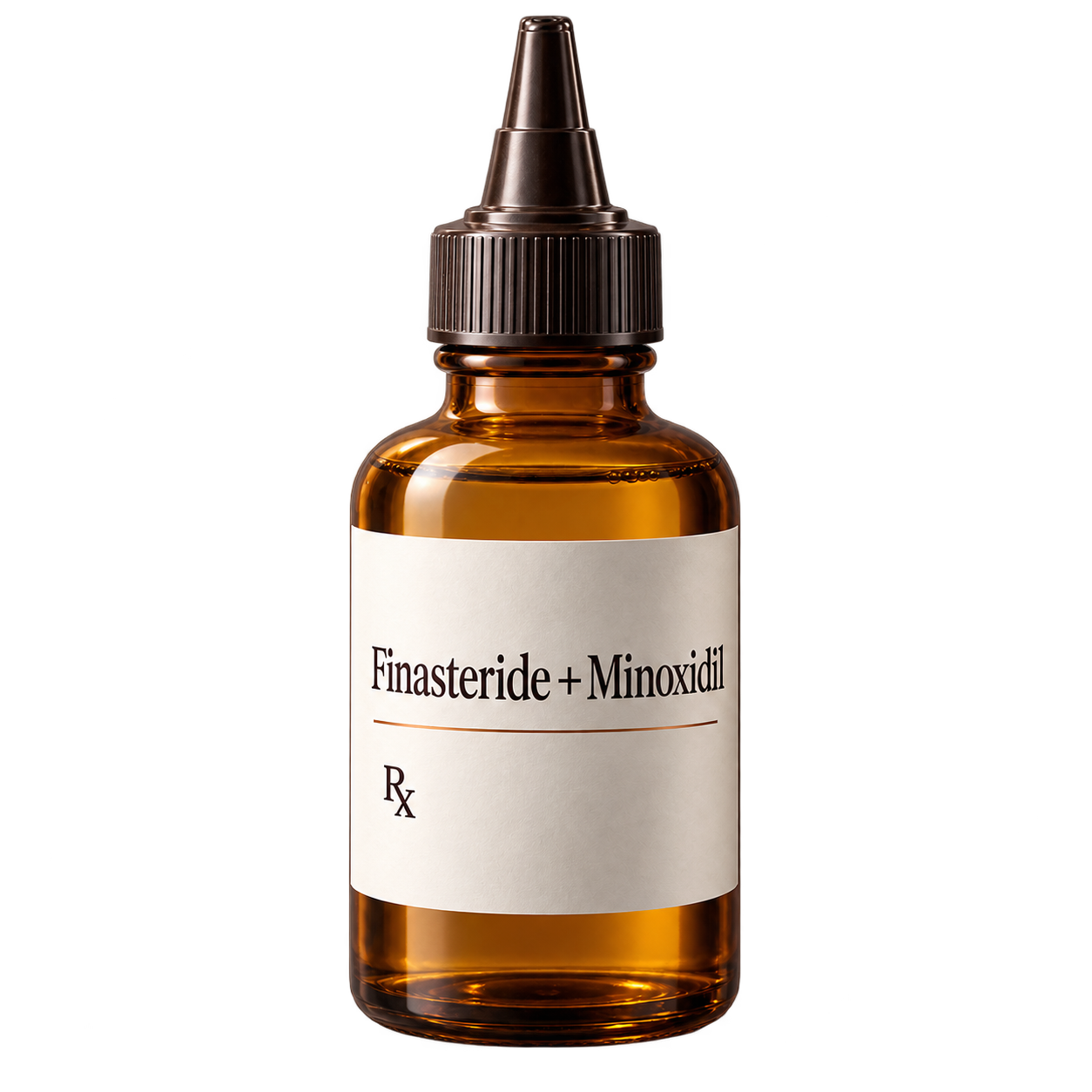
Minoxidil is a medication used on the scalp for hair loss. If you are asking what it does, the most accurate answer is that it helps some hair follicles shift toward active growth and stay there longer, but researchers still debate the exact steps. This page explains the leading, evidence-based theories behind the minoxidil mechanism of action and what that means for your expectations. If you are considering treatment, Vitals Vault can connect you with clinician-guided options and help you decide what questions to ask.
- The minoxidil mechanism of action is not fully known, but it appears to stimulate hair follicles and support regrowth.
- Evidence suggests minoxidil can prolong the hair growth phase (anagen) and increase follicle size.
- Minoxidil is a vasodilator, but improved blood flow is not the only proposed explanation for hair effects.
- Topical minoxidil can cause scalp irritation; systemic effects are uncommon but possible.
Answer: what minoxidil does
- What is known from labeling
- The mechanism by which topical minoxidil stimulates hair growth is not known.
- What research supports
- Minoxidil appears to shift follicles toward anagen and may enlarge miniaturized follicles in androgenetic alopecia.
- What this means for you
- Minoxidil can help maintain and regrow hair, but response varies and takes consistent use.
How minoxidil may work in hair follicles
It is a prodrug on the scalp
Minoxidil itself is converted to minoxidil sulfate in the skin by sulfotransferase enzymes. This active metabolite is thought to be important for the hair-growth effect, and differences in enzyme activity may help explain why some people respond better than others.
It may prolong the growth phase
Hair follicles cycle through growth (anagen), transition (catagen), and rest (telogen). Studies in androgenetic alopecia suggest minoxidil can increase the proportion of follicles in anagen and reduce time spent in telogen, which can translate into thicker, more persistent hair over time.
It may enlarge miniaturized follicles
In pattern hair loss, follicles can shrink (miniaturize), producing finer hairs. Clinical and histologic observations support that minoxidil can increase hair shaft diameter and may partially reverse miniaturization in some follicles, which is one reason density can look improved even without new follicles forming.
Potassium channel effects are a leading theory
Minoxidil is known to open ATP-sensitive potassium channels in other tissues, and this is one of the main proposed mechanisms in hair follicles as well. Potassium channel signaling may influence follicle cell activity and cycling, but the full pathway in human scalp follicles is still being studied.
Blood flow may play a role, but is not the whole story
Minoxidil was originally developed as an oral blood pressure medication because it relaxes blood vessels (vasodilator). Increased local blood flow and changes in growth factors have been proposed to support follicles, but experts generally consider the hair effect to involve more than circulation alone.
What it does not do
Minoxidil does not block dihydrotestosterone (DHT), the hormone linked to androgenetic hair loss. That is why it is sometimes paired with a DHT-targeting medication such as finasteride, under clinician guidance, to address different parts of the biology.
| Proposed mechanism | What it means | How certain is it? |
|---|---|---|
| Conversion to minoxidil sulfate in skin | Your scalp activates the medication locally | Supported by pharmacology and human skin data; still not the full story |
| Shift toward anagen (growth) phase | More follicles spend time actively growing hair | Supported by clinical and histologic observations in androgenetic alopecia |
| Follicle enlargement and thicker shafts | Existing hairs may become thicker and more visible | Supported by clinical outcomes; varies by person |
| Potassium channel opening | Cell signaling changes that may favor growth | Plausible and widely cited; human follicle pathway not fully mapped |
| Vasodilation and growth-factor changes | Local environment may become more supportive for follicles | Possible contributor; not proven as the only driver |
When to talk to a clinician
Sudden or patchy hair loss
If hair loss is sudden, rapidly worsening, or patchy, it can signal a different condition than pattern hair loss. A clinician can check for causes like alopecia areata, scalp inflammation, infection, or medication effects and guide next steps.
Pregnancy or breastfeeding questions
If you are pregnant, trying to conceive, or breastfeeding, ask a clinician before using minoxidil. Safety guidance can differ by formulation and your personal risk factors.
Heart, blood pressure, or swelling issues
Although topical minoxidil is intended to act locally, systemic absorption can occur. If you have heart disease, blood pressure concerns, or develop swelling, dizziness, fast heartbeat, or shortness of breath, seek medical advice promptly.
Scalp reactions that do not settle
Itching, redness, burning, or flaking can happen, sometimes due to the vehicle ingredients rather than minoxidil itself. A clinician can help you decide whether to switch formulations, adjust your routine, or evaluate for dermatitis.
Pro tips for using minoxidil
Be consistent
Minoxidil works by supporting hair cycling, so missed applications can reduce the chance of benefit.
Expect a gradual process
Early shedding can occur as follicles shift cycles; ask a clinician what is normal for you.
Protect your scalp barrier
Gentle cleansing and avoiding harsh irritants can help if you get dryness or itching.
Know what it targets
Minoxidil supports growth signals; it does not address DHT-driven miniaturization directly.
Check for other contributors
Iron, thyroid, and other issues can worsen shedding; labs can help you and your clinician decide.
Frequently Asked Questions
What does minoxidil do?
Minoxidil helps some hair follicles spend more time in the growth phase and can increase hair thickness over time. It does not work for everyone, and the exact mechanism is not fully known. Consistent use is usually needed to judge response.
What is the minoxidil mechanism of action?
The minoxidil mechanism of action for hair growth is not fully understood in labeling. Research suggests it is converted to an active metabolite in the skin and may promote anagen, enlarge miniaturized follicles, and affect potassium channel signaling.
Is minoxidil basically just increasing blood flow to the scalp?
Minoxidil is a vasodilator, so blood flow effects are plausible, but most experts do not view circulation as the only explanation. Hair follicle cycling and local signaling changes are also thought to contribute.
If minoxidil does not block DHT, why is it paired with finasteride?
Minoxidil and finasteride act on different parts of pattern hair loss biology. Minoxidil supports follicle growth cycling, while finasteride reduces DHT, which contributes to follicle miniaturization in androgenetic alopecia. A clinician can help decide whether either is appropriate for you.
Can I use Vitals Vault to ask if minoxidil makes sense for me?
Yes. Vitals Vault offers clinician guided treatment options and also PocketMD, which can help you ask questions using your health history and labs. A licensed clinician should make the final call on whether treatment is appropriate and safe.