
Glutathione side effects: what to expect
Common and rare side effects of glutathione by form, who should avoid it, and what to ask before starting injections.
Key facts
- Glutathione Injection is $129/month (billed $129 every 4 weeks), charged only after a clinician approves it.
- Answer a few health questions online. A licensed clinician reviews them. If approved, it ships to your door.
- Adults 18 or older. A licensed clinician reviews your health history and decides whether treatment is appropriate for you. Availability depends on the state you live in.


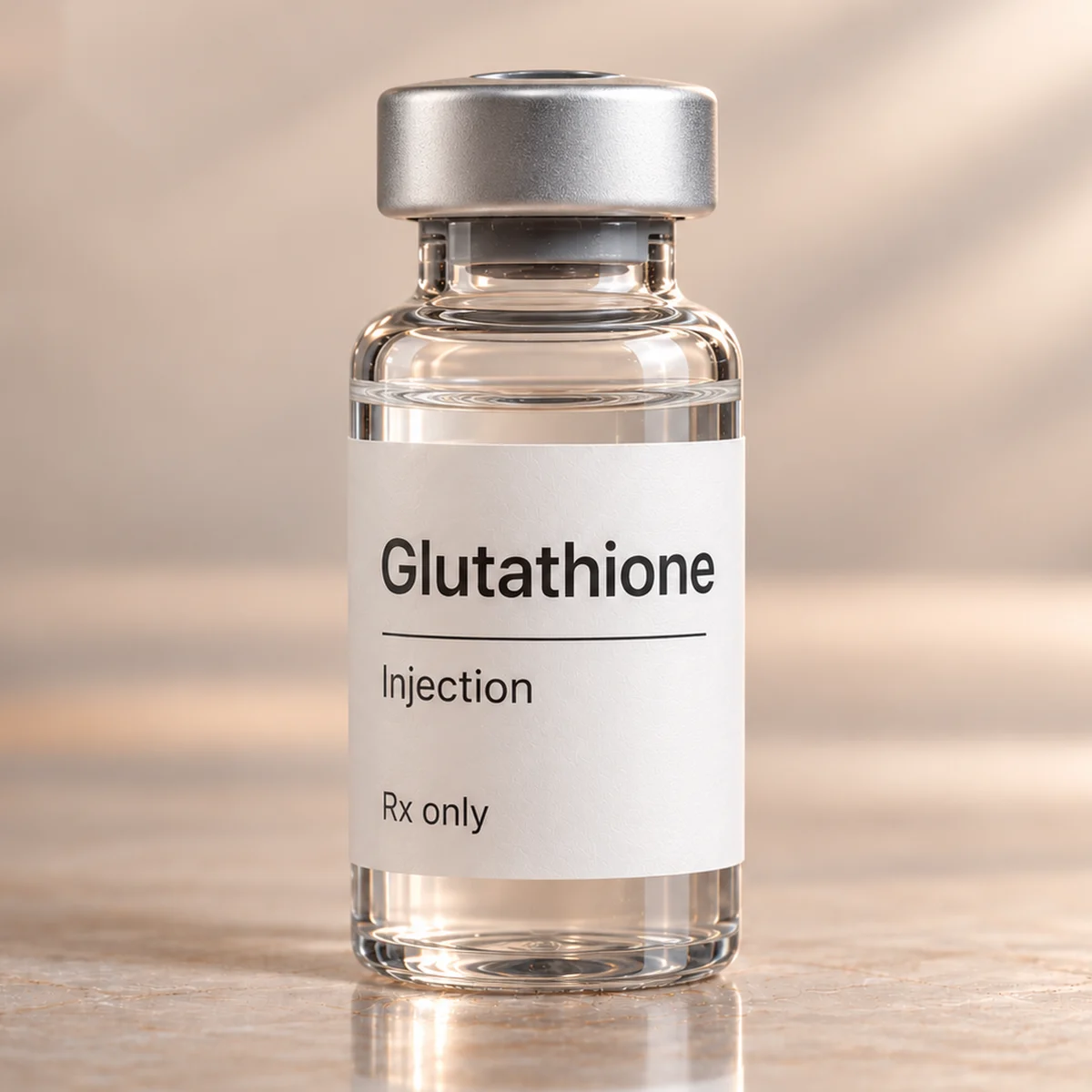
Glutathione is a naturally occurring antioxidant your body makes, and it is also used as a supplement and as clinician prescribed compounded therapy. People most often search for glutathione side effects because they feel unwell after a dose or want to understand the real risks before trying it. This guide explains the most reported side effects, what could signal a more serious reaction, and when it is safer to call a clinician or seek urgent care.
- Glutathione side effects are usually mild, but allergic reactions can be serious.
- Evidence is strongest for short term tolerability; long term safety is less certain.
- Stop and get urgent care for trouble breathing, facial swelling, or widespread hives.
- If you have asthma or sulfite sensitivity, discuss risk carefully before using glutathione.
Glutathione side effects, in plain terms
- What glutathione is
- A tripeptide antioxidant made in the body; also sold as supplements and used in clinical studies.
- Why side effects vary
- Different routes (oral, inhaled, IV) and product quality can change tolerability and risk.
- What is known best
- Short term studies report mostly mild adverse effects, with limited long term safety data.
Common vs serious side effects and what may help
Nausea or stomach upset
Some studies of oral glutathione report gastrointestinal symptoms such as nausea or abdominal discomfort. If symptoms are mild, it can help to review timing with food and any other new supplements that can irritate the stomach. Persistent vomiting, severe abdominal pain, or dehydration needs medical advice.
Headache
Headache has been reported in some glutathione studies and may also happen from dehydration, caffeine changes, or other ingredients in a product. If headaches are new, severe, or come with neurologic symptoms like weakness or confusion, contact a clinician promptly.
Skin rash or itching
Rash or itching can occur as a sensitivity to glutathione itself or to other ingredients in a supplement or compounded preparation. Mild, localized rash should be discussed with your clinician, especially if it recurs after dosing. A rapidly spreading rash, blistering, or rash with fever is urgent.
Allergic reaction (anaphylaxis)
Any medication or supplement can trigger an allergic reaction. Seek emergency care for trouble breathing, wheezing, swelling of the lips or tongue, fainting, or widespread hives. If you have had prior reactions to injections or IV infusions, tell your clinician before using glutathione again.
Breathing symptoms in asthma
Inhaled glutathione has been associated with bronchospasm (airway tightening) in people with asthma in clinical research, which can cause coughing, wheezing, or shortness of breath. If you have asthma, discuss this risk before any inhaled or nebulized form. New or worsening breathing symptoms should be treated as urgent.
Product quality and contamination risks
Because many glutathione products are supplements or compounded medications, the risk profile can depend on the source and preparation. Contamination, incorrect concentration, or added ingredients can increase side effects or cause unexpected reactions. Use products only under clinician guidance and report any unusual symptoms.
| What you notice | How urgent it is | What to do next |
|---|---|---|
| Mild nausea, mild headache, brief flushing | Usually not urgent | Track timing and discuss at your next check in. |
| Rash or itching without breathing symptoms | Call soon | Contact your clinician to review ingredients and whether to pause. |
| Wheezing, chest tightness, shortness of breath | Urgent | Seek urgent care, especially if you have asthma. |
| Facial or throat swelling, widespread hives, fainting | Emergency | Call emergency services or go to the ER. |
When to call a clinician or seek urgent care
Call urgently for breathing symptoms
Wheezing, chest tightness, or shortness of breath can be a severe allergic reaction or bronchospasm. This is especially important if you have asthma or a history of infusion reactions. Do not wait for a routine appointment if breathing is affected.
Call soon for rash or swelling
A new rash, itching, or swelling after glutathione may be a sensitivity to the active ingredient or to other components. Your clinician can help you sort out whether this is likely allergic and whether testing or a different approach is safer. Worsening or widespread rash needs prompt evaluation.
Discuss ongoing GI symptoms
If nausea, diarrhea, or abdominal pain continues, your clinician can review other causes, including other supplements, medications, or underlying conditions. Persistent symptoms can also be a sign the formulation or route is not a good fit for you. Seek care sooner if you cannot keep fluids down.
Review your full medication list
Even when a supplement seems simple, interactions and additive side effects can happen when you combine multiple products. Bring a list of all prescriptions, over the counter medications, and supplements. This helps your clinician identify avoidable triggers for side effects.
Pro tips for safer use discussions
Ask what form you are getting
Oral, inhaled, and IV forms have different risks and evidence.
Confirm the source and ingredients
Side effects can come from additives, not just glutathione.
Track symptom timing
Write down onset, duration, and any other new meds or supplements.
Mention asthma or prior reactions
These histories can change the risk of breathing side effects.
Do not ignore red flags
Breathing trouble, swelling, or widespread hives needs urgent care.
Frequently Asked Questions
What are the most common glutathione side effects?
In studies, reported side effects are often mild and can include stomach upset, headache, and skin rash. Your risk can vary by route (oral, inhaled, IV) and by product quality. New or worsening symptoms should be discussed with a clinician.
Can glutathione cause an allergic reaction?
Yes. Any supplement or medication can cause an allergic reaction, including hives, swelling, or breathing problems. Trouble breathing, facial or throat swelling, or fainting should be treated as an emergency.
Can glutathione affect breathing or asthma?
In clinical research, inhaled glutathione has been associated with bronchospasm in people with asthma. If you have asthma, discuss risks before using any inhaled or nebulized form. Seek urgent care for wheezing or shortness of breath.
Are glutathione injections safer than oral glutathione?
Safety depends on the route, dose, and the specific product used, and evidence is limited across forms. Injections and IV infusions can add risks related to administration and product sterility. Review the pros and cons with a licensed clinician.
How can Vitals Vault help if I am worried about side effects?
If you have symptoms, you can start with labs to check what may be contributing and share results with a clinician. You can also use PocketMD to ask questions using your own health history and learn when to seek care. For severe or sudden symptoms, get urgent medical help.