
Methylene blue side effects: what to expect
Methylene blue side effects range from urine discoloration and nausea to rare serious reactions like serotonin syndrome and hemolysis in G6PD deficiency.
Key facts
- Methylene Blue is $43/month (billed $129 every 84 days), charged only after a clinician approves it.
- Answer a few health questions online. A licensed clinician reviews them. If approved, it ships to your door.
- Adults 18 or older. A licensed clinician reviews your health history and decides whether treatment is appropriate for you. Availability depends on the state you live in.


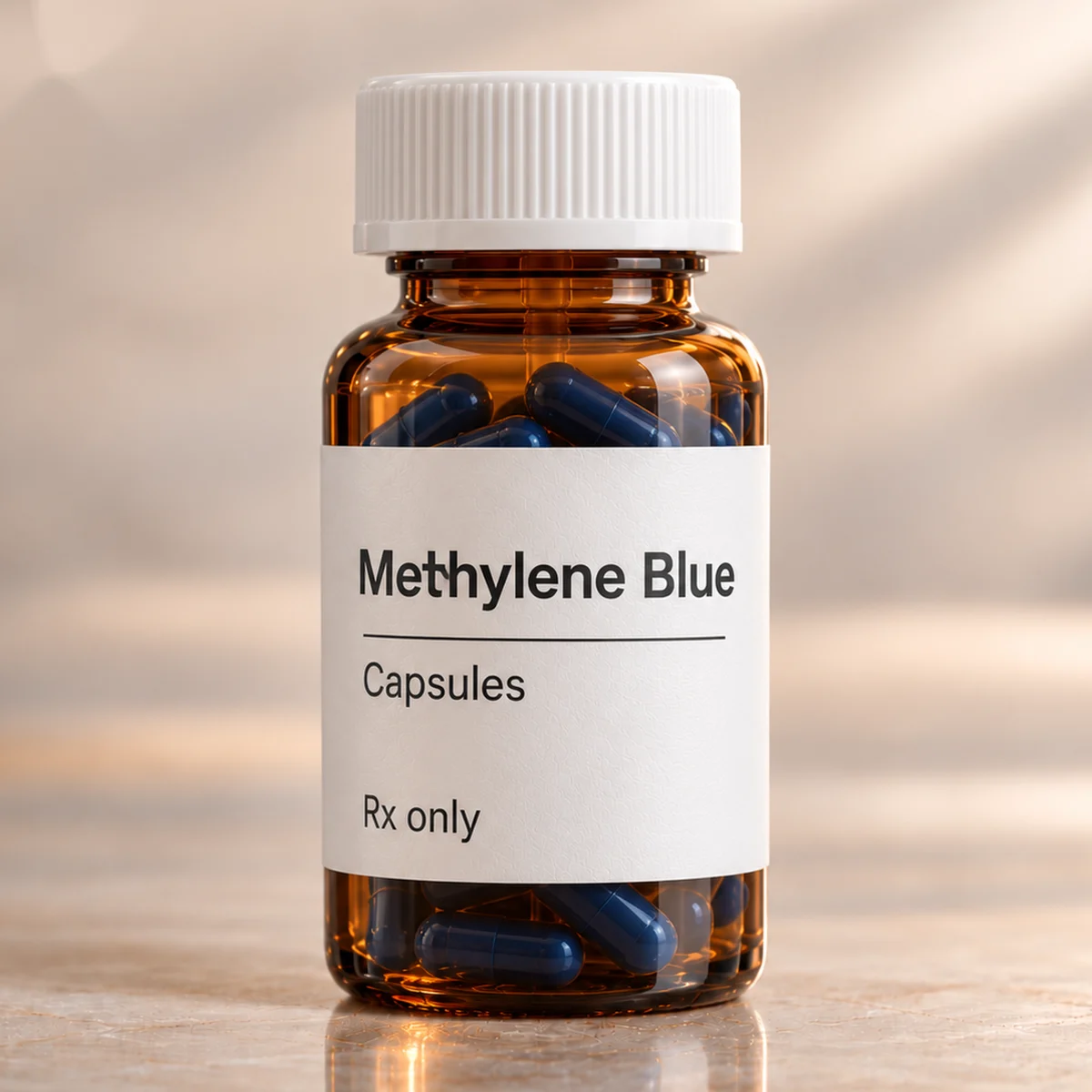
Methylene blue side effects can range from expected color changes (blue or green urine) to uncommon but serious reactions. Your risk depends on why you are taking it, your dose and route, and whether you take certain interacting medicines. This guide summarizes what is known from FDA labeling and medical literature, including what symptoms to watch for and when to seek care. If you are using methylene blue through Vitals Vault, you can also use your results and symptoms to guide a clinician conversation.
- Methylene blue side effects are often mild, but some are serious and need urgent care.
- Blue or green urine and stool discoloration can happen and is expected.
- Serotonin syndrome is a rare but dangerous risk with serotonergic medicines.
- People with G6PD deficiency can have hemolysis, a medical emergency.
Methylene blue side effects: what to expect
- Expected body fluid color change
- Can discolor urine and other body fluids blue or green.
- Key serious interaction
- Can cause serotonin syndrome with serotonergic drugs.
- Key higher risk group
- People with G6PD deficiency are at risk for hemolysis.
Common vs serious side effects and interactions
Blue or green urine
Methylene blue can color urine blue or green and may also discolor stool or other body fluids. This is expected from the dye and is not, by itself, dangerous. If you also have pain with urination, fever, or blood in urine, contact a clinician to rule out another cause.
Nausea or stomach upset
Some people experience nausea, vomiting, abdominal discomfort, or diarrhea. These symptoms can overlap with many other conditions, so pay attention to severity and whether you can keep fluids down. Seek care if vomiting is persistent or you show signs of dehydration.
Headache or dizziness
Headache, dizziness, or feeling lightheaded can occur. Avoid driving or risky activities if you feel impaired. If symptoms are severe, sudden, or come with fainting, chest pain, or neurologic symptoms, get urgent evaluation.
Serotonin syndrome
Methylene blue can act as a monoamine oxidase inhibitor and can trigger serotonin syndrome when combined with serotonergic medicines. Warning signs include agitation or confusion, sweating, fever, fast heart rate, tremor, muscle stiffness, and diarrhea. This can be life-threatening and needs emergency care.
Hemolysis in G6PD deficiency
In people with glucose-6-phosphate dehydrogenase (G6PD) deficiency, methylene blue can cause hemolysis, meaning red blood cells break down. Symptoms can include fatigue, shortness of breath, dark urine, jaundice (yellow skin or eyes), and rapid heart rate. This is an emergency and requires immediate medical attention.
Allergic reaction
Rarely, people can have hypersensitivity reactions. Seek urgent care for hives, swelling of the face or throat, wheezing, or trouble breathing. If you have a history of medication allergies, discuss your risk with a clinician before use.
| Symptom | How it often presents | Why it matters |
|---|---|---|
| Blue or green urine | Color change without pain or fever | Expected dye effect; monitor for other urinary symptoms. |
| Nausea, vomiting, diarrhea | GI upset that can vary in intensity | May improve with supportive care; severe symptoms need evaluation. |
| Agitation, fever, tremor | New mental status changes plus autonomic and muscle symptoms | Possible serotonin syndrome; emergency care is needed. |
| Dark urine, jaundice, fatigue | Symptoms of anemia or red blood cell breakdown | Possible hemolysis, especially with G6PD deficiency; urgent evaluation. |
When to talk to a clinician urgently
Go to emergency care now
Get emergency help for symptoms of serotonin syndrome (confusion, fever, severe agitation, tremor, muscle rigidity), severe allergic reaction (swelling, trouble breathing), fainting, or chest pain. These can worsen quickly and should not be watched at home.
Call a clinician the same day
Contact a clinician promptly for dark urine, yellow skin or eyes, unusual shortness of breath, or rapidly worsening fatigue, which can signal hemolysis or anemia. Also call for persistent vomiting or diarrhea, especially if you cannot keep fluids down.
Ask before you start
Ask a clinician before using methylene blue if you take antidepressants or other serotonergic medicines, if you might have G6PD deficiency, or if you are pregnant or breastfeeding. Your clinician can help weigh risks and consider alternatives.
Practical tips to reduce side effects
Expect color changes
Blue or green urine can be normal with methylene blue.
Review your medication list
Ask about antidepressants and other serotonergic drugs before taking it.
Do not ignore red flags
Fever, confusion, tremor, jaundice, or dark urine need urgent evaluation.
Use clinician guidance
If compounded, follow your prescriber and pharmacy instructions exactly.
Frequently Asked Questions
What are the most common methylene blue side effects?
Common effects include blue or green discoloration of urine and other body fluids and gastrointestinal upset such as nausea. Headache or dizziness can also occur. If symptoms are severe or worsening, contact a clinician.
Is blue urine from methylene blue dangerous?
Blue or green urine can be an expected effect because methylene blue is a dye. It is usually not harmful by itself. Seek care if you also have pain with urination, fever, or blood in urine.
Can methylene blue cause serotonin syndrome?
Yes. FDA labeling warns that methylene blue can cause serotonin syndrome, especially when combined with serotonergic medicines. Symptoms like confusion, fever, sweating, tremor, and muscle stiffness need emergency evaluation.
Who is at higher risk of serious side effects from methylene blue?
People with G6PD deficiency are at risk for hemolysis, which can be life-threatening. People taking serotonergic medications are at higher risk for serotonin syndrome. A clinician can help assess your personal risk before use.
Do I need labs if I have methylene blue side effects?
Sometimes labs can help a clinician evaluate symptoms like fatigue, dark urine, or suspected anemia, but they do not replace urgent care for severe or sudden symptoms. Vitals Vault labs can help you share objective results with a clinician when appropriate.