
Glutathione injection dosage: what to know
Glutathione injection dosing is not standardized for wellness uses, so your clinician sets dose and schedule based on your prescription, risks, and goals.
Key facts
- Glutathione Injection is $129/month (billed $129 every 4 weeks), charged only after a clinician approves it.
- Answer a few health questions online. A licensed clinician reviews them. If approved, it ships to your door.
- Adults 18 or older. A licensed clinician reviews your health history and decides whether treatment is appropriate for you. Availability depends on the state you live in.


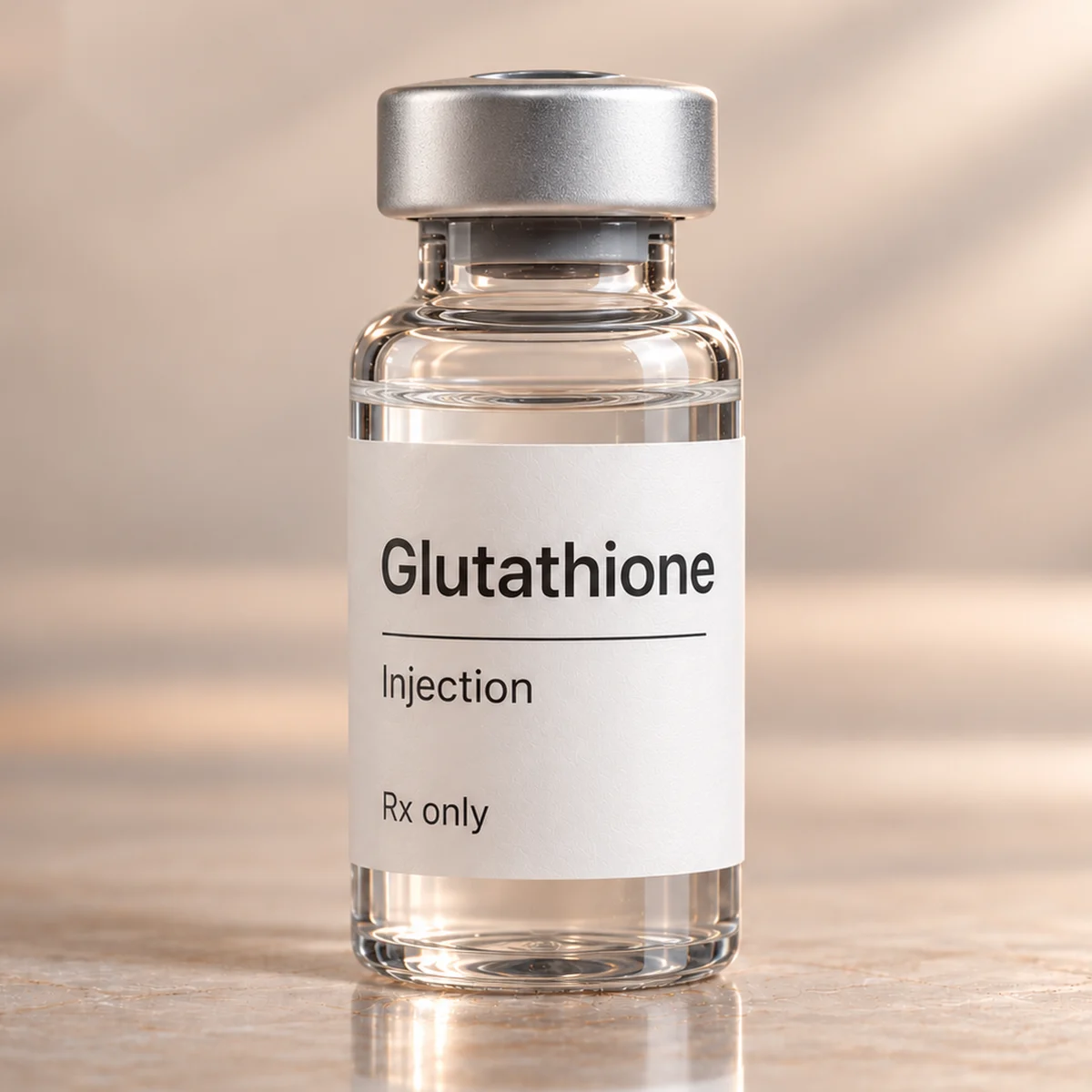
If you are searching for a glutathione injection dosage chart, it helps to know that glutathione injections are commonly used in wellness settings without a single FDA labeled dosing standard for those goals. That means the right dose and schedule depend on why it is being used, your health history, and the exact compounded formulation. This guide explains what is known and what is not about glutathione injection dosing, what to ask your prescriber, and when side effects should change your plan.
- There is no single standard glutathione injection dosage for wellness uses, so your clinician sets it.
- Most dosing charts online are not based on FDA labeled instructions for a specific product.
- Do not change dose or schedule without your prescriber, especially if you have asthma or medication allergies.
- Seek urgent care for trouble breathing, swelling, hives, or severe dizziness after an injection.
Glutathione injection dosage: the short answer
Why charts vary
Online charts often mix different routes, concentrations, and clinical contexts. Without a standardized FDA labeled product for wellness use, those charts are not a reliable way to choose a dose.
What your prescriber uses
A clinician typically considers your reason for use, other medications, allergy history, and how you responded to prior doses. They also follow the dispensing pharmacy’s formulation specific guidance for administration.
What you can do now
Bring your current vial label, directions, and a list of symptoms after dosing to your next visit. Ask what changes should trigger a pause and a check in, rather than making adjustments on your own.
How dosing is determined (and why charts vary)
Compounded formulation matters
Compounded glutathione is prepared for an individual prescription, and instructions can differ by pharmacy. The concentration, volume, and route can change what a “dose” means, so copying a schedule from someone else can be unsafe.
Evidence is limited for wellness goals
Glutathione is a naturally occurring antioxidant in the body, but clinical evidence for injection use in broad “wellness” or “anti-aging” goals is limited and not standardized. That uncertainty is one reason dosing is clinician directed rather than chart driven.
Allergic reactions are a key risk
Injectable products can cause hypersensitivity reactions in some people. If you have asthma, a history of severe allergies, or prior reactions to injections, your clinician may use extra caution or recommend avoiding injections.
Injection site reactions can happen
Redness, swelling, pain, or irritation at the injection site can occur with injections in general. If reactions are worsening, spreading, or accompanied by fever or drainage, you should contact your prescriber promptly.
Drug and condition interactions
Even when a product is “just an antioxidant,” it can still interact with your overall care plan. Tell your clinician about pregnancy or breastfeeding, kidney or liver disease, chemotherapy or radiation, and all supplements and prescriptions you use.
When to talk to a clinician urgently
Possible allergic reaction
Get urgent care for trouble breathing, wheezing, throat tightness, facial or lip swelling, widespread hives, or fainting after an injection. These can be signs of anaphylaxis, which is a medical emergency.
Severe dizziness or chest symptoms
Seek urgent evaluation for severe dizziness, chest pain, or a fast or irregular heartbeat after dosing. Even if symptoms improve, your prescriber needs to know before you take another dose.
Signs of infection
Contact a clinician quickly for increasing redness, warmth, swelling, pus, or fever after an injection. Do not assume it will resolve without treatment.
New or worsening asthma symptoms
If you have asthma and notice worsening wheeze, cough, or shortness of breath after injections, stop and contact your prescriber for guidance. You may need a different plan or closer monitoring.
Practical tips before you change anything
Bring your vial label
Your exact compounded concentration is essential for dosing questions.
Track timing and symptoms
Write down when you dose and any side effects for your clinician.
Ask what to monitor
Clarify which symptoms mean “hold” and message the prescriber.
Confirm route and instructions
Use the dispensing pharmacy’s directions, not social media tutorials.
Review your full med list
Include supplements, allergy history, and any new diagnoses.
Frequently Asked Questions
What is the typical glutathione injection dosage per week?
There is no single typical weekly schedule that applies to everyone because compounded formulations and treatment goals vary. Your prescribing clinician should set the plan and tell you what changes require a check in rather than self-adjusting.
Can I take a glutathione injection dosage per day?
Daily dosing is not something you should decide from online charts because it depends on the specific compounded product and your health history. Ask your prescriber what frequency is intended for your prescription and what side effects should prompt stopping and contacting them.
Is there a glutathione injection dosage chart I can follow?
A universal chart is not reliable because it may not match your product’s concentration, route, or clinical context. Use only the instructions provided with your prescription and confirm any changes with the prescribing clinician.
What affects glutathione injection price?
Cost can vary based on the compounded formulation, pharmacy preparation, clinician follow up, and whether labs are recommended for monitoring. If prices are shown for a specific plan, they are displayed on the treatment page rather than quoted in educational content.
Is glutathione injection FDA-approved for anti-aging or skin brightening?
Glutathione is made naturally in the body, but injection use for broad wellness, anti-aging, or skin brightening is not an FDA-approved indication. Evidence and dosing standards for these goals are limited, so it is important to discuss risks and expectations with a clinician.