
Glutathione: what it is, uses, safety
Glutathione is an antioxidant made in your body; compounded forms are used for wellness goals but are not FDA-approved. Learn safety, costs, and access.
Key facts
- Glutathione Injection is $129/month (billed $129 every 4 weeks), charged only after a clinician approves it.
- Answer a few health questions online. A licensed clinician reviews them. If approved, it ships to your door.
- Adults 18 or older. A licensed clinician reviews your health history and decides whether treatment is appropriate for you. Availability depends on the state you live in.
- A $20 clinician review, refunded if you don’t qualify.


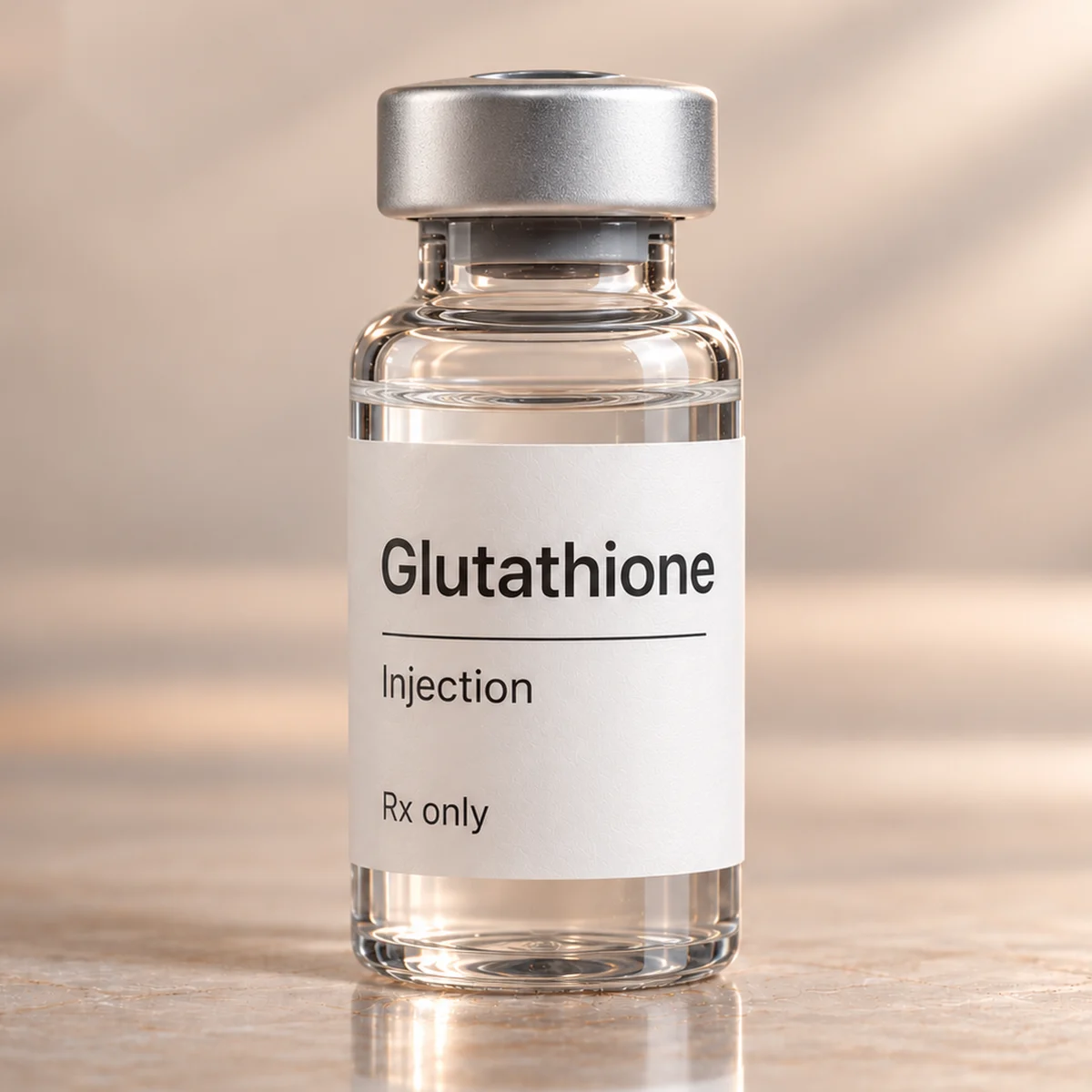
Glutathione is an antioxidant your body makes and uses to help protect cells from oxidative stress. In clinics, glutathione may be offered as compounded injections, nasal sprays, or other forms for wellness goals, but these compounded products are not FDA-approved. This guide explains what glutathione is, what the research supports, possible side effects, and how access typically works through Vitals Vault with clinician review and follow-up support.
- Glutathione is a natural antioxidant; compounded glutathione is not FDA-approved for wellness uses.
- Evidence is strongest for specific medical uses, not for general “anti-aging” or skin lightening claims.
- Safety depends on route and dose; discuss asthma, allergies, and pregnancy or breastfeeding first.
- Costs vary by formulation, pharmacy compounding, and whether labs or follow-ups are needed.
What glutathione is
A molecule your body makes
Glutathione is a small molecule made from three amino acids (glutamate, cysteine, and glycine). It is present in many tissues and helps maintain normal cellular function by participating in antioxidant defenses.
Not a single “approved” product
In the US, there is no FDA-approved glutathione drug product for general wellness, skin lightening, or “detox” purposes. When you see glutathione shots or injectable glutathione marketed for wellness, it is typically compounded by a pharmacy for an individual prescription.
Different routes, different expectations
Glutathione is discussed in multiple forms, including oral supplements, compounded injections, compounded nasal spray, and topical products like patches. The route matters because it can change absorption, side effects, and the quality of evidence behind the use.
How it is used medically
In clinical research and medical care, glutathione has been studied for specific conditions tied to oxidative stress and for supportive roles in some settings. These are not the same as broad wellness claims, so it helps to clarify your goal before considering treatment.
How glutathione works in the body
Key antioxidant role
Glutathione helps neutralize reactive oxygen species (sometimes called free radicals) and supports other antioxidant systems. It cycles between reduced and oxidized forms as it participates in redox reactions that protect cells.
Supports detox pathways
Glutathione is involved in conjugation reactions that help the body process certain compounds for elimination. This is a real biochemical role, but it does not mean extra glutathione will “detox” everyone or reverse exposures.
May influence inflammation signaling
Because oxidative stress and inflammation are linked, glutathione status can affect signaling pathways involved in inflammation. Research varies by condition and does not translate cleanly into a predictable wellness effect for most people.
Route affects bioavailability
Oral glutathione can be broken down in the gut, and studies have explored whether certain oral forms raise body glutathione levels. Compounded injections and sprays bypass parts of digestion, but they also introduce different safety and quality considerations.
Who glutathione may be for
People with a clear goal
You are more likely to make a good decision if you can name the specific goal you care about, such as fatigue, recovery, or skin concerns. A clinician can help you separate what is supported by evidence from what is mostly marketing.
Those willing to start with basics
Many concerns attributed to “low glutathione” overlap with common issues like sleep problems, iron deficiency, thyroid disease, vitamin deficiencies, or medication side effects. Labs and a medical history review can help avoid treating the wrong problem.
People who prefer clinician oversight
If you are considering glutathione shots or injectable glutathione, clinician oversight matters because sterile compounding, dosing decisions, and monitoring for reactions are safety-critical. This is especially important if you have asthma, allergies, or multiple medical conditions.
Those avoiding unsupported promises
If a clinic promises dramatic “anti-aging,” guaranteed skin lightening, or detox results, that is a red flag. The most responsible approach is to treat glutathione as a potentially helpful tool for some people, not a universal fix.
Who should not take glutathione (or should pause and ask first)
Severe allergy history
Avoid starting glutathione without clinician input if you have had anaphylaxis or serious reactions to injections, infusions, or unknown ingredients. With compounded products, inactive ingredients and concentrations can vary by pharmacy.
Asthma or breathing problems
Some forms of glutathione, especially inhaled routes studied in the past, have been associated with bronchospasm in certain people with asthma. If you have asthma or wheezing, discuss risks and alternatives with a clinician first.
Pregnancy or breastfeeding
Safety data for compounded glutathione used for wellness goals in pregnancy or breastfeeding is limited. A clinician should help weigh uncertain benefit against unknown risk and consider better-studied options.
Active infection or immune suppression
If you are immunocompromised or have an active infection, injections or infusions can carry higher risk. Ask your clinician whether it is appropriate to defer any elective injectable treatment until you are stable.
Anyone needing urgent care
Do not use glutathione to self-treat severe symptoms like chest pain, trouble breathing, confusion, fainting, or signs of a severe allergic reaction. Seek urgent or emergency care for those situations.
What to expect if you pursue glutathione
A goal and risk review first
A responsible visit starts with your health history, medications, allergies, and your reason for considering glutathione. You and the clinician should discuss what is known, what is uncertain, and whether a different approach is more evidence-based.
Possible labs before prescribing
Depending on your symptoms and medical history, a clinician may want recent lab results before recommending a plan. This can help identify common, treatable issues that can mimic “low glutathione” complaints.
Formulation and route discussion
You may see options like glutathione shots, injectable glutathione, nasal spray, or topical products. The clinician should explain why a route is being considered, what side effects to watch for, and what follow-up looks like.
No guaranteed outcomes
Even when glutathione affects lab measures of antioxidant status in studies, that does not guarantee you will feel or look different. Set expectations around uncertainty and focus on safety and measurable goals you can track with your clinician.
Glutathione side effects and safety
Injection site reactions
With glutathione shots or injectable glutathione, local reactions can include pain, redness, swelling, or irritation at the injection site. The risk can vary with technique, concentration, and individual sensitivity, and it may be higher with compounded products if formulations differ.
Headache or nausea
Some people report headache, nausea, or stomach upset with glutathione products. These symptoms are not specific to glutathione and can also occur from dehydration, anxiety around injections, or other ingredients in a compounded formulation.
Allergic reaction
Any injectable or compounded product can trigger an allergic reaction, ranging from hives and itching to swelling of the face or throat. Seek urgent care for trouble breathing, throat tightness, or fainting, and tell your clinician about any prior severe allergies.
Breathing symptoms in asthma
Glutathione delivered by inhaled routes has been reported to cause bronchospasm in some people with asthma in clinical research settings. If you have asthma, discuss this risk before using any glutathione spray or inhaled product, and do not ignore new wheezing or shortness of breath.
Infection risk with injections
Any injection can introduce bacteria if sterility is compromised. Using a licensed clinician and a reputable, licensed compounding pharmacy helps reduce risk, but it does not eliminate it. Contact a clinician promptly for worsening redness, warmth, fever, or drainage.
Glutathione cost and access
What drives cost
Cost can vary based on the route (for example, compounded injections versus other forms), the compounding pharmacy, the concentration and volume dispensed, and whether your plan includes follow-up visits. Shipping, supplies, and state-specific dispensing rules can also affect access.
Insurance coverage is variable
Because wellness uses of glutathione are not FDA-approved and many products are compounded, insurance coverage is often limited. If you are pursuing glutathione for a specific medical reason, ask your clinician what documentation or alternatives may be appropriate.
Where you see current prices
If current prices are available for this treatment, they are shown on this page in the price block. Your total cost can still depend on whether a clinician recommends labs or follow-up based on your history and goals.
How to get glutathione safely
- 1
Choose your goal and share your history
Tell the clinician what you are trying to address, plus your conditions, allergies, and current medications.
- 2
Review whether labs are needed
A clinician may ask for recent lab results before prescribing, based on your symptoms and risk factors.
- 3
Get a clinician decision on fit
A licensed clinician reviews your health history and decides whether glutathione is appropriate for you.
- 4
Follow the plan and check in
If prescribed, use the product only as directed and follow up if you have side effects or your goals change.
Frequently Asked Questions
Do glutathione shots work?
It depends on what you mean by “work.” Glutathione has clear biochemical roles as an antioxidant, but evidence for broad wellness or cosmetic outcomes from glutathione shots is limited and inconsistent. A clinician can help you match your goal to what research supports.
Do glutathione patches absorb through the skin?
Transdermal delivery can be hard to predict, and patch products vary widely in formulation and quality. There is limited high-quality evidence that glutathione patches reliably raise body glutathione levels or produce consistent wellness effects. Discuss alternatives with a clinician if you want a measurable plan.
Is injectable glutathione safe?
Injectable glutathione can cause side effects such as injection site reactions and, rarely, serious allergic reactions. Because compounded injectable products are not FDA-approved and can vary by pharmacy, safety depends on clinical oversight and product quality. Seek urgent care for severe allergy symptoms or trouble breathing.
Does glutathione spray work better than pills?
Different routes can change absorption, but “better” depends on your goal and the evidence for that route. Some glutathione spray products are compounded and not FDA-approved, and safety considerations differ from oral supplements. A clinician can help you choose a route with realistic expectations.
How much does glutathione cost through Vitals Vault?
Costs vary based on formulation, compounding, and whether a clinician recommends labs or follow-ups. If current prices are available, they are shown on this page in the price block rather than listed in the article. A licensed clinician still decides what is appropriate for you.