
Zepbound generic name: What is it?
Zepbound generic name: it is tirzepatide. Here is what generic means, why no FDA generic exists yet, and how compounded tirzepatide differs.
Key facts
- Tirzepatide + B12 is $169/month (billed $169 every 4 weeks), charged only after a clinician approves it.
- Answer a few health questions online. A licensed clinician reviews them. If approved, it ships to your door.
- Adults 18 or older. A licensed clinician reviews your health history and decides whether treatment is appropriate for you. Availability depends on the state you live in.


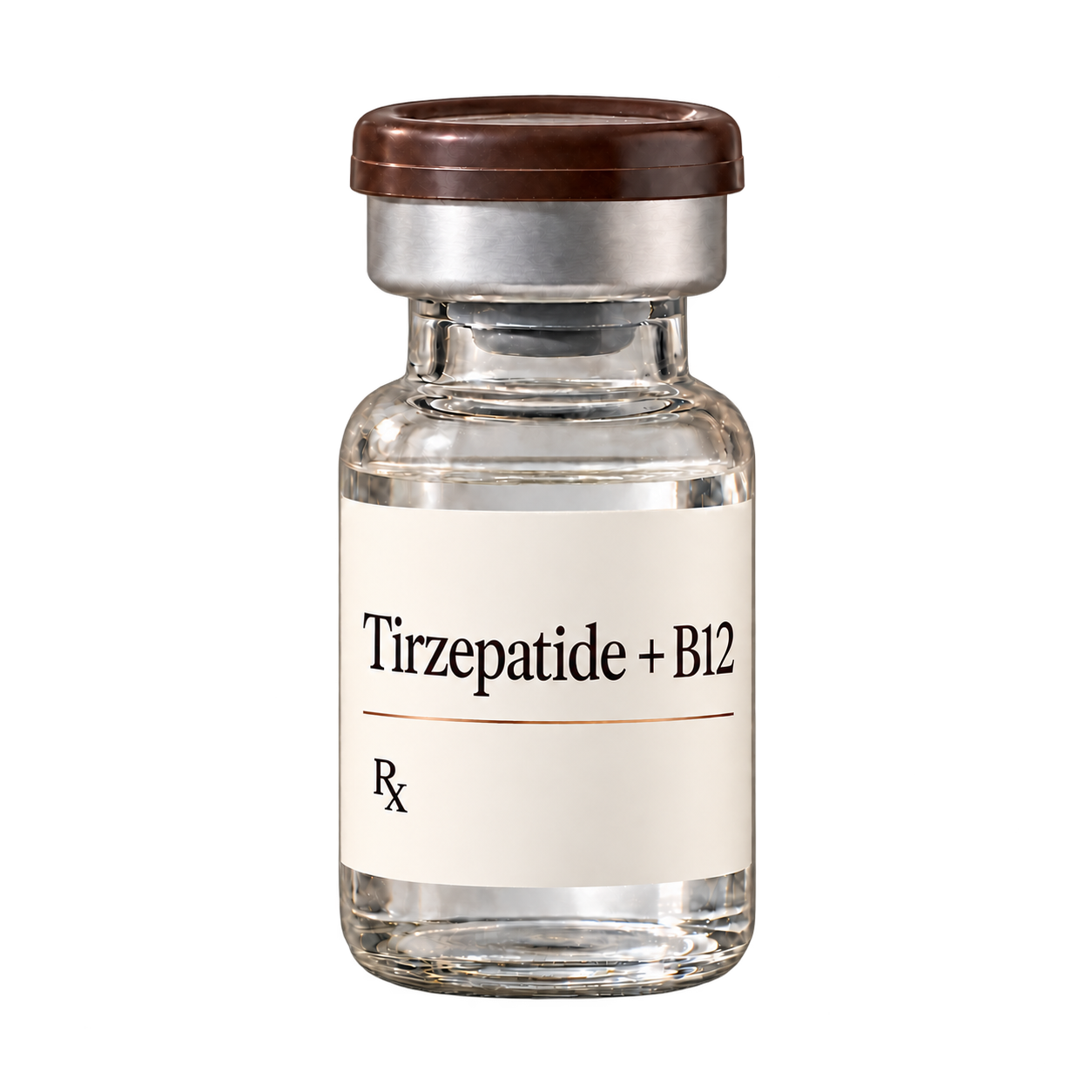
If you searched for the zepbound generic name, the direct answer is tirzepatide. Zepbound is the brand name, and tirzepatide is the drug (active ingredient) inside it. People often ask about a “generic Zepbound” to find a lower-cost option. Vitals Vault offers tirzepatide as a compounded, injectable medication, which is different from an FDA-approved generic and is not the Zepbound brand product.
- The zepbound generic name is tirzepatide.
- There is not an FDA-approved generic version of Zepbound as of now.
- “Compounded tirzepatide” is not a generic and is not FDA-approved.
- If you see “tirzepatide” on a label, it refers to the active ingredient in Zepbound.
Zepbound’s generic name
- Brand name
- Zepbound (tirzepatide)
- Generic (nonproprietary) name
- Tirzepatide
- Drug class
- Dual GIP and GLP-1 receptor agonist
What “generic” means here and what it does not
Generic name vs brand name
A generic name (also called a nonproprietary name) is the standard name for the active ingredient. A brand name is the manufacturer’s trademarked name for that same active ingredient. For Zepbound, the active ingredient is tirzepatide.
Is there a “generic Zepbound”?
A true generic is an FDA-approved drug that is therapeutically equivalent to a brand drug. As of now, there is no FDA-approved generic version of Zepbound listed in FDA’s Orange Book. If you see products marketed as “generic Zepbound,” treat that wording cautiously.
Compounded tirzepatide is different
Compounded medications are prepared by a licensed pharmacy for an individual prescription and are not FDA-approved. That means compounded tirzepatide is not a generic version of Zepbound, even though it uses the same active ingredient name.
Why the wording matters
Calling a compounded medication a “generic” can imply it went through FDA review for safety, effectiveness, and manufacturing quality as a generic drug. Compounded products do not have the same FDA approval pathway as brand or generic drugs.
How to verify what you are being offered
If you want an FDA-approved product, check the FDA Orange Book for approved drug products and their therapeutic equivalence evaluations. If you are considering a compounded product, ask where it is compounded and what quality and safety processes the pharmacy follows.
When to talk to a clinician about tirzepatide options
You have thyroid cancer history
Zepbound carries a boxed warning about risk of thyroid C-cell tumors seen in rodents, and it is contraindicated in people with a personal or family history of medullary thyroid carcinoma or in patients with Multiple Endocrine Neoplasia syndrome type 2. A clinician can help you understand what this means for you.
You have pancreatitis or gallbladder issues
GLP-1 based medicines can be associated with pancreatitis and gallbladder problems in warnings and precautions. If you have a history of pancreatitis, gallstones, or unexplained severe abdominal pain, talk with a clinician before pursuing tirzepatide.
You use insulin or sulfonylureas
Tirzepatide can increase the risk of low blood sugar (hypoglycemia) when used with insulin or an insulin secretagogue such as a sulfonylurea. A clinician may need to adjust other diabetes medicines and set a monitoring plan.
You have kidney problems or dehydration risk
Severe gastrointestinal side effects can lead to dehydration, which may worsen kidney function. If you have chronic kidney disease, frequent vomiting or diarrhea, or take medicines that affect fluid balance, ask about monitoring and safety planning.
You are pregnant, trying, or breastfeeding
Weight management medicines are generally not used during pregnancy, and labeling includes pregnancy related guidance. If pregnancy is possible, discuss contraception, timing, and alternatives with a clinician.
Pro tips for “generic Zepbound” searches
Use the right term
Search “tirzepatide” for the ingredient, not “generic Zepbound.”
Check FDA listings
Use FDA’s Orange Book to confirm whether a true generic exists.
Ask about formulation
Confirm whether a product is FDA-approved or compounded before you proceed.
Clarify what you are receiving
Brand Zepbound and compounded tirzepatide are not the same product.
Frequently Asked Questions
What is the zepbound generic name?
The zepbound generic name is tirzepatide. “Zepbound” is the brand name used for tirzepatide in its FDA-approved product labeling.
Is there a zepbound generic?
Not in the FDA-approved sense. FDA-approved generics are listed in FDA’s Orange Book, and as of now there is no approved generic version of Zepbound listed there.
Is “generic Zepbound” the same as compounded tirzepatide?
No. Compounded medications are prepared by a licensed pharmacy for an individual prescription and are not FDA-approved, so they are not the same as an FDA-approved generic drug product.
What is the generic for Zepbound called?
The active ingredient name is tirzepatide. That does not mean there is an FDA-approved generic version of the Zepbound brand product available.
How can I check if a true generic exists for Zepbound?
You can look up Zepbound and tirzepatide in FDA’s Orange Book to see whether an approved generic is listed. If you are offered a “generic” that is not in the Orange Book, ask whether it is compounded and who prepares it.