
Tretinoin cream uses: what it treats
Tretinoin cream uses include treating acne and, in some products, sun damaged facial skin. It can also be used off label for photoaging.
Key facts
- Tretinoin + Niacinamide is $43/month (billed $129 every 90 days), charged only after a clinician approves it.
- Answer a few health questions online. A licensed clinician reviews them. If approved, it ships to your door.
- Adults 18 or older. A licensed clinician reviews your health history and decides whether treatment is appropriate for you. Availability depends on the state you live in.


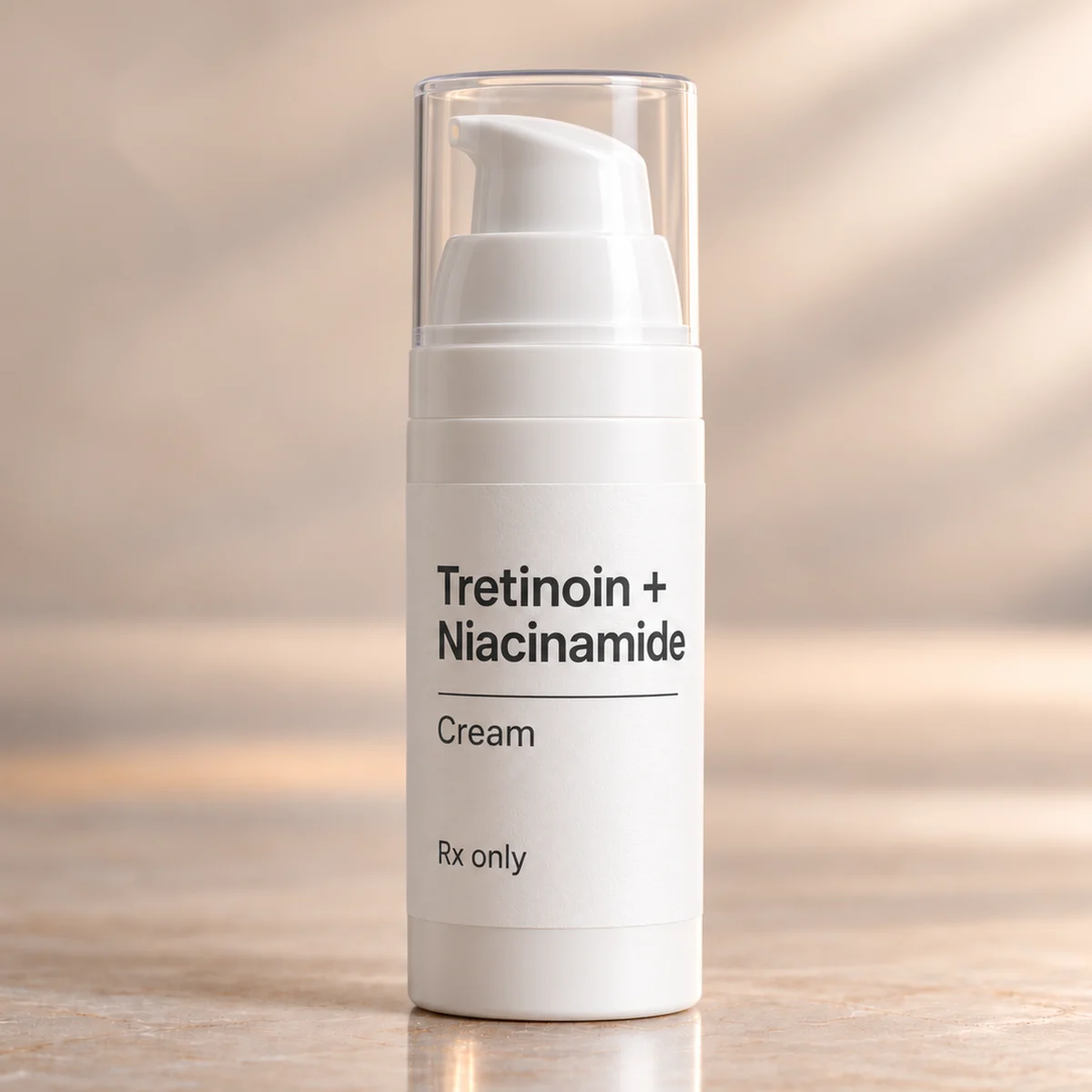
Tretinoin cream is a prescription topical retinoid. Its FDA approved uses include acne vulgaris, and for certain formulations, reducing signs of sun damaged facial skin when used with a full skin care and sun avoidance program. If you are considering a compounded tretinoin formula such as tretinoin with niacinamide, Vitals Vault can connect you with a licensed clinician to review your history and discuss whether it fits your goals and skin type.
- Tretinoin cream uses include treating acne and, for some products, sun damaged facial skin.
- It is a topical retinoid that increases skin cell turnover and helps keep pores from clogging.
- Irritation and sun sensitivity are common, especially early on.
- Avoid use in pregnancy unless your clinician specifically advises otherwise.
What tretinoin cream is used for
Acne (FDA approved)
Tretinoin cream is used to treat acne vulgaris. It helps prevent new comedones (clogged pores) and can reduce acne lesions over time. It is not a spot treatment, and irritation early in treatment is common.
Sun damaged facial skin (FDA approved for some)
Some tretinoin products are indicated to reduce fine wrinkles, mottled hyperpigmentation, and roughness of facial skin due to sun damage, as part of a broader skin care and sun avoidance program. It does not remove wrinkles or repair sun damaged skin on its own.
Photoaging and texture (often off label)
Clinicians also use tretinoin to support smoother texture and more even tone in photoaged skin. This is common in dermatology practice, but the exact indication depends on the specific product labeling and your clinician’s plan.
Details that change what it is used for
| Use | Status | What it may help | Key limitations and considerations |
|---|---|---|---|
| Acne vulgaris | FDA approved (product dependent) | Helps prevent clogged pores and reduces acne lesions over time | Often causes dryness, peeling, burning or stinging early on; sun sensitivity can increase |
| Sun damaged facial skin (photodamage) | FDA approved for some products | Fine wrinkles, mottled hyperpigmentation, roughness when paired with sun avoidance | Works as part of a broader program; does not eliminate wrinkles or reverse sun damage by itself |
| Photoaging goals (tone, texture) | Often off label | May support smoother texture and more even tone | Evidence and labeling vary by product; irritation risk can limit use |
Why it works for acne
Tretinoin is a retinoid that affects how skin cells grow and shed. By increasing turnover and reducing how easily pores plug, it targets comedones and helps prevent new breakouts. Because it changes skin biology, results usually build gradually rather than overnight.
Why it is used for sun damage
In photodamaged skin, tretinoin can improve the appearance of fine wrinkles and uneven pigmentation when used with sun avoidance and a comprehensive skin care program. Consistent sun protection matters because tretinoin can increase sensitivity to sunlight.
Common side effects that shape use
Local irritation is common and can include redness, peeling, dryness, burning or stinging. Some people also notice increased sensitivity to wind or cold. These effects often influence how frequently it is used and what supporting skin care is needed.
Pregnancy and breastfeeding considerations
Tretinoin applied to the skin results in much lower systemic exposure than oral retinoids, but pregnancy safety is still a key discussion. Product labeling generally advises avoiding use during pregnancy unless clearly needed, and you should tell your clinician if you are pregnant, trying to conceive, or breastfeeding.
When to talk to a clinician
You might be pregnant
Tell a clinician if you are pregnant, trying to become pregnant, or think you might be pregnant. They can help you weigh potential risks and choose safer alternatives if needed.
Severe irritation or swelling
If you develop intense burning, significant swelling, blistering, or crusting, stop and contact a clinician for guidance. These can be signs that your skin barrier is overly irritated or that you are reacting to the product or another ingredient.
Eczema or very sensitive skin
If you have eczema, rosacea, or a history of strong reactions to skin products, a clinician can help you choose a gentler approach. You may need a different strength, vehicle, or schedule, plus supportive skin care.
You use other acne or anti-aging actives
Benzoyl peroxide, salicylic acid, alpha hydroxy acids, and some alcohol based products can increase dryness and irritation when combined. A clinician can help you sequence products and avoid unnecessary overlap.
Practical tips for common goals
Use a gentle routine
A mild cleanser and bland moisturizer can reduce irritation.
Protect from sun daily
Daily sunscreen helps prevent worsening redness and pigmentation.
Go slow if you are sensitive
A clinician can suggest a schedule that your skin tolerates.
Avoid harsh add-ons
Skip scrubs and strong acids unless your clinician okays them.
Be consistent
Benefits build with steady use, not occasional applications.
Frequently Asked Questions
What are tretinoin cream uses?
Tretinoin cream uses include treating acne vulgaris. Some tretinoin products are also indicated to reduce fine wrinkles, mottled hyperpigmentation, and roughness of sun damaged facial skin as part of a broader skin care and sun avoidance program.
Is tretinoin cream used for acne scars?
Tretinoin is not specifically approved to treat acne scars, but by preventing new breakouts it may help reduce future scarring risk. Some people also notice gradual texture improvement, but established scars often need other dermatology treatments.
Can tretinoin cream be used for wrinkles or anti-aging?
Certain tretinoin products are indicated to reduce fine wrinkles and other signs of sun damaged facial skin when paired with sun avoidance and a comprehensive skin care program. Clinicians also use tretinoin off label for photoaging goals depending on your skin and plan.
Can I use tretinoin cream if I am pregnant?
Tell your clinician if you are pregnant, trying to conceive, or breastfeeding. Product labeling generally advises avoiding tretinoin during pregnancy unless clearly needed, and your clinician can help you choose safer alternatives.
What should I do if tretinoin cream irritates my skin?
Dryness, redness, and peeling are common early side effects and often improve with a gentler routine and moisturizer. If you have severe burning, swelling, blistering, or crusting, contact a clinician for guidance rather than pushing through it.