
Minoxidil and finasteride topical solution: Uses
Minoxidil and finasteride topical solution combines two hair loss medicines in one applied treatment. Learn what it is and how safety works.
Key facts
- Finasteride + Minoxidil Scalp Solution is $53.50/month (billed $107 every 50 days), charged only after a clinician approves it.
- Answer a few health questions online. A licensed clinician reviews them. If approved, it ships to your door.
- Adults 18 or older. A licensed clinician reviews your health history and decides whether treatment is appropriate for you. Availability depends on the state you live in.


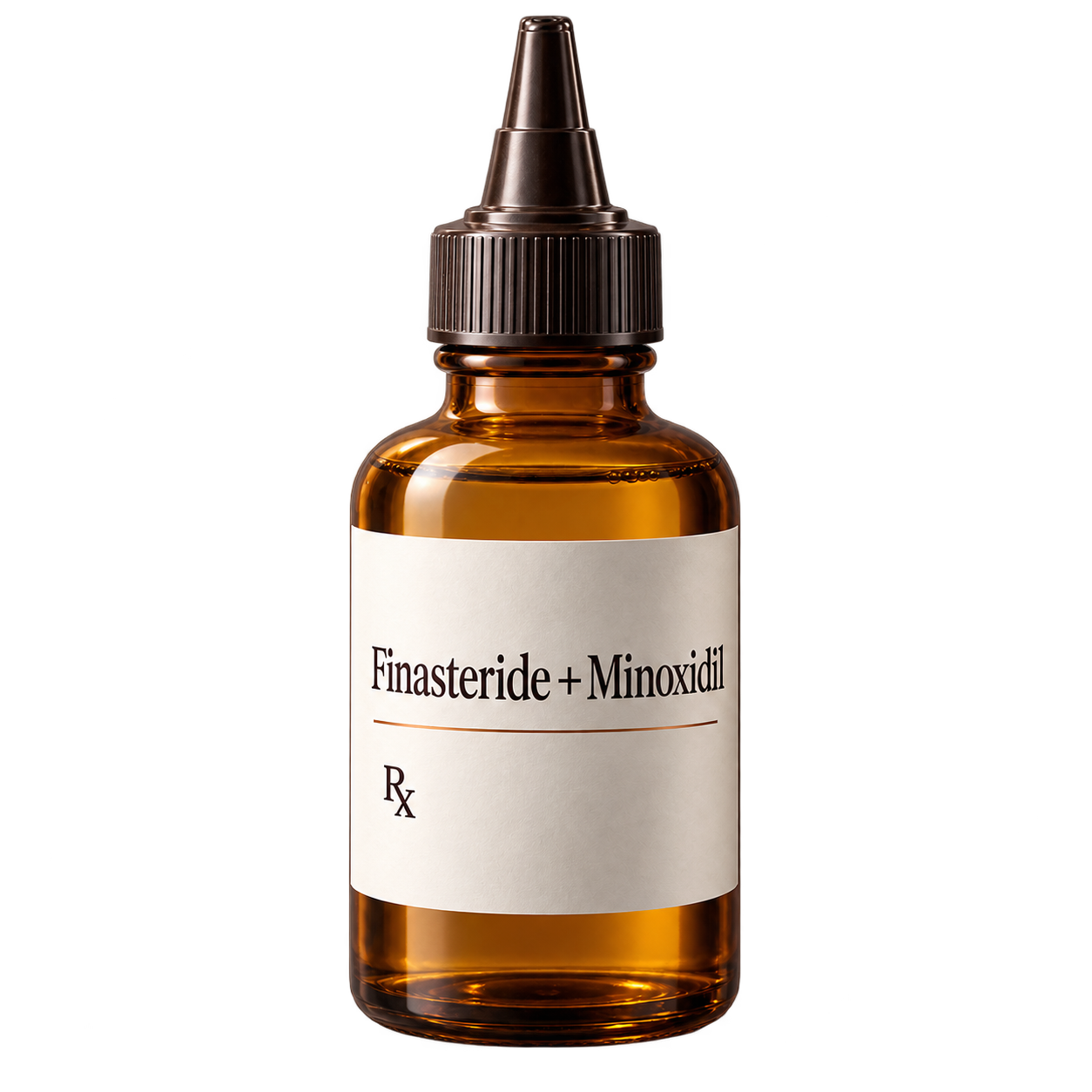
Minoxidil and finasteride topical solution is a scalp-applied treatment that combines two well known hair loss medicines in one formula. People usually look for it when they want the DHT lowering effect of finasteride with the growth support of minoxidil, but prefer a topical approach. This page explains what the combination is, what is known about benefits and risks, and what to discuss with a clinician before you start.
- Minoxidil and finasteride topical solution is a scalp-applied combination used to treat hair loss.
- Minoxidil supports hair growth, while finasteride lowers scalp DHT, a hormone linked to pattern hair loss.
- Topical finasteride combinations are typically compounded and are not FDA-approved as a combined product.
- Finasteride can cause sexual side effects and must be avoided in pregnancy exposure.
- Expect gradual change over months and continued use is usually needed to maintain results.
What minoxidil and finasteride topical solution is
A combination scalp solution
Minoxidil and finasteride topical solution is a liquid applied to the scalp that combines minoxidil with finasteride. Some formulas also include other ingredients such as biotin, depending on the pharmacy and prescription. Because the combination product is not an FDA-approved branded medication, it is commonly prepared as a compounded prescription.
Two different drug types
Minoxidil is a topical hair growth treatment that is FDA-approved over the counter in certain strengths for androgenetic alopecia (pattern hair loss). Finasteride is a prescription 5-alpha reductase inhibitor that is FDA-approved by mouth for male pattern hair loss. Using finasteride topically, or combining it with topical minoxidil, is not an FDA-approved labeled combination.
Used for pattern hair loss
Most people considering this combination are trying to treat androgenetic alopecia, which is driven in part by sensitivity to dihydrotestosterone (DHT). A clinician may also evaluate for other contributors to shedding, such as iron deficiency or thyroid disease, because those need different treatment.
Compounded means not FDA-approved
Compounded medications are prepared by a licensed pharmacy for an individual prescription and are not FDA-approved. That matters because the exact ingredients, strength, vehicle, and instructions can vary by prescription and pharmacy, and the evidence base is not the same as for FDA-approved products.
How it works for hair loss
Minoxidil supports growth phase
Minoxidil is thought to help increase hair follicle size and prolong the anagen (growth) phase of the hair cycle. In clinical use for androgenetic alopecia, it is applied to the scalp and works locally at the hair follicle. The exact mechanism is not fully understood, but it is believed to involve potassium channel opening and effects on follicle biology.
Finasteride lowers DHT
Finasteride blocks type II 5-alpha reductase, the enzyme that converts testosterone to DHT. Lowering DHT can slow miniaturization of hair follicles in androgenetic alopecia. Oral finasteride has clear systemic effects on DHT; topical finasteride aims to target the scalp, but some systemic absorption can still occur.
Why combine them
The combination is used with the goal of addressing two pathways at once: minoxidil to support regrowth and finasteride to reduce DHT-driven follicle miniaturization. Evidence for the combination exists in published studies, but product formulations and study designs vary, so a clinician should help interpret how that applies to you.
Not a cure for all shedding
If your hair loss is from telogen effluvium (stress or illness related shedding), scarring alopecia, or a medication side effect, a DHT-focused approach may not be enough. A clinician may recommend evaluation for other causes before committing to long-term treatment.
- Finasteride drug class
- 5-alpha reductase inhibitor (type II)
- Finasteride labeled indication
- Oral finasteride is FDA-approved for male pattern hair loss (and for BPH at a different dose).
- Minoxidil labeled indication
- Topical minoxidil is FDA-approved for androgenetic alopecia in men and women (product-specific labeling).
Who this treatment may be for
Pattern hair loss
This combination is most often considered for androgenetic alopecia, such as a widening part, diffuse thinning over the crown, or recession at the temples. A clinician may look for a typical pattern and family history, and may also check for signs of inflammation or scarring that suggest a different condition.
People who want a topical approach
Some people prefer a topical regimen because they want to avoid taking a daily pill or want to limit systemic exposure. It is still important to understand that topical finasteride can be absorbed and may still carry some of the same risks as oral finasteride.
Those willing to use it consistently
Hair loss treatments generally require consistent, long-term use to maintain benefit. If you stop, any benefit may gradually fade as the hair cycle returns to its baseline pattern.
People who can follow safety precautions
Because finasteride can cause harm to a developing fetus, anyone who is pregnant or could become pregnant needs to avoid exposure. A clinician can help you decide whether a finasteride-containing topical is appropriate given your household and reproductive plans.
After evaluation for other causes
If your hair loss is sudden, patchy, painful, or associated with scalp scaling or sores, you may need a different workup and treatment. Labs may be helpful when symptoms or history suggest iron deficiency, thyroid disease, or hormonal contributors.
Who should not use it or should use extra caution
Pregnancy exposure risk
Finasteride is contraindicated in pregnancy because it can cause abnormalities of the external genitalia of a male fetus. People who are pregnant should not use finasteride, and should avoid handling crushed or broken finasteride tablets; with topical products, discuss household exposure and application precautions with a clinician.
Allergy or irritation to ingredients
Topical solutions can contain alcohols or propylene glycol that irritate sensitive skin. If you have a history of allergic contact dermatitis, eczema flares, or severe scalp irritation with topical products, ask a clinician about alternative vehicles or patch testing.
Certain heart conditions
Topical minoxidil can be absorbed and may affect blood pressure or heart rate in rare cases. If you have cardiovascular disease, low blood pressure, arrhythmias, or you take blood pressure medicines, discuss risks and monitoring with a clinician before using minoxidil-containing products.
Unexplained or scarring hair loss
If you have patchy hair loss, scalp pain, burning, pustules, or scarring, you may need urgent dermatology evaluation. Using a growth stimulant alone can delay diagnosis of conditions like scarring alopecia that require different treatment.
What to expect when you start
A gradual timeline
Hair growth changes typically happen slowly because hair follicles cycle through growth and rest phases. Some people notice reduced shedding first, while visible thickening can take months. Your clinician can help set expectations based on the pattern and duration of your hair loss.
Possible early shedding
With minoxidil, some people experience increased shedding early on as hairs shift through the cycle. This can be alarming, but it is a known phenomenon described in patient information for topical minoxidil. If shedding is severe or persists, check in with a clinician.
Ongoing use to maintain benefit
For androgenetic alopecia, treatments like minoxidil and finasteride generally need continued use to maintain results. If you stop, the underlying pattern hair loss process continues, and gains may gradually reverse.
Scalp care matters
Dryness, itching, or flaking can make it harder to stick with treatment. If you develop irritation, a clinician may suggest adjusting the vehicle, frequency, or adding scalp care measures to improve tolerability.
Follow-up and monitoring
Because compounded topical finasteride is individualized, follow-up helps confirm you are tolerating it and that the plan still matches your goals. If you develop sexual side effects, mood changes, or concerning symptoms, you should discuss them promptly with your clinician.
Side effects and warnings
Scalp irritation
Burning, itching, redness, or flaking can occur with topical minoxidil products and with alcohol-based vehicles used in many solutions. Irritation may improve with a different vehicle, less frequent use, or treating underlying dermatitis, but persistent inflammation should be evaluated.
Unwanted facial hair
Topical minoxidil can cause hair growth in unintended areas if it spreads beyond the scalp or transfers to the face. Careful application and hand washing after use can reduce transfer. If you notice new facial hair growth, discuss adjustments with your clinician.
Sexual side effects
Finasteride can cause sexual side effects such as decreased libido, erectile dysfunction, and decreased ejaculate volume. These effects are described in the FDA labeling for oral finasteride; topical use may still carry risk due to systemic absorption. If you notice sexual or mood changes, contact your clinician to discuss next steps.
Mood changes
Depression and suicidal ideation have been reported with finasteride use and are included in safety communications and labeling updates in some regions. If you develop new or worsening depression, anxiety, or thoughts of self-harm, seek urgent help and contact your clinician.
Low blood pressure symptoms
Although uncommon with topical use, minoxidil can be absorbed and may cause dizziness, lightheadedness, fast heartbeat, or swelling. These symptoms need medical evaluation, especially if you have heart disease or take blood pressure medicines.
Pregnancy exposure warning
Finasteride is contraindicated in pregnancy because of risk to a male fetus. If you are pregnant or could become pregnant, discuss safer alternatives and household exposure precautions with a clinician before using any finasteride-containing topical.
Cost and access
What drives cost
Cost depends on whether your prescription is compounded, the specific strengths and ingredients, the quantity dispensed, and the pharmacy preparing it. Compounded products are not FDA-approved and are often not covered the same way as FDA-approved medications.
Insurance coverage varies
Hair loss treatments are commonly considered lifestyle or cosmetic by some plans, which can limit coverage. Even when ingredients are covered in other forms, a compounded combination topical may be treated differently than an FDA-approved single-ingredient product.
Current prices on this page
If you are viewing this on Vitals Vault, the current catalog prices for the topical finasteride and minoxidil solution plan are shown on this page in the price block. A clinician visit and follow-up expectations can also affect overall cost and convenience.
Access requires a prescription
Finasteride is prescription-only, and a finasteride-containing topical solution requires a clinician to evaluate safety, reproductive considerations, and whether your hair loss pattern fits. If labs are needed to rule out other contributors, that can be part of the access pathway.
How to get minoxidil and finasteride topical solution
- 1
Complete an intake
Share your hair loss history, medications, and any pregnancy exposure concerns.
- 2
Clinician review
A licensed clinician reviews your health history and decides whether treatment is appropriate for you.
- 3
Labs if needed
A clinician may ask for recent lab results before prescribing, especially if another cause is possible.
- 4
Start and follow up
If prescribed, follow the instructions from your clinician and dispensing pharmacy, and check in about side effects and progress.
Frequently Asked Questions
What is minoxidil and finasteride topical solution used for?
It is used to treat pattern hair loss (androgenetic alopecia) by combining minoxidil, which supports hair growth, with finasteride, which lowers DHT. The combined topical product is typically compounded, so your clinician tailors it to your situation.
Is minoxidil and finasteride topical solution FDA-approved?
A combined topical finasteride plus minoxidil solution is not an FDA-approved product. Minoxidil topical products and oral finasteride each have FDA-approved labeling, but a compounded combination topical is prepared by a pharmacy for an individual prescription.
Can topical finasteride still cause sexual side effects?
Yes. Sexual side effects are described in the FDA labeling for oral finasteride, and topical finasteride can still be absorbed into the body. If you notice sexual changes, discuss them promptly with a clinician.
How long does it take to see results with minoxidil and finasteride topical solution?
Hair changes are usually gradual because follicles cycle through growth and rest phases. Some people notice shedding changes first, but visible thickening can take months. Your clinician can help set expectations based on your pattern of hair loss.
How much does minoxidil and finasteride topical solution cost?
Cost depends on whether it is compounded, the prescription strength and ingredients, and whether labs or follow-up visits are needed. If you are on Vitals Vault, current prices for the plan are shown in the on-page price block rather than listed in the article.