
Topical finasteride and minoxidil: what to know
Topical finasteride and minoxidil is a compounded hair loss treatment. See how it may work, who it may fit, and the side effects to know.
Key facts
- Finasteride + Minoxidil Scalp Solution is $53.50/month (billed $107 every 50 days), charged only after a clinician approves it.
- Answer a few health questions online. A licensed clinician reviews them. If approved, it ships to your door.
- Adults 18 or older. A licensed clinician reviews your health history and decides whether treatment is appropriate for you. Availability depends on the state you live in.


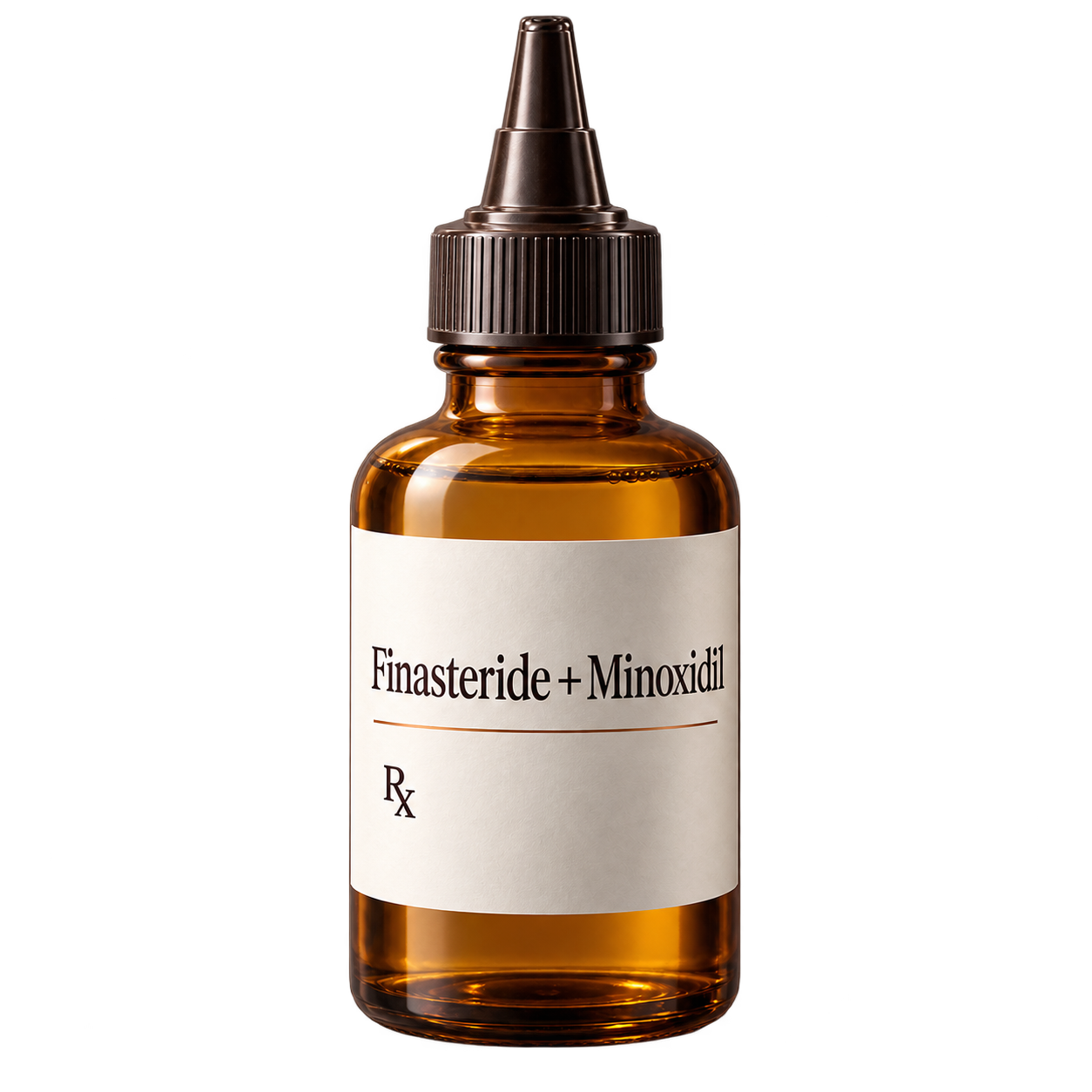
Topical finasteride and minoxidil combines two hair loss medicines in one scalp treatment. People consider it to simplify routines or to try to limit whole body exposure compared with oral finasteride, but evidence and formulations vary. This page explains what the combination is, what is known about benefits and risks, and how access typically works. If you are exploring options through Vitals Vault, a licensed clinician reviews your history and helps decide whether it fits.
- Topical finasteride and minoxidil is a scalp-applied combo used for pattern hair loss.
- Minoxidil is FDA-approved topically for hair loss; topical finasteride is not FDA-approved.
- Finasteride exposure can cause birth defects in a male fetus, so pregnancy precautions matter.
- Early shedding and scalp irritation can happen; results take months and require ongoing use.
- Because many combos are compounded, strength and instructions can vary by pharmacy.
What topical finasteride and minoxidil is
A two-drug scalp treatment
This refers to a topical product applied to the scalp that contains both finasteride and minoxidil. Some products are made as compounded combinations, meaning they are prepared by a pharmacy for an individual prescription and are not FDA-approved.
Used for pattern hair loss
The most common goal is androgenetic alopecia, also called male pattern hair loss or female pattern hair loss. These conditions involve gradual thinning, often at the hairline and crown in men and along the part in women.
Not one standardized formula
Unlike an FDA-approved brand with a fixed label, compounded topical combinations can differ in ingredients, vehicle (solution or foam), and concentration. Your prescribing clinician and dispensing pharmacy provide the specific directions and safety counseling for your prescription.
Minoxidil is the on-label piece
Topical minoxidil is FDA-approved for hair regrowth in androgenetic alopecia (with different labeled products for men and women). Finasteride is FDA-approved orally for male pattern hair loss, but topical finasteride products are not FDA-approved.
- FDA-approved for hair loss (topical)
- Minoxidil topical solution and foam are FDA-approved for androgenetic alopecia; combination compounded products are not FDA-approved.
- FDA-approved for hair loss (oral)
- Finasteride tablets are FDA-approved for male pattern hair loss; topical finasteride is not FDA-approved.
- Why pregnancy precautions matter
- Finasteride can cause abnormalities of the external genitalia of a male fetus; women who are or may become pregnant should not handle crushed or broken finasteride tablets.
How it works for hair loss
Minoxidil supports hair growth
Minoxidil is thought to prolong the growth phase of hair follicles and increase follicle size in some people with androgenetic alopecia. It does not treat every cause of hair shedding, so it works best when thinning is due to pattern hair loss.
Finasteride lowers DHT signaling
Finasteride inhibits type II 5-alpha reductase, an enzyme that converts testosterone to dihydrotestosterone (DHT). DHT contributes to follicle miniaturization in androgenetic alopecia, especially in men.
Topical delivery aims for local effect
Applying medication to the scalp is intended to concentrate effects near hair follicles. However, both drugs can still be absorbed through the skin to some degree, so systemic side effects remain possible.
Evidence is mixed and evolving
There are clinical studies of topical finasteride, including combinations with minoxidil, but products and study designs vary. That makes it hard to generalize one expected outcome to every compounded formula.
Who topical finasteride and minoxidil may be for
Pattern hair loss
You may be a candidate if your thinning pattern fits androgenetic alopecia and you want a medical option that targets both follicle growth (minoxidil) and DHT-driven miniaturization (finasteride). A clinician can help confirm whether your pattern matches this condition.
People who want one routine
Some people prefer a single topical product rather than separate bottles. Convenience can improve consistency, which matters because both treatments generally require ongoing use to maintain any benefit.
Those avoiding oral finasteride
Some people ask about topical finasteride because they are concerned about systemic side effects from oral finasteride. Topical use may reduce systemic exposure in some studies, but it does not eliminate risk.
After evaluation for other causes
If your shedding is sudden, patchy, or associated with symptoms like fatigue or heavy menstrual bleeding, your clinician may consider other causes such as thyroid disease, iron deficiency, or telogen effluvium. In those cases, treating the underlying trigger can matter as much as hair medications.
Who should not use it or should use extra caution
Pregnancy or trying to conceive
Finasteride can cause harm to a developing male fetus. If you are pregnant, may become pregnant, or are trying to conceive, discuss safer alternatives with a clinician and avoid exposure to finasteride-containing products.
Breastfeeding
Ask a clinician before using finasteride or minoxidil while breastfeeding. Data are limited for topical finasteride, and clinicians may recommend avoiding it because of potential infant exposure.
Allergy or scalp skin disease
If you have a known allergy to ingredients in the vehicle (for example, propylene glycol in some solutions) or active scalp dermatitis, topical products can worsen irritation. A clinician may suggest a different vehicle or treating the skin condition first.
Heart or blood pressure concerns
Minoxidil was originally developed as an oral blood pressure medicine, and topical minoxidil can rarely cause systemic effects. If you have cardiovascular disease, fainting, or swelling, discuss risks and monitoring with a clinician.
Children and adolescents
These medications are generally studied and labeled for adults. A clinician should evaluate any hair loss in a minor to look for underlying medical causes and appropriate treatment.
What to expect when you start
Results take time
Hair growth cycles are slow, so visible changes typically take months rather than weeks. If you stop treatment, any maintained benefit often gradually reverses over time because the underlying pattern hair loss process continues.
Possible early shedding
Some people notice increased shedding early on with minoxidil as hairs shift through the growth cycle. This can be alarming, but it is not always a sign the treatment is failing; a clinician can help you interpret what you are seeing.
Consistency matters
Topical treatments work best when used consistently as prescribed. If irritation or dryness makes it hard to stick with, ask about switching vehicles (for example, foam vs solution) or adjusting the formulation.
Follow-up is part of safe use
Because compounded products vary, follow-up helps confirm you are tolerating the formulation and that your hair loss pattern still fits the plan. Your clinician may also reassess for other contributors to shedding if progress is not as expected.
Side effects and safety considerations
Scalp irritation or itching
Topical minoxidil commonly causes scalp irritation, itching, dryness, or flaking, often related to the vehicle ingredients. If you develop rash, burning, or worsening dermatitis, stop and contact a clinician to discuss alternatives.
Unwanted facial or body hair
Minoxidil can cause hair growth in unintended areas if it spreads beyond the scalp or transfers to other skin. Washing hands after application and avoiding contact with the face can help reduce this risk.
Headache or dizziness
Systemic absorption of topical minoxidil can rarely contribute to dizziness or lightheadedness, especially in people sensitive to blood pressure changes. If symptoms are persistent or severe, contact a clinician promptly.
Swelling or rapid weight gain
Fluid retention and swelling of the hands or feet are rare but important to recognize, because minoxidil can affect cardiovascular function when absorbed systemically. Seek urgent evaluation for rapid swelling, shortness of breath, or chest symptoms.
Sexual side effects
Finasteride can cause decreased libido, erectile dysfunction, or reduced ejaculate volume in some people. These effects are best established with oral finasteride, but topical finasteride can still be absorbed, so discuss any sexual symptoms with a clinician.
Mood changes
Depressed mood and suicidal thoughts have been reported with finasteride use. If you notice new or worsening mood symptoms, stop the medication and seek medical help right away.
Cost and access
What drives cost
Cost depends on whether your product is compounded, the pharmacy and formulation, and whether your plan includes clinician follow-up. Compounded prescriptions are often paid out of pocket because they are not FDA-approved products with standard insurance coverage.
Insurance coverage varies
Over-the-counter topical minoxidil may be purchased without insurance, while prescription hair loss treatments are often not covered or require prior authorization. Compounded combinations are less likely to be reimbursed, but you can ask your insurer about out-of-network pharmacy benefits.
Where to see current pricing
If pricing is available for this treatment, current prices are shown on this page in the catalog price block. Your final cost can also depend on your state and the clinician's assessment.
How to get topical finasteride and minoxidil
- 1
Confirm the goal and pattern
A clinician reviews your hair loss history, pattern, and any red flags for other causes.
- 2
Review safety and pregnancy precautions
You discuss contraindications, cardiovascular history, and how to avoid unintended finasteride exposure.
- 3
Consider labs if indicated
If your history suggests other contributors, a clinician may request recent lab results before prescribing.
- 4
Get a prescription and follow-up plan
If appropriate, the clinician prescribes and sets check-ins to monitor tolerability and progress.
Frequently Asked Questions
Is topical finasteride and minoxidil FDA-approved?
Topical minoxidil is FDA-approved for androgenetic alopecia, but topical finasteride products are not FDA-approved. Many combination products are compounded, which means they are not FDA-approved and can vary by pharmacy.
Is topical minoxidil and finasteride the same thing?
Yes, people often use the phrases interchangeably to describe a scalp-applied combination of minoxidil plus finasteride. The exact formulation can differ, especially when it is compounded.
Can women use topical finasteride and minoxidil?
Some clinicians may consider topical minoxidil for women with female pattern hair loss, and it is available in labeled products. Finasteride requires extra caution because of pregnancy risk and limited evidence for topical formulations, so a clinician should guide the decision.
What side effects should I watch for with topical finasteride and minoxidil?
Common issues include scalp irritation and unwanted hair growth outside the scalp from minoxidil. Because absorption can occur, seek medical help for chest pain, fainting, severe dizziness, shortness of breath, rapid swelling, or new mood or sexual symptoms.
How much does topical finasteride and minoxidil cost?
Cost depends on whether the product is compounded, the pharmacy and formulation, and whether follow-up care is included. If pricing is available, current prices are shown on this page in the catalog price block rather than listed in the article.