
Rogaine side effects: what to expect
Rogaine side effects are usually scalp irritation or unwanted hair growth. Rarely, chest pain, fast heartbeat, fainting, or swelling need urgent care.
Key facts
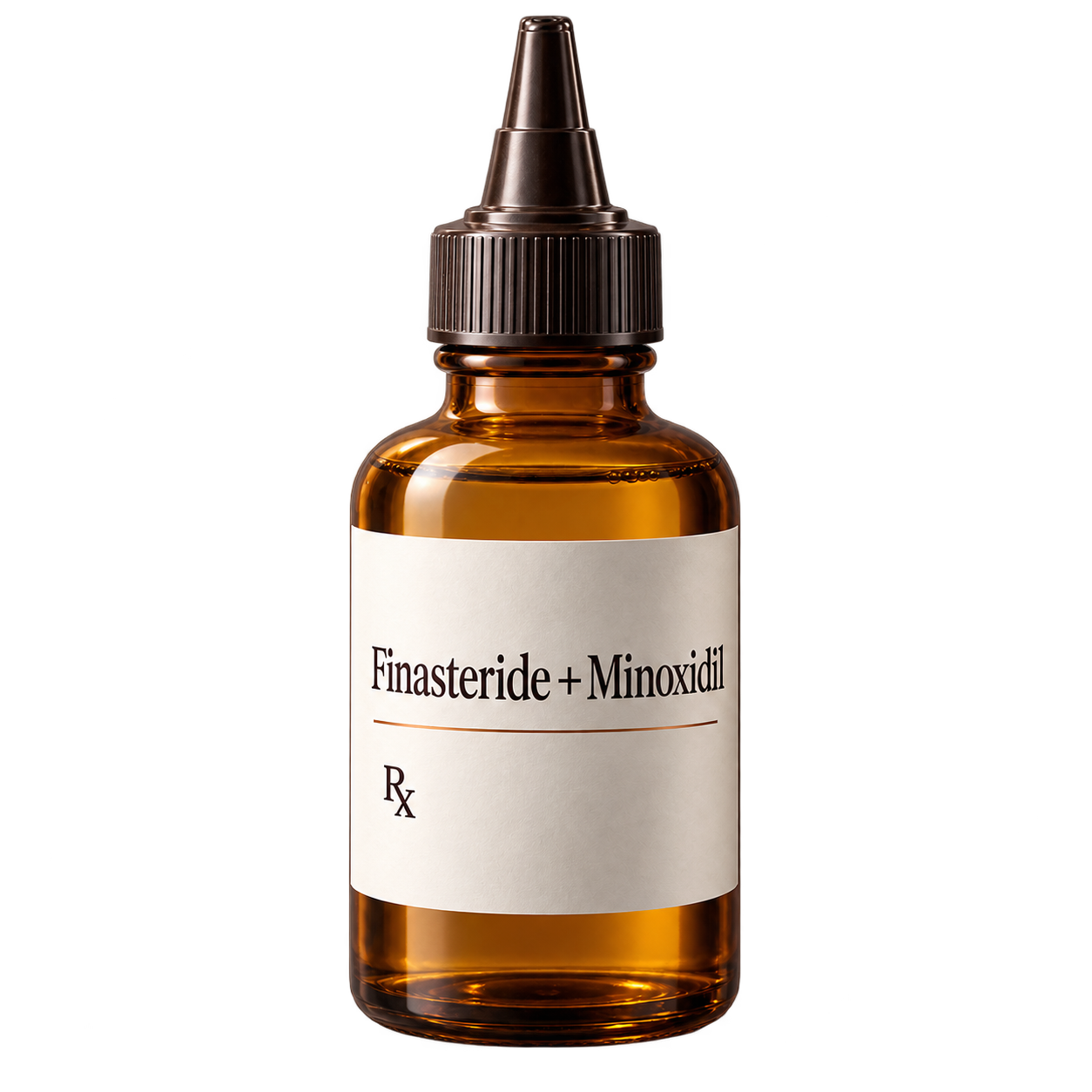
- Finasteride + Minoxidil Scalp Solution is $53.50/month (billed $107 every 50 days), charged only after a clinician approves it.
- Answer a few health questions online. A licensed clinician reviews them. If approved, it ships to your door.
- Adults 18 or older. A licensed clinician reviews your health history and decides whether treatment is appropriate for you. Availability depends on the state you live in.


Rogaine (topical minoxidil) can help some types of hair loss, but the tradeoff is that it can cause local scalp side effects and, rarely, whole body symptoms. Knowing what is common versus what is urgent helps you decide when to watch, when to adjust your routine, and when to stop and get medical advice. This guide summarizes labeled risks for topical minoxidil and what they can mean for you.
- Rogaine side effects are most often scalp irritation, itching, or dryness.
- A temporary increase in shedding can happen early with minoxidil.
- Stop use and get urgent help for chest pain, fainting, fast heartbeat, or swelling.
- Unwanted facial or body hair can occur if medication spreads beyond the scalp.
Quick answer: what side effects can Rogaine cause?
Rogaine side effects, common vs serious
Itching, dryness, redness
These are common with topical minoxidil and are usually limited to the scalp. They can be caused by minoxidil itself or by inactive ingredients (for example, alcohol or propylene glycol) that can irritate sensitive skin. If irritation is persistent or severe, a clinician can help you decide whether to stop or switch formulations.
Flaking or scaling
Some people notice dandruff-like scaling after starting Rogaine. This can overlap with seborrheic dermatitis or psoriasis, which may flare with alcohol-based solutions. If you also have burning, oozing, or worsening rash, treat it as more than simple dryness and ask a clinician.
Temporary shedding early on
An increase in shedding can happen after starting minoxidil as hair follicles shift through the growth cycle. If shedding is sudden, patchy, or comes with scalp pain or inflammation, it may not be from minoxidil alone and should be evaluated.
Unwanted facial or body hair
Hair growth can occur outside the scalp if medication spreads to the face, neck, or hands and is then transferred. This is more likely if the product runs, is applied too broadly, or is not washed off the hands after use. If unwanted hair growth is bothersome or spreading, discuss whether to stop or change products.
Allergic reaction or severe rash
Stop using the product and seek medical advice if you develop hives, widespread rash, swelling of the face or lips, or trouble breathing. Some reactions are due to ingredients in the vehicle rather than minoxidil itself, but you should treat any signs of allergy as urgent.
Heart and fluid symptoms
Topical minoxidil can rarely cause symptoms that suggest systemic absorption, including chest pain, rapid heartbeat, dizziness or fainting, sudden unexplained weight gain, or swelling of hands or feet. Stop use and get urgent medical evaluation if these occur, especially if you have heart disease or are short of breath.
When to call a clinician or seek urgent care
Get urgent care now
Seek urgent evaluation if you have chest pain, fainting, severe dizziness, a fast or irregular heartbeat, shortness of breath, or swelling of the hands or feet. These are listed warning symptoms for topical minoxidil and should not be watched at home.
Call within 24 to 48 hours
Contact a clinician promptly for a spreading rash, blistering, oozing, severe burning, or signs of infection on the scalp. Also call if you are pregnant, trying to conceive, or breastfeeding and have been using minoxidil, since you need individualized risk guidance.
Make a routine appointment
If you have persistent irritation, unwanted hair growth, or ongoing shedding that worries you, a clinician can help you sort out whether this is expected, a product reaction, or another cause of hair loss. They may also review other medicines and conditions that could contribute to shedding.
Practical ways to reduce irritation and surprises
Apply only to the scalp
Keep product off the face and neck to reduce unwanted hair growth.
Wash hands after use
Hand transfer is a common reason hair appears where you did not apply it.
Avoid broken or inflamed skin
Applying to irritated skin may increase burning and absorption.
Track symptoms for 2 weeks
Note timing, products used, and scalp changes to share with a clinician.
Check for other causes
Iron, thyroid, and vitamin issues can mimic treatment side effects.
Frequently Asked Questions
What are the most common rogaine side effects?
The most common side effects are local scalp reactions like itching, dryness, redness, and scaling. Some people also notice temporary increased shedding early on. These effects are described in topical minoxidil labeling.
Can Rogaine cause shedding at first?
Yes. Increased shedding can occur after starting minoxidil as hair follicles shift through the growth cycle. If shedding is sudden, patchy, or accompanied by scalp pain or inflammation, contact a clinician to rule out other causes.
Can Rogaine cause heart palpitations or chest pain?
Rarely, topical minoxidil can cause systemic side effects such as chest pain, a rapid heartbeat, dizziness or fainting, swelling, or sudden weight gain. Labeling advises stopping use and seeking medical evaluation if these occur.
Can Rogaine cause unwanted facial hair?
Yes, unwanted hair growth can occur, especially if the product spreads beyond the scalp or is transferred by hands. Washing hands after application and keeping the product confined to the scalp can help reduce this risk. If it persists, discuss options with a clinician.
How can I tell if my hair loss is from Rogaine or something else?
Timing helps: irritation or shedding that starts after beginning minoxidil may be related, but many medical issues can also cause shedding. A clinician may review your history and sometimes recommend labs to check contributors like iron or thyroid status. Vitals Vault can help you start with a hair loss lab panel to share with a clinician.