
Finasteride side effects: what to expect
Finasteride side effects can include sexual and mood changes and breast tenderness. Know what is common, what is serious, and when to call a clinician.
Key facts
- Finasteride + Minoxidil Scalp Solution is $53.50/month (billed $107 every 50 days), charged only after a clinician approves it.
- Answer a few health questions online. A licensed clinician reviews them. If approved, it ships to your door.
- Adults 18 or older. A licensed clinician reviews your health history and decides whether treatment is appropriate for you. Availability depends on the state you live in.


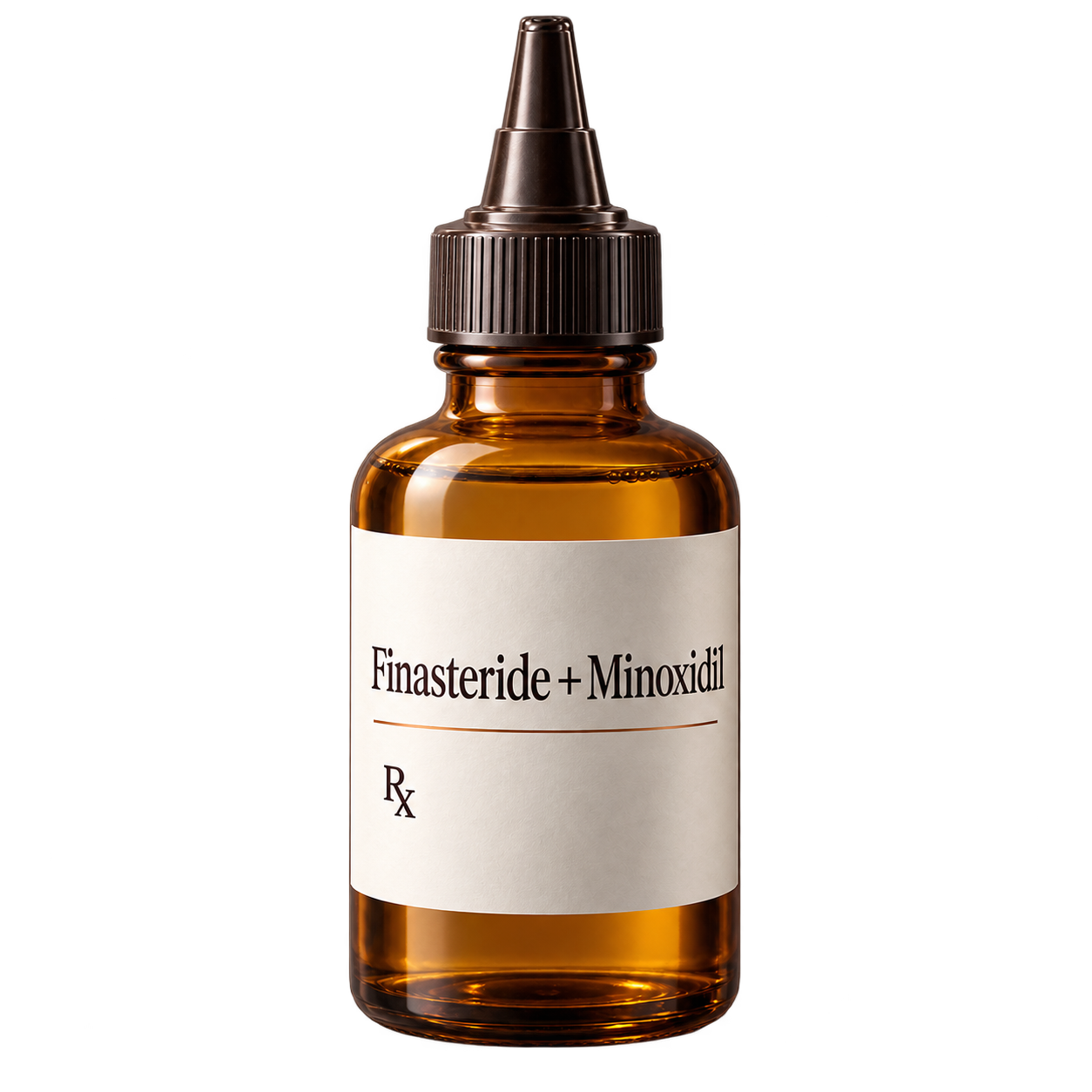
Finasteride is a prescription medicine that lowers dihydrotestosterone (DHT). It is FDA-approved as Propecia for male pattern hair loss and as Proscar for benign prostatic hyperplasia (BPH). Like any medication, it can cause side effects, and some are important to recognize early. This guide summarizes finasteride side effects from FDA labeling and safety information, including what is common, what is serious, and when to contact a clinician. Vitals Vault also offers lab options you can share with a clinician when you are sorting out hair loss or symptoms.
- Finasteride side effects most often involve sexual function, mood, or breast changes.
- Some side effects may improve after stopping, but persistent symptoms have been reported.
- Serious concerns include allergic reactions, breast lumps, and depression or suicidal thoughts.
- Finasteride can cause birth defects; pregnant people should not handle crushed tablets.
Finasteride side effects, in plain language
- What finasteride is
- A 5-alpha reductase inhibitor that lowers DHT; FDA-approved for male pattern hair loss (1 mg) and BPH (5 mg).
- Key safety point
- Finasteride is not for use in pregnancy; exposure can harm a male fetus, and pregnant people should not handle crushed or broken tablets.
- Where side effect info comes from
- FDA-approved prescribing information and patient labeling for finasteride products (Propecia and Proscar).
Side effects: what is common vs serious
Lower sex drive
Decreased libido is a reported side effect in clinical trials for finasteride. If it happens, a clinician can help you weigh whether the benefit is worth the tradeoff and review other possible contributors (stress, sleep, other medications). Do not change your medication on your own.
Erection or ejaculation changes
Erectile dysfunction and ejaculation disorders (including decreased ejaculate volume) are listed adverse reactions with finasteride. If this is new or bothersome, bring it up early. Your clinician may review timing, other causes, and whether a different hair loss approach makes more sense.
Breast tenderness or enlargement
Breast tenderness or enlargement (gynecomastia) has been reported with finasteride. Because breast symptoms can overlap with other conditions, it is reasonable to document what you notice and discuss it with a clinician, especially if it is one-sided or worsening.
Breast lump or nipple discharge
A breast lump, pain, or nipple discharge should be evaluated promptly. Male breast cancer has been reported in people taking finasteride, and any new breast mass needs medical assessment rather than watchful waiting.
Depression or suicidal thoughts
Depressed mood has been reported with finasteride, and patient labeling advises stopping finasteride and contacting a clinician if you develop depression. If you have suicidal thoughts or feel unsafe, seek emergency help right away.
Allergic reaction
Rash, itching, hives, and swelling of the lips or face can be signs of an allergic reaction. Stop and seek urgent medical care if you have swelling, trouble breathing, or widespread hives, and tell clinicians you have taken finasteride.
| What you notice | Why it matters | What to do next |
|---|---|---|
| Lower libido, erection changes, ejaculation changes | Known adverse reactions in finasteride labeling | Track timing and discuss with your prescribing clinician |
| Breast tenderness or enlargement | Reported with finasteride; needs clinical context | Schedule a clinician visit, especially if persistent |
| Breast lump or nipple discharge | Needs prompt evaluation; rare reports of male breast cancer | Contact a clinician promptly for an exam |
| Depression, mood changes, suicidal thoughts | Patient labeling warns to stop and contact a clinician; suicidal thoughts are an emergency | Urgent clinician contact; emergency care if safety is a concern |
| Rash, facial or lip swelling, trouble breathing | Possible allergic reaction | Seek urgent or emergency care |
When to call a clinician or seek urgent care
Call promptly for breast symptoms
Contact a clinician if you notice breast lumps, pain, enlargement, or nipple discharge. These symptoms need an exam and sometimes imaging or additional testing, whether or not you take finasteride.
Get urgent help for severe mood changes
If you develop depression, contact your prescribing clinician as soon as possible. If you have suicidal thoughts, feel out of control, or cannot stay safe, seek emergency care immediately.
Seek urgent care for allergic reactions
Swelling of the face or lips, widespread hives, or trouble breathing can be signs of a serious allergic reaction. This is urgent and should be treated as an emergency.
Bring up persistent sexual side effects
If sexual side effects are persistent or distressing, discuss them with a clinician. Labeling notes that some sexual adverse reactions have persisted after stopping in postmarketing reports, so it is worth documenting symptoms and timeline.
Pro tips for monitoring side effects
Write down the timeline
Note when symptoms started, changed, and whether anything else changed too.
Separate hair loss from medication effects
Stress, illness, and nutrition can affect hair and mood. Ask about other causes.
Do not ignore breast changes
Breast lumps or discharge deserve prompt evaluation, even if mild.
Bring a full medication list
Other prescriptions and supplements can contribute to sexual or mood symptoms.
Ask about topical options
Topical formulations may have different systemic exposure than oral tablets.
Frequently Asked Questions
What is finasteride?
Finasteride is a prescription medicine that blocks 5-alpha reductase, which lowers DHT (dihydrotestosterone). It is FDA-approved as Propecia for male pattern hair loss and as Proscar for BPH. Lowering DHT can slow hair loss in some men, but it can also cause side effects.
What are the most common finasteride side effects?
The most commonly reported finasteride side effects involve sexual function, such as decreased libido, erectile dysfunction, and ejaculation disorders. Breast tenderness or enlargement can also occur. If symptoms are persistent or distressing, discuss them with a clinician.
Are there different oral finasteride side effects at 1 mg vs 5 mg?
Finasteride is marketed at different strengths for different conditions, and side effects listed in labeling overlap across products. Your individual risk can depend on dose, other medications, and health history. A clinician can help interpret symptoms in your specific situation.
Can finasteride side effects last after stopping?
FDA labeling notes postmarketing reports of sexual adverse reactions that persisted after discontinuation. This does not happen to everyone, but it is a reason to bring symptoms up early and document timing. A clinician can help evaluate other possible causes and next steps.
When should I seek urgent help for finasteride side effects?
Seek urgent or emergency care for signs of a serious allergic reaction, such as facial or lip swelling or trouble breathing. Contact a clinician promptly for breast lumps or nipple discharge, and urgently for depression or suicidal thoughts. If you feel unsafe, get emergency help right away.