
Ozempic dosage: labeled doses and schedule
Ozempic dosage is increased gradually on a weekly schedule. Here are the labeled doses, escalation timing, and what to do if you miss one.
Key facts
- Semaglutide + B12 is $157/month (billed $157 every 4 weeks), charged only after a clinician approves it.
- Answer a few health questions online. A licensed clinician reviews them. If approved, it ships to your door.
- Adults 18 or older. A licensed clinician reviews your health history and decides whether treatment is appropriate for you. Availability depends on the state you live in.


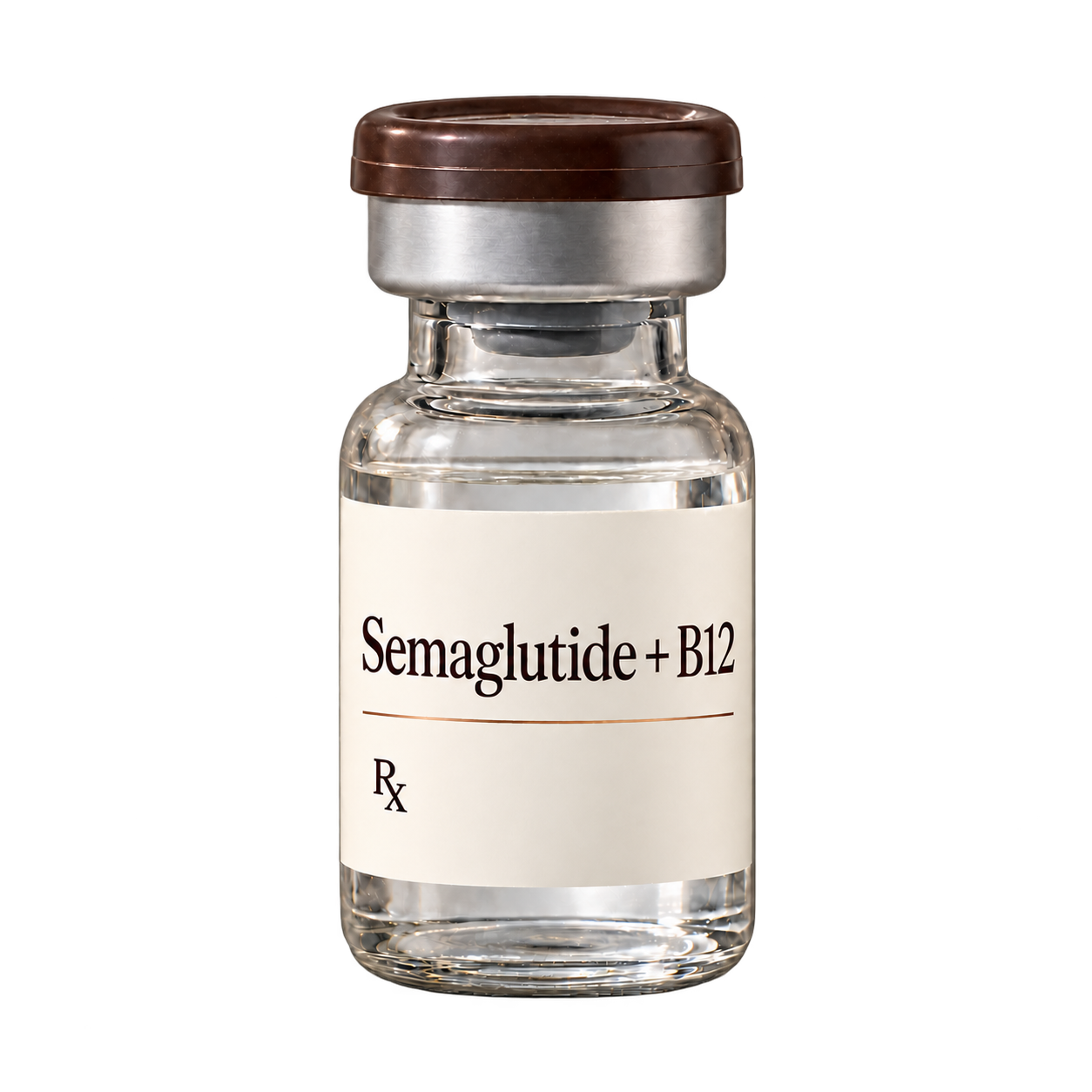
Ozempic (semaglutide) is a once weekly injection with a labeled titration schedule that starts low and increases over time. This page summarizes the FDA labeled Ozempic dosage options, including the highest dose, common dose steps, and what the label says to do if you miss a dose. If you are using semaglutide from a compounding pharmacy, your exact dose and pen or syringe instructions can differ from Ozempic. Vitals Vault includes PocketMD to help you ask dosing questions in context, but dose decisions stay with your prescribing clinician.
- Ozempic dosage is titrated weekly from a starting dose up to a maintenance dose per the FDA label.
- The labeled maximum Ozempic dose is 2 mg once weekly for adults with type 2 diabetes.
- If you miss a dose, the label gives timing rules for taking it or skipping it.
- Dose changes are usually made to improve tolerability and glucose control, not for faster results.
Answer: Ozempic dosage at a glance
Starting dose
For adults with type 2 diabetes, the FDA label starts Ozempic at 0.25 mg once weekly for 4 weeks. This starting dose is for treatment initiation and is not intended for glycemic control. Your clinician may choose a different plan based on your situation.
Typical titration
After 4 weeks at 0.25 mg weekly, the label increases to 0.5 mg once weekly. If additional glycemic control is needed after at least 4 weeks on 0.5 mg, the label allows increasing to 1 mg once weekly, and then to 2 mg once weekly if needed.
Highest dose
The highest Ozempic dose in the FDA prescribing information is 2 mg once weekly for adults with type 2 diabetes. Higher doses are not part of the Ozempic label. If you are seeing higher numbers online, confirm what product and indication they refer to.
Why doses increase gradually
Dose escalation is designed to improve tolerability, especially nausea and other gastrointestinal side effects that are common early in treatment. Your clinician may pause escalation if side effects are hard to manage, or if glycemic goals are met at a lower dose.
Ozempic dosage chart and label details
| Dose step | How long | What the label says it is for |
|---|---|---|
| 0.25 mg once weekly | 4 weeks | Treatment initiation; not intended for glycemic control |
| 0.5 mg once weekly | At least 4 weeks | Maintenance dose; may increase if additional glycemic control needed |
| 1 mg once weekly | At least 4 weeks | If additional glycemic control needed after 0.5 mg |
| 2 mg once weekly | Ongoing | Maximum recommended dose if additional glycemic control needed after 1 mg |
What are the doses of Ozempic?
For adults, the FDA label includes 0.25 mg, 0.5 mg, 1 mg, and 2 mg once weekly. The 0.25 mg dose is a starter dose used for 4 weeks and is not intended to control blood sugar. Your clinician chooses the maintenance dose based on response and tolerability.
Ozempic pen doses and strengths
Ozempic is supplied as prefilled pens that deliver labeled doses. The specific pen presentations and how many doses a pen contains depend on the pen strength, and the label and Instructions for Use describe how to check your pen and select your prescribed dose. If you use compounded semaglutide, your dispensing pharmacy provides product-specific instructions.
Missed dose rules (label)
If you miss a dose, the label says to take it as soon as possible within 5 days after the missed dose. If more than 5 days have passed, skip the missed dose and take the next dose on the regularly scheduled day. Do not take two doses within 2 days of each other.
Changing the weekly injection day
The label allows changing the day of the week you take Ozempic, as long as the time between two doses is at least 2 days. If you need to change your schedule, confirm the plan with your prescribing clinician. For compounded semaglutide, follow clinician and pharmacy directions.
Where Ozempic is injected (label only)
The Ozempic label says it is injected under the skin (subcutaneously) in the abdomen, thigh, or upper arm. A clinician or pharmacist should show you how to use the pen, and the Instructions for Use cover the steps. Do not inject into a muscle or vein.
Important safety context for dosing
Ozempic has a boxed warning about risk of thyroid C-cell tumors based on rodent studies, and it should not be used in people with a personal or family history of medullary thyroid carcinoma or MEN 2. The label also warns about pancreatitis, gallbladder disease, kidney injury, and low blood sugar when used with insulin or insulin secretagogues. These risks can affect how closely you are monitored during dose changes.
When to talk to a clinician
Severe stomach pain
Contact a clinician urgently if you have severe abdominal pain that may radiate to your back, with or without vomiting. The Ozempic label warns about acute pancreatitis, which needs prompt evaluation. Do not take another dose until you have medical guidance.
Gallbladder symptoms
Seek medical advice if you develop right upper abdominal pain, fever, jaundice, or persistent nausea and vomiting. The label warns about acute gallbladder disease. Your clinician may evaluate whether symptoms are related to treatment and whether dosing should be paused.
Signs of low blood sugar
If you use Ozempic with insulin or a sulfonylurea, ask your clinician about hypoglycemia risk and monitoring. The label notes that risk can increase with these combinations. Symptoms can include sweating, shakiness, confusion, or fast heartbeat and should be treated promptly.
Dehydration or kidney concerns
Call your clinician if vomiting or diarrhea is persistent, or if you notice reduced urination or swelling. The label warns that gastrointestinal side effects can lead to dehydration and worsen kidney function, including acute kidney injury. Early guidance can prevent complications.
Neck mass or hoarseness
Report a lump or swelling in your neck, hoarseness, trouble swallowing, or shortness of breath. Ozempic carries a boxed warning about thyroid C-cell tumors, and the label advises discussing these symptoms promptly. Your clinician will decide what evaluation is appropriate.
Pro tips for staying on schedule
Pick a consistent weekly day
A set day helps you avoid missed doses and confusion about timing.
Use the label’s missed-dose rule
Within 5 days you may take it; after that, skip and resume.
Expect GI effects early
Nausea and stomach upset are common during dose escalation and often improve.
Confirm your product and instructions
Ozempic pen directions differ from compounded semaglutide instructions from a pharmacy.
Bring questions to check-ins
Dose changes should be made with clinician guidance, especially with other diabetes meds.
Frequently Asked Questions
What is the highest dosage of Ozempic?
In the FDA prescribing information for adults with type 2 diabetes, the maximum recommended Ozempic dose is 2 mg once weekly. Dose increases are made stepwise and only if additional glycemic control is needed. Your clinician decides what dose is appropriate for you.
What are the doses of Ozempic?
The adult Ozempic label includes 0.25 mg, 0.5 mg, 1 mg, and 2 mg once weekly. The 0.25 mg dose is used for 4 weeks to start treatment and is not intended for glycemic control. Maintenance dosing is adjusted based on response and tolerability.
What’s the highest dose of Ozempic?
The highest dose listed in the Ozempic FDA label is 2 mg once weekly. If you see higher doses mentioned elsewhere, they may refer to a different product, different indication, or non-labeled use. Confirm dosing only with your prescribing clinician.
Is there an Ozempic dosage chart I can follow?
Yes. The Ozempic FDA label provides a titration schedule that starts at 0.25 mg weekly for 4 weeks, then increases to 0.5 mg weekly, with possible later increases to 1 mg and 2 mg if needed. Do not change your dose without clinician guidance.
What should I do if I miss my Ozempic dose?
The label says to take the missed dose as soon as possible within 5 days after the missed dose. If more than 5 days have passed, skip the missed dose and take your next dose on the regularly scheduled day. Do not take two doses within 2 days of each other.