
Is methylene blue safe to take orally?
Methylene blue can be taken orally in some uses, but it has serious interaction risks. Avoid self-dosing and review meds and conditions with a clinician.
Key facts
- Methylene Blue is $43/month (billed $129 every 84 days), charged only after a clinician approves it.
- Answer a few health questions online. A licensed clinician reviews them. If approved, it ships to your door.
- Adults 18 or older. A licensed clinician reviews your health history and decides whether treatment is appropriate for you. Availability depends on the state you live in.


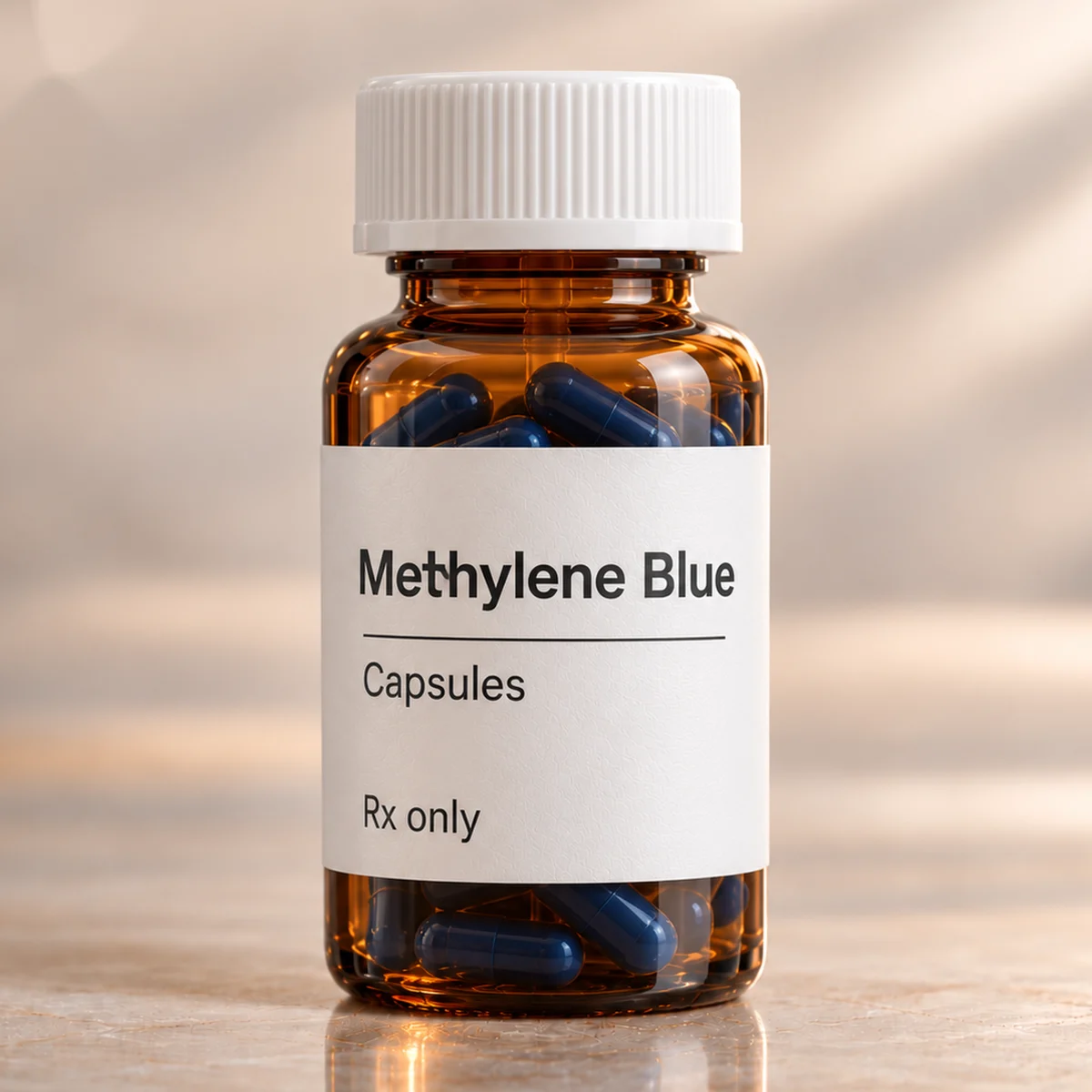
Oral methylene blue is used in specific medical situations, but it is not a harmless supplement. Whether it is safe for you depends on why you are taking it, your other medications, and health conditions that raise risk. This guide covers the main safety issues, interactions, and warning signs to act on. If you are having symptoms, Vitals Vault can help you start with labs and share results with a clinician for next steps.
- Methylene blue can be safe orally only with clinician oversight and careful medication review.
- The most serious avoidable risk is serotonin syndrome with serotonergic medicines.
- G6PD deficiency raises the risk of hemolysis and may require screening.
- Blue or green urine or stool can happen and is often temporary.
- Tell your lab and clinician because methylene blue can affect some test methods.
Is methylene blue safe to take orally?
- Why interactions matter
- FDA warns of serious CNS reactions when methylene blue is used with serotonergic psychiatric medications.
- High-risk condition to rule out
- DailyMed labeling warns of hemolysis risk in people with G6PD deficiency.
- Common benign change
- Discoloration of urine can occur because methylene blue is a dye and is excreted.
Safety details that change the answer
Serotonin syndrome risk
FDA warns that methylene blue can cause serious central nervous system reactions when used in people taking serotonergic psychiatric medications. Symptoms can include agitation, confusion, sweating, tremor, muscle stiffness, fever, and diarrhea. Seek urgent care if symptoms are severe or rapidly worsening.
G6PD deficiency and hemolysis
DailyMed labeling warns that people with glucose-6-phosphate dehydrogenase (G6PD) deficiency are at higher risk of hemolysis (breakdown of red blood cells) with methylene blue. Signs can include dark urine, jaundice (yellowing of skin or eyes), unusual fatigue, or shortness of breath. A clinician may recommend screening before use.
Confusion about route and product
Much of the strongest safety warning language comes from FDA communications and labeling for methylene blue given in medical settings. Oral use for wellness is not an FDA-approved indication, and safety depends on formulation and supervision. Discuss the exact product and route with a clinician.
Blue or green body fluids
Blue or green urine, stool, or saliva can happen because the dye is excreted. This can be alarming but is often temporary. If discoloration comes with pain, fever, or other new symptoms, check in with a clinician.
Stomach upset and headache
Some people report nausea, abdominal discomfort, or headache. If symptoms are persistent, severe, or lead to dehydration, contact your clinician. Do not try to fix side effects by changing how you take it without medical guidance.
Lab test interference
Because methylene blue is a dye, it can interfere with some laboratory tests that use color-based methods. Tell your clinician and the lab that you are taking it so results are interpreted correctly. This matters most when you are being evaluated for new symptoms.
When to talk to a clinician
Urgent: serotonin syndrome signs
Seek urgent care for severe agitation, confusion, high fever, stiff muscles, tremor, or rapidly worsening diarrhea, especially if you take serotonergic psychiatric medications. FDA warns these reactions can be serious. Bring a list of everything you took.
Prompt: possible hemolysis
Contact a clinician promptly for dark urine, yellowing of the skin or eyes, unusual fatigue, shortness of breath, or a fast heartbeat. These can be signs of hemolysis or anemia, which DailyMed labeling highlights as a risk in G6PD deficiency. Do not ignore rapidly worsening symptoms.
Before starting: review your goal
If you are considering methylene blue for wellness or longevity, ask a clinician to clarify whether there is evidence for your goal and what monitoring is appropriate. Many online uses are outside FDA-approved indications. A clinician can also check for safer alternatives.
Before labs: disclose use
Tell your clinician and the lab if you have taken methylene blue recently. Because it is a dye, it can affect some lab methods and complicate interpretation. This is especially important if you are being evaluated for new symptoms.
Pro tips for safer discussions
Bring a full med list
Include prescriptions, OTC products, and supplements, especially antidepressants and serotonergic agents.
Ask about G6PD status
If you do not know your status, ask whether screening is appropriate before use.
Mention it before testing
Tell the lab you took methylene blue so results are interpreted correctly.
Report new neuro symptoms
Agitation, confusion, tremor, or fever needs urgent evaluation, especially with serotonergic meds.
Clarify the exact product
Oral products vary; confirm formulation, strength, and instructions with your clinician.
Frequently Asked Questions
Is methylene blue safe to take orally if I take an antidepressant?
It may not be safe with many antidepressants because FDA warns of serious CNS reactions when methylene blue is used with serotonergic psychiatric medications. Do not combine them without clinician oversight. Seek urgent care for severe agitation, fever, stiffness, tremor, or confusion.
Why does methylene blue turn urine blue or green?
Methylene blue is a dye and can be excreted in urine, which may cause blue or green discoloration. This can be expected and temporary. Tell your clinician if you also have pain, fever, or other new symptoms.
Do I need G6PD testing before taking methylene blue orally?
DailyMed labeling warns that G6PD deficiency increases the risk of hemolysis with methylene blue. Your clinician can decide whether screening is appropriate based on your history. Get prompt care for dark urine, jaundice, or sudden shortness of breath.
Can methylene blue affect lab test results?
Yes. Because it is a dye, methylene blue can interfere with some lab methods that rely on color changes. Tell the lab and your clinician that you are taking it so results are interpreted correctly.
If I am considering methylene blue for wellness, what is the safest next step?
Review your goal, medication list, and risk factors with a qualified clinician, since interactions can be serious and many uses are off-label. If you use Vitals Vault, you can start with labs and share results with a clinician to guide a safer discussion.