
Is methylene blue safe?
Is methylene blue safe? It can be when prescribed and monitored, but it has serious interaction risks, including serotonin syndrome and hemolysis risk.
Key facts
- Methylene Blue is $43/month (billed $129 every 84 days), charged only after a clinician approves it.
- Answer a few health questions online. A licensed clinician reviews them. If approved, it ships to your door.
- Adults 18 or older. A licensed clinician reviews your health history and decides whether treatment is appropriate for you. Availability depends on the state you live in.


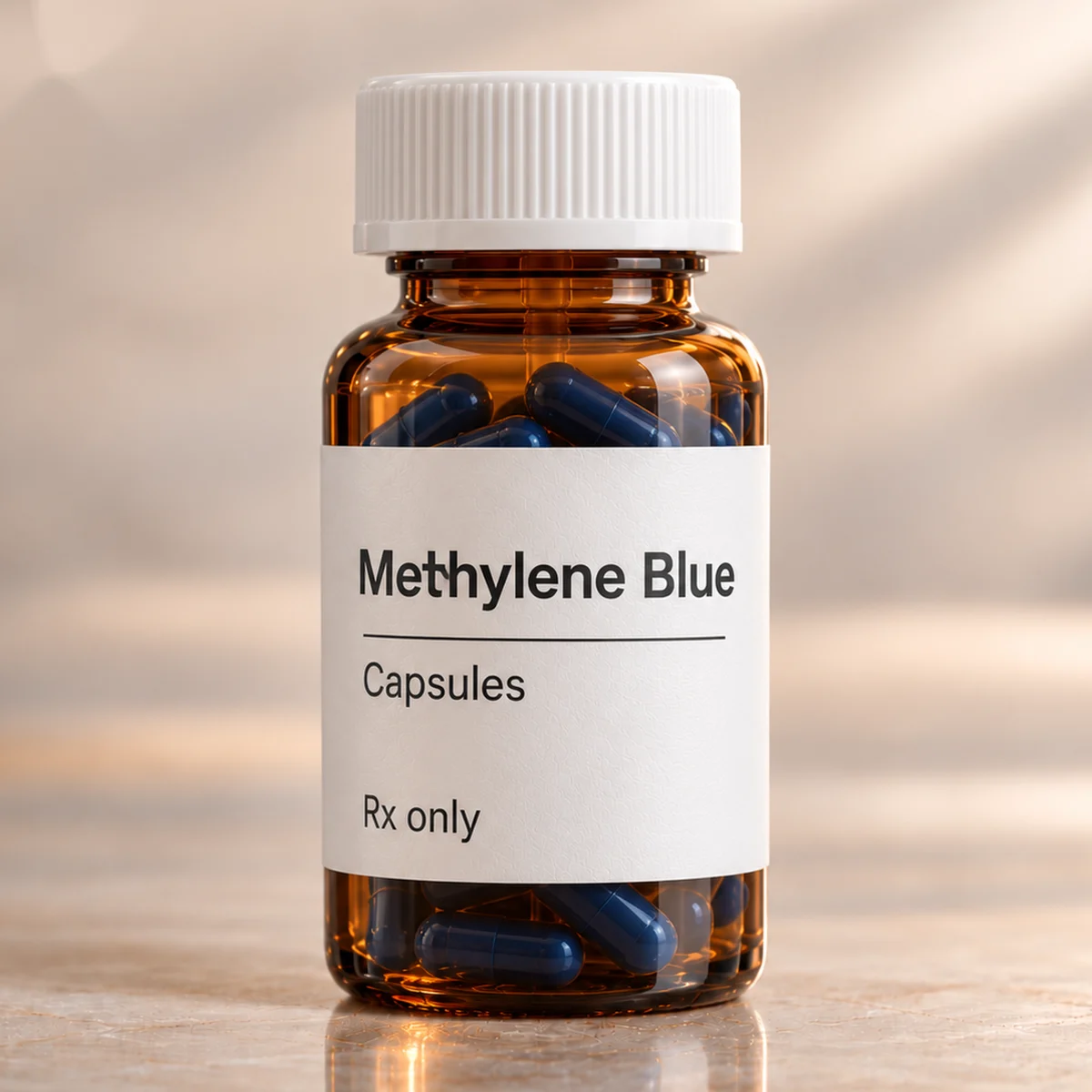
If you are asking “is methylene blue safe,” the most accurate answer is: it depends on why you are using it, your other medications, and your underlying risks. Methylene blue is a prescription drug for specific medical uses, and it can also be used in other ways under clinician supervision. This page covers the safety issues that matter most, including drug interactions (especially serotonin syndrome), who should avoid it, and what symptoms mean you should get urgent care.
- Methylene blue can be safe for some people, but safety depends on your meds and risk factors.
- The most important risk is serotonin syndrome with serotonergic medicines (for example SSRIs and SNRIs).
- G6PD deficiency raises the risk of hemolytic anemia and is a labeled contraindication for injection.
- Blue or green urine and temporary discoloration can happen and is usually not dangerous alone.
Is methylene blue safe?
- Key interaction risk
- Can cause serotonin syndrome when combined with serotonergic drugs (for example SSRIs and SNRIs).
- Key avoid group
- G6PD deficiency is a contraindication for methylene blue injection due to hemolysis risk.
- Common visible effect
- May discolor urine or skin blue or green.
What makes methylene blue risky for some people
Serotonin syndrome
FDA warns methylene blue can cause serious central nervous system reactions when given to patients taking serotonergic psychiatric medications. Symptoms can include agitation, confusion, sweating, tremor, muscle stiffness, diarrhea, fever, and fast heart rate. This is a medical emergency risk, not a minor side effect.
Hemolytic anemia in G6PD deficiency
Methylene blue can cause hemolysis (breakdown of red blood cells) in people with glucose-6-phosphate dehydrogenase (G6PD) deficiency. This can lead to anemia, jaundice, dark urine, shortness of breath, and fatigue. DailyMed labeling for methylene blue injection lists G6PD deficiency as a contraindication.
Methemoglobinemia and oxygen problems
Methylene blue is used in specific clinical settings, but safety depends on the indication and careful medical use. If you develop sudden shortness of breath, gray or blue lips, chest pain, or confusion, treat this as urgent. These symptoms need immediate evaluation regardless of the cause.
Blue urine or skin discoloration
Because methylene blue is a dye, it can discolor urine and sometimes skin or mucous membranes. This can look alarming but is usually not dangerous by itself. If discoloration comes with breathing problems, chest pain, fainting, or severe symptoms, seek urgent care.
Allergic reactions
Hypersensitivity reactions are possible with any medication. Seek urgent care for hives, swelling of the face or throat, wheezing, or trouble breathing. Prescribing information for methylene blue injection includes warnings about hypersensitivity.
Pregnancy and breastfeeding questions
Safety depends on the indication, dose, and timing, and the evidence base varies by use. If you are pregnant, trying to conceive, or breastfeeding, discuss risks and alternatives with a clinician before using methylene blue in any form.
| Medication or class | Why it matters with methylene blue | What to do |
|---|---|---|
| SSRIs and SNRIs | FDA warns of serious CNS reactions and serotonin syndrome risk. | Review your full list with a clinician before any use. |
| Other serotonergic drugs and supplements | Some migraine, pain, and herbal products can increase serotonin. | Bring all prescriptions and over-the-counter products to review. |
| Psychiatric medications (broadly) | FDA safety communication highlights risk with certain psychiatric meds. | Do not assume it is safe because it is “low dose” or “wellness.” |
When to call a clinician or seek urgent care
Possible serotonin syndrome
Get urgent care for confusion, agitation, fever, heavy sweating, diarrhea, tremor, muscle rigidity, or a fast heart rate, especially if you take antidepressants or other serotonergic drugs. Tell the care team you may have taken methylene blue.
Signs of hemolysis or anemia
Seek prompt evaluation for new severe fatigue, shortness of breath, yellowing of the eyes or skin, dark urine, or rapid heart rate. These can be signs of hemolytic anemia, which is a known risk in G6PD deficiency.
Breathing or chest symptoms
Call emergency services for trouble breathing, chest pain, fainting, or blue or gray lips. These symptoms need urgent evaluation regardless of the cause.
Medication list changes
Talk to a clinician before starting or stopping antidepressants, migraine medicines, or other serotonergic drugs if methylene blue is being considered. Many interaction risks depend on what you take together.
Practical safety tips
Bring your full med list
Include antidepressants, migraine drugs, pain medicines, and supplements that may affect serotonin.
Ask about G6PD risk
If you have a family history or higher risk ancestry, ask whether testing is appropriate.
Expect harmless discoloration
Blue or green urine can happen and is not usually dangerous by itself.
Avoid DIY stacking
Combining multiple serotonergic products can increase interaction risk.
Frequently Asked Questions
Is methylene blue safe?
Methylene blue can be safe when it is prescribed for an appropriate reason and your risks and medication list are reviewed. The most important safety issues are serotonin syndrome risk with serotonergic drugs and hemolytic anemia risk in G6PD deficiency.
Can methylene blue cause serotonin syndrome?
Yes. FDA warns of serious CNS reactions and serotonin syndrome risk when methylene blue is used with certain serotonergic psychiatric medications. Seek urgent care for confusion, fever, sweating, tremor, diarrhea, or muscle stiffness after exposure.
Who should not take methylene blue?
DailyMed labeling for methylene blue injection lists G6PD deficiency as a contraindication because of hemolysis risk. People taking serotonergic medications may also be at higher risk for serious interactions, so a clinician should review your full medication list.
Why does methylene blue turn urine blue or green?
Methylene blue is a dye, and some of it is excreted in urine, which can change urine color. This is usually not dangerous on its own, but get urgent care if discoloration comes with breathing problems, chest pain, or severe symptoms.
Is compounded methylene blue safe?
Compounded methylene blue is prepared by a licensed pharmacy for an individual prescription and is not FDA-approved. Safety depends on appropriate prescribing, screening for risks like G6PD deficiency, and avoiding dangerous interactions such as serotonergic drug combinations.