
Methylene blue dosage: what the label says
Methylene blue dosage depends on the FDA labeled use and route. Here is what the label says, plus key safety issues to discuss.
Key facts
- Methylene Blue is $43/month (billed $129 every 84 days), charged only after a clinician approves it.
- Answer a few health questions online. A licensed clinician reviews them. If approved, it ships to your door.
- Adults 18 or older. A licensed clinician reviews your health history and decides whether treatment is appropriate for you. Availability depends on the state you live in.


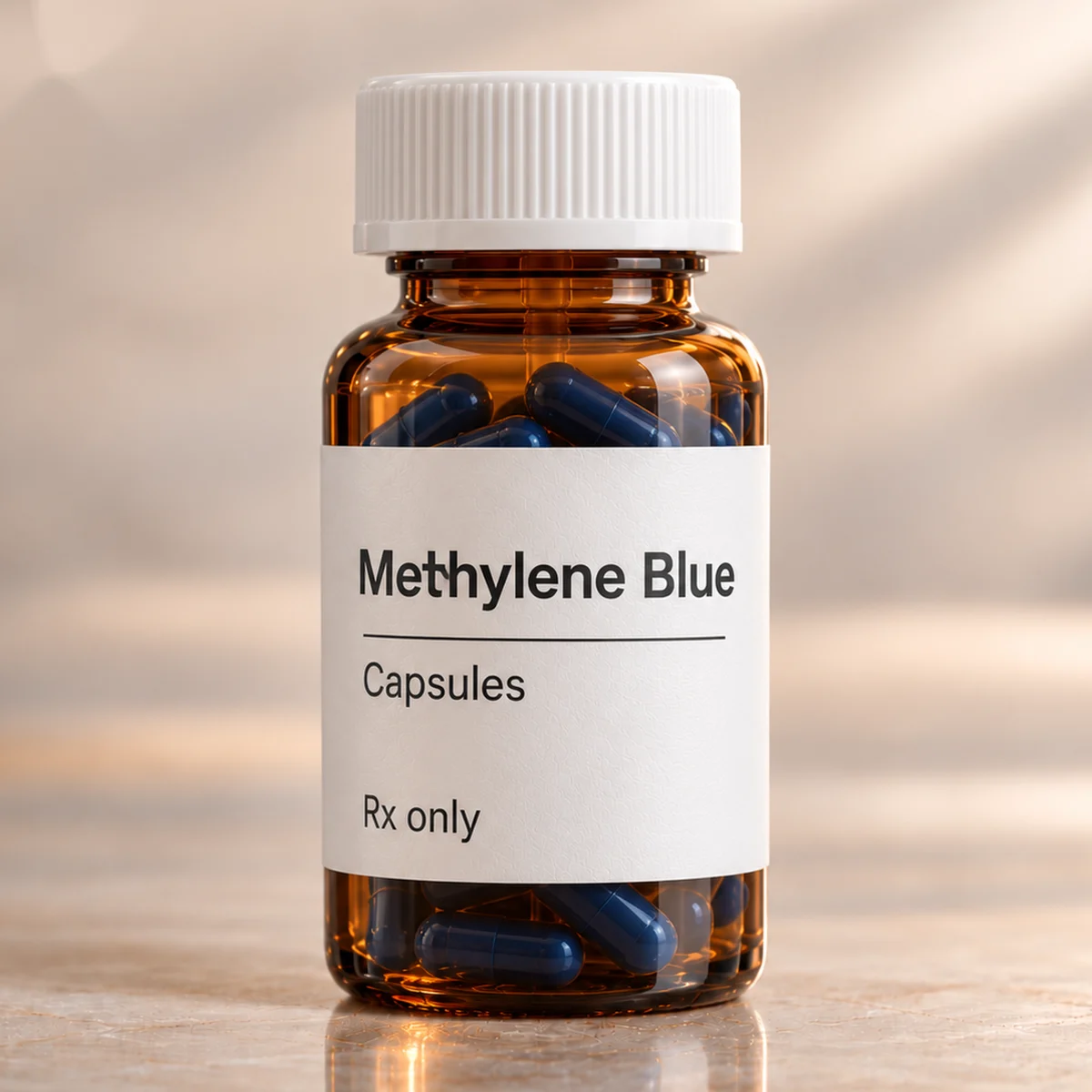
Methylene blue is a prescription medicine with FDA labeled dosing for specific medical uses, most notably treating acquired methemoglobinemia. Because dosing depends on the indication, route, and safety factors, there is not one single methylene blue dosage that fits every situation. This page summarizes what the FDA labeling says and what to discuss with your clinician if you are considering methylene blue. Vitals Vault also offers PocketMD to help you ask dosing questions using your own health history and labs.
- Methylene blue dosage is set by the labeled use, route, and your clinical situation.
- FDA labeled dosing is for methemoglobinemia and is weight-based IV dosing.
- Do not self-dose for wellness or longevity without clinician guidance and monitoring.
- Major safety issues include serotonin syndrome risk with serotonergic drugs and hemolysis risk in G6PD deficiency.
Methylene blue dosage, in plain terms
There is no one standard dose
The correct methylene blue dosage depends on why it is being used and how it is given. FDA labeling provides dosing for methemoglobinemia using intravenous (IV) administration. Other uses you may see online are not the basis for FDA labeled dosing.
Label dosing is weight-based
For treating acquired methemoglobinemia, the FDA label describes dosing in milligrams per kilogram (mg/kg) given IV over a specified time period. Your clinician uses your weight and your clinical response to decide whether additional dosing is needed.
Safety factors can change dosing decisions
Certain medicines and conditions can make methylene blue unsafe or require extra caution. Examples include serotonergic medications due to serotonin syndrome risk and glucose-6-phosphate dehydrogenase (G6PD) deficiency due to hemolysis risk.
Dosage details from FDA labeling
| What the label covers | What it says | What this means for you |
|---|---|---|
| Indication | Treatment of acquired methemoglobinemia | Labeled dosing is tied to this specific condition, not general wellness use. |
| Route | Intravenous (IV) administration | Administration is clinician-directed in a medical setting. |
| Initial dose basis | Weight-based dosing (mg/kg) as described in the label | Your clinician calculates dose from your weight and clinical context. |
| Repeat dosing | The label describes when an additional dose may be given based on response | Follow-up assessment is part of safe use, not just the initial dose. |
Serotonin syndrome interaction
Methylene blue can increase serotonin activity and has a known risk of serotonin syndrome when combined with serotonergic drugs (for example, SSRIs, SNRIs, MAOIs, and certain other medicines). This is a medical emergency risk, so your full medication list matters before any dose is considered.
G6PD deficiency and hemolysis
The FDA label warns about hemolytic anemia (breakdown of red blood cells) in people with G6PD deficiency. If you have known G6PD deficiency or a history suggesting it, your clinician may avoid methylene blue or use alternative approaches.
Dose form matters
FDA labeling referenced here applies to methylene blue injection products. Compounded methylene blue formulations are prepared by a pharmacy for an individual prescription and are not FDA-approved, so their directions come from the prescribing clinician and dispensing pharmacy.
Blue or green discoloration
Methylene blue can discolor urine and other body fluids blue or green. This effect can look alarming but is expected with the drug and is described in product labeling and patient information for methylene blue products.
When to talk to a clinician about dosing
You take antidepressants or stimulants
Bring a complete list of prescription drugs, over-the-counter products, and supplements. Many commonly used medications affect serotonin, and combining them with methylene blue can raise the risk of serotonin syndrome.
You may have G6PD deficiency
If you have a personal or family history of G6PD deficiency or unexplained hemolytic anemia, discuss it before any methylene blue use. Your clinician may recommend testing or choose a different approach.
You are pregnant or breastfeeding
Ask about pregnancy and breastfeeding considerations before using methylene blue. Risk and benefit decisions can differ by indication and timing, and your clinician should guide this.
You have kidney problems
Kidney function can matter for medication safety and monitoring. Tell your clinician if you have chronic kidney disease or abnormal kidney labs so they can decide what monitoring is appropriate.
You have urgent symptoms
If you have sudden shortness of breath, confusion, chest pain, severe headache, or signs of an allergic reaction, seek urgent care rather than trying to adjust a dose. These symptoms need medical evaluation.
Pro tips for safer dosing conversations
Share your full med list
Include antidepressants, migraine meds, and supplements that affect serotonin.
Ask what monitoring is planned
Clarify which symptoms and labs should trigger a check-in.
Confirm the exact formulation
Injection label guidance does not automatically apply to compounded products.
Do not chase effects
If you feel worse, contact your clinician instead of changing the dose.
Frequently Asked Questions
What is the standard methylene blue dosage?
There is not one standard methylene blue dosage for every situation. FDA labeling provides weight-based IV dosing for treating acquired methemoglobinemia, and dosing decisions depend on indication, route, and safety factors. Discuss your medications and risks with a clinician.
Is methylene blue dosing different for oral vs IV use?
Yes. FDA labeled dosing discussed here is for IV methylene blue injection for acquired methemoglobinemia. Oral dosing information you may see online is not the same as FDA injection labeling, and compounded products rely on clinician and pharmacy directions.
Can I take methylene blue with antidepressants (SSRIs or SNRIs)?
Methylene blue can interact with serotonergic medications and can increase the risk of serotonin syndrome, which is a medical emergency. Do not combine or adjust medicines on your own. A clinician should review your full medication list before any dosing decision.
Why do clinicians ask about G6PD deficiency before methylene blue?
FDA labeling warns about hemolytic anemia risk in people with G6PD deficiency. If you have G6PD deficiency, methylene blue may be unsafe or require alternative treatment. Your clinician can advise whether testing or avoidance is appropriate.
Is compounded methylene blue dosed the same as FDA-approved products?
Not necessarily. Compounded medications are prepared by a licensed pharmacy for an individual prescription and are not FDA-approved, so they do not have the same FDA-reviewed label. Your prescribing clinician and dispensing pharmacy provide the dosing directions and monitoring plan.