
Methylene blue gummies: what they are
Methylene blue gummies are a compounded oral form of methylene blue. Learn the safety risks, who should avoid it, and how access works.
Key facts
- Methylene Blue is $43/month (billed $129 every 84 days), charged only after a clinician approves it.
- Answer a few health questions online. A licensed clinician reviews them. If approved, it ships to your door.
- Adults 18 or older. A licensed clinician reviews your health history and decides whether treatment is appropriate for you. Availability depends on the state you live in.
- A $20 clinician review, refunded if you don’t qualify.


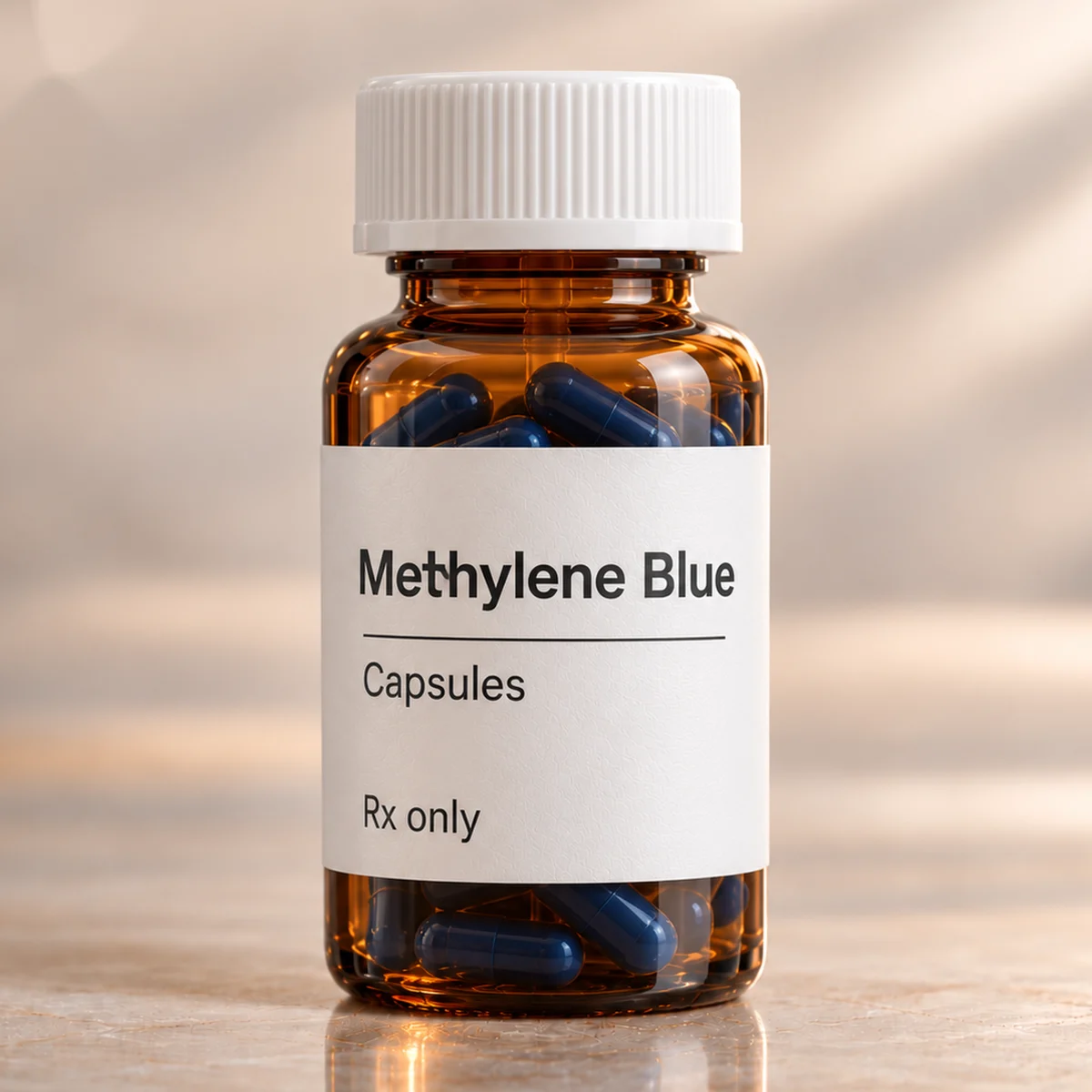
Methylene blue gummies are an oral, compounded formulation of methylene blue. People often search for them for wellness goals, but the strongest evidence and FDA approval are for a different form and indication: intravenous methylene blue for methemoglobinemia. This page explains what methylene blue gummies are, who should avoid them, and what safety issues to discuss with a clinician. If you are exploring options through Vitals Vault, you can also see how clinician review and access typically work.
- Methylene blue gummies are a compounded oral form of methylene blue, prescribed for select uses, not FDA-approved as gummies.
- Methylene blue is FDA-approved as an injection for methemoglobinemia, but many wellness uses are off-label and evidence-limited.
- A key safety issue is serotonin syndrome risk when combined with serotonergic medicines due to MAO inhibition.
- It can discolor urine and stool blue to green and can interfere with some lab tests.
- A clinician may want labs and medication review before prescribing.
What methylene blue gummies are
An oral compounded formulation
Methylene blue gummies refer to methylene blue prepared by a compounding pharmacy in a chewable, flavored form. Compounded medications are prepared for an individual prescription and are not FDA-approved. This matters because quality, dosing consistency, and instructions depend on the prescribing clinician and dispensing pharmacy.
Not the FDA-approved product form
The FDA-approved methylene blue product is an injection used to treat methemoglobinemia, a condition where hemoglobin cannot carry oxygen normally. Gummies are not an FDA-approved dosage form for methylene blue. If you are considering gummies for wellness, you are generally discussing off-label use.
A medication, not a supplement
Methylene blue is a drug with meaningful interactions and contraindications. Even at low doses, it can affect neurotransmitter pathways and lab testing, and it can cause side effects. It is important to review your full medication list, including antidepressants and migraine medicines, before using it.
Why people look for gummies
Many people prefer gummies because they are easy to take and may be easier to tolerate than liquids or capsules. Convenience does not change the underlying safety considerations. The most important step is confirming whether methylene blue is appropriate for your health history and current medications.
- FDA-approved indication (methylene blue injection)
- Treatment of methemoglobinemia (intravenous formulation).
- Status of gummies
- Compounded dosage form; not FDA-approved.
- Key interaction class
- Serotonergic drugs due to monoamine oxidase (MAO) inhibition risk.
How methylene blue works
Restores hemoglobin function
In methemoglobinemia, hemoglobin is oxidized to methemoglobin and cannot carry oxygen effectively. Methylene blue acts as a reducing agent through red blood cell pathways to help convert methemoglobin back to hemoglobin. This is the clearest, FDA-approved medical use for methylene blue.
MAO inhibition and serotonin risk
Methylene blue can inhibit monoamine oxidase (MAO), an enzyme involved in breaking down serotonin and other neurotransmitters. When combined with serotonergic medicines, this can raise the risk of serotonin syndrome, a potentially life-threatening reaction. This interaction is one of the main reasons clinician screening matters.
Wellness mechanisms are less certain
You may see claims about mitochondrial support or cognitive effects. Some laboratory and early clinical research explores these pathways, but evidence quality and applicability vary by dose, formulation, and population. For gummies used for wellness goals, the evidence base is generally limited compared with the FDA-approved indication.
Who methylene blue gummies may be for
People seeking a clinician-guided trial
If you are considering methylene blue gummies for a wellness goal, the safest path is a clinician-guided plan that starts with a careful medication review and clear monitoring goals. This is especially important if you take any psychiatric medicines, migraine medicines, or opioids that can affect serotonin.
People who prefer oral dosing
Some people prefer an oral formulation over liquids or other forms. A clinician can help decide whether an oral compounded form is reasonable for you and whether a different dosage form would be safer or more consistent for your situation.
People who can avoid key interactions
Methylene blue is not a good fit for everyone because of interaction risks. If you cannot safely pause or change interacting medications, or if you have conditions that increase risk, a clinician may recommend avoiding methylene blue entirely.
People prepared for lab and follow-up
Depending on your goals and health history, a clinician may want baseline labs and follow-up. Labs do not diagnose on their own, but they can help a clinician assess safety and track relevant markers over time.
Who should not take methylene blue gummies
People on serotonergic medications
Methylene blue has a well-described risk of causing serotonin syndrome when used with serotonergic drugs. This includes many antidepressants (such as SSRIs and SNRIs), some migraine medicines, and other serotonergic agents. Do not combine these without clinician oversight because serotonin syndrome can be life-threatening.
G6PD deficiency
Methylene blue can cause hemolysis (breakdown of red blood cells) in people with glucose-6-phosphate dehydrogenase (G6PD) deficiency. Because G6PD status is not always known, clinicians may screen based on history, ancestry, and prior reactions. This is a safety-critical contraindication to discuss before use.
Severe kidney impairment
Kidney function can affect how drugs and metabolites are handled and can change risk. Product labeling for methylene blue injection highlights cautions in certain populations, and clinicians may avoid or adjust plans when kidney function is significantly reduced. If you have kidney disease, bring recent lab results to your visit.
Pregnancy or breastfeeding questions
Safety depends on indication, dose, and timing. If you are pregnant, trying to conceive, or breastfeeding, discuss risks and alternatives with a clinician before considering methylene blue in any form. Do not assume a compounded gummy is safer than other forms.
Anyone with unexplained symptoms
If you have sudden shortness of breath, chest pain, confusion, fainting, or bluish skin or lips, seek urgent care. Those symptoms can signal serious conditions that should not be managed with a wellness treatment.
What to expect if you use methylene blue gummies
A medication review first
A clinician should review your medication and supplement list for interaction risks, especially serotonergic drugs. They may also ask about past anemia, hemolysis, or known G6PD deficiency. This step is often the main determinant of whether methylene blue is even an option.
Possible baseline labs
Depending on your health history and goals, a clinician may request recent labs before prescribing. Labs can help assess safety and establish a baseline for monitoring. If labs are ordered, you typically complete them first and then review results with the clinician.
Noticeable discoloration
Methylene blue can cause blue to green discoloration of urine and sometimes stool. This can be alarming if you are not expecting it, but it is a known effect of the dye. It can also stain the mouth or tongue temporarily with oral forms.
Lab test interference
Methylene blue can interfere with certain laboratory tests and monitoring methods. If you are getting bloodwork or monitoring oxygen levels, tell the clinician and the lab staff that you are using methylene blue. This helps avoid misinterpretation of results.
Side effects and warnings
Blue or green urine
Discoloration of urine is a common and expected effect because methylene blue is a dye. It can also discolor stool and, with oral forms, may temporarily stain the mouth. If you develop pain with urination, fever, or blood in the urine, contact a clinician because that is not expected.
Nausea or stomach upset
Some people experience gastrointestinal side effects such as nausea or abdominal discomfort. Taking an oral form with food may help for some people, but you should follow the instructions provided with your prescription. Persistent vomiting, severe abdominal pain, or dehydration warrants medical advice.
Headache or dizziness
Headache and dizziness have been reported with methylene blue. These symptoms can also have many other causes, so do not assume methylene blue is the only explanation. If you have severe headache, fainting, or neurologic symptoms, seek urgent evaluation.
Serotonin syndrome
Methylene blue can precipitate serotonin syndrome when combined with serotonergic drugs because it inhibits MAO. Symptoms can include agitation, confusion, fever, sweating, tremor, diarrhea, and muscle rigidity. This is a medical emergency and requires immediate care.
Hemolytic anemia in G6PD deficiency
In people with G6PD deficiency, methylene blue can trigger hemolysis, which may cause fatigue, shortness of breath, dark urine, jaundice, or rapid heart rate. This risk is serious and is a key reason clinicians screen for G6PD deficiency. Seek urgent care if these symptoms occur.
Allergic reactions
Allergic reactions are possible with any medication. Seek emergency care for swelling of the face or throat, trouble breathing, or widespread hives. For milder rash or itching, contact a clinician promptly for guidance.
Cost and access for methylene blue gummies
What drives cost
For compounded methylene blue gummies, cost is influenced by the compounding pharmacy, the prescribed strength and quantity, and whether labs or follow-up visits are needed. Shipping, state-specific dispensing rules, and refill cadence can also affect what you pay. Current prices, when available, are shown on this page in the price block.
Insurance coverage is variable
Compounded medications are often not covered by insurance, and coverage rules vary widely by plan. Even when methylene blue is covered for an FDA-approved indication, a compounded gummy formulation may be treated differently. If you want to try to use insurance, ask your plan what it covers and what documentation it requires.
Access depends on clinician review
Because methylene blue has meaningful interaction risks, access typically requires a clinician review of your health history and medication list. A clinician may also require recent lab results before prescribing. This is especially relevant if you take antidepressants, migraine medicines, or other serotonergic drugs.
How to get methylene blue gummies safely
- 1
Complete an intake
Share your goals, medical history, and a complete medication and supplement list.
- 2
Review with a licensed clinician
A clinician evaluates interaction risks and decides whether methylene blue is appropriate.
- 3
Get labs if requested
If needed, complete labs first so the clinician can review results before prescribing.
- 4
Receive a prescription and instructions
If prescribed, follow the dosing and monitoring guidance provided by your clinician and dispensing pharmacy.
Frequently Asked Questions
Are methylene blue gummies FDA-approved?
No. Methylene blue is FDA-approved as an injection for methemoglobinemia, but gummies are a compounded dosage form and are not FDA-approved. If you are considering gummies, ask a clinician about quality, dosing consistency, and monitoring.
What is the biggest safety risk with methylene blue gummies?
A major risk is serotonin syndrome when methylene blue is used with serotonergic medicines because it inhibits MAO. This can be life-threatening and needs urgent care if symptoms occur. Always review your full medication list with a clinician first.
Why does methylene blue turn urine blue or green?
Methylene blue is a dye, and discoloration of urine is a known and expected effect. It can also discolor stool and sometimes stain the mouth temporarily with oral forms. Tell your clinician if you have pain, fever, or blood in urine.
How much do methylene blue gummies cost?
Cost varies based on the compounding pharmacy, the prescribed formulation and quantity, and whether labs or follow-up visits are needed. Insurance coverage is often limited for compounded medications. Current prices, when available, are shown on this page in the price block.
Can I use Vitals Vault to get methylene blue gummies?
Vitals Vault can connect you with a licensed clinician who reviews your health history and decides whether treatment is appropriate for you. Treatment plans include clinician consults and ongoing support, and availability depends on your state. A clinician may also ask for recent lab results before prescribing.