
Tretinoin results: when you see changes
Tretinoin results build gradually over weeks to months. Early irritation is common, and consistent use plus sun protection help.
Key facts
- Tretinoin + Niacinamide is $43/month (billed $129 every 90 days), charged only after a clinician approves it.
- Answer a few health questions online. A licensed clinician reviews them. If approved, it ships to your door.
- Adults 18 or older. A licensed clinician reviews your health history and decides whether treatment is appropriate for you. Availability depends on the state you live in.


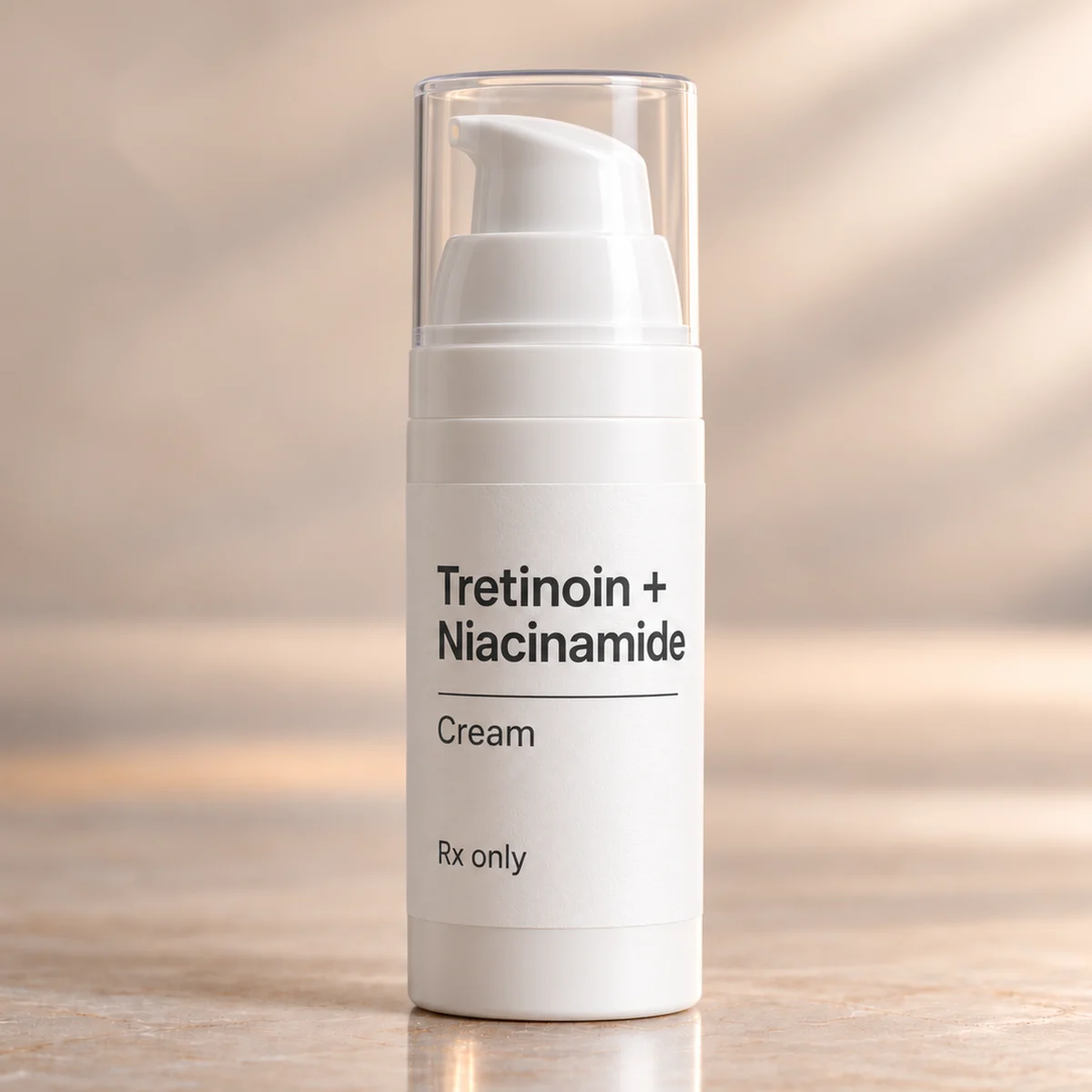
Tretinoin is a prescription retinoid used for acne and for reducing fine wrinkles and mottled skin discoloration from sun damage. Because it changes how skin cells grow and shed, tretinoin results usually build slowly, and irritation early on is common. This guide explains what tretinoin does, what a realistic timeline can look like, and what factors make results faster or slower. If you are using a compounded formula such as tretinoin with niacinamide, Vitals Vault can help you discuss expectations and tolerability with a licensed clinician.
- Tretinoin results are gradual, with visible improvement often taking weeks to months.
- Early dryness, peeling, and redness are common and can look like things are worse at first.
- Consistency and sun protection matter because tretinoin increases sun sensitivity.
- Your starting skin concerns, irritation level, and product strength affect how fast you notice change.
How long does tretinoin take to work?
Acne changes
In studies of tretinoin for acne, improvement is assessed over weeks, not days. You may notice fewer new breakouts and smoother texture gradually, while irritation can happen early. If acne is worsening or painful, check in with a clinician.
Fine wrinkles and sun damage
For photoaging (fine wrinkles and uneven pigmentation from sun), tretinoin studies evaluate results over months. Changes tend to be subtle at first and build with ongoing use. Daily sun protection helps you see and keep improvements.
Early irritation is not failure
Dryness, peeling, burning or stinging, and redness are expected for many people when starting. This adjustment period can make skin look worse before it looks better. A clinician can help you adjust the plan if irritation is limiting.
What tretinoin does for skin and what affects results
Speeds up cell turnover
Tretinoin is a retinoid (a vitamin A derivative) that affects how skin cells grow and shed. This can help keep pores from clogging and can gradually improve uneven texture. Because it changes cell behavior, benefits are typically gradual.
Helps acne in multiple ways
Tretinoin is indicated for acne vulgaris and is used to treat comedones (blackheads and whiteheads) and inflammatory acne. Early on, clogged pores coming to the surface can look like a flare even when treatment is working. If you are unsure, a clinician can reassess your regimen.
Improves photoaging with time
Tretinoin is also indicated to reduce fine wrinkles, mottled hyperpigmentation, and skin roughness from sun damage when used with a comprehensive skin care and sun avoidance program. If you are still getting significant sun exposure, results may be limited. Sunscreen and protective clothing matter.
Common early side effects
Common reactions include skin irritation such as dryness, peeling, redness, burning or stinging, and itching. These effects are often most noticeable when you first start or after increases in strength or frequency. Using other irritating products at the same time can make this worse.
Sun sensitivity and sunburn risk
Tretinoin can increase sensitivity to sunlight and the risk of sunburn. Sun avoidance and protective measures are part of labeled photoaging use and are also important for acne use. If you burn easily or have high sun exposure, discuss a plan you can realistically follow.
Pregnancy precautions
Topical tretinoin is generally avoided in pregnancy because retinoids are associated with fetal risk, and product labeling advises against use during pregnancy. If you are pregnant, trying to conceive, or breastfeeding, ask a clinician about safer alternatives. Do not self-start or continue without guidance.
| Factor | How it can affect results | What to discuss with a clinician |
|---|---|---|
| Primary goal (acne vs photoaging) | Acne and photoaging studies assess improvement over different time frames; both are gradual. | What outcome you care about most and how to measure progress. |
| Skin sensitivity and irritation | More irritation can lead to inconsistent use, slowing visible improvement. | Ways to reduce irritation and whether to adjust strength or frequency. |
| Sun exposure | Sun can worsen discoloration and increases sunburn risk on tretinoin. | Daily sun protection strategy you will actually use. |
| Other products used | Harsh cleansers, exfoliants, or other irritating actives can increase redness and peeling. | A simplified routine and which products to pause or space out. |
| Formulation and tolerability | Cream, gel, and compounded combinations can feel different on skin and affect adherence. | Whether a different vehicle or compounded blend is appropriate. |
A realistic timeline for tretinoin results
Weeks 1 to 4
Irritation is common early, including dryness, peeling, and redness. Some people notice a temporary flare in breakouts as clogged pores surface. Focus on tolerability and consistency rather than judging final results.
Weeks 6 to 12
Acne improvement is often evaluated around this window in clinical studies, and many people start to notice fewer new lesions and smoother texture. If you are not seeing any improvement or irritation is persistent, a clinician can reassess the plan.
Months 3 and beyond
For fine wrinkles and mottled discoloration from sun damage, studies assess changes over months with ongoing use and sun protection. Improvements tend to be gradual and can continue with continued treatment. Maintenance usually requires continued use as directed by a clinician.
When to talk to a clinician
Severe irritation
If you have intense burning, swelling, blistering, or crusting, you may be having a strong irritant reaction or contact dermatitis. A clinician can help you decide whether to pause, adjust, or switch treatments. Seek urgent care for signs of a severe allergic reaction such as trouble breathing or facial swelling.
No progress after months
If you have been using tretinoin consistently for several months and see no improvement in your main concern, it is reasonable to recheck the diagnosis and routine. Acne can have multiple drivers, and discoloration may need different approaches. A clinician can help you choose next steps.
Pregnancy or trying to conceive
If you are pregnant, planning pregnancy, or think you may be pregnant, contact a clinician promptly about whether to continue. Retinoids are generally avoided in pregnancy, and labeling advises against use. Ask about alternatives that better fit your situation.
New or changing skin lesions
Tretinoin is not a treatment for skin cancer. If you notice a new, changing, bleeding, or non-healing spot, get it evaluated rather than trying to treat it with a retinoid. A clinician can decide if you need an in-person exam.
Pro tips for better tolerance and consistency
Keep it simple
Use a gentle cleanser and moisturizer, and avoid stacking multiple irritating actives at first.
Protect from sun
Daily sunscreen and sun avoidance are part of labeled photoaging use and help limit irritation.
Expect an adjustment phase
Early peeling and redness can be normal, so track trends over weeks, not days.
Check product interactions
Ask about exfoliants, benzoyl peroxide, and other acne products that may increase irritation.
Ask before changing frequency
If you want to use it more often, confirm the plan with your prescribing clinician.
Frequently Asked Questions
What does tretinoin do?
Tretinoin is a topical retinoid that changes how skin cells grow and shed, which can help treat acne. It is also indicated to reduce fine wrinkles, mottled discoloration, and roughness from sun damage when used with sun avoidance and skin care.
How often to use tretinoin?
How often you use tretinoin depends on the specific product, strength, and how your skin tolerates it. Follow your prescriber’s directions and ask before changing frequency, especially if you are having irritation.
What does tretinoin do for skin?
For acne-prone skin, tretinoin helps reduce clogged pores and can improve texture over time. For sun-damaged skin, it can gradually improve fine wrinkles and uneven pigmentation when paired with sun protection.
How often should you use tretinoin?
Use tretinoin on the schedule your clinician prescribed, since irritation and your skin type affect what is appropriate. If you are using a compounded product, your prescriber and dispensing pharmacy can confirm the exact directions for your formulation.
Are tretinoin benefits permanent if you stop?
Some improvements can fade if you stop because tretinoin works by ongoing effects on skin cell turnover. For photoaging, labeling emphasizes a comprehensive skin care and sun avoidance program, which also affects how well results are maintained.