
Where to inject tirzepatide in thigh?
Where to inject tirzepatide in the thigh: use the front of the thigh per the Instructions for Use. Rotate sites and get trained by your clinician.
Key facts
- Tirzepatide + B12 is $169/month (billed $169 every 4 weeks), charged only after a clinician approves it.
- Answer a few health questions online. A licensed clinician reviews them. If approved, it ships to your door.
- Adults 18 or older. A licensed clinician reviews your health history and decides whether treatment is appropriate for you. Availability depends on the state you live in.


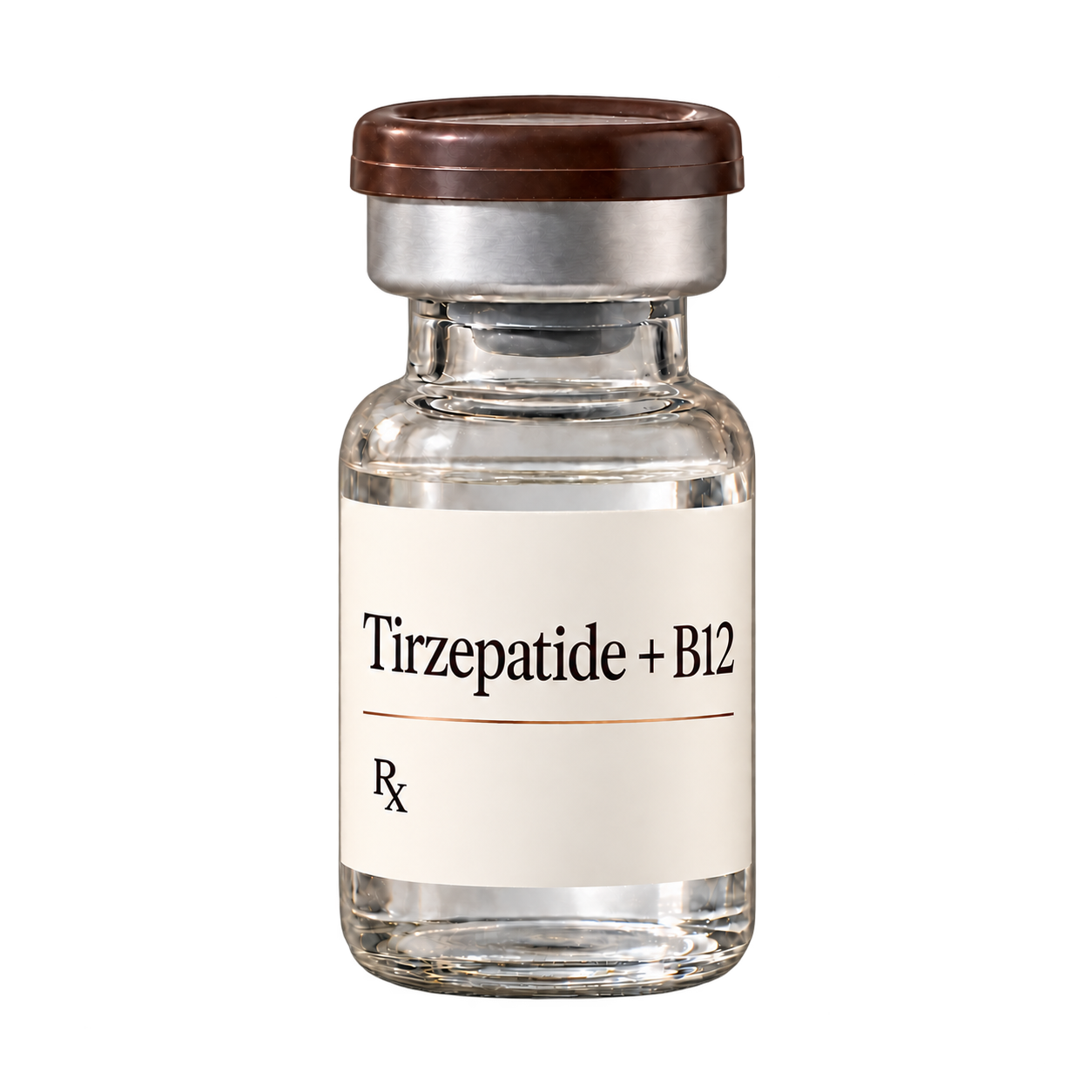
If you are using tirzepatide and want the direct answer, the Instructions for Use list the front of the thigh as an injection site. Tirzepatide is given as a subcutaneous injection, meaning it goes into the fatty layer just under the skin. This page summarizes what the FDA labeled materials say about thigh injections, what to avoid, and when to call your clinician. If you use compounded tirzepatide, your prescriber and pharmacy provide the exact instructions, and Vitals Vault can help you prepare questions to ask.
- For where to inject tirzepatide in thigh, use the front of the thigh per Instructions for Use.
- Tirzepatide is injected under the skin, not into muscle or a vein.
- Rotate injection sites each dose and avoid irritated, bruised, or scarred skin.
- Your prescriber or pharmacist should show you how to use your specific device.
Answer: thigh injection site
- Route
- Subcutaneous injection (under the skin).
- Injection sites listed
- Thigh, abdomen, or upper arm (upper arm typically requires another person).
Thigh site details and rotation
Use the labeled area
For thigh injections, the label shows the front of the thigh as the site. Do not inject into areas your Instructions for Use do not show. If you are unsure where the front area is for you, ask your clinician or pharmacist to point it out on your body.
Rotate injection sites
The label instructs you to rotate injection sites with each dose. Rotation means changing the exact spot you inject, even when you keep using the thigh. This can help reduce local skin reactions such as tenderness, redness, or swelling.
Avoid damaged or irritated skin
Do not inject into skin that is tender, bruised, red, hard, scarred, or has stretch marks, unless your Instructions for Use says otherwise. If you notice a lump, persistent swelling, or worsening irritation at prior injection sites, contact your prescribing clinician for guidance.
Do not share injection devices
Tirzepatide pen labels instruct not to share your pen with other people, even if the needle is changed. Sharing can spread infections. If you think someone used your device, contact your pharmacist or clinician for next steps.
Thigh vs abdomen vs upper arm
The label lists thigh, abdomen, and upper arm as injection sites. Some people prefer the thigh for easier reach and visibility. The best site is the one you can use correctly and consistently, following the Instructions for Use and your clinician’s training.
Compounded tirzepatide note
Compounded tirzepatide products are not FDA-approved and may come with different devices or instructions than brand pens. Your prescribing clinician and dispensing pharmacy should provide the specific injection instructions for your compounded medication.
When to contact a clinician
Severe allergic reaction
Get emergency help if you have swelling of your face, lips, tongue, or throat, trouble breathing, or severe rash. These can be signs of a serious allergic reaction. Do not wait to see if symptoms pass.
Possible pancreatitis symptoms
Contact a clinician right away for severe abdominal pain that may spread to your back, with or without vomiting. The prescribing information warns about pancreatitis with tirzepatide and other medicines in this class. Your clinician will decide what evaluation is needed.
Gallbladder symptoms
Call your clinician if you develop upper right belly pain, fever, jaundice (yellowing skin or eyes), or clay-colored stools. The label warns about acute gallbladder disease. These symptoms need prompt medical evaluation.
Kidney problems or dehydration
Seek care if you cannot keep fluids down, have significantly decreased urination, or feel faint. The label warns that severe gastrointestinal side effects can lead to dehydration, which may worsen kidney function. Your clinician may want labs or medication adjustments.
Injection site concerns
Contact your clinician if an injection site becomes increasingly painful, warm, swollen, or starts draining, or if redness spreads. Mild redness can happen, but worsening or persistent changes can signal infection or another reaction that needs assessment.
Quick tips for comfort and safety
Pick a consistent routine
Using the same day each week can make rotation easier to track.
Check the skin first
Look for bruising, irritation, or scars and choose a different spot.
Keep a simple rotation map
Alternate left and right thigh and move to a new spot each time.
Ask for a demo
Have your pharmacist or clinician walk you through your exact device.
Use your Instructions for Use
Follow the printed steps that come with your medication, not online videos.
Frequently Asked Questions
Where to inject tirzepatide in thigh?
The manufacturer Instructions for Use list the front of the thigh as an injection site for tirzepatide injection pens. Follow the site diagrams and steps in your product materials, and have your prescriber or pharmacist show you how to inject safely.
Can I inject tirzepatide in the inner thigh?
The Instructions for Use show the front of the thigh as the injection area, not the inner thigh. If you are unsure what counts as the front area for you, ask your pharmacist or prescribing clinician to confirm the correct location.
Do I need to rotate thigh injection sites with tirzepatide?
Yes. The label instructs you to rotate injection sites with each dose, which means changing the exact spot you inject. Rotation can help reduce local skin reactions like redness, swelling, or tenderness.
What should I avoid when injecting tirzepatide in the thigh?
Avoid injecting into skin that is tender, bruised, red, hard, or scarred, and do not use sites not shown in your Instructions for Use. If an injection site becomes increasingly painful, warm, or swollen, contact your clinician.
Does compounded tirzepatide have the same thigh injection instructions?
Not always. Compounded tirzepatide is not FDA-approved and may be dispensed with different devices or instructions than brand pens. Your prescribing clinician and dispensing pharmacy should provide the correct injection directions for your specific compounded product.