
How long does semaglutide stay in your system?
Semaglutide can remain in your body for weeks after your last dose. Here is what the half-life means, what affects timing, and when to ask a clinician.
Key facts
- Semaglutide + B12 is $157/month (billed $157 every 4 weeks), charged only after a clinician approves it.
- Answer a few health questions online. A licensed clinician reviews them. If approved, it ships to your door.
- Adults 18 or older. A licensed clinician reviews your health history and decides whether treatment is appropriate for you. Availability depends on the state you live in.





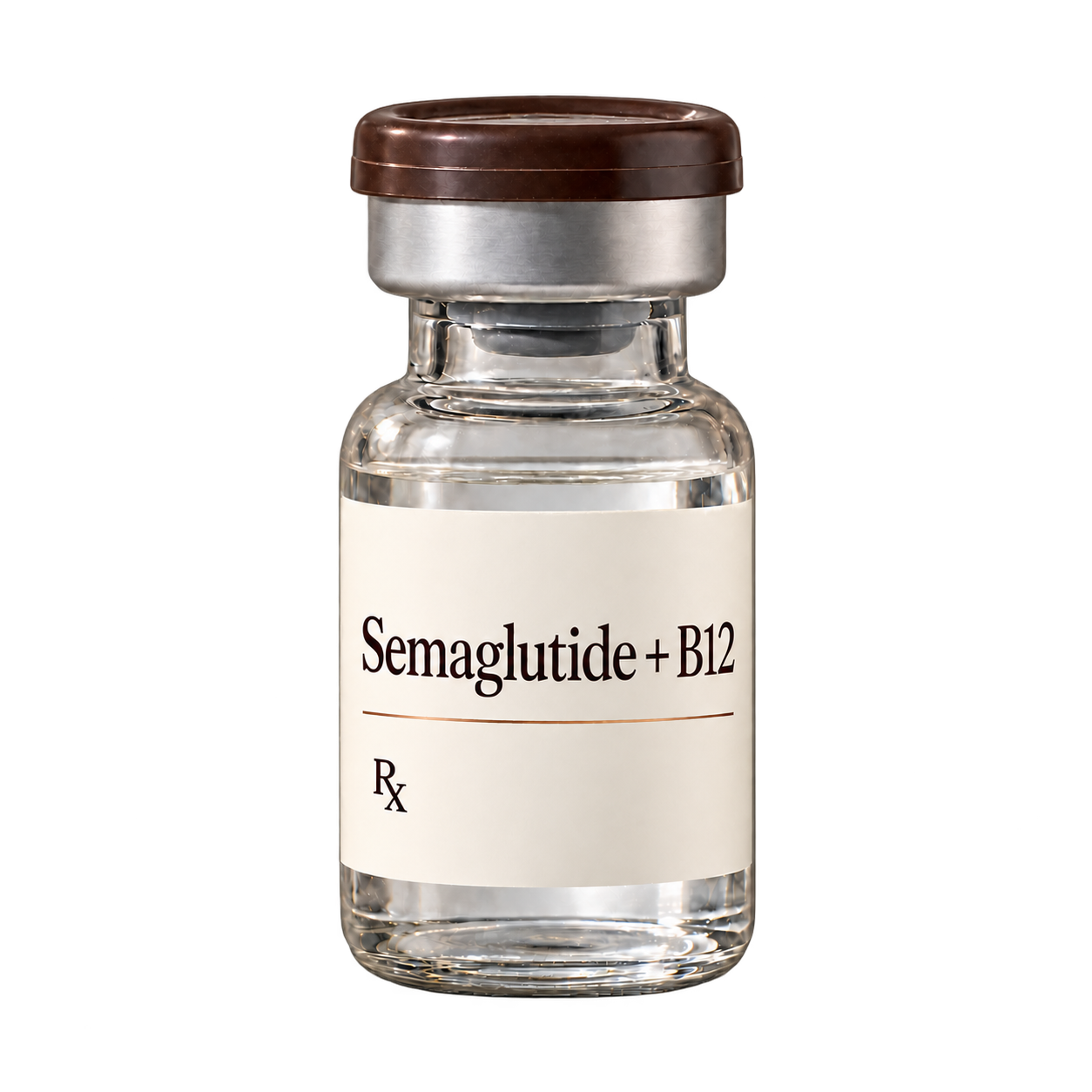
If you are wondering how long does semaglutide stay in your system, the key idea is that it leaves slowly. Semaglutide has a long half-life, so it can take several weeks for most of the medication to clear after your last dose. This matters for side effects, missed doses, switching treatments, and planning around procedures. Vitals Vault put this guide together to explain what the label data means in plain language and what factors can make your timeline different.
- Semaglutide can stay in your system for about 5 weeks after the last dose.
- Its elimination half-life is about 1 week, so levels fall gradually over time.
- Kidney function, dose, and how long you have used it can affect how long effects linger.
- Do not restart or stop based on timing alone; a clinician should guide changes.
Direct answer: how long it stays in your body
About 5 weeks
Based on FDA prescribing information for semaglutide injection products, semaglutide has an elimination half-life of about 1 week and remains in circulation for about 5 weeks after the last dose. That is why effects can fade gradually rather than stopping abruptly.
Half-life explained
A half-life is the time it takes for the amount of drug in your body to drop by about half. With a 1 week half-life, it typically takes multiple half-lives for most of the medication to clear, which is why the timeline is measured in weeks.
Compounded products vary
This page uses the FDA label data for semaglutide injections as the best available reference for timing. Compounded semaglutide is not FDA-approved, and the exact formulation and instructions can vary by pharmacy, which may affect how you experience onset and offset.
What affects how long semaglutide lasts
Time since last dose
Semaglutide levels decline steadily after your last dose, not all at once. Because the half-life is about 1 week, you may still have measurable drug in your system for weeks, even if you feel like the main appetite or stomach effects have changed.
Dose and titration stage
Higher doses generally lead to higher drug exposure in the body, and it can take longer for levels to fall below a noticeable threshold. If you recently increased your dose, you might notice lingering gastrointestinal effects longer than you expected.
How long you have used it
With weekly dosing, semaglutide accumulates until it reaches a steady state, meaning the amount going in and the amount clearing balance out. The FDA labels note that steady state is reached after 4 to 5 weeks of once-weekly administration, which helps explain why changes can take time to show up.
Kidney and liver considerations
Semaglutide is not primarily cleared unchanged by the kidneys, but overall health and organ function can still influence how you tolerate the medication and how long side effects persist. If you have kidney problems, dehydration from vomiting or diarrhea can be more risky and needs clinician guidance.
Other medicines and low blood sugar risk
Semaglutide can increase the risk of low blood sugar when used with insulin or insulin secretagogues such as sulfonylureas, according to FDA labeling. Low blood sugar is not about semaglutide lingering longer, but it can change what symptoms you notice as levels rise or fall.
Typical timeline after your last dose
| Time since last dose | What the label suggests is happening | What this can mean for you |
|---|---|---|
| About 1 week | Roughly one half-life has passed, so levels are about half of peak. | Some effects may start to ease, but the medication is still active. |
| Several weeks | Multiple half-lives have passed, so levels continue to fall gradually. | Side effects may continue improving, but changes can be uneven. |
| About 5 weeks | FDA labels state semaglutide remains in circulation about 5 weeks after the last dose. | Most people have little to no drug left, but your experience can vary. |
When to talk to a clinician about timing
Severe stomach symptoms
Get medical advice right away if you have severe or persistent vomiting, severe abdominal pain, or signs of dehydration. FDA labeling warns about pancreatitis and kidney problems, which can be associated with severe gastrointestinal symptoms.
Possible pancreatitis
Seek urgent evaluation for severe abdominal pain that may radiate to the back, with or without vomiting. Semaglutide labels warn about acute pancreatitis and advise discontinuation if pancreatitis is suspected, which requires clinician evaluation.
Gallbladder symptoms
Contact a clinician if you develop right upper abdominal pain, fever, or yellowing of the skin or eyes. GLP-1 receptor agonist labels include warnings about acute gallbladder disease, and timing questions often come up when symptoms appear after dose changes.
Planning surgery or procedures
Tell your care team you use semaglutide, including if you recently stopped. Clinicians may advise specific timing because GLP-1 receptor agonists can slow stomach emptying, which can affect anesthesia planning.
Pregnancy planning
If you are pregnant, planning pregnancy, or breastfeeding, ask your clinician how to handle semaglutide timing. The FDA labels include pregnancy and lactation considerations and recommend individualized risk benefit discussion.
Practical tips while it clears
Track symptoms weekly
Note nausea, reflux, constipation, diarrhea, and appetite changes to share with your clinician.
Hydration matters
If you have vomiting or diarrhea, prioritize fluids and contact a clinician if you cannot keep liquids down.
Avoid sudden changes
Do not restart, double up, or change schedules without clinician guidance.
Tell every prescriber
Include semaglutide on your medication list, even if you stopped recently.
Ask about monitoring
If you have diabetes or take insulin, ask how to watch for low blood sugar.
Frequently Asked Questions
How long does semaglutide stay in your system?
FDA prescribing information for semaglutide injections reports a half-life of about 1 week and that semaglutide remains in circulation for about 5 weeks after the last dose. Your experience can vary based on dose, how long you used it, and your overall health.
How long does it take semaglutide to be completely out of your system?
There is not a single exact time for everyone, but label data suggests semaglutide can remain in circulation for about 5 weeks after the last dose. Clinicians often think in half-lives, meaning levels fall gradually over several weeks.
Can semaglutide side effects continue after you stop?
Yes. Because semaglutide clears slowly, nausea, constipation, or reflux can linger for days to weeks after the last dose, although many people improve sooner. If symptoms are severe or persistent, contact a clinician to rule out complications.
If I miss a dose, does semaglutide still stay in my system?
Semaglutide does not disappear quickly after a missed dose because its half-life is about 1 week. The FDA labels include missed-dose instructions for the FDA-approved products, and your prescriber can advise what is safest for your situation.
Does compounded semaglutide stay in your system the same amount of time?
Compounded semaglutide is not FDA-approved, and formulations can vary by pharmacy, so the exact experience may differ. The best available reference for drug persistence comes from FDA labeling for semaglutide injections, which reports about 5 weeks in circulation after the last dose.