
How long does ozempic stay in your system?
How long does Ozempic stay in your system? It can remain in your body for about 5 weeks after your last dose. Here is what the half-life means.
Key facts
- Semaglutide + B12 is $157/month (billed $157 every 4 weeks), charged only after a clinician approves it.
- Answer a few health questions online. A licensed clinician reviews them. If approved, it ships to your door.
- Adults 18 or older. A licensed clinician reviews your health history and decides whether treatment is appropriate for you. Availability depends on the state you live in.





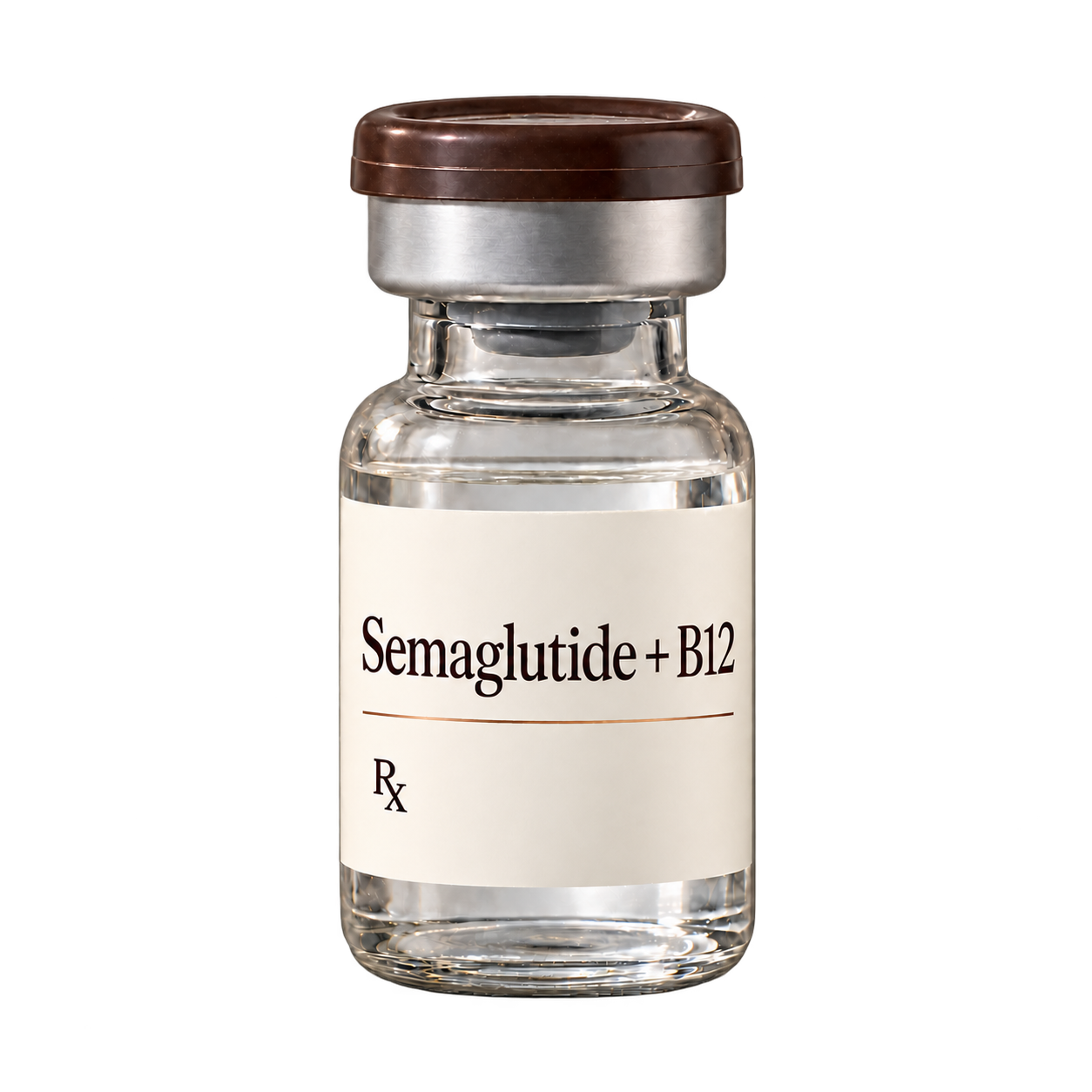
If you are wondering how long does ozempic stay in your system, the most useful number is its half-life, which is about 1 week. Because drugs usually take several half-lives to clear, semaglutide can remain in your body for weeks after your last injection. This matters for side effects, missed doses, switching medications, and planning around procedures or pregnancy. Vitals Vault can help you discuss timing with a licensed clinician, especially if you are using compounded semaglutide rather than the brand product.
- Ozempic can stay in your system for about 5 weeks after the last dose.
- Semaglutide has an elimination half-life of about 1 week.
- It can take about 4 to 5 half-lives for most of a drug to clear.
- Kidney or liver issues are not the main drivers of semaglutide clearance.
How long Ozempic stays in your system
- Half-life (semaglutide)
- About 1 week
- Time for most drug to clear
- About 5 weeks after the last dose (about 5 half-lives)
Why the timeline is about 5 weeks
Half-life drives the math
A half-life is the time it takes for the amount of drug in your body to drop by about half. The Ozempic label reports a semaglutide half-life of about 1 week, which is why the medication does not leave your system quickly.
Clearance takes several half-lives
A common pharmacology rule is that it takes about 4 to 5 half-lives for most of a drug to be eliminated. With a 1-week half-life, that works out to roughly 4 to 5 weeks, which is why many references cite about 5 weeks.
Steady state takes time too
With once-weekly dosing, semaglutide builds up gradually. The Ozempic label notes that steady-state exposure is reached after 4 to 5 weeks of weekly administration, which matches the same half-life logic in the other direction.
Dose and timing still matter
The exact amount of drug remaining depends on your last dose, how long you were on treatment, and how recently you took it. A clinician can help interpret what that means for side effects, missed doses, or switching to another GLP-1 medicine.
Kidney and liver function
Semaglutide is a large peptide that is broken down by general protein catabolism pathways rather than being cleared unchanged by the kidneys. The Ozempic label reports no clinically relevant change in semaglutide exposure with renal impairment or hepatic impairment, but your overall health still affects safety decisions.
| Time since last dose | What is happening | Why it matters |
|---|---|---|
| About 1 week | Roughly half of the drug remains | You may still feel medication effects and side effects. |
| About 2 to 3 weeks | Drug levels continue to decline | Symptoms like nausea may improve, but can linger. |
| About 4 to 5 weeks | Most of the drug has cleared | This is often the timeframe used for planning changes. |
When to talk to a clinician about timing
Severe stomach pain
Get urgent medical care for severe abdominal pain that may radiate to your back, with or without vomiting. This can be a sign of pancreatitis, which is a labeled warning for semaglutide.
Gallbladder symptoms
Contact a clinician promptly for right upper belly pain, fever, yellowing of the skin or eyes, or clay-colored stools. GLP-1 medicines including semaglutide carry warnings about acute gallbladder disease.
Dehydration or kidney concerns
If vomiting or diarrhea leads to dehydration, seek care, especially if you have kidney disease. The Ozempic label warns that severe gastrointestinal reactions can worsen kidney function in some people.
Low blood sugar risk
If you use insulin or a sulfonylurea, ask your prescriber how to reduce hypoglycemia risk. The Ozempic label notes increased risk of hypoglycemia when semaglutide is used with these medicines.
Pregnancy planning
Discuss timing well in advance if you are planning pregnancy. The Ozempic label recommends discontinuing semaglutide at least 2 months before a planned pregnancy due to the long washout period.
Practical tips for real-life situations
Think in weeks, not days
Because the half-life is about 1 week, changes in effects usually happen gradually.
Track symptoms over time
Write down nausea, appetite changes, and bowel changes weekly to spot patterns.
Do not self-adjust for events
If you want to pause for travel or a procedure, ask your prescriber first.
Ask about switching plans
Switching GLP-1 medicines often depends on timing of the last dose and side effects.
Confirm your product type
Brand Ozempic and compounded semaglutide can have different handling instructions.
Frequently Asked Questions
How long does ozempic stay in your system after you stop?
The Ozempic label reports a semaglutide half-life of about 1 week. Because most drugs take about 4 to 5 half-lives to clear, semaglutide can remain in your body for about 5 weeks after your last dose.
Why does Ozempic take so long to leave your body?
Semaglutide is designed to last, which is why Ozempic is dosed once weekly. Its long half-life, about 1 week, means blood levels fall gradually rather than quickly.
Can side effects continue after the last Ozempic dose?
Yes. Because semaglutide levels decline over weeks, effects like nausea or appetite changes can persist for a while after stopping, although they often improve as levels fall. Seek urgent care for severe abdominal pain or signs of dehydration.
How long should you stop Ozempic before pregnancy?
The Ozempic label recommends discontinuing semaglutide at least 2 months before a planned pregnancy. This is due to the long washout period from the medication's long half-life.
Is compounded semaglutide the same as Ozempic for timing?
Ozempic is a brand product, while compounded semaglutide is prepared by a pharmacy for an individual prescription and is not FDA-approved. The expected timing is often discussed using semaglutide's half-life, but your clinician should advise based on your specific product and plan.