
Vaginal estrogen: what is it and is it safe?
Vaginal estrogen is low-dose estrogen used in the vagina for menopause-related dryness and painful sex. Safety depends on your health history.
Key facts
- Estradiol Vaginal Cream is $39.67/month (billed $119 every 84 days), charged only after a clinician approves it.
- Answer a few health questions online. A licensed clinician reviews them. If approved, it ships to your door.
- Adults 18 or older. A licensed clinician reviews your health history and decides whether treatment is appropriate for you. Availability depends on the state you live in.





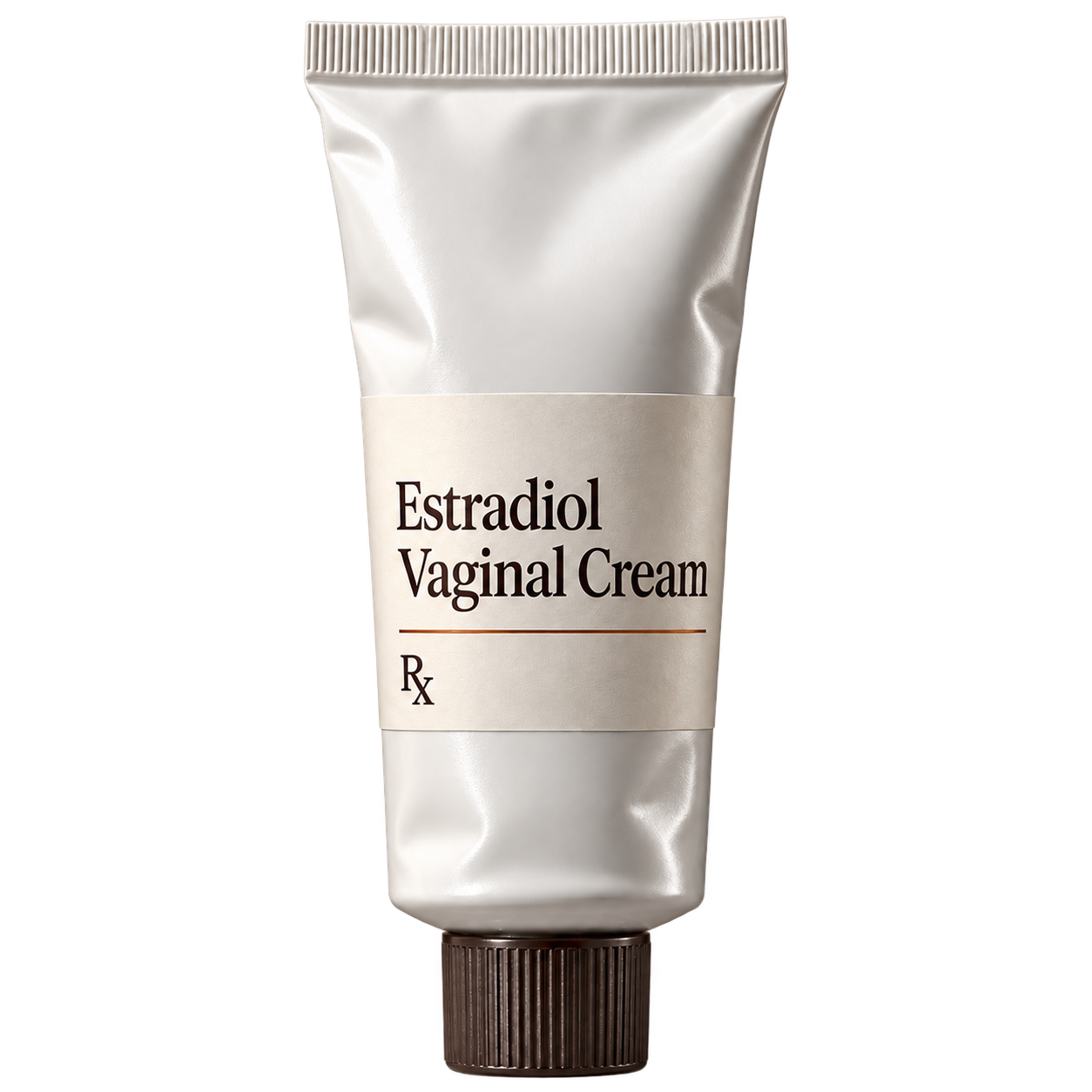
Vaginal estrogen is a low-dose estrogen medicine used inside the vagina to help menopause-related vaginal and urinary symptoms, such as dryness, burning, and pain with sex. It comes in different forms, including creams, tablets or inserts, and a vaginal ring. This page explains what vaginal estrogen is and what safety questions to discuss with a clinician. If you want help deciding what fits your history, Vitals Vault can connect you with clinician-guided care options where available.
- Vaginal estrogen is low-dose estrogen used in the vagina for menopause-related dryness and painful sex.
- It is different from systemic estrogen (pills or patches) that treat whole-body symptoms like hot flashes.
- Common side effects are local irritation and discharge; postmenopausal bleeding needs prompt evaluation.
- Estrogen products carry boxed warnings, so your risks should be reviewed with a clinician.
What is vaginal estrogen?
A local estrogen treatment
Vaginal estrogen is estrogen placed in the vagina rather than taken by mouth or used as a whole-body patch. It is intended to treat local symptoms in vaginal and vulvar tissues that can happen after menopause.
Used for GSM symptoms
FDA-approved vaginal estrogen products are indicated for menopause-related vulvovaginal symptoms such as moderate to severe painful intercourse (dyspareunia). Clinicians often use the term genitourinary syndrome of menopause (GSM) for this group of symptoms.
Different from systemic estrogen
Systemic estrogen therapy is designed to treat symptoms throughout the body, such as hot flashes. Vaginal estrogen is generally used when symptoms are mainly vaginal or urinary, but the right choice depends on your symptoms and medical history.
Safety, side effects, and forms
- What it treats
- Menopause-related vulvovaginal symptoms such as dryness and painful intercourse (dyspareunia).
- Common forms
- Vaginal cream, vaginal tablet or insert, and a vaginal ring that releases estradiol.
- Key safety framing
- Estrogen products carry boxed warnings and require individualized risk assessment.
- Bleeding after menopause
- Postmenopausal vaginal bleeding should be evaluated to rule out serious causes.
Vaginal cream
Cream is applied inside the vagina using an applicator. Some people prefer it when dryness is significant, but it can feel messier and may cause discharge. Use instructions and schedules vary by product and should follow the prescribing information.
Vaginal tablet or insert
A tablet or insert is placed in the vagina and is generally less messy than cream. People may call these “suppositories” in everyday searches, but the exact product and directions depend on the FDA-approved labeling or your prescription.
Vaginal estrogen ring
A vaginal ring is placed in the vagina and releases estradiol over time. It can be convenient if you prefer not to apply medicine frequently, but it may not be a fit if you have discomfort with insertion or certain vaginal concerns.
Vaginal irritation or burning
Some people notice irritation, itching, or burning, especially early on. If symptoms are severe, persistent, or you develop signs of infection, contact a clinician to reassess the product, formulation, or diagnosis.
Vaginal discharge
Discharge can occur with vaginal estrogen, and cream products can also create residue that looks like discharge. New odor, pelvic pain, fever, or significant itching should be checked to rule out infection or other causes.
Breast tenderness or headache
Some people report symptoms that feel more systemic, such as breast tenderness or headache. If these occur, a clinician can review your product choice and whether another approach is a better fit for you.
Unusual vaginal bleeding
Any postmenopausal bleeding needs prompt medical evaluation, whether or not you use vaginal estrogen. Bleeding can have benign causes, but it can also be a sign of endometrial problems that should not be ignored.
Blood clots and stroke warnings
Estrogen products carry boxed warnings about cardiovascular events such as blood clots and stroke, based largely on systemic hormone therapy data. Your clinician will weigh your personal risk factors and the type of estrogen therapy being considered.
Cancer-related warnings
Estrogen products carry boxed warnings related to endometrial cancer risk with unopposed estrogen and to breast cancer risk in certain hormone therapy contexts. If you have a history of hormone-sensitive cancer, decisions about any estrogen exposure should be made with your oncology and gynecology team.
When to talk to a clinician
Bleeding after menopause
If you have any vaginal bleeding after menopause, get evaluated promptly. A clinician may need to rule out endometrial causes before continuing or starting any hormone-based therapy.
History of clots or stroke
If you have had a blood clot, stroke, or certain heart conditions, ask for an individualized risk review before using any estrogen product. Your clinician can discuss nonhormonal options or the lowest-risk approach for your situation.
Breast cancer history
If you have a personal history of breast cancer or another estrogen-sensitive cancer, do not self-treat. Decisions about vaginal estrogen may involve your oncologist and depend on your cancer type, treatments, and symptom severity.
Possible infection symptoms
Fever, pelvic pain, foul-smelling discharge, or severe itching can signal infection or another condition that needs targeted treatment. Vaginal estrogen is not a treatment for sexually transmitted infections or urinary tract infections.
Practical tips if you are considering it
Match the form to you
Cream, insert, and ring differ in convenience, mess, and comfort.
Track symptom changes
Note dryness, burning, and pain with sex to review with a clinician.
Do not ignore bleeding
Any postmenopausal bleeding should be evaluated, even if it seems minor.
Ask about nonhormonal add-ons
Lubricants and moisturizers can still help, even with vaginal estrogen.
Bring your history
Clot, stroke, and cancer history can change the risk-benefit discussion.
Frequently Asked Questions
Is vaginal estrogen safe?
For many people, low-dose vaginal estrogen can be an appropriate option for menopause-related vaginal symptoms, but safety depends on your medical history. Estrogen products carry boxed warnings, so review clot, stroke, and cancer history with a clinician.
What are the side effects of vaginal estrogen?
Common side effects can include local irritation, itching or burning, and discharge. Seek medical evaluation for postmenopausal bleeding, severe symptoms, or signs of infection, because those need a different workup than dryness alone.
Are vaginal estrogen suppositories the same as inserts or tablets?
People often use the word suppository to mean any vaginal medication, but FDA-approved products are labeled as tablets or inserts depending on the product. The correct use and schedule depend on the specific prescribing information and your prescription.
How does a vaginal estrogen ring work?
A vaginal estrogen ring is placed in the vagina and releases estradiol over time. Whether it is a good fit depends on comfort with insertion, anatomy, and your medical history, so it is best chosen with a clinician.
Is there OTC vaginal estrogen?
In the US, vaginal estrogen products are prescription medications. Over-the-counter vaginal moisturizers and lubricants can help symptoms, but they do not contain estrogen and do not treat the underlying low-estrogen tissue changes.