
Topical minoxidil side effects: what to expect
Topical minoxidil side effects are usually scalp irritation or unwanted hair growth, but rare serious reactions can occur. Know the warning signs.
Key facts
- Finasteride + Minoxidil Scalp Solution is $53.50/month (billed $107 every 50 days), charged only after a clinician approves it.
- Answer a few health questions online. A licensed clinician reviews them. If approved, it ships to your door.
- Adults 18 or older. A licensed clinician reviews your health history and decides whether treatment is appropriate for you. Availability depends on the state you live in.


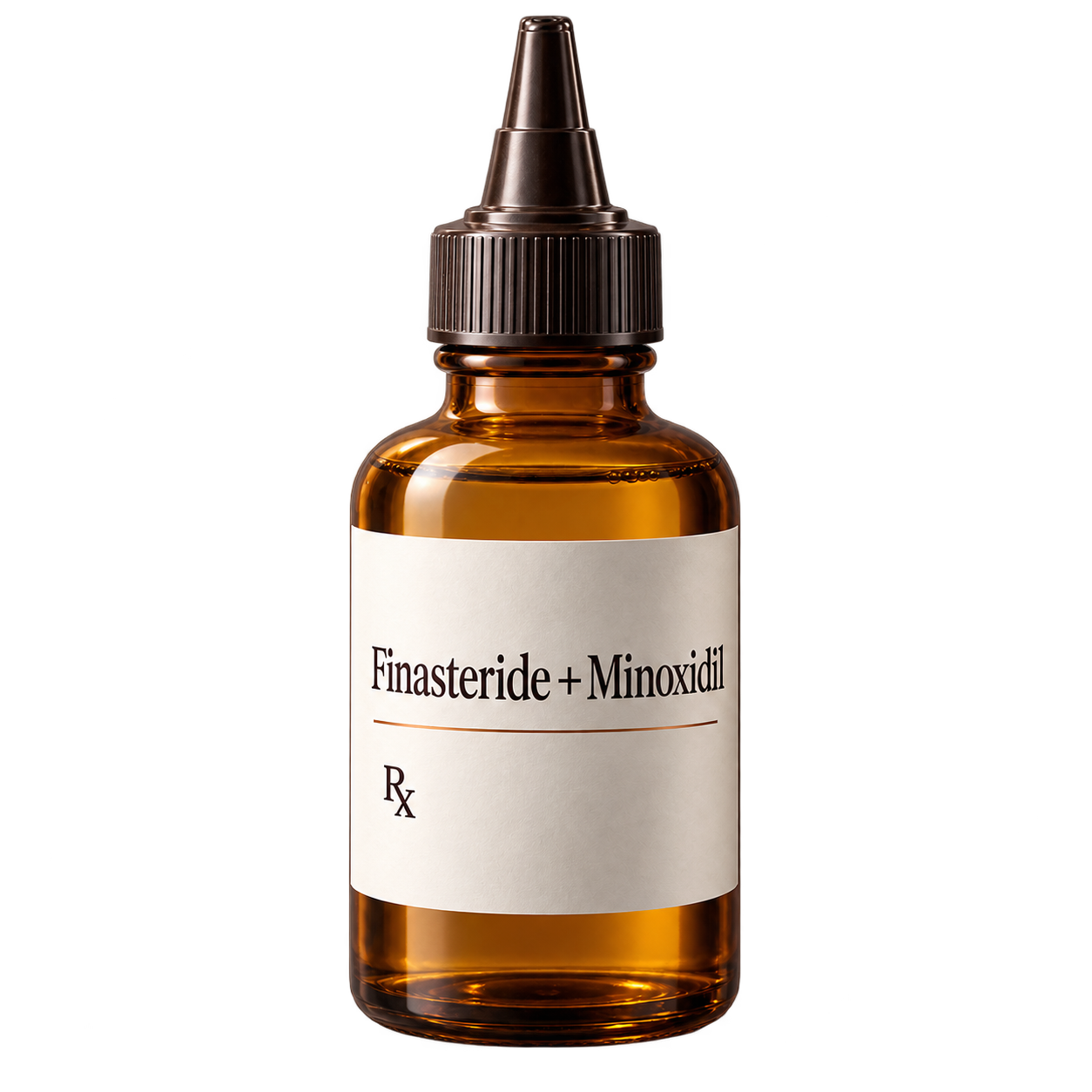
Topical minoxidil is a medicine applied to the scalp for hair loss. Most topical minoxidil side effects are mild and stay on the skin, such as itching, dryness, or redness. Less commonly, your body can absorb enough to cause whole body effects, especially if used on irritated skin or more than directed. This guide explains what is known from FDA labeling and clinical evidence, what is common versus serious, and when to call a clinician.
- Topical minoxidil side effects are usually local scalp irritation, but rare serious reactions need urgent care.
- Unwanted hair growth can happen if medication spreads to the face or other skin.
- Early shedding can occur when starting and is not always a bad sign.
- Stop and get help for chest pain, fainting, fast heartbeat, or sudden swelling.
Are topical minoxidil side effects common?
Topical minoxidil side effects: common vs serious
Scalp irritation
Itching, dryness, scaling, redness, or burning can occur where you apply minoxidil. This may be from minoxidil itself or from the vehicle ingredients (for example, alcohol or propylene glycol in some solutions). If irritation is persistent or severe, a clinician can help you decide whether to change formulation or stop.
Unwanted hair growth
Hair growth can occur on nearby areas such as the face if the product spreads beyond the scalp or transfers from hands, pillows, or hats. Washing hands after application and avoiding contact with other skin areas can reduce this risk. If it happens, it usually improves after stopping exposure, but discuss changes with a clinician.
Temporary shedding at start
Some people notice increased shedding early on. This can happen when hairs shift from a resting phase into a new growth cycle, which can push older hairs out. If shedding is heavy, sudden, or comes with other symptoms, consider evaluation for other causes of hair loss.
Allergic reaction or severe rash
Stop using the product and seek medical care if you develop hives, widespread rash, severe itching, blistering, or swelling of the face, lips, tongue, or throat. These can be signs of an allergic reaction. A clinician can help determine whether minoxidil or another ingredient is the trigger.
Chest pain or fast heartbeat
Although topical minoxidil is meant to act locally, it can be absorbed and affect the cardiovascular system in rare cases. Get urgent medical evaluation for chest pain, palpitations, a fast heartbeat, dizziness, or fainting. These symptoms are treated as serious because minoxidil is a vasodilator when absorbed systemically.
Swelling and rapid weight gain
Seek prompt care for swelling of hands or feet, shortness of breath, or sudden rapid weight gain. These can be signs of fluid retention or heart strain, which are rare but listed warnings for topical minoxidil products. Do not ignore these symptoms, especially if you have heart disease history.
- What it is
- A topical hair loss medication; systemic minoxidil was originally an oral blood pressure drug.
- Main risk categories
- Local skin reactions and unwanted hair growth; rare systemic cardiovascular symptoms.
- When to treat as urgent
- Chest pain, fainting, fast heartbeat, shortness of breath, or sudden swelling.
When to call a clinician or seek urgent care
Get urgent care now
Seek urgent evaluation for chest pain, fainting, severe dizziness, shortness of breath, a fast or irregular heartbeat, or swelling of hands or feet. These can signal a rare systemic reaction. If you have severe or sudden symptoms, do not rely on a lab order or app guidance.
Call within 24 to 48 hours
Contact a clinician soon if you develop a severe scalp rash, blistering, intense burning, or signs of infection. Also call if you notice new widespread hair growth in unwanted areas or if shedding is sudden and dramatic.
Discuss before using
Ask a clinician before starting if you have heart disease, blood pressure problems, or if you are pregnant or breastfeeding. Also ask if you have scalp conditions (eczema, psoriasis, infection) that could increase irritation or absorption.
Pro tips to reduce side effects
Keep it on the scalp
Apply only to the intended area and wash hands afterward to limit unwanted hair growth.
Avoid broken skin
Do not apply to irritated, sunburned, or infected skin unless a clinician advises it.
Check your ingredients
If you react, ask about switching vehicle ingredients (for example, foam vs solution).
Track triggers
New products, dandruff treatments, and dyes can worsen irritation. Note timing and changes.
Rule out other causes
If shedding is new or diffuse, consider labs for iron, thyroid, and other contributors.
Frequently Asked Questions
Is minoxidil safe?
For many people, topical minoxidil is tolerated and side effects are mild, mainly scalp irritation. Rarely, it can cause serious symptoms like chest pain, fast heartbeat, fainting, or swelling, which need urgent evaluation. Review your risks with a clinician, especially if you have heart disease.
What are the most common topical minoxidil side effects?
The most common topical minoxidil side effects are local scalp reactions such as itching, dryness, redness, or burning. Some people also notice unwanted hair growth on nearby skin if the product spreads. If symptoms persist, ask a clinician about alternatives.
Can topical minoxidil cause heart palpitations?
Yes, palpitations or a fast heartbeat are listed as possible serious reactions, although they are uncommon with topical use. Because minoxidil can be absorbed through the skin, cardiovascular symptoms should be treated seriously. Seek urgent care for chest pain, fainting, or shortness of breath.
Why am I shedding more after starting topical minoxidil?
Some people notice temporary shedding when starting because hairs can shift into a new growth cycle and older hairs may fall out. This does not always mean the treatment is harming your hair. If shedding is sudden, severe, or paired with other symptoms, consider evaluation for other causes.
Can I use labs to check what is causing my hair loss?
Labs can help check for common contributors to shedding, such as thyroid or iron related issues, but they do not diagnose hair loss on their own. If you order labs through Vitals Vault, you can share results with a clinician to decide next steps. Sudden or severe symptoms should be evaluated urgently.